


 Published on
16 Jul, 2026
Published on
16 Jul, 2026 Updated on 16 Jul, 2026
 5106
5106We usually obsess over one magic number with sleep: eight hours. We figure if we hit that mark, we’re golden. But have you ever slept a full eight hours and still dragged yourself out of bed feeling sick? Meanwhile, on other days, you wake up refreshed after just six or seven.
The difference usually isn't how much you slept it’s when you slept.
Your body has a built-in 24-hour clock that dictates when you should feel wide awake and when it's time to wind down. When your schedule bounces all over the place, that clock gets confused, draining your energy, ruining your focus, and messing with your mood.
Here is why keeping a regular sleep routine is the secret weapon you didn't know you needed.
Doctor’s Note
Sleep quality is influenced not only by how long you sleep but also by how consistently you sleep. Irregular sleep schedules can affect energy levels, concentration, mood, and overall health. If you experience persistent insomnia, loud snoring, frequent nighttime awakenings, or excessive daytime sleepiness despite maintaining healthy sleep habits, consult a healthcare professional for proper evaluation.
Your Body Loves Routine
Think about how your stomach rumbles at the exact same time every day if you eat on a set schedule. Sleep works the exact same way.
Your internal master clock, the circadian rhythm, runs in the background 24/7, managing everything from sleepiness and digestion to your hormones and body temperature. When you go to bed and wake up at roughly the same time every day, your body knows what's coming. It automatically drops your core temperature and starts winding down at night, then preps your brain to wake up before your alarm even goes off.
But when your bedtime is a moving target, your body is constantly playing catch-up. That's why you can clock a full night of sleep and still feel completely exhausted.
Why Sleeping Late on Weekends Can Backfire
We’re all guilty of this pattern: you run on fumes from Monday to Friday, waking up early for work or school. Then Friday night hits, you stay up late, and you sleep in until noon on Saturday and Sunday to "catch up."
It feels like self-care, but it actually backfires. Scientists call this social jet lag because shifting your sleep times by three or four hours on the weekend does the exact same thing to your body as flying across three time zones twice a week
You aren't catching up on rest; you're just giving your internal clock jet lag. No wonder Monday mornings feel so miserable; your brain thinks it’s still weekend time in a different time zone.

A Consistent Schedule Can Improve Your Energy
When we feel exhausted, our first instinct is usually, "I need more sleep." But very often, what we actually need is consistent sleep.
Think about how easily toddlers fall asleep when they have a strict bedtime routine. Adults aren't really any different we just ignore our natural wiring. When you lock in a regular sleep window, something magical happens:
- You fall asleep faster without staring at the ceiling for an hour.
- Waking up feels natural instead of like a daily battle with your alarm.
- Your energy stays steady all day without that brutal afternoon crash.
- You naturally need less caffeine just to function.
Your Mood Is Closely Connected to Your Sleep Timing
Ever snap at someone over something minor after a weird night of sleep? Your sleep rhythm and your mental health are deeply wired together.
Throwing your sleep timing off balance messes with the brain chemicals that regulate your emotions. When your sleep habits are erratic, you’re much more likely to deal with brain fog, irritability, sudden mood swings, and a feeling of being constantly overwhelmed.
Staying up until 2:00 AM doomscrolling and then forcing yourself awake at 7:00 AM leaves your brain emotionally drained before you even step out the front door. Keeping a steady schedule is one of the easiest ways to keep your mood stable and your stress levels in check.

Better Sleep Timing Supports Your Physical Health
Sleep isn't just a daily pause button; it's peak maintenance time for your body. While you're out cold, your brain is filing away memories, your muscles are rebuilding, your immune system is repairing itself, and your hormones are resetting.
When your sleep timing is chaotic, your body doesn't get the uninterrupted, predictable window it needs to finish those vital repairs. Over time, living with a scrambled sleep schedule makes it harder to manage your weight, slows down your metabolism, and leaves you more vulnerable to catching whatever cold is going around the office.
Your Productivity Depends on More Than Coffee
When that 2:00 PM brain fog hits, most of us just grab another coffee or energy drink. But caffeine is just a Band-Aid; it can't replace actual restorative rest.
An inconsistent sleep schedule takes a massive toll on your working memory, your creativity, and your ability to solve complex problems. Ever found yourself reading the same sentence three times because your brain just refuses to absorb it? That’s not a lack of effort; that’s your brain running on a scrambled circadian rhythm. Regular sleep habits give you the mental clarity that no amount of coffee can buy.
Small Habits That Can Fix Your Sleep Schedule
You don't need to completely overhaul your life overnight to fix your sleep. Here are a few simple, realistic habits that actually work:
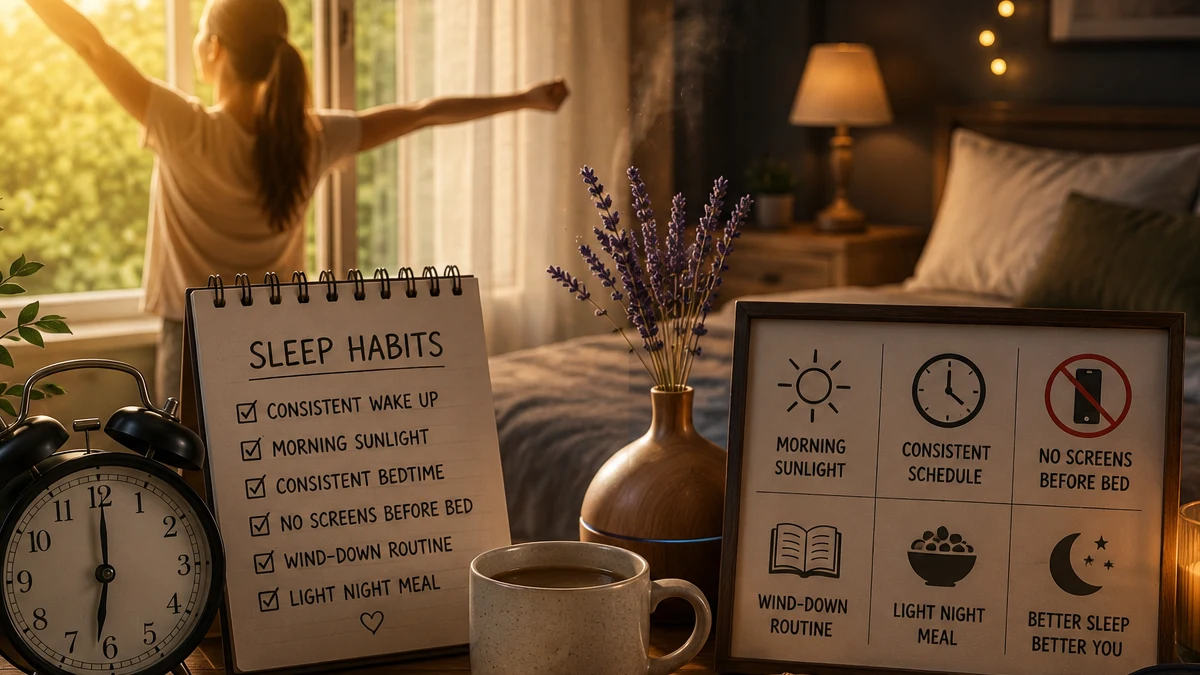
- Lock in your wake-up time: If you only change one thing, pick a set wake-up time and stick to it seven days a week. Your bedtime will naturally adjust once your morning alarm anchors your internal clock.
- Get outside in the morning: Step into the natural daylight for 5 to 10 minutes soon after you wake up. Morning sunlight acts like a physical reset button for your brain's sleep clock.
- Keep your bedtime roughly consistent: Try to go to sleep within the same 30-to-45-minute window every night, even on weekends.
- Ditch the late-night screens: The blue light from phones and laptops tricks your brain into thinking it's still daytime. Give yourself a screen-free buffer zone 30 to 60 minutes before bed.
- Build a simple wind-down routine: Reading a book, stretching, or listening to calm music gives your body a clear physical cue that it’s time to sleep.
- Skip heavy midnight snacks: Eating a massive meal right before lying down forces your digestive system to work overtime when it should be resting.
When Should You See a Doctor?
We all have occasional restless nights, stress, travel, or a late night out happen. But if you're keeping a consistent schedule and still constantly struggling to fall asleep, waking up multiple times a night, snoring loudly, or feeling completely exhausted every day, don't just ignore it.
Chronic sleep issues can sometimes point to underlying health problems like sleep apnea. Check in with a doctor if good habits aren't moving the needle.

Struggling With Poor Sleep Despite Your Best Efforts?
If you're going to bed on time but still waking up tired, feeling drained throughout the day, dealing with frequent nighttime awakenings, or finding it difficult to maintain a healthy sleep routine, it may be time to look deeper into the root cause.
At Jiva Ayurveda, experienced Ayurvedic doctors take a personalized approach to sleep-related concerns. By understanding your lifestyle, daily routine, digestion, stress levels, and overall health, they can help identify factors that may be affecting your sleep quality and overall well-being.
Don't let poor sleep impact your energy, mood, productivity, and quality of life.
Take the first step toward better sleep and better health. Call Jiva Ayurveda today.
Final Thoughts
Stop looking at sleep as just a math equation where you need to hit eight hours by any means necessary. When you sleep is just as important as how long you sleep.
Giving your body the gift of a regular rhythm improves your mood, sharpens your focus, boosts your energy, and protects your long-term health. The next time you wake up feeling sluggish despite getting plenty of sleep, look at your clock, not just for how many hours you logged, but for the consistency of your routine. Getting on a steady schedule is one of the absolute simplest things you can do to wake up feeling like yourself every day.