 Published on
22 Jul, 2026
Published on
22 Jul, 2026 Updated on 22 Jul, 2026
 5070
5070Many women with PCOD feel completely frustrated. You eat healthy, you go for walks, you put in genuine effort, but the weighing scale simply refuses to move. Sometimes it feels like your own body is fighting against you.
The reality is that weight loss in PCOD is not just about eating less and exercising more. It totally changes the way our body processes food, manages energy, and stores fat. Hormonal imbalances, stress, and hidden swelling inside your body make this journey much harder than it is for someone without PCOD. But do not worry, losing weight is not impossible. It just requires a slightly different, much kinder approach.
What Is PCOD?
PCOD stands for Polycystic Ovarian Disease. It is a very common issue where the hormones in a woman's body get confused. The ovaries end up making more "male hormones" than they normally should. This hormonal imbalance prevents the body from producing an egg each month.
Because of all this, you might notice symptoms like:
- Very late or missed periods.
- Sudden weight gain that is incredibly hard to lose.
- Acne and pimples on your face or back.
- Extra hair growing on your face or chin.
- Hair falling out of your scalp.
- Feeling tired all the time.
Not every woman gets all these signs but weight gain is one of the most common and frustrating ones.
The Hormonal Changes That Make Weight Loss Harder
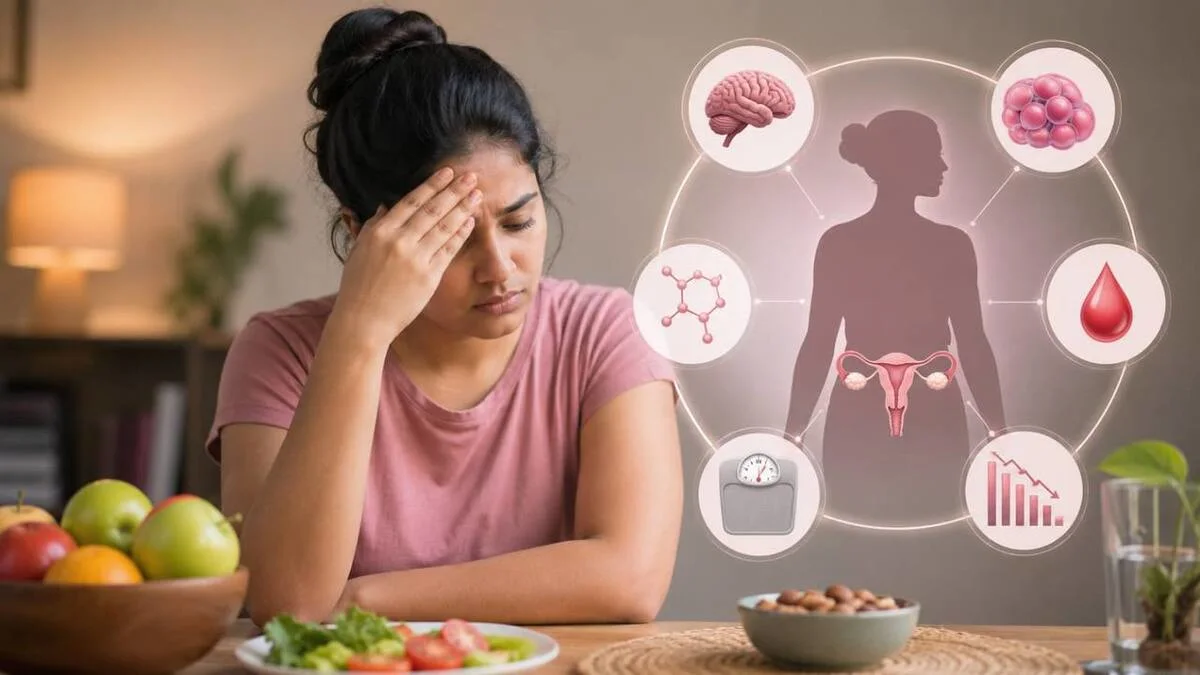
Your hormones control almost everything your body does, including how you burn fat. In PCOD, a few key hormones stop doing their jobs properly.
Insulin Resistance: This is the biggest hurdle. When you eat, your body makes insulin to turn that food into energy. But in PCOD, your body stops listening to the insulin. To fix this, your body just makes more and more insulin. Sadly, high insulin acts like a fat-storing machine, especially around your belly.
High Male Hormones (Androgens): Because of the high insulin, your ovaries start making extra male hormones. These hormones also push your body to store fat around your stomach and make it much harder to build lean, fat-burning muscle.
Slower Metabolism: People with PCOD often have a slower metabolism. Your resting metabolism, the calories you burn just by existing, is a bit slower than normal. Because of this, progress happens slowly, and you need a lot of patience.
The Connection Between PCOD and Insulin Resistance
If you want to understand PCOD weight gain, you have to understand insulin.
When your insulin levels stay high all day:
- Your body locks up its fat stores and refuses to burn them.
- You feel hungry very often.
- You have sweet cravings.
- You want to eat junk food more.
- You feel sleepy all day.
It becomes a tough cycle. You crave sugar, you eat some sweets, your blood sugar spikes, and as a result, your insulin goes up again, and your body stores more fat. To break this loop, you have to eat meals that keep your blood sugar steady.
Inflammation and Its Hidden Role in Weight Gain
Many women with PCOD go through "chronic inflammation." Think of this as a quiet, hidden swelling inside the body. You cannot see it, but it affects how your body works.
This hidden swelling makes you feel constantly tired, slows down your recovery after a workout, and messes with your hunger signals.

Stress Hormones, Sleep, and Weight
Stress is the hidden enemy of PCOD.
When you take a lot of stress, your body makes more stress hormone called cortisol. This makes you feel hungrier, and then you will eat more and unhealthily, which gives you weight around your belly.
Sleep is just as important. If you do not sleep well, you wake up with high hunger hormones. You will crave heavy, sugary foods all day, and you won't have the energy to exercise. Getting seven to eight hours of deep sleep is a must for balancing your hormones.
Lifestyle Habits That Can Make PCOD Worse
Small things you do every day can secretly make your PCOD worse.
- Sitting Too Much: Sitting at a desk all day makes insulin resistance worse. Just getting up and walking for five minutes every few hours helps a lot.
- Eating Packaged Food: Biscuits, chips, and sweet drinks cause massive blood sugar spikes, which lead straight to fat storage.
- Skipping Meals: Skipping breakfast or lunch makes your blood sugar drop. By dinnertime, you are starving and end up eating double the amount. Eating at the same time every day keeps your body happy and predictable.
Doctor’s Note
PCOD makes weight loss difficult due to Insulin Resistance, which forces your body to store belly fat rather than burn it. Avoid crash diets or extreme workouts, as they spike stress and slow metabolism further. Instead, focus on fresh, protein-rich meals, moderate daily movement, and 7-8 hours of sleep to naturally balance your hormones.
How Ayurveda Looks at PCOD and Weight Gain
In Ayurveda, PCOD is not treated based on external systems; instead, we look at the higher picture. Ayurveda explains that PCOD and weight gain occur due to the imbalance of kapha dosha (controller of energy and digestion) in the body.
Slow Digestive Fire: Ayurveda says your stomach has a digestive fire. When this fire is weak, your food does not digest properly. So this slows down your metabolism in the body and causes weight gain.
Build-up of Ama: When your food is not digested well, because of the weak digestive fire, it turns the food into a sticky waste known as Ama. This waste blocks the channels in your body, stopping your hormones from talking to each other.
To fix this, Ayurveda suggests eating warm, freshly cooked food, sipping warm water, doing gentle yoga, and waking up early to get the body moving again.

Ayurvedic Way to Support Weight Loss with PCOD
Forget about magic diets. Real weight loss with PCOD is about building long-term habits.
Eat Fresh & Warm Meals: Try to eat a balanced diet, which includes:
- Add lots of fresh, colorful vegetables.
- Eat a good amount of protein to keep you full.
- Have healthy carbs like brown rice or whole wheat roti.
- Eat good fats, like a few almonds or seeds.
Move Your Body Daily: You do not need to do extreme workouts in order to lose weight. A mix of brisk walking, doing a bit of weight training, and doing some yoga helps your body use insulin much better.
Manage Your Stress and Sleep: Stop scrolling on your phone late at night. Read a book, do some deep breathing, and go to bed on time. A calm mind leads to a calm body, which naturally drops weight.
Common Mistakes to Avoid
When we are not able to lose weight, our body tends to push this mental pressure towards making these common mistakes:
- Crash Diets: Starving yourself slows your metabolism even more. You will lose weight for a week, and then gain it all back instantly.
- Too Much Gym: Doing crazy, high-intensity workouts every single day spikes your stress hormones and makes you exhausted.
- Skipping Meals: This just messes up your blood sugar and causes extreme cravings.
- Expecting Overnight Magic: PCOD weight loss is slow. Do not compare yourself to others. Celebrate the small wins, like having more energy or clearer skin.
When to Seek Medical Advice
You should definitely talk to a doctor if:
- You completely stop getting your periods.
- You get severe, painful acne or thick facial hair.
- You feel totally exhausted and depressed every day.
- You are trying to get pregnant without success.
Conclusion
Weight loss and PCOD become an uphill struggle as everything from your hormones to your stress and lifestyle becomes entangled with each other. The good news is that you hold the key to untangling all of these.
Forget about looking for quick fixes to lose weight or depriving yourself of food. Instead, try to eat healthy, warm, and fresh meals, exercise daily, sleep properly, and manage stress. If you follow these simple steps, it can help you to repair your weak metabolism and help you manage your weight and PCOD more effectively.
References
How to manage weight loss in women with obesity and PCOS seeking fertility? - PMC
Weight Management Interventions in Women with and without PCOS: A Systematic Review - PMC
Polycystic ovary syndrome and weight management - PubMed
Polycystic Ovary Syndrome: Etiology, Current Management, and Future Therapeutics - PMC