 Published on
17 Jul, 2026
Published on
17 Jul, 2026 Updated on 17 Jul, 2026
 5091
5091High blood pressure is often called a "silent condition" because it rarely shows any early warning signs. Yet, it quietly puts a huge amount of extra stress on your heart, brain, and kidneys. While medicine is incredibly important for many people, what you put on your plate every single day plays a massive role in keeping your blood pressure steady.
Today's normal diet is usually packed with extra sugars, heavy salt, refined flour, and highly processed junk food. Eating like this every day slowly builds up inflammation inside your body. This inflammation quietly damages your blood vessels over time. By eating clean, whole foods, you give your body the tools it needs to calm that inflammation and keep your heart beating strong and healthy.
What Happens When You Cut Back on Added Sugar?
Most people think sugar only causes weight gain or diabetes, but it actually does much more. Eating too many sweet snacks, cold drinks, and sugary bakery items creates constant inflammation, making it very hard for your body to manage your blood pressure.
Cutting back on added sugar does not mean you have to stop eating fresh fruits. It just means avoiding the extra, fake sugar that factories add to packaged foods.
When you stop eating this added sugar, you usually notice:
- Your energy stays steady all day without suddenly crashing.
- You stop getting those desperate sweet cravings.
- You feel fuller after meals.
- You naturally start choosing healthier foods, which directly supports a happy heart.
How Does an Anti-Inflammatory Meal Plan Support Your Heart?
Inflammation is just your body’s way of fighting off harm. But when this internal fire stays lit for too long, it can slowly damage the inside of your blood vessels.
An anti-inflammatory meal plan focuses on foods that naturally cool down this internal fire. These foods include:
- Bright, colorful vegetables.
- Fresh, juicy fruits.
- Whole, unpolished grains.
- Lentils and beans.
- Nuts and seeds.
- Healthy olive oil.
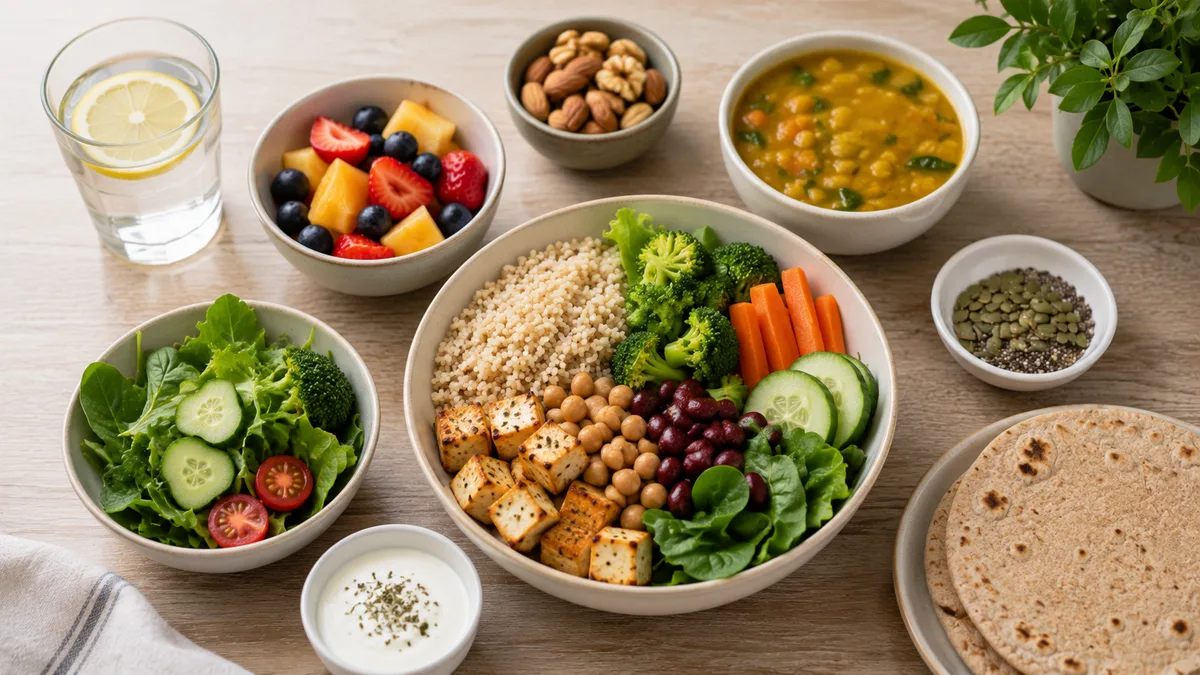
These foods are packed with fiber, potassium, and healthy fats that your heart loves. You do not have to starve yourself. The goal is just to eat foods that naturally heal your body.
Before You Begin: Simple Rules for Following This 7-Day Plan
Eating well is easy when the rules are simple.
Eat more:
- Fresh, green vegetables.
- Seasonal local fruits.
- Unsalted nuts.
- Plain yogurt.
Eat less:
- Sweet, cold drinks.
- Packaged cookies and cakes.
- White bread.
- Salty chips and fast food.
Make sure to drink plenty of plain water every day, and try to build your meals with a good mix of vegetables, proteins, and healthy fats so you never feel hungry.
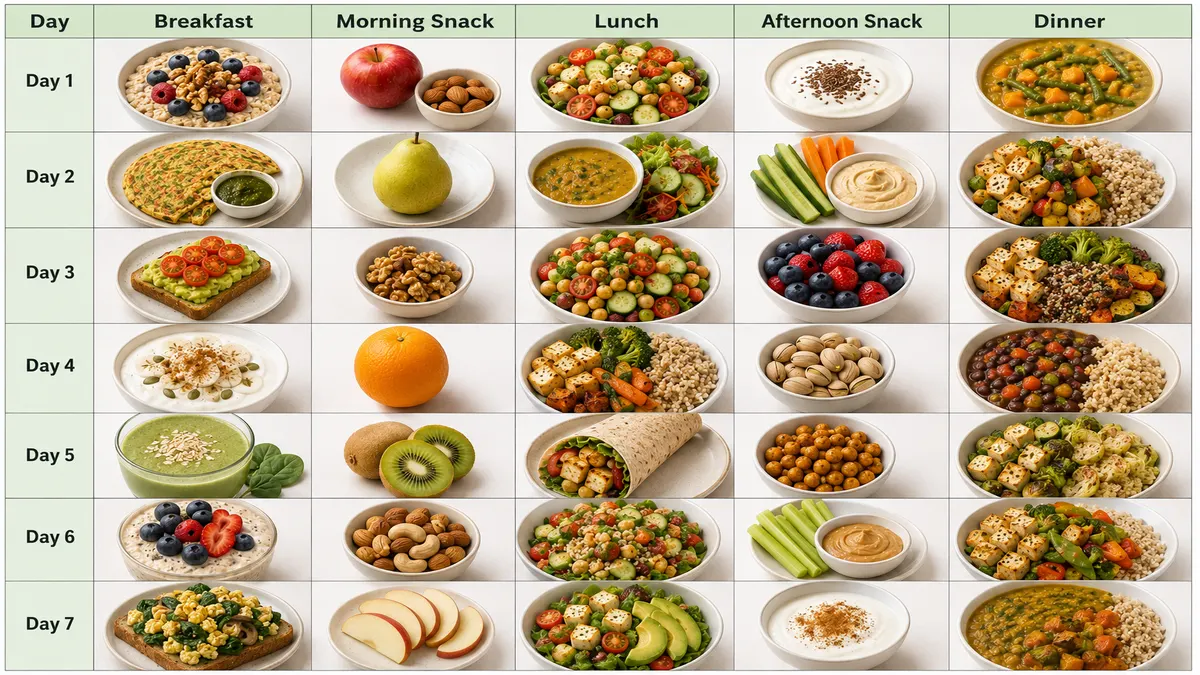
Here is the fully vegetarian version of your 7-day meal plan:
| Day | Breakfast | Morning Snack | Lunch | Afternoon Snack | Dinner |
| Day 1 | Oats with berries, walnuts & cinnamon | Apple & unsalted almonds | Mixed salad with roasted paneer or chickpeas | Plain yogurt with flaxseeds | Warm bowl of moong dal with green beans & sweet potato |
| Day 2 | Besan chilla (chickpea pancake) or paneer bhurji with spinach, onion & tomato | Fresh pear | Warm dal with a side salad | Cucumber & carrot sticks with hummus | Grilled paneer or tofu with brown rice & mixed veggies |
| Day 3 | Avocado toast with tomatoes | Handful of walnuts | Chickpea salad (cucumber, tomato, coriander, lemon) | Berries or seasonal fruit | Grilled tofu or paneer with quinoa or brown rice & roasted veggies |
| Day 4 | Yogurt with banana, pumpkin seeds & cinnamon | Orange | Grilled tofu or lentils with roasted veggies & barley/oats | Unsalted pistachios | Black bean & vegetable stew with brown rice |
| Day 5 | Spinach, yogurt & oat smoothie | Kiwi or local fruit | Roti wrap with paneer or chickpeas & veggies | Dry-roasted chana | Baked seasoned tofu or warm dal with roasted cabbage/Brussels sprouts & grains |
| Day 6 | Overnight oats with milk & berries | Unsalted mixed nuts | Quinoa & chickpea salad with leafy greens | Celery or cucumber with natural peanut butter | Tofu & vegetable stir-fry over brown rice |
| Day 7 | Scrambled paneer or tofu with spinach & mushrooms on toast | Apple slices | Paneer or chickpea salad with avocado & greens | Plain yogurt with cinnamon | Warm dal & vegetable curry over brown rice |
Remember, day seven is not the end. It is the beginning of a totally new, healthy way of eating!
Which Foods Should You Keep Limiting Even After the Plan Ends?
For your blood pressure to remain totally balanced, you must always endeavor to minimize:
- Cold drinks and sweet fruit juices.
- Candies, cookies, and any other kind of sugary baked goods.
- Sugary breakfast cereals.
- Chips and salty snacks.
- Instant noodles and fried fast foods.
By switching to wholesome and nutritious foods, your heart will be grateful to you for many years to come.

Lifestyle Habits That Make This Meal Plan Even More Effective
Although food is extremely significant, it does not make up everything in life. To fully safeguard yourself from the risk of heart disease, try the following tips:
- Engage in some form of physical activity daily.
- Ensure that you get at least seven to eight hours of sleep every night.
- Find some way to decrease your levels of stress.
- Quit smoking completely.
- Maintain a healthy body weight.
Common Mistakes to Avoid During a No-Added-Sugar Meal Plan
When people try to stop eating sugar, they often make a few common mistakes.
- Do not buy "diet" foods: Packaged diet foods often have zero sugar but are filled with terrible chemicals.
- Do not skip meals: Skipping meals will just make you very hungry, and you will end up eating junk food later.
- Do not drink sweet coffee: A healthy breakfast is ruined if you drink a coffee loaded with sweet syrups.
- Do not forget about salt: While avoiding sugar is great, you must also keep your salt intake low for good blood pressure.
Final Thoughts
Blood pressure adjustment does not mean starving oneself or following impossible diets. Real health comes with making the right decisions daily. By opting to eat vegetables rather than chips or reducing your sugar intake in tea and consuming balanced meals, you are really taking good care of your heart.
Consider this seven-day plan just as an easy guide. It is very simple to substitute the vegetables or the proteins for something currently available at your local market. For those who have any serious diseases, such as kidney problems or diabetes, you should always consult your doctor first.
References
Uncontrolled high blood pressure puts over a billion people at risk