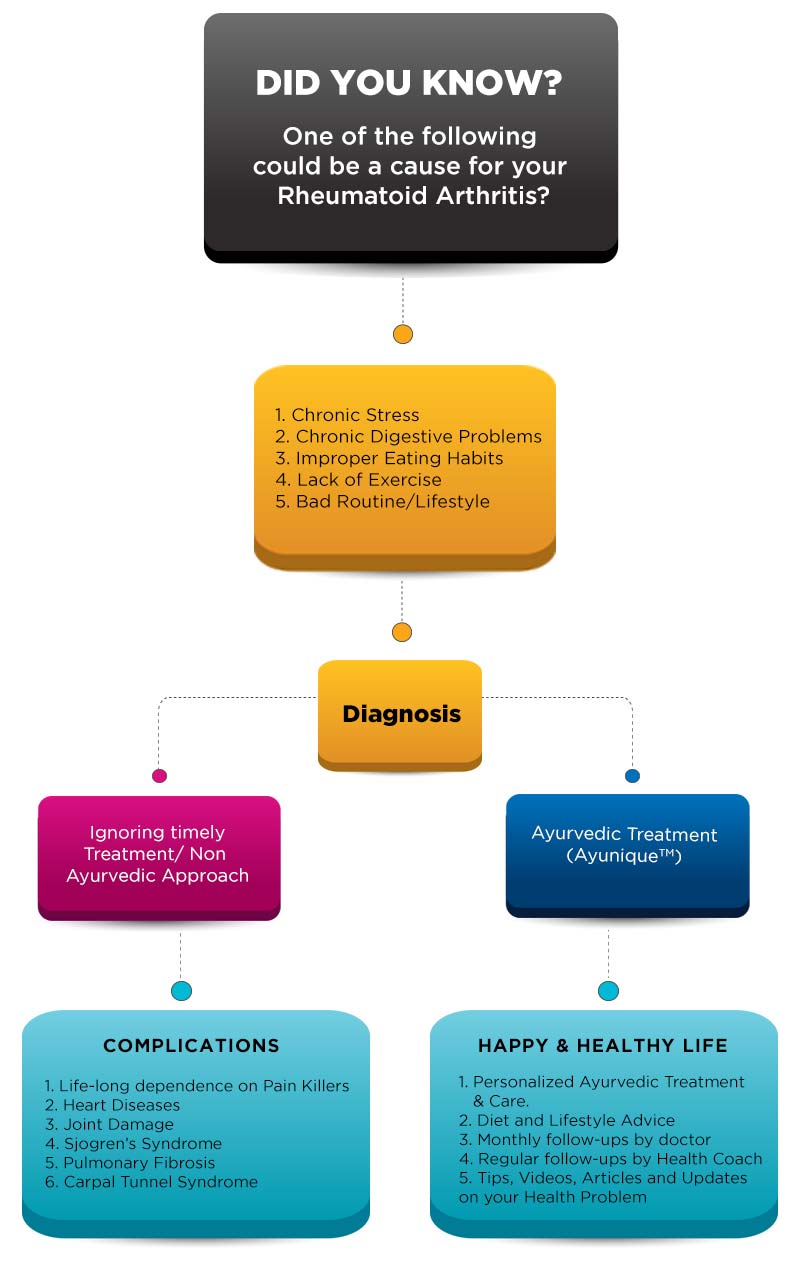
 Published on
18 Jul, 2026
Published on
18 Jul, 2026 Updated on 18 Jul, 2026
 5096
5096We have all experienced waking up feeling like a rusty robot. But there is a huge difference between having a stiff neck after sleeping in an awkward position and struggling to unbind your fingers or step out of bed every single morning for months.
Many people mistakenly believe that any morning joint discomfort means their body is permanently "ageing." On the flip side, some think that constantly feeling stiff, inflamed, and tired is just a normal part of their stressful lifestyle. These mix-ups can keep you from getting the right help. Occasional lifestyle stiffness, natural ageing, and arthritis have entirely different causes, warning signs, and recovery paths. Let us break down the exact differences simply and clearly so you can understand what your body is actually trying to tell you.
Reasons for Morning Stiffness
Some of the common reasons behind sudden morning stiffness can be the following:
- You slept in an awkward posture that strained your neck or back.
- You did a very heavy, unusual workout the day before.
- You slept on an old, unsupportive mattress or a very thick pillow.
- You spent the entire previous day sitting in one position in front of a screen.
- You slept directly under a cold AC vent, which caused your muscles to spasm and tighten.
Because the cause is just a temporary physical stressor, your joints and muscles usually go right back to normal once you stretch, move around, or take a warm shower.
Ageing vs Arthritis vs Lifestyle: the Difference
These things all have to do with muscle discomfort, but they work in completely different ways.
How they start: Lifestyle stiffness starts all of a sudden after something specific happens, like lifting heavy boxes. Ageing stiffness comes on slowly over many years. Arthritis can start slowly. It often has sudden and very painful flare-ups with swelling.
How long they last in the morning: Lifestyle stiffness goes away after a few minutes of moving around. Ageing stiffness usually goes away in 10 to 15 minutes. Arthritis stiffness is something you deal with every day. It often lasts for 45 minutes to an hour or even longer after you wake up.
The cause: Lifestyle stiffness is due to factors outside your body, such as a bad mattress or poor posture. Ageing stiffness is caused by the wear and tear of the cartilage in your joints over many decades. Arthritis is caused by problems like your body's immune system attacking itself or your joints becoming severely damaged.
The signals: Lifestyle stiffness makes your muscles feel tight and achy. Ageing stiffness makes you feel creaky all over. On the other hand, arthritis gives you joints that are swollen, warm, and tender, and it makes you feel very tired all the time.
The fix: To deal with Lifestyle stiffness, you just need to take a shower, stretch, and maybe get a better pillow. For ageing, you need to move around every day to keep your joints working well. Arthritis requires a doctor to figure out what is wrong. Then you need special treatments, and you have to completely change what you eat and how you live to deal with the inflammation of Arthritis.
Ageing vs Arthritis vs Lifestyle: the Difference
| Feature | Lifestyle Stiffness | Age-Related Stiffness | Arthritis |
| How it starts | Suddenly after activity, overuse, or poor posture | Gradually develops over many years | Gradually develops or appears with painful flare-ups |
| Morning duration | Usually lasts only a few minutes | Typically improves within 10–15 minutes | Often lasts 45–60 minutes or longer |
| Swelling | Rare | Usually absent | Common, especially during flare-ups |
| Pain level | Mild | Mild to moderate | Moderate to severe |
| Affected joints | Neck, back, shoulders, and muscles | Weight-bearing joints such as knees and hips | Any joint, commonly hands, wrists, feet, and knees |
| Improves with movement | Yes, usually improves quickly | Yes, movement often helps | May improve slowly, but stiffness can persist |
| Medical evaluation needed | Usually not necessary | Sometimes helpful if symptoms worsen | Often recommended for proper diagnosis and treatment |
Common Causes of Lifestyle-Related Morning Stiffness
When random stiffness strikes, it is usually because of a direct, daily trigger.
- Poor Ergonomics: Staring down at your phone or hunching over a laptop for 8 hours puts massive tension on your spine, which tightens up overnight.
- Dehydration: The cartilage in your joints is mostly water. Not drinking enough water throughout the day leaves your joints unlubricated and stiff by morning.
- Lack of Movement: Joints are like hinges; if you do not use them, they rust. A completely sedentary lifestyle leads your joints to lack the fluid movement they need to stay flexible.
- Overtraining: Pushing your limits causes micro-tears in your muscles, leading to stiffness the next morning as your body tries to heal.
Doctor’s Note
When you wake up in the morning, it is okay to feel a little stiff If your joints still feel stiff after you have been up for over an hour, that is not okay. You should also pay attention to your joints if they are swollen or if they are red, warm, or if you feel really tired for weeks. Do not think that this is just because you are getting older. You should go see a doctor soon. Getting checked by a doctor can help find problems with inflammation that you do not know about. It can help keep your joints from getting damaged for good.
Why Do Joints and Muscles Become Weak With Age?
It is frustrating when our bodies do not bounce back the way they used to, but joint and muscle decline is not just about getting older. It is often the buildup of daily habits that we don't think twice about. Here is what is really going on behind the scenes:
- What We Eat Matters: Diets heavy in junk food, sugary treats, processed meats, and refined oils slowly trigger chronic inflammation. Over time, this low-grade swelling silently wears down your joints.
- The Toll of High Stress: When you are constantly overwhelmed, your body pumps out a stress hormone called cortisol. This keeps your muscles tense and locked up all day, which pulls on your joints and drives up inflammation.
- Missing Out on Sleep: Deep sleep is your body's built-in maintenance time. If you aren't getting 7 to 8 hours a night, your muscles and joints simply do not get the chance to repair their daily wear and tear.
- Carrying Extra Weight: Every extra pound acts like a heavy backpack on your lower back, hips, and knees. Over the years, this constant physical pressure grinds down your joint cartilage much faster.
Signs That Suggest You May Have Arthritis Instead of Just Ageing
If you have arthritis, your body will send you specific, daily warning signs. You should pay attention if you experience:
- Stiffness in the morning that lasts for more than 45 to 60 minutes, even after you start moving around.
- Joints that look visibly swollen, red, or feel unusually warm when you touch them.
- Symmetrical pain for example, if the knuckles on your left hand hurt, the knuckles on your right hand hurt too.
- Feeling completely exhausted and feverish alongside your joint pain.
- A locking or grating sensation in your joints that physically stops you from moving them freely.
Can a Bad Lifestyle Lead to Arthritis?
Sometimes,
While some forms of arthritis (like Rheumatoid Arthritis) are autoimmune, Osteoarthritis is highly influenced by how you live. Sitting for years with bad posture, carrying excess weight, and eating inflammatory foods can accelerate the breakdown of your cartilage. Most people can prevent early joint aging by staying active. But for some, ignoring these lifestyle warnings leads to permanent joint sensitivity and chronic pain. Moving your body and eating a balanced diet is the best way to protect your joints for the future.
How Ayurveda Understands Morning Stiffness and Joint Health
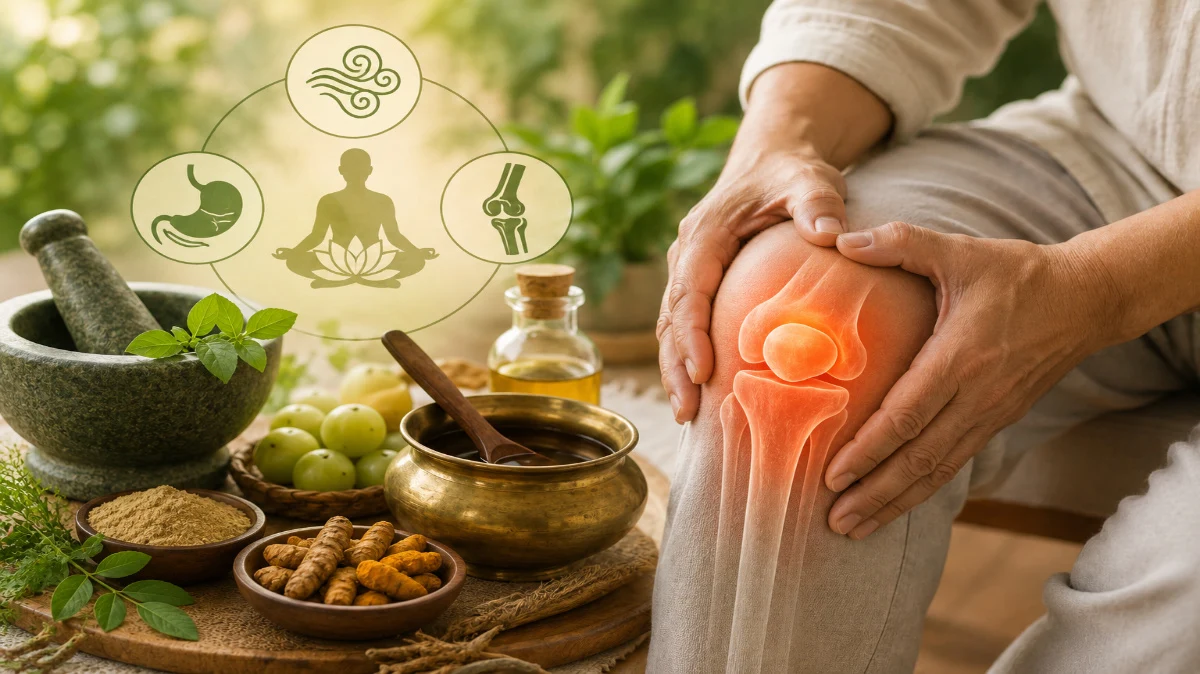
Ayurveda does not look at pain and morning stiffness as a single problem that is isolated from the rest of the body. Instead, it works on the root cause of the problem. Focuses on the overall well-being of the individual who is experiencing joint pain and morning stiffness.
The Vata Imbalance is one thing that Ayurveda looks at when it comes to pain and morning stiffness. In Ayurveda, the movement in the body is governed by the Vata dosha, which is made up of air and space elements. As people get older or if they have a lifestyle that's dry and cold, the Vata dosha increases in the body. This increase in Vata dosha can dry out the lubrication in the joints, which can cause stiffness and cracking in the joints.
Another thing that Ayurveda looks at is Toxic Waste, which is also called Ama. When a person's digestion is weak, their food does not get processed properly. This can turn into an undigested toxin that is called Ama. Ayurveda teaches that this sticky waste or Ama gets carried by the Vata dosha and lodges in the joints. This can cause swelling, stiffness, and severe pain in the joints, which's a condition that is known as Amavata. Amavata is similar to Rheumatoid Arthritis.
Ayurveda also looks at Joint Degeneration, which's a condition that occurs when the Vata dosha completely dries out the joint spaces. This can lead to a condition that is called Sandhigata Vata, which's similar to Osteoarthritis. To fix this, according to Ayurveda, management may focus on supporting digestion, maintaining balanced doshas, and promoting joint comfort through individualized lifestyle and dietary recommendations.
Simple Ways to Support Joint Health and Recover Faster
You do not need pills to help with the stiffness you feel every day. What really helps is doing things every day.
Daily habits are the way to make yourself feel better.
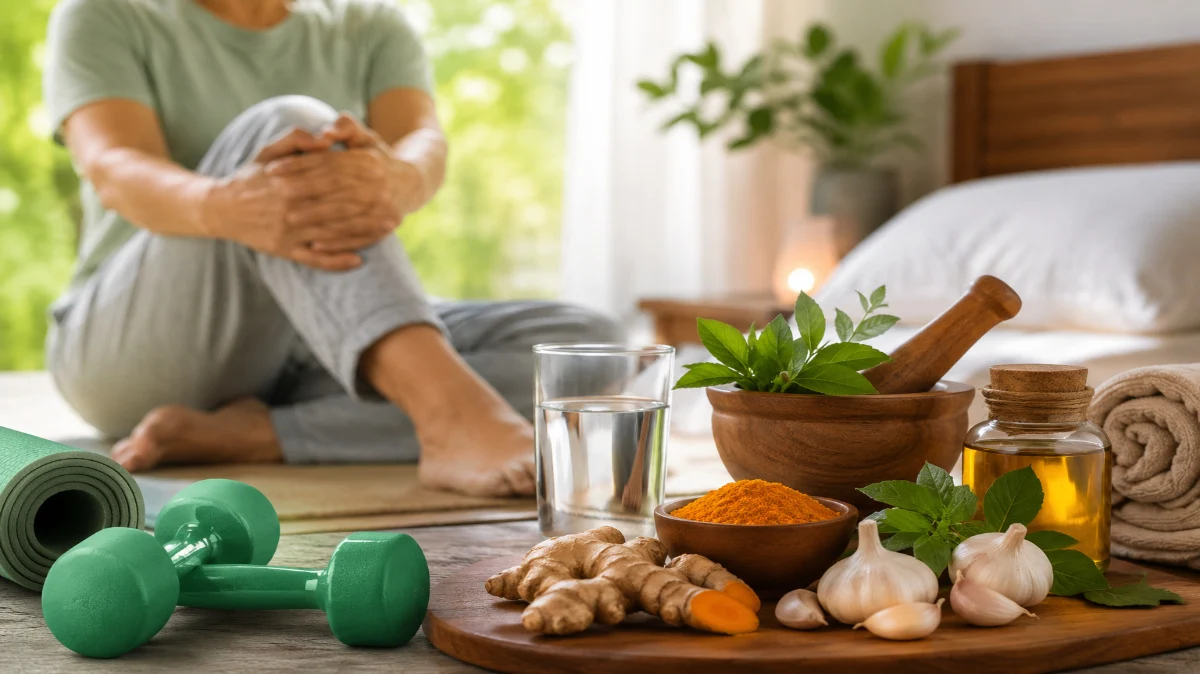
To help your joints feel good, you should drink water all day. This will keep the cartilage in your joints moist.
When you wake up do some stretches while you are still in bed. You can pull your knees up to your chest. Roll your ankles around.
You can also add some spices to your food that will help with the stiffness, like turmeric, ginger, and garlic.
Taking a shower as soon as you wake up is a good idea. The warm water will get your blood flowing. Help your muscles relax.
Before you go to bed, you can rub your joints with some oil, like sesame oil or mustard oil. This will help your blood flow.
It is really important to get plenty of rest. You should try to sleep for 7 or 8 hours every night on a mattress that's firm and supportive.
When Should You See a Doctor?
Most everyday morning stiffness clears up with good home care and movement, but you should never ignore danger signs.
Please see a doctor immediately if you have:
- Morning stiffness that consistently lasts for more than an hour.
- Joints that are visibly swollen, bright red, or hot to the touch.
- A high fever alongside your joint pain.
- Sudden, unexplained weight loss or extreme fatigue.
- Joint pain that is sharp, unbearable, or wakes you up in the middle of the night.
- A joint that suddenly looks deformed or is completely locked in place.
Conclusion
Experiencing a stiff neck from a bad pillow and dealing with the daily, painful grind of arthritis both involve your joints, but they are completely different experiences. Lifestyle-related stiffness is a fast, temporary reaction, like an emergency alarm going off to tell you to stretch or change your mattress. True arthritis or accelerated joint ageing, on the other hand, is a slow, daily struggle caused by inflammation, cartilage loss, and sometimes long-term bad habits.
Knowing the difference helps you take the right action. If you have sudden morning stiffness, you just need a warm shower, hydration, and gentle stretching. But if you have chronic joint pain and swelling, you need to slowly rebuild your physical strength with an anti-inflammatory diet, proper medical guidance, and regular, joint-friendly movement. By simply listening to what your joints are trying to tell you every morning, you can guide yourself back to feeling flexible, energetic, and completely healthy.
References
Rheumatoid arthritis morning stiffness is associated with synovial fibrin and neutrophils - PMC