

 Published on
29 Sep, 2026
Published on
29 Sep, 2026 Updated on 29 Sep, 2026
 5053
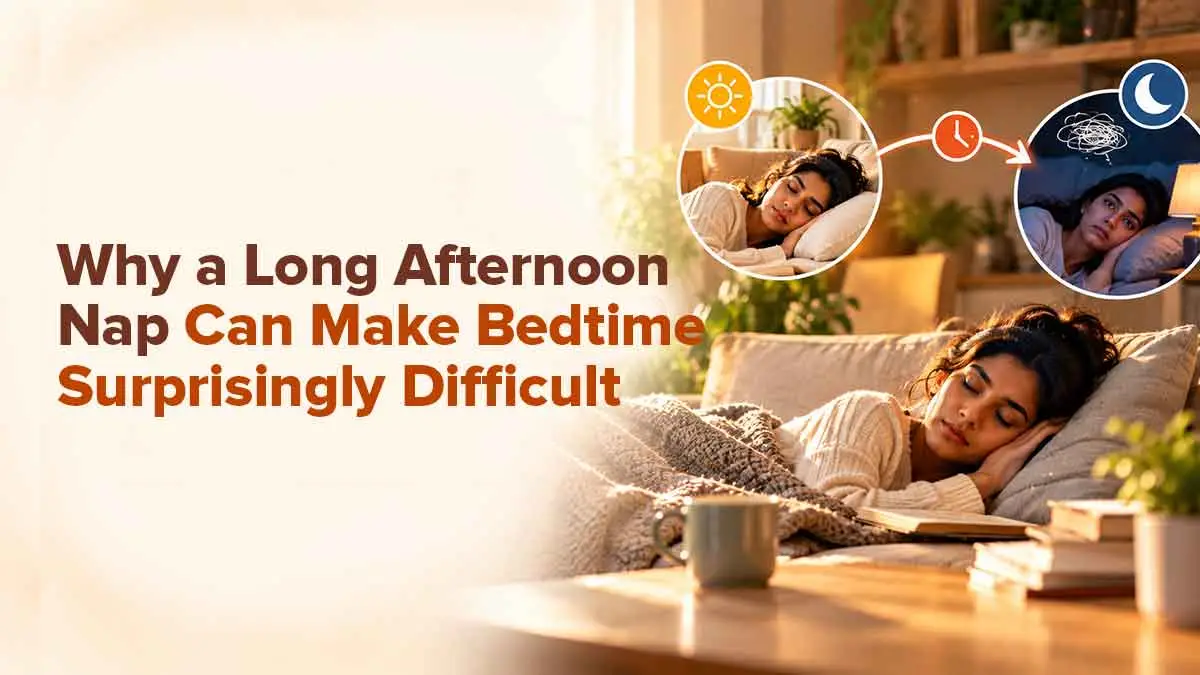
5053This might have happened to you too. When you have your afternoon meal, your room seems quiet, your eyes feel heavy, and you do not even realise you have fallen asleep. And you thought it would only be for 20 minutes, but you fell asleep for 2 hours straight, and you woke up after 2 hours, feeling active or sometimes feeling heavy. But later in the night, you are lying on your bed, staring at the ceiling, but no sleep in your eyes. Right? Have you ever wondered why this happens?
The reason could be that long afternoon nap.
Taking an occasional afternoon nap is not a problem, but a long nap can reduce your sleep drive and impact your alertness during nighttime sleep.
Why An Afternoon Nap Is Required
With our busy schedules, we are occupied with work from the very morning; we are often so busy that we do not even find time to eat. Then, when we do have a meal during the day, that meal makes us feel ready to take a nap.
An afternoon nap is not strictly necessary for everyone, but it helps in aligning our body’s clock to foster our mood, restore our energy, and improve our performance.
A short nap gives us a mental reset, which improves our learning capacity and creative thinking, and it also helps with stress reduction.
There is nothing wrong with taking a nap, but make sure that it is 15-20 minutes and try to take your nap in the early afternoon so it does not ruin your nighttime sleep.
What Happened After That Long Afternoon Nap?
Our body has its own sleep-wake rhythm, which tells us when to fall asleep and when we're ready to wake up.
Throughout the day, our body keeps building an energy that is termed sleep pressure.
And it is because of this sleep pressure that we feel sleepy; that is why we fall asleep when we go to bed at night, but when we fall asleep in the afternoon, half of that sleep pressure is reduced; that is the reason why we struggle to fall asleep at night.
After that long afternoon nap, our mind feels heavy and not alert enough at that moment; it also disrupts the sleep cycle at night and creates fatigue for the rest of the day.
Does Timing Matter?
Sometimes, when you sleep during the day, you can fall asleep at night, but other times you can't. Do you know why? Does it happen due to timing?
The answer is yes; timing matters. For example, you take a nap around 1 pm for 30 minutes, and you wake up; it does not disrupt your sleep at night because it gives your body time to build sleep pressure again for the night. On the other hand, if you take a long, two-hour nap, your body will feel active and ready for work when you wake up; however, it will disrupt your nighttime sleep because you have already reduced your sleep pressure during the day.
Taking a short nap earlier in the day is not harmful, but a long afternoon nap can disrupt your nighttime sleep.
What Should You Do To Sleep At Night After Long Afternoon Naps?
Feeling sleepy during the day is normal; sleeping occasionally during the day is not a problem, but if it becomes a habit, it can be harmful to your sleep cycle.
Taking a small nap in the early afternoon is completely fine, but taking a long nap in the afternoon may leave you staring at the ceiling at night.
Now the question is: How to sleep at night after a long afternoon nap?
Nighttime sleep is fuel for the next day, so sleeping at night is important, but because of that afternoon nap, your sleep drive is disturbed. To build that sleep pleasure again, you need to reset your routine and calm your body and mind:
If you are unable to sleep after 20 minutes, get out of your bed.
Avoid looking at screens; this will increase alertness and anxiety.
Keep your room dark and cool; this will help signal rest to your body.
Try slow breathing, the 4-7-8 breathing method. In this method, you need to inhale for 4 seconds, hold your breath for 7 seconds, and exhale for 8 seconds. This will lower your heart rate.
Try to read books until you feel sleepy.
These activity will lower your heart rate and help you to build that sleep pressure again.
What Does Ayurveda Say?
Ayurveda pays close attention to the Daily routine (dincharya), digestion, and rest.
Ayurveda says that daytime sleep is something that is caused by seasonal changes and other aspects. A regular long daytime nap can cause heaviness and sluggishness at night and can affect sleep drive at the same time.
In Ayurveda, daytime sleep increases Kapha and Pitta doshas, which affect the sleep drive by lowering the nature of sleep pressure at night. Sleeping during the day immediately increases Kapha and can provoke Pitta. It can also affect Vata.
Sleeping during the daytime can increase heavy and cooling qualities in the body, which obstructs the body and mind and prevents the proper functioning of the nervous system and the energy flow. A long afternoon nap after a heavy meal will definitely impact your nighttime sleep, but it has a consequential effect on your digestion as well; it will produce toxins (ama) in your body, which will cause lethargy and heaviness.
Conclusion
A long afternoon nap might seem like a solution to relieve the fatigue accumulated during the day, but it will leave you staring at the ceiling at night and make your bedtime surprisingly difficult. Taking a short nap in the early afternoon can actually help you recharge your energy but the long afternoon nap will definitely make you diificult to sleep at night. This happens because our body constantly builds up sleep pressure, and sleeping for a long time during the day reduces that pressure, making it difficult for us to fall asleep at night. Ayurveda claims that long daytime sleep can increase Kapha and Pitta dosha and also affect Vata dosha, which will have an impact on our digestion as well. To avoid these issues, we should take short naps during the day and avoid screens at night before going to bed; instead, we should prepare ourselves for sleep by doing breathing exercises or reading books.
References
Long daytime napping: A silent danger for hypertensive individuals - PMC
Effects of Afternoon Nap Deprivation on Adult Habitual Nappers' Inhibition Functions - PMC