 Published on
18 Jul, 2026
Published on
18 Jul, 2026 Updated on 18 Jul, 2026
 5091
5091Most people know the usual signs of dengue: a sudden, brutal fever, severe body ache, and a drop in blood platelets. But this illness is often more complicated than just a temporary viral infection.
Sometimes, the virus quietly travels beyond your bloodstream and directly targets your heart. While heart issues aren't the most common side effect of dengue, they are serious and need fast medical attention. Spotting these hidden red flags early makes a huge difference in how quickly you bounce back.
Can Dengue Really Affect the Heart?
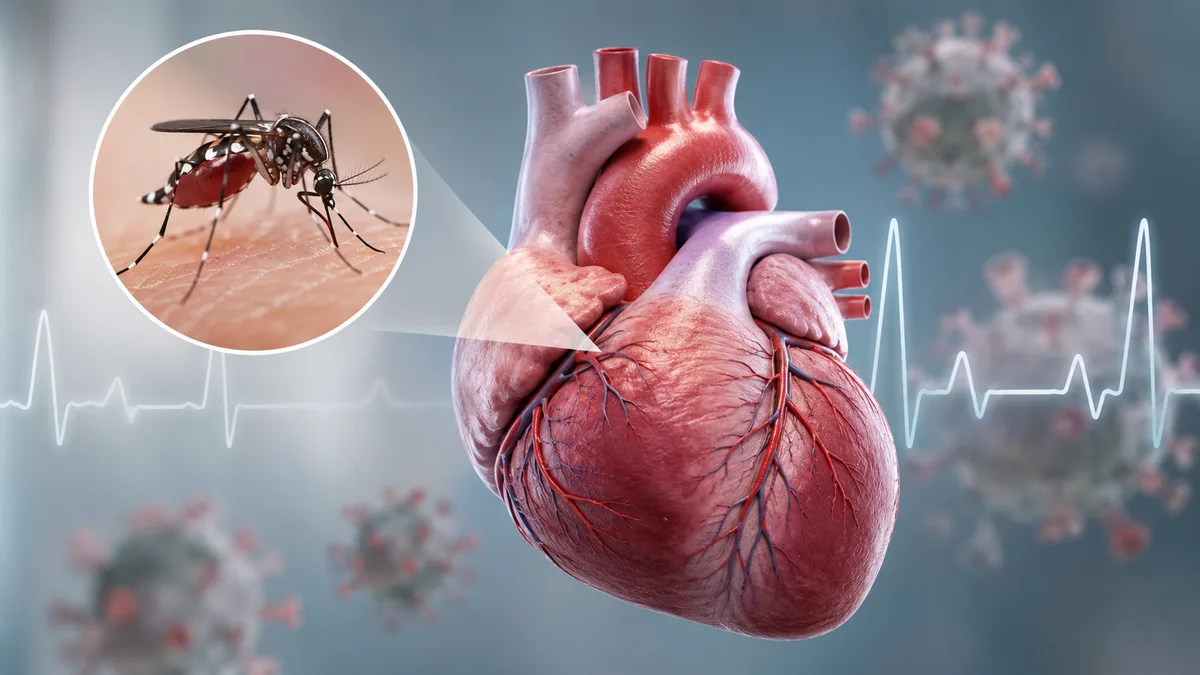
Yes! It can affect our heart. Even though it does not happen to everyone, the dengue virus can travel straight to your heart and can affect it severely.
During a moderate or severe dengue infection, the virus causes a lot of swelling and irritation inside the body. Sometimes, this heavy swelling goes beyond your blood and reaches the actual muscles of your heart. In a way, your body’s own immune system fights so hard to kill the virus that it accidentally harms your heart tissue in the process.
Why Many People Overlook Heart Complications
When you are recovering from dengue, feeling dizzy, exhausted, and out of breath is completely normal. Because you expect to feel terrible, you might just brush off these symptoms. You might tell yourself, "I'm just tired because of the fever."
This is exactly why heart problems go unnoticed. People assume their chest feels heavy just because they are coughing, or they think they are breathless just because they are weak. But if you have a strange discomfort in your chest, a heart that beats too fast for no reason, or breathing issues that just keep getting worse, it could be a sign that your heart is begging for help. Ignoring this can dangerously delay your treatment.

How Does Dengue Impact Heart Health?
Your heart is basically a very hard-working pump. It relies on healthy muscle and perfect electrical signals to pump blood to your entire body. Dengue can mess with both of these things.
Swelling of the Heart Muscle: One of the main things dengue does is cause the heart muscle to swell up. Doctors call this "myocarditis," but it simply means your heart is irritated and inflamed. Think of it like trying to run with a badly swollen knee. You can't do it properly. When your heart is swollen, it cannot squeeze and pump blood effectively. This makes you feel unusually exhausted and short of breath, even if you are just sitting on the sofa.
Changes in Your Heart's Rhythm: Your heart beats in a perfect rhythm because of a natural electrical wiring system inside it. Dengue can temporarily mess with this wiring. When the wiring acts up, your heart might:
- Beat way too slowly.
- Beat much faster than normal.
- Skip a beat or flutter strangely in your chest.
- Make you feel dizzy because the blood isn't flowing smoothly.
Most of the time, this strange wiring issue fixes itself once the fever goes away, but it is always best to let a doctor listen to it.
Reduced Pumping Power: Due to swelling in the heart and in the veins, our heart’s pumping power gets weak, and as a result, it cannot push blood strongly, and the body gets less oxygen. This leads to heavy breathlessness, an extreme level of fatigue, and a sudden drop in your blood pressure.
Who Is More Likely to Develop Heart Problems During Dengue?
Anyone can get heart complications from dengue, but some people are at a much higher risk. You need to be extra watchful if you or your loved one falls into these groups:
- People who have a very severe case of dengue (dengue shock).
- Older adults whose bodies naturally take longer to heal.
- People who already have heart disease, like blocked arteries or a history of heart attacks.
- People living with uncontrolled diabetes or high blood pressure.
- Patients whose other organs, like the liver or kidneys, are also struggling with the virus.
If you belong to any of these groups, your doctor will likely monitor you much more closely during your hospital stay.
Doctor’s Note
Never dismiss chest pain, severe breathlessness, or a racing heartbeat during Dengue as simple "weakness" or dehydration. The virus can occasionally cause myocarditis (inflammation of the heart muscle) or dangerous arrhythmias. If you experience these symptoms, along with fainting, bluish lips, cold and clammy skin, or persistently low blood pressure despite adequate hydration, seek emergency medical care immediately, as these are critical signs of cardiac distress that require prompt clinical intervention.

Early Warning Signs That Could Point to Heart Involvement
You should never just sit and wait if you feel certain things. Watch out for these red flags:
- You feel heavy, discomfort, and severe pain in your heart that doesn’t go away.
- You struggle to breathe even when you are sleeping straight on your bed.
- You feel your heart is racing fast, fluttering, and also skipping beats.
- You faint or feel like the room is heavily spinning.
- Your blood pressure stays very low, even after you drink lots of water or get IV fluids.
- Your hands and feet start feeling cold and sweaty at the same time.
Having these signs does not mean your heart is permanently damaged, but it means you need a doctor to check you right away.
When Symptoms Are Not Just Due to Dehydration
When you have dengue, your blood pressure often drops because you are simply dehydrated. You sweat, you might throw up, and you lose fluids.
Normally, if a doctor gives you water or an IV drip, your blood pressure bounces back to normal. But what if they give you plenty of fluids and your blood pressure is still dangerously low? What if you are completely hydrated but still gasping for air?
That is the exact moment doctors realize the problem isn't just a lack of water, it is a lack of pumping power from the heart. Knowing the difference between "I just need water" and "my heart is struggling" changes the entire way doctors treat you.
Can Heart Damage From Dengue Be Reversed?
Yes, absolutely!
This is the most comforting news. For the vast majority of people, this heart swelling is totally temporary. When the dengue virus leaves your body, and your fever comes down, your heart muscles start healing and return to their natural state.
How fast you heal depends on how early you caught the symptoms and how healthy you were before the mosquito bit you. Even in very serious cases, with the right hospital care, the heart can bounce back completely.

Simple Steps to Protect Your Heart While Recovering From Dengue
Follow these simple steps to protect your heart while recovering:
- Drink liquids wisely: Keep yourself hydrated. Keep drinking water, soup, and coconut water, but avoid excessive intake at one go.
- Do not rush to work or the gym: This is important. The heart is fatigued and needs a break for a couple of weeks. Do not do any heavy lifting or intense exercise.
- Eat healthy food: Try to eat healthy home-cooked food.
- Take cues from the body: Walking even a short distance makes you feel dizzy or causes chest pain, then stop and sit down.
When Should You Seek Emergency Medical Care?
Go see a doctor if you experience:
- Severe chest pain.
- Abrupt, intense difficulty breathing.
- Fainting, but having trouble regaining consciousness.
- A blue color on the lips and fingertips (signifies low levels of oxygen).
- Severe confusion or incoherent speech.
- Sweating and cold skin.
Conclusion
Normally, we perceive the dengue virus only as something that ruins our blood platelets and infects our body with a severe fever. Yet, there is much more to it than that. Although heart problems caused by dengue fever may not be among the most prevalent cases, they may be quite dangerous if overlooked.
If you experience weird heartache, breathing problems, or an unrelenting, accelerated pulse, try not to brush off your condition as mere "weakness" - inform the doctor right away. The most important thing about dengue fever is to pay attention to your body and listen to your heart.
References
Dengue Fever - StatPearls - NCBI Bookshelf
Dengue guidelines, for diagnosis, treatment, prevention and control
About Heart Attack Symptoms, Risk, and Recovery | Heart Disease | CDC