 Published on
30 Jun, 2026
Published on
30 Jun, 2026 Updated on 30 Jun, 2026
 5099
5099Most of us assume that as long as we aren't incredibly thirsty, we are perfectly hydrated. In reality, thirst is a late-stage alarm bell. Long before your mouth feels like a desert, your body starts dropping subtle hints: a lingering afternoon headache, chapped lips, unexpected fatigue or a sudden inability to focus. Because life is busy, it is incredibly easy to brush these off as just another symptom of stress or lack of sleep.
Water makes up nearly every system in your body. It carries nutrients, maintains your body’s temperature, helps in lubricating joints and aids in eliminating waste. Just a little change in your body’s fluid level will lead to the malfunctioning of these bodily processes.
Understanding Dehydration?
Dehydration happens when your body loses more fluids than it takes in. We are constantly losing water through breathing, sweating and basic bodily functions. Usually, we replace this seamlessly through the beverages we drink and the water-rich foods we eat. Trouble brews when the outgoing fluids outpace the incoming ones.
You don't have to run a marathon in summer heat to get dehydrated. A busy workday where you simply forget to drink, a mild fever or drinking too many caffeinated beverages can slowly drain your fluid reserves. Dehydration develops gradually and catching it early makes it easy to fix.
How Ayurveda Views Hydration
Water (Jala Mahabhuta) is a basic element of life according to Ayurveda. It hydrates the body tissues, oils up the joints and keeps everything soft within the body.
But Ayurveda stresses that the hydration process depends on the state of Agni (digestive fire in your body). Your body will not benefit from an excess intake of water since it cannot assimilate effectively due to weak digestion.
Your unique constitution also dictates how your body handles fluids:
- Vata (Air/Space): By nature, you tend to be dry. If your fluids deplete, it is easy for you to suffer from dry skin, chapped lips and constipation.
- Pitta (Fire/Water): You generate a lot of heat internally. Thus, it is easy for you to lose fluids very fast through sweating and to feel irritable without proper hydration.
- Kapha (Earth/Water): By nature, you retain fluid well. However, improper digestion (Agni) may disrupt fluid metabolism.
Instead of calculating glasses of water you drink, it is better to optimize your digestion, eat seasonal foods and help your body function naturally.
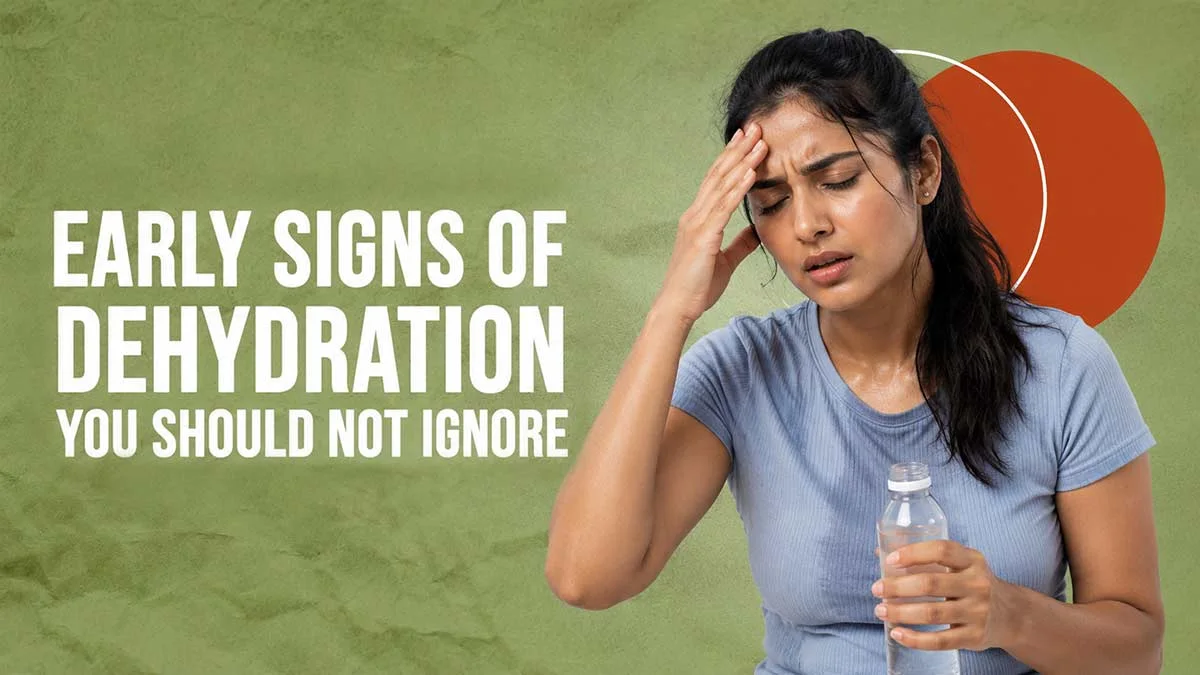
Early Signs of Dehydration You Should Never Ignore
Don't wait for extreme thirst. Watch out for these subtle early warning signs:
- Persistent Thirst: This is your body's check-engine light. If you feel thirsty, your fluid levels have already dropped.
- Dry Mouth and Chapped Lips: Saliva production drops when you are low on fluids. A sticky mouth or cracking lips are immediate red flags.
- Dark-Colored Urine: This is one of the most reliable indicators. Pale yellow means you are on track, dark yellow or amber means your kidneys are aggressively conserving water.
- Fatigue and Low Energy: Mild dehydration, like just a bit too little fluid, shrinks your blood volume a touch, so your heart has to work extra to move oxygen. Then you notice that sort of sluggish, drained, icky feeling, kind of fast.
- Headaches: Your brain is pretty sensitive to fluid changes. If you get a headache after being out in the sun or skipping your water breaks, that can be a well-known clue, not always, but often.
- Dizziness or Lightheadedness: If the room tilts or spins slightly when you stand up quickly, it may be your circulating fluid volume slipping and your blood pressure follows it down.
- Dry Skin: Skin stays springy because it pulls on moisture from the inside. So if you suddenly see roughness or your skin doesn’t bounce back the same, water might be missing.
- Constipation: When the body feels thirsty, the intestines try to hold onto water, so stool can become harder to move. That’s why bathroom time gets difficult or less frequent.
- Muscle Cramps: Sweating drains both water and key electrolytes. With that combo, muscles can start acting up, and leg cramps are a common example.
- Brain Fog and Irritability: The brain runs better when hydration is present. Without enough water, you can get stuck with poor concentration, moodiness, and a kind of mental exhaustion that won’t quit.
Who Is Most at Risk?
Although any individual may suffer from dehydration, some people should take more precautions:
- Children: They lose their bodily fluids quickly when sick and usually neglect drinking while playing around.
- The Elderly: The sense of thirst diminishes in old age, resulting in chronic dehydration.
- Sportsmen: Physical activities are demanding and require immediate replenishment of fluids and electrolytes.
- Expectant and Nursing Mothers: Their fluid requirements increase dramatically to accommodate both themselves and their babies.
- Anybody Who Is Not Feeling Well: Fever, vomiting and diarrhea drain the body's fluid levels within just a few hours.
Ayurvedic Tips to Maintain Healthy Hydration
While drinking enough fluids is highly important, ancient wellness traditions teach us that how and when you hydrate matters just as much. Here are five simple, everyday habits to help your body absorb water better and keep your energy balanced:
- Sip, don’t chug: If you drink a huge amount of water in one go, it will overwhelm your stomach and result in slowing down your digestion. So take small, steady sips through the day, not all at once, so your body has time to process it.
- Listen to your body: You don’t really need to force a rigid, pretend daily target. Drink when you’re genuinely thirsty and when it’s hot out or you’re constantly on the move, your intake will naturally rise.
- Eat foods that hydrate: You don’t have to pull all your fluids from a water glass. Things that are juicy and cool, like cucumbers, watermelon, coconut water, and oranges, can be a really great way to stay hydrated while you eat.
- Keep your digestion solid: Try to eat meals around the same times, and don’t overdo portions. When your stomach is doing its job well, it can absorb the water you take in and send it where it needs to go.
- Adapt as the weather shifts: When the heat is high, your body loses its natural moisture faster because of sweat. Try not to stay under the blazing afternoon sun and lean into cooling, refreshing foods so your internal fluids don’t just evaporate.
When Dehydration Becomes a Medical Emergency
If any of the following symptoms show up in a way that feels severe or strange, seek urgent medical care:
- Extreme confusion, delirium or a lot of drowsiness
- A fast or erratic heartbeat
- You cannot keep even small sips down or you keep everything from staying in you
- Fainting or dizzy episodes that just won't settle
- No urination for many hours
- Eyes that seem to bulge out, along with extreme weakness
Simple Daily Habits for Lasting Hydration
The best way to treat dehydration is to never let it happen in the first place. Build these friction-free habits into your routine:
- Drink a glass of warm water first thing in the morning to wake up your digestion.
- Keep a reusable water bottle in your line of sight at your desk.
- Increase your intake automatically on hot days or before working out.
- Glance at your urine color when you use the restroom to check your status.
The Bottom Line
Your body is always talking to you through quiet warning signs like dry lips, a stubborn afternoon headache, or a sudden drop in energy. Noticing these small clues lets you fix the balance right away, long before it turns into a major health issue.
Hydration is not about consuming large amounts of liquid; it is more about understanding the needs of your entire body at the very moment. In combination with healthy habits and simple knowledge of Ayurveda (slow drinking of water, consumption of juicy fruits and vegetables, as well as maintenance of digestion), this helps your body stay refreshed and energized all day long.
Take a few seconds to think about yourself at this moment. Does your mouth feel dry? Have you lost your concentration? Then do not wait until you become completely exhausted; have a glass of water, drink it carefully and provide your body with proper care.
References
Fluid management in severely malnourished children under 5 years of age without shock