

 Published on
08 Jul, 2026
Published on
08 Jul, 2026 Updated on 10 Aug, 2026
 5111
5111You wake up, and before you even brush your teeth or wash your face, you crave just one thing: your morning "bed tea." From young kids to busy adults and the elderly, almost everyone shares this same bad habit.
But a few minutes after finishing that cup, a strange discomfort often begins. You might feel a sharp burn in your chest, get sour burps, or feel a heavy, bloated uneasiness in your stomach. This brings up a big question: Is the tea itself bad for you, or is drinking it on a completely empty stomach the real troublemaker?

Is Drinking Tea on an Empty Stomach Really That Bad?
It depends on your digestion. While some people can handle it just fine, for anyone with a sensitive stomach or frequent heartburn, it is like throwing gasoline on a tiny fire.
When you wake up, your stomach has been empty for seven to eight hours and its inner lining is highly sensitive. Because tea is loaded with strong stimulants like caffeine, drinking it empty stomach leaves no cushion to protect your stomach. The tea hits the lining directly, causing instant irritation. Ayurveda reminds us that everyone's body is different, so it is crucial to pay attention to your own stomach's signals.
Why Your Morning Tea Triggers Acidity
To fix the problem, we first need to understand what is happening inside the body. Here is why that empty-stomach tea causes so much trouble:
- It Produces Excess Acid: Whenever you take tea, your stomach thinks that food will be arriving and thus begins to produce digestive acids. Since there isn’t any food to neutralize the acid, the excess acid ends up irritating your delicate stomach lining, resulting in the well-known heartburn sensation.
- The Effects of Caffeine: Caffeine not only energizes your brain but also irritates your stomach, producing more acid. The sudden rush of caffeine might lead to nausea and jitteriness.
- The Effect of Tannins: Tannins are naturally occurring chemicals in tea responsible for its dark coloration. Even though tannins are completely harmless, they are extremely harsh on an empty stomach.

Who is Most at Risk?
Some people are much more likely to get sick from morning tea than others. You are highly likely to suffer from tea-induced acidity if you:
- Always skip breakfast and run straight to work.
- Already suffer from frequent heartburn or gas.
- Eat your meals at totally random, irregular times.
- Live a highly stressful life.
- Drink multiple cups of very strong tea throughout the day.
- Eat a lot of heavily spiced or oily outside food.
- Have a habit of smoking along with your morning tea.
Doctor’s Note
Occasional morning acidity can be managed with routine changes, but chronic heartburn can actually damage your food pipe over time. If avoiding empty-stomach tea doesn't bring relief, or if you ever experience severe chest pain, trouble swallowing, frequent vomiting, or black stools, do not ignore it. These are red flags for conditions like ulcers or severe acid reflux that need a proper medical check-up.
Warning Signs That Your Body Hates Empty-Stomach Tea
Your body always talks to you before a small problem becomes a huge one. It gives you subtle warning signs. You need to pay attention if you experience:
- A hollow, burning feeling in your upper stomach right after drinking tea.
- Sour, acidic burps.
- A sudden feeling of bloating where your stomach feels tight.
- A bitter, metallic taste resting in the back of your throat.
- A mild, nagging headache that starts an hour after your tea.
- A complete loss of appetite for your actual breakfast.
If these things happen to you regularly, your body is begging you to change your morning routine.
"Kadak Chai" Problem
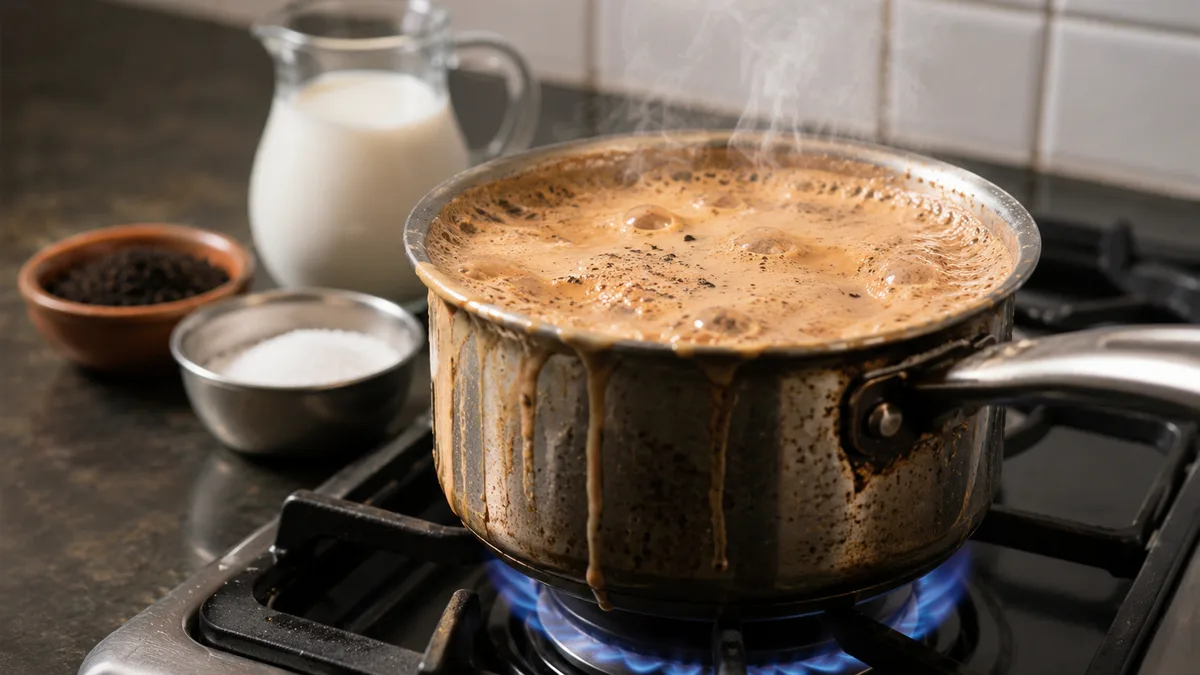
It is also important to look at how we make our tea. Many of us love our tea to be strong, dark, and boiled for a long time.
Boiling tea leaves endlessly in water, then adding milk and massive amounts of white sugar, and boiling it all over again, creates a highly acidic drink. The longer you boil the tea leaves, the more bitter tannins and harsh compounds are released into the water. This super-strong, overly sweet, heavy milk tea is the absolute hardest thing for an empty stomach to process
How does Ayurveda explains this?
Ayurveda compares your digestion to a fire burning in your belly. When this fire burns steadily, you digest food perfectly. But when you disturb it, problems start.
Acidity happens when there is an imbalance in Pitta, your body's natural heat energy. When this gets out of control, your stomach fire becomes too sharp and wild. This excess internal heat is exactly what causes the chest burn and sour taste.
Since tea is naturally a "heating" drink, having it on an empty stomach immediately spikes this internal heat. If your body already struggles with excess heat, this morning habit is a recipe for instant acidity.
Gentle Herbal Alternatives
If normal tea hurts your stomach, try these gentle, caffeine-free Ayurvedic drinks that heal instead of burn:
- Fennel (Saunf) Water: Boiling fennel seeds in water instantly cools the stomach and reduces internal heat.
- Coriander Water: Another excellent, natural option to calm and cool down your body.
- Chamomile Tea: A light drink that gently soothes an irritated stomach lining without causing acid spikes.

Simple Habits for a Happy Morning Stomach
To keep acidity far away, try making these small changes in the first hour of your morning:
- Drink Warm Water: Begin with a glass of plain lukewarm water in order to clean the digestive system of toxins accumulated during sleep.
- Move a Bit: Walk for a while or stretch your body in order to make it ready for the morning routine.
- Tea After Breakfast: Never forget to eat something to avoid damaging your stomach before drinking tea.
When Is It Time to See a Doctor?
While simple acidity can often be fixed by changing your morning habits, you should seek immediate medical help if you experience:
- Persistent Acidity: Pain that lasts for several weeks, even if you have managed to change your lifestyle habits.
- Sharp chest pain: Severe pain that is far more painful than ordinary heartburn pain.
- Difficulty in swallowing: Inability to swallow your food comfortably.
- Vomiting or passing black stools: These are clear indications of an underlying problem that requires professional treatment, not merely changes in diet.
The Bottom Line
Your morning cup of tea is not the enemy, but drinking it on a completely empty stomach is a very fast way to ruin your digestion. The caffeine, the tannins, and the natural heat of the tea overwhelm a sensitive, empty stomach, leading to burning pain, sour burps, and endless discomfort.
You do not have to give up your favorite morning comfort. Just remember to listen to your body. Wake up with warm water, eat a small, light snack to protect your stomach lining, and then sit down to enjoy your tea. A few tiny changes to your morning routine can keep your stomach cool, calm, and happy all day long.
References
Acid Reflux (GER & GERD) in Adults - NIDDK