 Published on
06 Jul, 2026
Published on
06 Jul, 2026 Updated on 06 Jul, 2026
 5088
5088There are times, we have all been there, when you're sipping your cup and reading your book, and your wrist begins shaking. Then you glance down, and a small screen flashes to let you know that you've been sitting too long and it's time to stand up. Or maybe you wake up feeling totally rested while your phone tells you that you had a terrible sleep according to the "sleep score". You start to feel tired all of a sudden.
In this day and age, smartwatches and fitness trackers are everywhere. They monitor steps we take, track heart rate, keep an eye on our deep sleep, and even tell us to take a deep breath. We are a culture that has turned into a numbers, graphs, and percentages-obsessed society.
While these devices are incredibly clever and packed with advanced sensors, they bring up a very important question. Before we had screens strapped to our arms, how did we know if we were healthy? In traditional Ayurvedic medicine, health has never been about hitting a specific number of steps or a perfect heart rate. Health is about Swasthya, being rooted in yourself, listening to your digestion, your energy, and your mind.
So, are these wearable trackers actually helping us stay healthy, or are they just disconnecting us from our own bodies? The answer is a little bit of both. Let us break down exactly how this modern technology fits and clashes with the ancient wisdom of Ayurveda.
Why We Need More Than Just Data?
We have all been told that "data is power." And yes, having information about your body is helpful. But true health is about a lot more than just staring at a graph on your phone.
When you look at a health app, it only sees isolated numbers. It knows your heart beat faster today, but it does not know why. It does not know that you had a stressful argument with a friend, or that you ate a very heavy, oily meal late last night, or that the weather suddenly changed and made you feel sluggish.
If you only look at the numbers on your wrist without tuning into how your body actually feels, you might start feeling incredibly anxious. You might push yourself to run five miles because your watch told you to "close your rings," even when your joints are aching, and your body is begging for a day of rest.
This is where the Ayurvedic approach steps in to bring some balance. Technology is a fantastic tool, but it should never replace your own internal alarm system. Let us look at what these trackers get right, and where they go wrong.
The Good Side: When Tech Meets Tradition
Believe it or not, Ayurveda and your smartwatch actually agree on quite a few things. When used correctly, these devices can be a wonderful mirror, showing us exactly how far we have drifted from our natural rhythms.
Tracking Your Dinacharya (Daily Routine): Ayurveda places a massive emphasis on Dinacharya, or following a strict daily routine aligned with the sun. We are supposed to wake up early, eat at consistent times, and go to sleep before the night gets too late.
- What the Tracker Does: Your watch is brilliant at holding you accountable to this routine. When you see a whole week of data showing that your sleep schedule is completely chaotic, it is a wake-up call. It proves that those late nights binge-watching shows are actually disrupting your body’s natural ability to heal.
- The Ayurvedic Benefit: By using your sleep data to force yourself into a consistent bedtime, you naturally calm down your nervous system and give your digestive fire a chance to reset overnight.
The Push for Vyayama (Right Movement): According to Ayurveda, our bodies need daily movement to keep our Agni (digestive fire) burning bright and to stop heavy, sticky toxins from building up in our tissues.
- What the Tracker Does: That simple 10,000-step goal is a fantastic motivator. For people who work at desks all day, the gentle buzz reminding them to walk around is a lifesaver.
- The Ayurvedic Benefit: This can be particularly beneficial when you have excess Kapha energy in your body, and is considered very effective when Kapha is sluggish. The Kapha types naturally tend to sit and rest. A fitness tracker is just like a strict but caring friend, motivating you to get up, get the blood moving, and shake the weightiness.
The Dark Side: Where Data Creates Imbalance
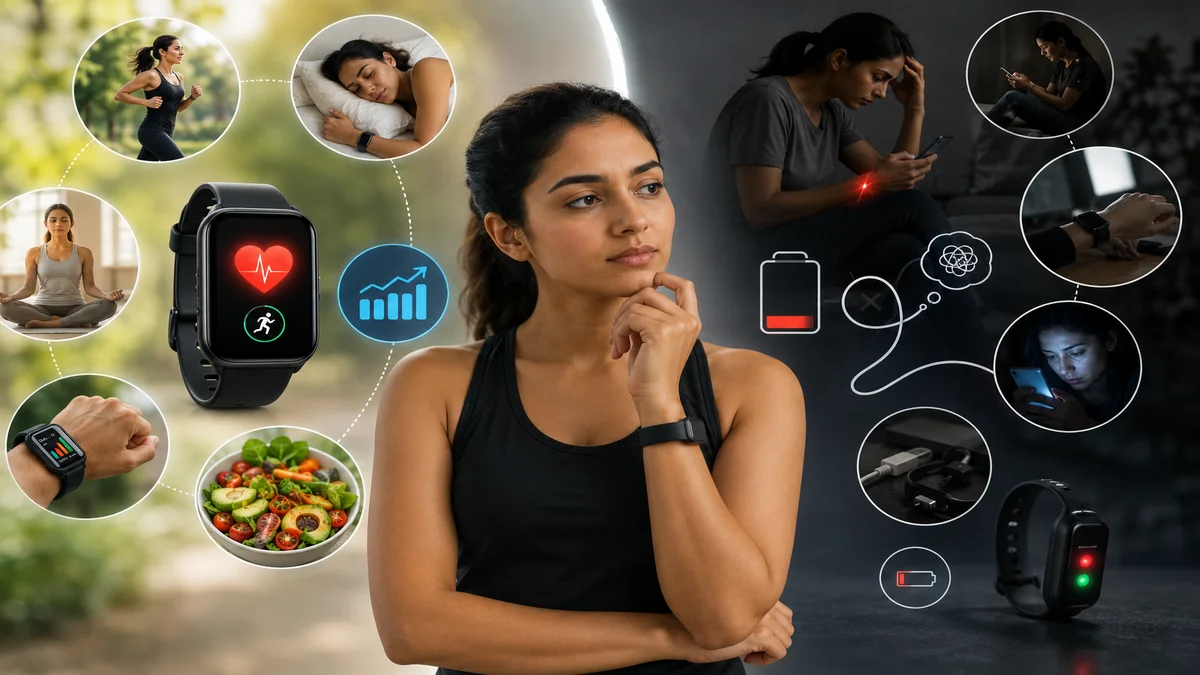
The reminders are good, but relying solely on a small screen can have a significant impact on the mind and on the signals that the body sends out.
The Vata Trap (Information Overload): In Ayurvedic medicine, Vata dosha is the energy of air and movement. In a Vata-balanced state, you are creative and full of energy. Vata imbalances cause restlessness, anxiety, and an overwhelming stream of thoughts.
- The Problem: Constantly checking your wrist to see your heart rate, stressing over a "low recovery score," and hyper-analysing your sleep cycles creates a massive Vata imbalance. It pulls your energy out of your body and entirely into your head. You start living in a state of mild, constant panic about your own health, which ironically raises your stress hormones and makes you unhealthier.
Ignoring Your Inner Wisdom (Prajnaparadha): Ayurveda talks about a concept called Prajnaparadha, which roughly translates to "a crime against wisdom." This happens when your body tells you exactly what it needs, but your brain completely ignores it.
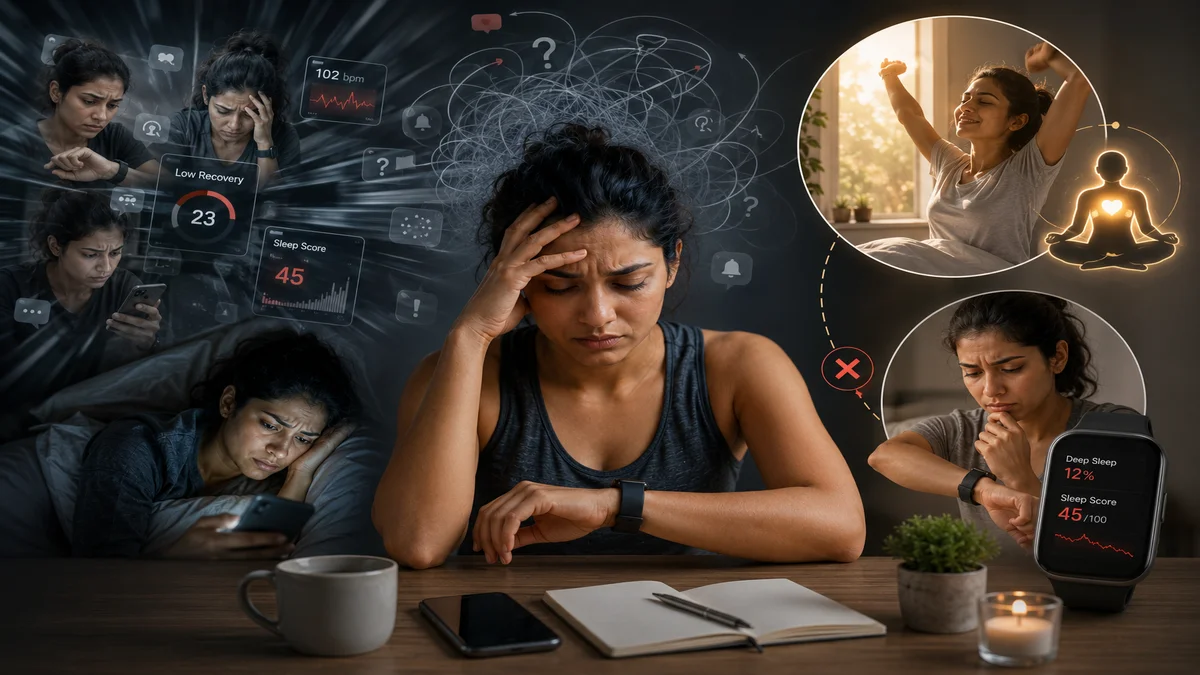
- The Problem: Wearables cause this all the time. Imagine waking up feeling wonderfully rested and full of energy. You feel great! Then, you check your watch, and it says you only got 12% "deep sleep" and your sleep score is a 45 out of 100. Instantly, your brain tricks you into feeling tired and groggy. You let a machine override your own physical reality.
How to Use Your Tracker the Ayurvedic Way?
Since we are not going to throw our expensive smartwatches in the trash anytime soon, let us think about how to use them without losing touch with ourselves. The goal is to make the technology work for you, not the other way around.
If you are embarking on a new health journey, follow your tracker as a plan. Let it show you how little you're actually moving throughout the day or even how unpredictable your rest cycles are. Create a healthy, strong habit using the data.
If you are a natural competitor and are prone to running on nerves, use your tracker to make yourself take a timeout! Use your HR data to identify when you are stressed, and the breathing apps to sit and relax your nervous system.
But most importantly, if you wake up feeling incredibly sore, tired, or mentally exhausted, take the watch off. If your body says "rest," you rest, even if the watch says your "training readiness" is high.
A Few Things to Keep in Mind
While these gadgets can be fun and motivating, everyone's mind works differently. Here is who should be a little careful:
If you are a naturally anxious person or someone who struggles with health anxiety, constantly seeing your heart rate fluctuate on your wrist will only make you feel worse. You might want to turn off continuous heart rate tracking and only use the watch for counting steps.
People who struggle with insomnia can end up adding more strain when they sleep with a watch that registers each flip and turn. Worry will keep you awake because you are trying to score a good night's sleep. Don't touch the watch at night as it is plugged in to the charger.
If you have a Kapha-dominant constitution and struggle to stay active, wear your tracker throughout the day. Let the hourly reminders and step goals serve as the annoying but needed coach to get your digestion going.
Conclusion
We do not need a piece of technology to tell us how to survive the day. Our grandmothers did not need a sleep score to know they were tired, and they did not need a step counter to know they had worked hard in the fields or the kitchen. They just listened to their bodies.
Smartwatches and fitness trackers are wonderful tools, but they are just that, tools. They have survived the test of modern convenience because they actually provide useful information. You do not have to completely reject them or blindly follow their every command. Listen to your body first. Let your tracker remind you to take a walk after lunch, or use it to ensure you go to bed on time. But when the screen contradicts how your body actually feels, then you can trust your own inner wisdom. Stay balanced, move well, and enjoy the feeling of being healthy from the inside out.
References:
Smartwatches in healthcare medicine: assistance and monitoring; a scoping review - PMC