 Published on
14 Jul, 2026
Published on
14 Jul, 2026 Updated on 14 Jul, 2026
 5111
5111There’s nothing quite like the monsoon. After baking in summer heat for months, the cool rain feels like a blessing. But while we stay busy enjoying the hot pakodas and the green view from our windows, the rainy season quietly brings a few hidden health risks we rarely think about.
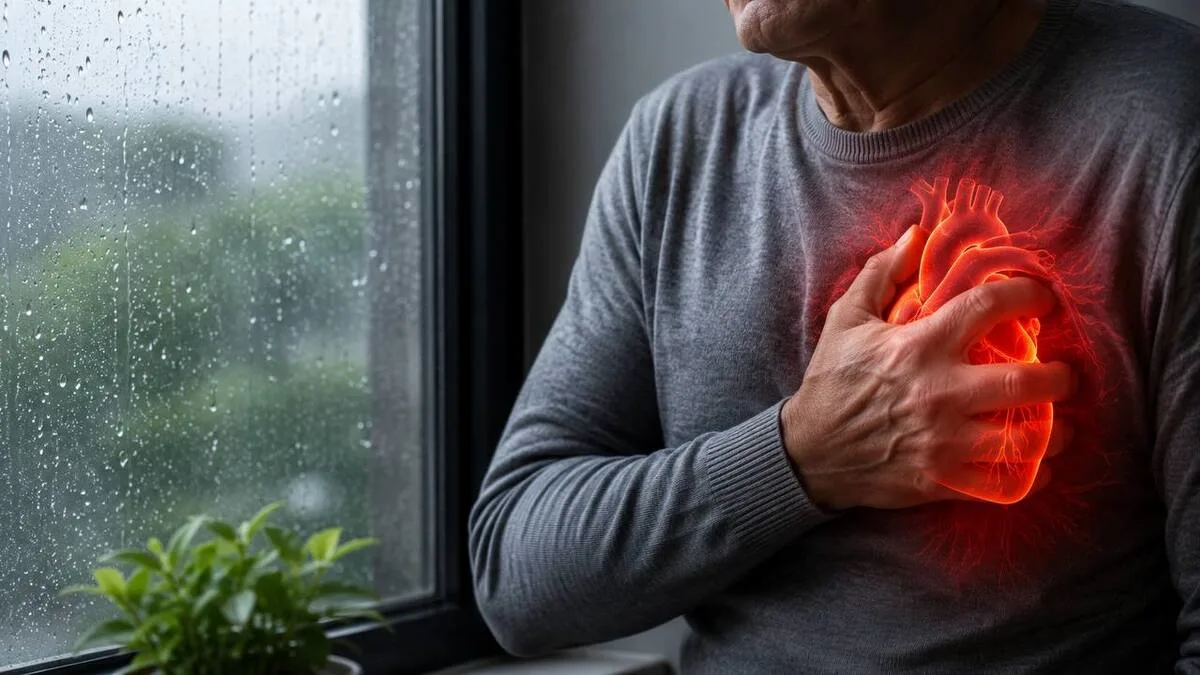
You might have heard people wonder if rainy weather can actually trigger a heart attack. The short answer is no, the rain itself does not directly stop your heart. However, the sudden drop in temperature, the heavy humidity and the lifestyle changes that come with the monsoon can put a surprising amount of extra pressure on your heart. Knowing exactly how this happens is the easiest way to protect your heart while still enjoying the beautiful weather.
How Cold, Humid Weather Can Put Extra Stress on the Heart
Even though the monsoon is not as freezing as winter, the sudden chill after a heavy downpour does something very specific to your body.
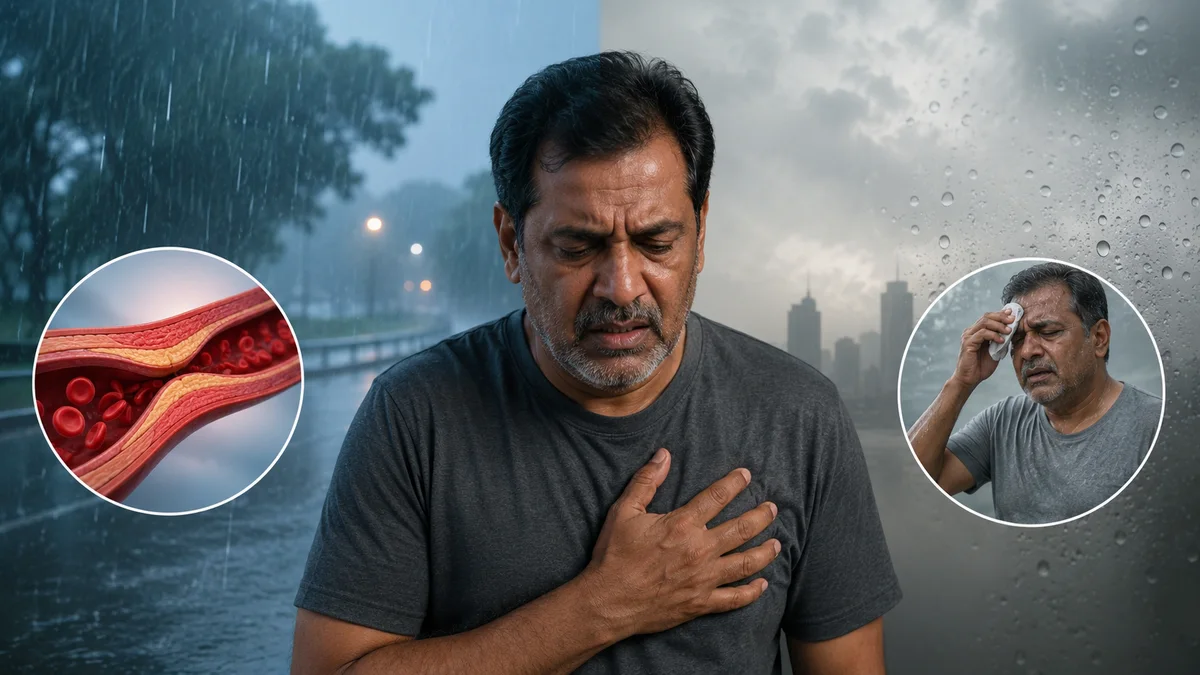
- Shrinking Blood Vessels: When the air suddenly turns cold, your blood vessels naturally shrink and tighten up to keep you warm. When the pipes (blood vessels) get smaller, your heart has to pump much harder to push the blood through them.
- The Humidity Trap: The monsoon creates a humid and sticky environment. High humidity basically means that your sweat cannot dry easily. When you cannot sweat properly, as a result, your body takes a lot of time to calm down and creates a heavy pressure on your heart,
For someone whose heart is already weak or whose arteries are slightly blocked, this extra workload can sometimes be the breaking point.
Why Infections During Monsoon Can Increase Cardiovascular Risk
We all know that the rainy season is the season of viral fevers, colds and flu. But what does a cold have to do with your heart? A lot, actually.
When you catch a viral infection, your body goes to war. It creates inflammation to kill the germs. While this is good for fighting the flu, massive inflammation is very dangerous for your heart. If you have any sticky cholesterol (plaque) sitting inside your heart's pipes, this heavy inflammation can cause that plaque to break open. When it breaks open, a blood clot forms instantly, blocking the blood flow and causing a heart attack.
This is exactly why you must be extra careful with your heart while recovering from a heavy seasonal fever or the flu.
Lifestyle Changes That Quietly Affect Your Heart in the Rainy Season
The biggest reason the monsoon hurts our hearts is because of what we do when it rains.
- We Stop Moving: When it is pouring outside, nobody wants to go for their morning walk or hit the gym. We end up sitting on the sofa for days or weeks at a time.
- We Eat Junk: Rainy weather instantly triggers massive cravings for deep-fried samosas, salty snacks, and heavy, oily foods.
- We forget to Drink Water: Because it is cool and cloudy, we do not feel thirsty. We drink much less water, which makes our blood thicker and harder for the heart to pump.
This deadly combination of sitting all day, eating oily junk food, and not drinking water quietly pushes your blood pressure and cholesterol up, heavily increasing your risk of a heart attack.
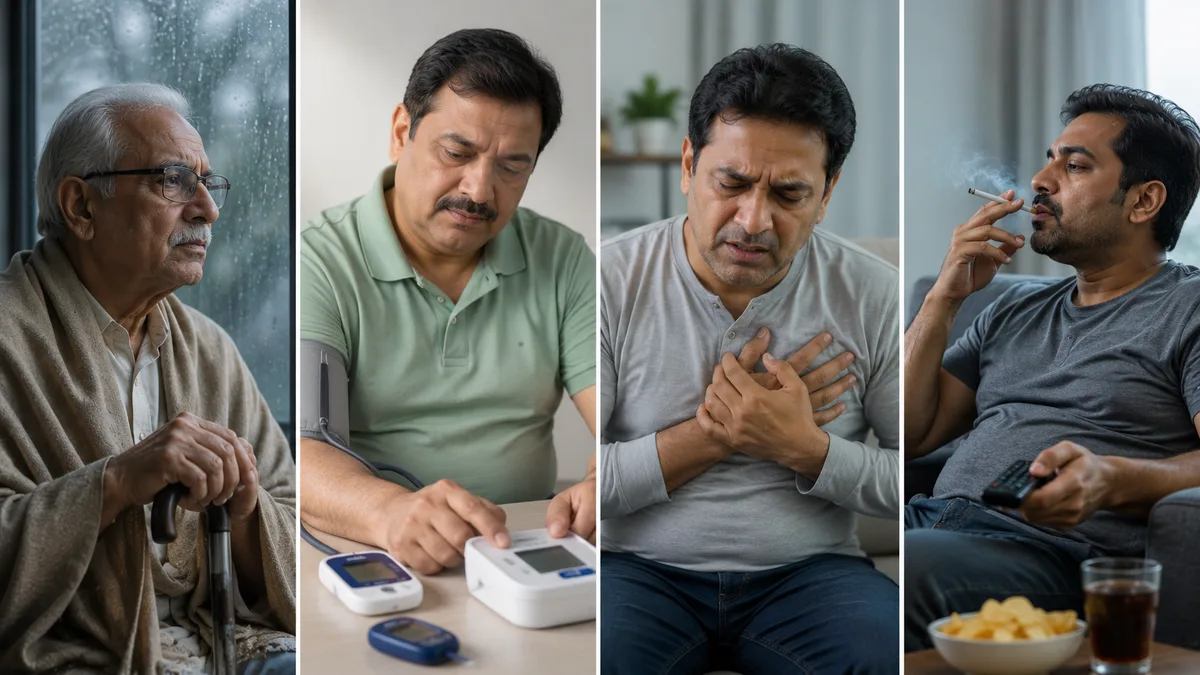
Who Is More Vulnerable During the Monsoon?
While everyone should take care, the rainy season is especially risky if you fall into any of these groups:
- Older Adults: As we age, our bodies simply cannot handle sudden temperature changes or heavy humidity as well as they used to.
- People with High Blood Pressure or Diabetes: These conditions already damage your blood vessels. The extra weather stress makes them much more vulnerable.
- Individuals with Existing Heart Disease: If you have already had a heart attack, an angioplasty, or bypass surgery, you must be extremely careful during sudden weather shifts.
- Smokers and Inactive People: Smoking heavily damages your blood vessels. If you mix smoking with a completely lazy, sitting lifestyle, the monsoon stress can easily trigger severe heart problems.
Doctor’s Note
While healthy monsoon habits are important, they cannot replace emergency care. If you experience sudden chest pressure, severe shortness of breath, cold sweats, or unusual jaw pain and nausea, do not dismiss it as simple indigestion. These are red flags for a heart attack requiring immediate emergency medical attention.
Warning Signs of a Heart Attack You Should Never Ignore
A heart attack does not always look like it does in the movies. You must call for emergency help immediately if you feel:
- Heavy pressure, tightness, or a squeezing pain in the center of your chest.
- Pain that spreads from your chest into your left arm, jaw, neck, or back.
- Suddenly struggling to breathe or gasping for air.
- Breaking out in a cold sweat for no reason.
- Feeling extremely dizzy, faint, or sick to your stomach.
Never ignore these signs. Never assume it is just gas. It is always better to go to the hospital and be wrong than to stay home and be right.
Are Heart Attack Symptoms Different in Women and Older Adults?
Yes, absolutely. This is a very common and dangerous mistake.
Women, the elderly, and people with severe diabetes often do not feel the classic "crushing chest pain." Instead, they might feel:
- Extreme Tiredness
- A mild ache in the jaw or upper back.
- Feeling heavily nauseous or vomiting.
- What feels exactly like bad acidity or indigestion.
Because these signs are so quiet, many people just take an antacid and go to sleep, which can be a fatal mistake.

Practical Ways to Protect Your Heart During the Rainy Season
Protecting your heart during the monsoon is actually very simple if you follow a few basic rules:
- Keep Moving Inside: If it is raining too heavily for a walk, do not just sit. Walk around your house, do some stretching, or practice light yoga indoors.
- Eat Smart: Enjoy the rain, but do not eat fried pakodas every single day. Stick to warm, fresh, home-cooked meals and keep your salt intake low.
- Drink Water: Force yourself to drink enough water even if you do not feel perfectly thirsty.
- Never Skip Medicine: If you are on blood pressure or heart medication, take it exactly on time. Do not skip a single dose, even if you feel absolutely fine.
- Protect Yourself from the Flu: Wash your hands consistently throughout the day and stay at a distance from people who are suffering from the flu.
When Should You Seek Immediate Medical Care?
Do not play a guessing game with your heart.
If you feel sudden, heavy pressure in your chest, or if you feel breathless and sweaty, do not wait to see if it goes away in an hour. Call an ambulance or get someone to drive you to the emergency room immediately. Getting to the hospital quickly is the number one thing that saves lives and prevents permanent damage to the heart muscle.
Final Thoughts
The beautiful monsoon rain is not your enemy, but the sudden changes it brings can be very hard on your body.
The drop in temperature, the heavy, sticky humidity, the viral fevers, and the urge to eat oily food while sitting on the sofa all combine to put massive stress on your heart. If you are already dealing with blood pressure, sugar, or heart issues, you must be extra careful during these months. By simply eating well, staying active indoors, drinking enough water, and taking your daily medicines, you can safely enjoy the rainy season while keeping your heart beating strong and healthy.
Reference’s
What Is a Heart Attack? | NHLBI, NIH