.webp)
 Published on
06 Jul, 2026
Published on
06 Jul, 2026 Updated on 06 Jul, 2026
 5087
5087When we think about getting older, most of us immediately look in the mirror. We notice new silver hair, a fine line around the eyes or maybe our knees ache a little more after a long walk.
Because we can easily see these outward changes, we use them to judge how fast we are aging. But while you are busy checking the mirror, another completely invisible kind of aging is quietly happening entirely out of sight: the aging of your brain.
Long before you ever notice yourself forgetting a name or struggling to focus on a conversation, tiny, subtle changes are happening deep inside your head. And in some people, these changes are happening way too fast. In fact, your brain might actually be years older than the age printed on your driver’s license.
The good news? This invisible aging process is not completely out of your control. The way you sleep, eat, handle stress, and talk to your friends all play massive roles in deciding whether your brain stays sharp or ages prematurely.
.webp)
Can Your Brain Really Be Older Than Your Body?
Surprisingly, yes. Scientists look at age in two different ways. The first is your chronological age, the number of birthday candles on your cake. The second is your biological age, which looks at how well your body and organs are actually functioning on the inside.
Your brain has its own biological age. When doctors look at brain scans, they sometimes find that a 50-year-old person has a brain that looks and acts like it belongs to a 60-year-old.
Understanding the "Brain Age Gap"
Researchers call this difference the "Brain Age Gap."
Imagine two cars that rolled off the assembly line in the same year. One car has been driven gently, gets regular oil changes and is parked in a garage. The other has been driven aggressively over pothole-ridden dirt roads and left out in the harsh weather. Even though they are the exact same age on paper, one has significantly more wear and tear.
Our brains work the same way. The choices you make every single day determine whether your brain ages gracefully or gets worn down before its time.
Why Does an Older Brain Matter?
An aging brain is about so much more than just misplacing your car keys.
When your brain ages faster than your body, your overall health risks increase. Studies show that a larger "Brain Age Gap" is heavily linked to a much higher risk of serious memory issues, dementia, strokes and even severe depression later in life.
Your brain is the control center for everything you do. A healthy brain is what allows you to learn new things, make quick decisions, manage your anger and sadness, and react quickly if you trip and fall. Keeping your brain young is the ultimate secret to staying independent and happy as you get older.
.webp)
The Hidden Habits That Age Your Mind
What causes a brain to age so fast? It usually isn't one catastrophic event. Instead, it comes down to totally ordinary, everyday habits that most of us don't think twice about.
- Living under Constant Stress: It is normal to experience some stress in life, but constant stress is bad for the brain. The more stressed you are, the more your body releases the stress hormone. In effect, constant release of the stress hormone leads to shrinking of the hippocampus, the very part of your brain responsible for learning and storing memories.
- Skimping on Sleep: Sleep isn't just downtime; it is the vital window when your brain clears out toxic waste, repairs its cells, and locks in the memories of the day. Clinical studies show that people who regularly get poor, fragmented sleep have brains that appear two to three years older than they should.
- Running on Ultra-Processed Foods: You are what you eat and your brain is no exception. Regularly snacking on ultra-processed foods, like packaged chips, sugary baked goods and fast food, can drastically slow down your mental processing. These heavily processed items trigger inflammation in the body, which damages healthy brain cells.
- Isolating Yourself: Your brain needs a workout and a human connection is one of the best exercises out there. Having conversations, laughing, and navigating social situations forces your brain to stay active. Social isolation is actually one of the biggest risk factors for dementia. Being chronically lonely deprives your brain of the stimulation it needs to stay sharp.
- Sitting Still All Day: Exercise isn't just for your heart and muscles. When you get your heart rate up, you pump fresh, oxygen-rich blood directly into your brain. Sitting on a couch or at a desk all day deprives your brain of this vital blood flow, making it sluggish and slow.
What Does Brain Aging Feel Like?
This kind of aging happens very slowly. You usually won't notice it overnight. The early warning signs look like this:
- Slower Recall: It takes you a few extra seconds to remember a word or a friend's name.
- Slower Processing: Complex tasks, like doing mental math or figuring out a new phone, take much longer than they used to.
- A Shrinking Attention Span: You find it incredibly hard to multitask, and simple distractions completely ruin your focus.
- Mood Swings: You get overwhelmed or anxious much faster than you used to.
Occasional forgetfulness is totally normal. But if you or a loved one are frequently getting confused or lost in familiar places, it is time to see a doctor.
Can You Turn Back the Clock?
The most encouraging news in modern science is this: an aging brain is not a permanent life sentence.
Your brain has an incredible, almost magical ability to adapt, heal, and rebuild itself, a concept known as neuroplasticity. By making small, consistent lifestyle tweaks, you can actually encourage your brain to build brand new pathways, effectively slowing down the aging process.
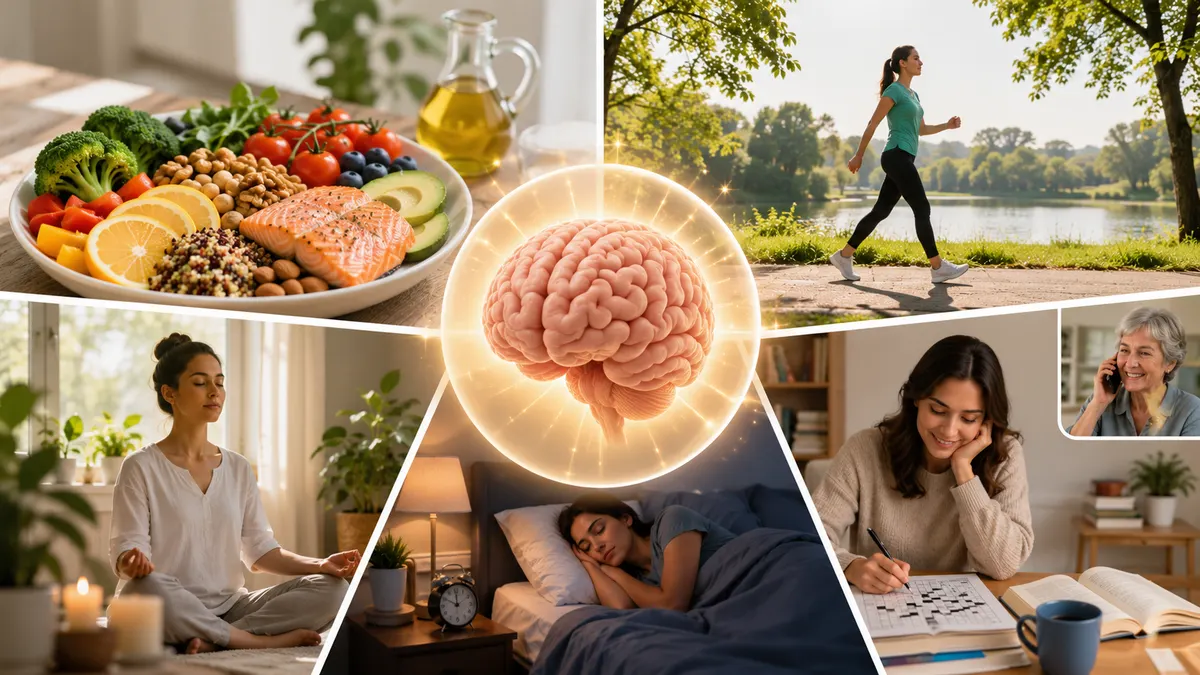
Daily Habits to Keep Your Mind Young
You do not need to overhaul your entire life to protect your brain. Small, boring, everyday habits are actually the most powerful medicine.
Feed Your Brain Well: Ditch the heavy processed snacks and fill your plate with colorful vegetables, sweet fruits, whole grains, nuts, and healthy fats like olive oil. These foods are packed with the exact vitamins your brain uses to repair itself.
Move Your Body: You do not have to become a marathon runner. A brisk daily walk, a bike ride, or a gentle yoga class is more than enough to pump that fresh, healthy blood up into your head.
Protect Your Peace: Find a way to manage the stress that actually works for you. This could mean taking ten minutes to breathe deeply, sitting quietly in nature, or just taking a break away from your bright phone screen.
Guard Your Sleep: Protect your sleep schedule like your life depends on it. Try to go to bed and wake up at the same time every day to give your brain a predictable, safe window to clean and repair itself.
Keep Learning and Talking: Do not let your brain get lazy. Read books, do a daily crossword puzzle, try to learn a few words of a new language, or just call a friend to catch up. Keeping your mind curious and engaged is the best defense against aging.
The Ayurvedic View: Balance is Everything
This modern advice perfectly matches what Ayurveda has been saying for centuries. Ayurveda believes that mental clarity comes from having a balanced, peaceful life.
In Ayurveda, keeping your digestion strong, sticking to a predictable daily routine, and protecting your nervous system from extreme stress are the absolute keys to healthy aging. While there are famous Ayurvedic herbs like Ashwagandha and Brahmi that support the mind, the real secret lies in living a life that does not constantly burn you out.
The Bottom Line
Your chronological age is just a number that tells you how many trips you have taken around the sun. But your biological brain age is something you help create every single day.
Through ensuring that you get enough sleep, manage stress, stay in touch with your friends, and eat healthy food, you not only live a healthy lifestyle but also ensure the protection of your memories, your personality, and your ability to appreciate what is going on around you. Protection of your brain does not mean youth but the ability to maintain mental sharpness for decades to come.
References
Child and adolescent mental and brain health
Optimizing brain health across the life course: WHO position paper