 Published on
06 Jul, 2026
Published on
06 Jul, 2026 Updated on 07 Jul, 2026
 5080
5080We hear the same advice all the time. Eat more fiber. Drink more water. Avoid eating too much spicy food. We focus entirely on our plates. We focus on our diet.
But there is another side to the story. The wellness world ignores a habit that costs us absolutely nothing to fix. Yet, it is quietly causing one of the most painful issues many Indians face today. Piles.
Let's look past the kitchen. Let's look at what bringing your smartphone into the bathroom actually does to your body.
The Problem With the Digital Distraction
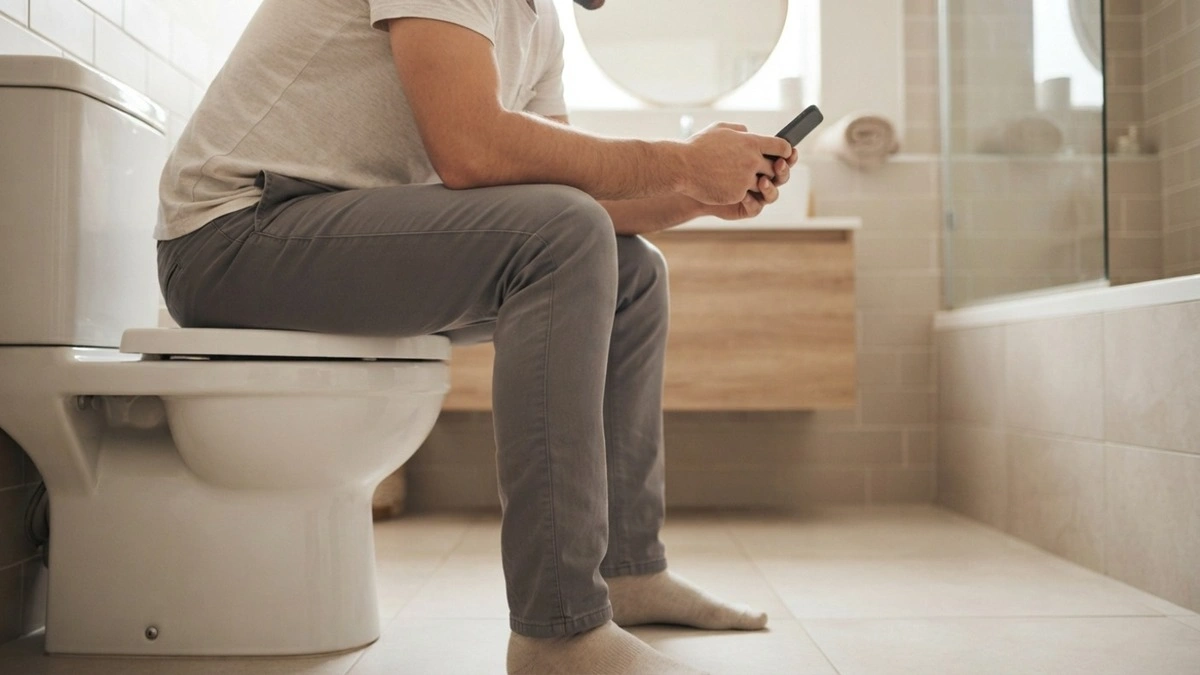
We view our time in the bathroom as a mini-break. We sit down.We open WhatsApp. We scroll through Instagram Reels. We watch a quick YouTube video. What should be a simple two-minute bodily function turns into twenty minutes of sitting.
But there is a major catch. The human body is great at adapting. But it is terrible at handling prolonged gravity in that specific position.
When you sit on a Western-style commode, the middle of your pelvic floor is completely unsupported. Gravity immediately pulls downward. Over those twenty minutes of scrolling, blood pools into the delicate, tiny veins in your lower rectum.
Over the years, this pressure builds up. Too much pressure causes those veins to stretch. They swell up. They become inflamed. This is exactly how hemorrhoids begin.
3 Simple Ways to Fix It
You don't need expensive medicine or complicated doctor visits to fix this. You just need to change the routine
- Leave the phone outside: Make the bathroom a zero-screen zone. If you don't have a distraction, you won't linger.
- The 5-Minute Rule: If nothing happens within five minutes, just stand up and walk away. Try again later when your body is actually ready.
- Prop your feet up: Put a small footstool or step-stool under your feet when you sit. Lifting your knees above your hips relaxes that internal muscle, un-kinks the hose, and makes everything happen much faster without straining.
Think of your digestive tract like a garden hose.
When you sit upright at a 90-degree angle on a modern toilet, a specific muscle acts like a tight rubber band. It is called the puborectalis muscle. It creates a kink in the hose to help maintain continence. To pass a stool in this sitting position, you have to actively push against this natural kink. You force the waste through a tightened pathway.
This creates immense friction. It creates intense pressure. Your body tries to manage this. But the constant, unconscious straining while you read your phone takes a toll.
Why the Traditional Way Worked
The traditional Indian squatting toilet solved this problem perfectly. When you squat, that puborectalis muscle completely relaxes. The kink in the hose straightens out entirely. The physical stress on your body drops to zero.
Plus, squatting naturally tires out your legs. You simply cannot physically stay in that position for twenty minutes reading memes. Your body forces you to finish the job quickly. You get up. You leave.
Reversing the Damage Naturally
Your body is an amazing machine. It just needs the right environment to function without unnecessary strain. You do not need expensive treatments.You just need better habits.
Create a Digital-Free Zone
Leave the phone on your bed. Do not bring it inside. If you have nothing to read, your brain focuses on the task at hand. You will be in and out in less than five minutes. Your veins will not have time to fill with pooled blood.
Elevate Your Knees
If you use a Western commode, you do not need to replace it. Just buy a simple plastic footstool. Place your feet on it while you sit. This lifts your knees above your hips. It mimics the natural Indian squatting angle. It releases the muscle. It straightens the hose.
Watch the Maida and Water
Indian summers pull moisture directly out of your body. If you are dehydrated, your stool becomes hard. If you eat heavy, refined-flour foods like naan or parottas, the problem gets worse. Hard stool requires more pushing. Drink at least 3 liters of water a day. Embrace whole grains like oats or *dalia* to keep things soft.
Good health is rarely found in complex surgeries. True health comes from respecting how our bodies were built to work. Next time you head to the washroom, leave the screen behind. Your body will thank you.
Simple Ayurvedic Fixes for Your Routine
You don't need herbs or complex treatments to protect yourself. You just need to align your daily routine (Dinacharya) with nature
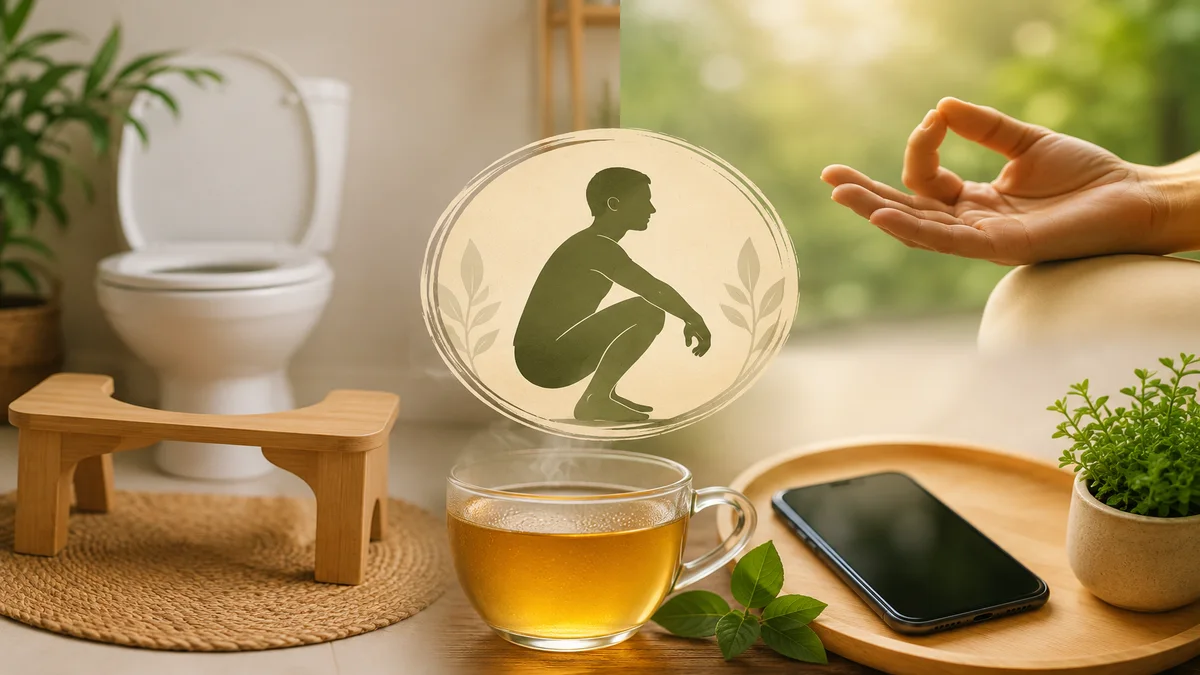
- Leave the Phone Outside: Keep your mind calm and focused.The bathroom is for releasing waste, not consuming digital information.When you remove the screen, you will naturally finish in a couple of minutes.
- Use the "Squat" Footstool: Put a small step-stool under your feet while sitting on the toilet. Raising your knees above your hips mimics the ancient squatting posture, unlocking the physical kink and letting Apana Vata flow freely.
- Listen to the Urge: Only sit down when your body tells you it is completely ready. If nothing happens after 3 to 5 minutes, get up, walk around, and try again later.
- Morning Warm Water: Kickstart your Apana Vata first thing in the morning by drinking a glass of warm water as soon as you wake up. This gently wakes up your digestive fire (Agni) and encourages a smooth, effortless morning routine.
References
Smartphone use on the toilet and the risk of hemorrhoids - PMC
Smartphone use on the toilet and the risk of hemorrhoids - PubMed