 Published on
07 Jul, 2026
Published on
07 Jul, 2026 Updated on 25 Jul, 2026
 5092
5092Living with PCOS often feels like trying to solve a puzzle where the pieces keep changing. One month, your biggest worry might be an irregular period. The next month, it could be a sudden breakout, deep exhaustion or food cravings that feel absolutely impossible to ignore.
But for many women, the most frustrating and constant struggles are stubborn weight gain and a stomach that feels constantly swollen and bloated.
It is very common to look in the mirror and wonder why these two things seem to happen together. Is the bloating causing the weight gain? Is the weight gain making the PCOS worse? Or is there a deeper reason hiding underneath it all?

What Actually is PCOS?
Despite the confusing name, not every woman with PCOS actually gets cysts on her ovaries. It is really a full-body hormonal issue. When you have PCOS, your body produces higher levels of certain hormones (called androgens) and often struggles to use insulin properly.
Insulin is the hormone that helps your body use sugar for energy. When your body becomes resistant to it, it has to pump out extra insulin just to get the job done. This extra insulin is the main troublemaker. It sends confused signals to your body, telling it to store extra fat, changing how your digestion works and throwing your monthly cycle completely off track.
The Ayurvedic View: Looking at the Whole Picture
Ayurveda does not look at PCOS as one single disease that needs a single pill. Instead, it sees PCOS as a sign that your body's internal environment has gotten out of balance.
Ayurveda believes that good health starts with your stomach. When your digestion gets weak, everything else slowly starts to struggle.
The Three Energies (Doshas): Ayurveda says that our bodies run on three main energies:
- Vata: The energy of wind and movement.
- Pitta: The energy of fire and heat.
- Kapha: The energy of earth, water and heaviness.
In women with PCOS, Ayurveda usually sees an imbalance involving Vata (the wind) and Kapha (the heaviness). When Vata acts up, it causes irregular periods and trapped gas in the stomach. When Kapha acts up, it causes a slow metabolism, heavy weight gain and makes you feel sluggish.

Your Internal Fire (Agni): Ayurveda places a massive focus on Agni, your digestive fire. Think of this fire like a campfire that cooks your food. If this fire is strong, then you will be able to digest food properly; if this fire is weak, then it will create chaos inside your body,
The Sticky Waste (Ama): When your food is not digested properly, it starts getting rotten and becomes Ama. This travels through your body, blocking up your channels. Ayurveda believes this toxic sludge is what makes you feel heavy, exhausted and deeply bloated.
Why Does PCOS Make You So Bloated?
Bloating is often one of the very first things women with PCOS notice. It is uncomfortable, and it can change how your clothes fit from morning to night.
Trapped Wind (Vata): Because Vata controls movement, an imbalance means the food and waste in your digestive tract stop moving smoothly. Things get stuck. Then this created an imbalance in your body, which leads to burping, bloating, and unexpected weight gain.
Sluggish Digestion (Kapha): When kapha gets imbalanced in your body, it makes your whole body process sluggish. As a result, our stomach takes much longer to process meals. This sluggishness often leads to water retention, making you feel puffy and swollen, even if you haven't eaten a large meal.
Modern Habits: Eating very quickly, drinking ice-cold water with meals or eating heavy, late-night dinners directly weakens your digestive fire, guaranteeing you will wake up bloated the next day.
Why the Weight Gain Feels Unfair
If you have gained weight with PCOS, it is rarely because you lack willpower. It is driven by very real biological and energetic changes.
The Insulin Trap: When your body pumps out extra insulin because of PCOS, it sends a message to your cells: Store fat, especially around the belly. This creates a metabolic trap. Your body becomes very good at storing fat and very bad at burning it, making standard weight loss advice incredibly frustrating.
The Heavy Energy (Kapha): In Ayurveda, when Kapha energy gets too high, it creates a very real physical heaviness. Your metabolism slows and then you start craving for unprocessed foods such as sweets and chocolates. This cycle slowly adds weight over time.
A Weak Digestive Fire: If your digestive fire slows down, then your whole body process gets disturbed, which leads to imbalance in your doshas and in your body.
Are Bloating and Weight Gain the Same Thing?
While they feel similar when you button your jeans, they are different.
Bloating happens fast. Your stomach might be flat at breakfast but swollen by dinner. It usually goes away after you sleep or go to the bathroom.
Weight Gain is a slow process. It does not happen overnight. But it does give some subtle warning signs beforehand, so that you can work on it and not let that happen.
However, in PCOS, they are deeply connected. They both stem from the same root problem: a struggling metabolism and a weak digestive system. By fixing your digestion, you can start to clear up both issues.
Eating the Ayurvedic Way for PCOS
Ayurveda does not believe on making you starve or cout your calories, instead it focuses on making you eat the right food at the right time.
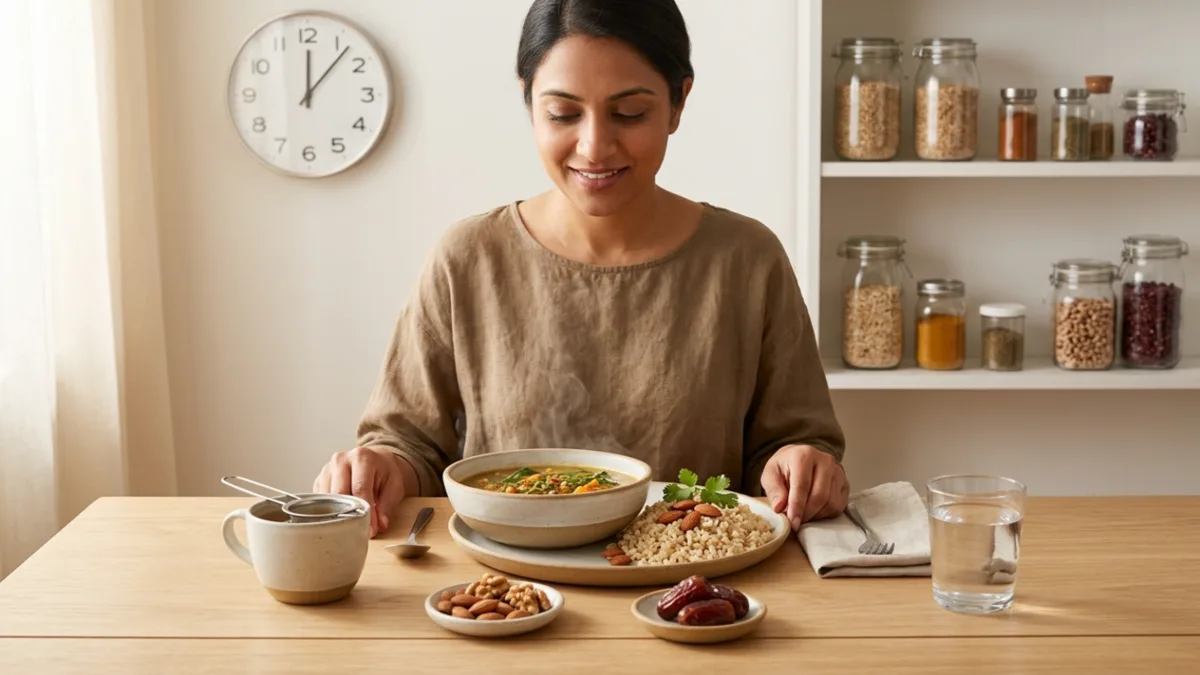
- Eat Warm & Fresh Food: Swap the iced drinks and raw salads for warm, cooked meals. Warm vegetable soups, cooked lentils, and steamed greens are much easier for your stomach to process, leaving zero bloating behind.
- Keep Your Blood Sugar Steady: To help calm down that extra insulin, focus on foods that give you slow, steady energy. Eat whole grains, beans, nuts, and good-quality proteins. These foods stop the wild blood sugar spikes that trigger intense cravings.
- Things to Gently Reduce: Try to slowly cut back on heavy, sticky foods that put out your digestive fire. This includes refined white flour, excessive sugary sweets, deep-fried snacks, and highly processed, packaged foods.
- Eat on a Schedule: Your body loves routine. Eating your lunch and dinner at roughly the same time every day trains your stomach to be ready for food, which drastically cuts down on gas and bloating.
Lifestyle Habits That Make a Difference
Food is only half the battle. How you live your day is just as important.
- Create a Good Routine: Waking up, eating, and going to bed at similar times every day acts like an anchor for your nervous system. This routine naturally calms the erratic, anxious Vata energy.
- Move Gently: You do not need to run marathons. Gentle, consistent movement like walking, swimming, or yoga helps burn off the heavy Kapha energy, improves your insulin levels, and massages your digestive organs to relieve gas.
- Breathe and Sleep: High stress and bad sleep completely ruin your hormones. Taking just ten minutes a day to do simple, deep breathing exercises tells your brain you are safe. Prioritizing a good night's sleep gives your body the time it needs to clean and repair itself.
When to Seek Medical Help
You should never ignore serious symptoms. Please go see a doctor if:
- Your periods have stopped entirely or are extremely heavy.
- You are gaining weight incredibly fast and nothing stops it.
- You feel severe, sharp pain in your stomach or pelvis.
- Your bloating never goes away, even in the morning.
- You are having a very hard time getting pregnant.
A doctor can make sure there are no other hidden medical issues and help you find the right balance of care.
The Bottom Line
PCOS, bloating, and weight gain are deeply tangled together. Modern medicine blames insulin and hormones; Ayurveda points to weak digestion and sticky toxins. The beautiful thing is that both views are right, and they point to the same solution.
You cannot fix PCOS with a quick, magical crash diet. Healing happens when you treat your body with patience and respect. By eating warm, nourishing foods, keeping a steady routine, moving gently, and finding ways to manage your stress, you can slowly rebuild your digestive fire.
Take it one small, healthy choice at a time. Consistency is far more powerful than perfection. With time, you can quiet the bloating, support your metabolism, and start feeling like yourself again.
References
Polycystic Ovary Syndrome: Etiology, Current Management, and Future Therapeutics - PMC