 Published on
19 Aug, 2026
Published on
19 Aug, 2026 Updated on 19 Aug, 2026
 5063
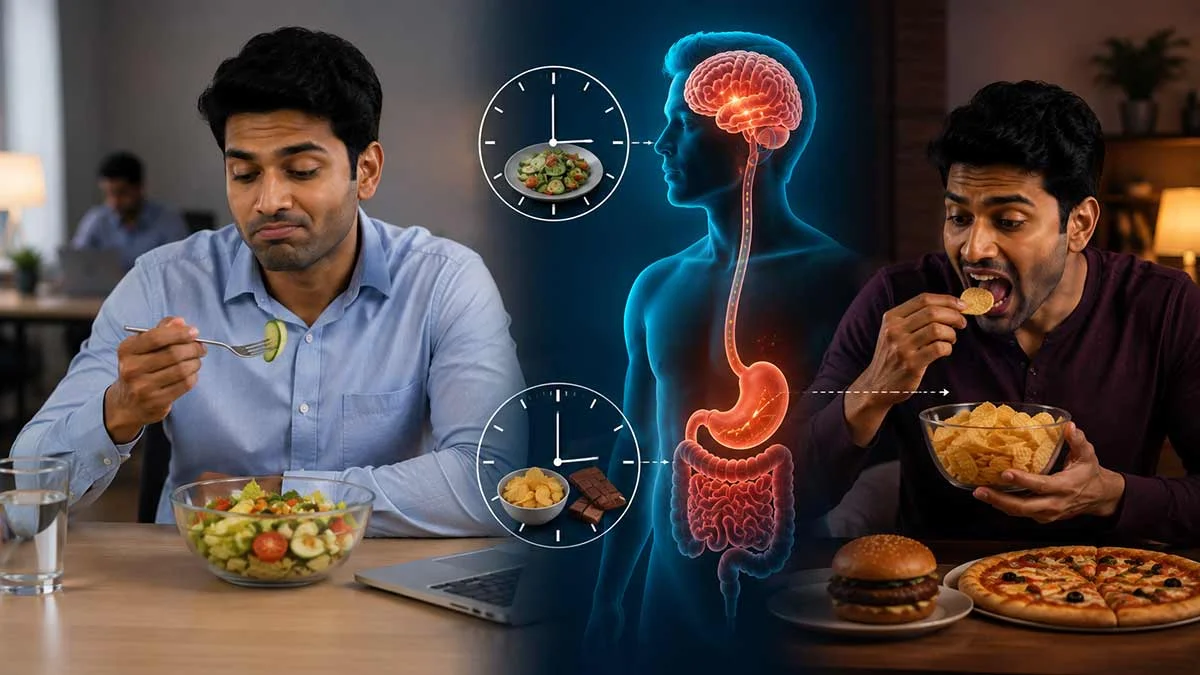
5063Most people are used to believing in and adopting the newest health trends, in hopes of a true betterment of their wellness. It’s common for us to prepare a healthy and green salad for breakfast, as a positive step towards truly achieving our ideal body state, but as the evening approaches, we end up craving whatever edible item we have in sight, and then we feel guilty about snacking.
The truth is often more nuanced than just “snacking is a bad habit” assumptions, as there are real flaws in our food habits that mandate our body and mind to hunt for snacks later in the day. Evening snacking might just be a biochemical result of our afternoon meal.
Light Lunch And Health
According to Ayurveda, the time of the day when our digestive fire is at its strongest is the afternoon, and the fact that the body is capable of digesting more food quantities in the afternoon says a lot about how we should compartmentalise our meal intakes.
Taking the biggest and heaviest meal of the day while the sun is up and digestion is strong is the best choice to fulfill the calorie and nutrient requirements of the body without stressing a weakened Agni (digestive fire) in the evening.
Although having a heavy meal in the day doesn’t mean we must eat anything heavy just for the sake of it, it should be a well-planned strategic diet that allows for enough calorie intake in the day without consuming empty calories.
The Implication Of A Light Lunch
When we do not consume a substantial meal in the daytime, our body faces a stage known as a calorie deficit. This deficit is detected by the body, and it reduces the amount of glucose in the blood, later triggering a neurotransmitter known as Neuropeptide Y, which essentially makes us search for the fastest way to get carbohydrates in the body to get energy from it.
This need for quick and simple carbohydrates is mostly fulfilled by snacking, as it happens to be the path of least friction in a hunger-driven situation.
The evening snacking session often ends with a bloated stomach and difficulty having dinner, as the body is already processing the unhealthy constituents of those snacks.
Disturbance Of The Circadian Rhythm
Having too many snacks in the evening or later disrupts the natural clock our body runs on, as the release of the sleep signal via the melatonin hormone is delayed, which pushes back the feeling of sleep late at night.
The delay in sleep signals also allows the stress hormones to stay active for longer, increasing the risk of metabolic issues and obesity.
Our body is naturally bad at burning calories at night, and this hormonal disturbance makes it even worse, also affecting the quality of sleep when sleep finally arrives.
The Ayurvedic Timeline For Digestion
Ayurveda divides a day into multiple periods of energy. Midday timing from 10 AM to 2 PM is known as the Pitta time, when the digestive fire is at its peak. When we feed a tiny plate of salad to this strong Agni, the digestive system burns through it in a couple of hours, and then it starts wanting more food to sustain the energy, which then leads to the snack craving and overeating.
It is ideal to align with the natural cycle of the body and its natural digestive timeline for keeping the system healthy as well as ensuring total digestion and minimum Ama production.
Ayurvedic Guidelines For Proper Lunch
There are certain steps one can take to make their meal and digestion process smoother, and according to Ayurvedic principles, these are some of the tips to get the best out of our digestive fire:
Make Lunch The Primary Meal
Lunch should ideally be the heaviest meal of the day. By eating the majority of food between 11 AM and 1:30 PM, we are feeding our peak digestive fire exactly what it needs to feel full.
This is the golden window when our agni can process and digest complex proteins and healthy fats efficiently.
Include All The Six Tastes
Ayurveda suggests we should have lunch that includes all six tastes: sweet, sour, salty, pungent, bitter, and astringent, because a missing taste could mean we’ll crave that taste later in the day, leading to snacking again.
Consume Cooked Vegetables
Eating a variety of cooked, warm vegetables is more beneficial for the digestive system than relying on raw, cold, and leafy salads. Eating cooked food is gentle on the stomach and offers better absorption.
Incorporate Healthy Fats
Having some healthy fats like ghee or sesame oil in lunch helps take nourishment deep into the tissues and soothes the body. It also helps with joint health and provides lubrication.
Conclusion
Having a light lunch is not only about the lunch itself, but also about the opportunity cost of not taking in enough nutrient-dense calories when the time is right; it's about meeting the dietary requirements of the body while ensuring proper nutrient profile fulfillment.
The strategic spacing of the food must be considered with the state and strength of the digestive agni in relation to the time of day.
By making sure we’re having a balanced diet, the food is warm and fresh, and the allocation of calories is smartly adjusted to having the biggest meal of the day in the middle of the afternoon, we allow our body to efficiently utilise the food we eat for extracting energy instead of carrying the meal as a liability in our stomach.
References:
Agni in Ayurveda - A Comprehensive Review of its Role and Interrelations with Physiological Factors
Agni (Digestion and Metabolism) In Relation to Diurnal and Seasonal Rhythms: A Conceptual Review
Metabolic Effects of Late Dinner in Healthy Volunteers—A Randomized Crossover Clinical Trial - PMC
Is Eating Before Bed Good for You, or Bad?
Eating breakfast and avoiding late-evening snacking sustains lipid oxidation - PMC