 Published on
07 Aug, 2026
Published on
07 Aug, 2026 Updated on 29 Aug, 2026
 5059
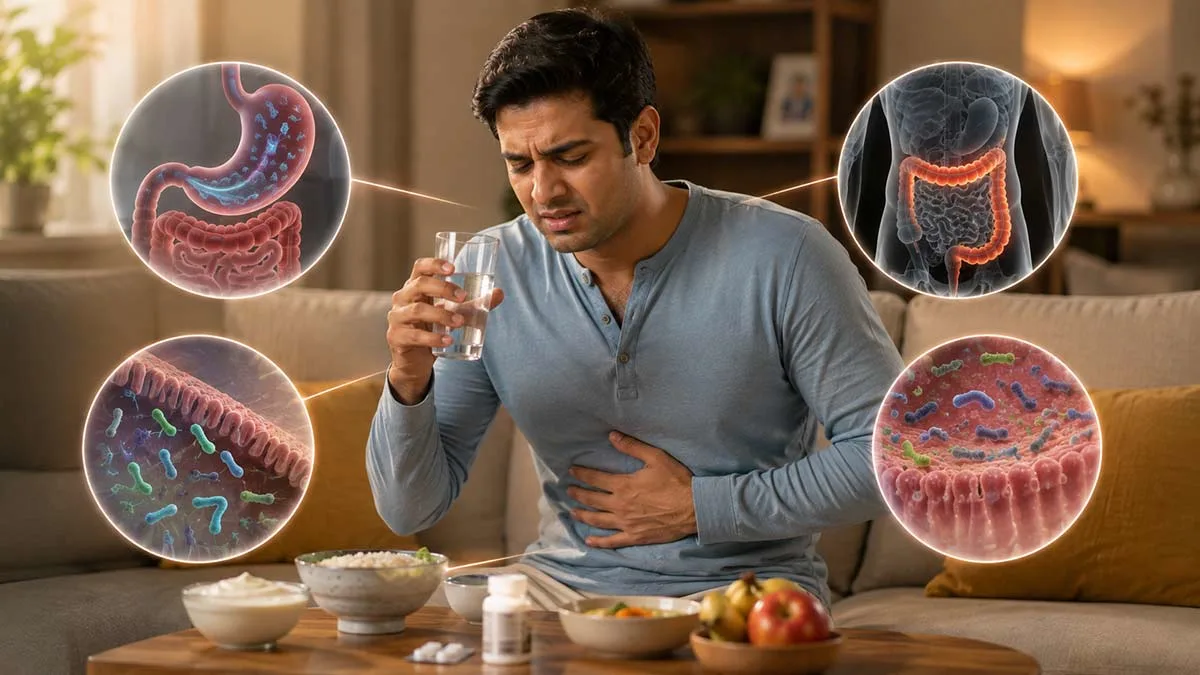
5059Antibiotics do a great job of fighting off infections when you are down with a fever or infection. But while they are busy clearing out the bad bacteria making you sick, they end up affecting your digestion also.
In Ayurveda, digestion is considered the main controller of your entire body. When this main engine gets disturbed, your whole body feels the impact. As antibiotics sweep through your system, they accidentally wash away the good, healthy bacteria, too. These good bacteria are important for keeping your stomach running smoothly. Because if they go missing, your natural internal balance gets thrown off. This is exactly why you end up dealing with annoying problems like bloating, gas, loose stools, or constipation after finishing your medicine.
How Antibiotics Affect the Gut Beyond Fighting Infection
Antibiotics just kill bacteria; they cannot tell the difference between the bad bacteria making you sick and the good ones keeping your digestion running smoothly. When these helpful bacteria get wiped out, your stomach loses its natural balance and struggles to break down food. This is exactly what causes temporary stomach upset and bowel changes. How much your digestion suffers simply depends on the specific medicine you took and how long you were on it.
Common Digestive Problems After Taking Antibiotics
Everyone responds to antibiotics a little differently. Here are the most common digestive issues people face once treatment ends:
- Bloating: Because you don't have enough good bacteria to break down your food, gas gets trapped in your belly. This leaves you feeling uncomfortably stuffed and swollen after eating.
- Loose Stools: Without those helpful bacteria, extra water just sits in your intestines, causing diarrhea that usually clears up on its own in a few days.
- Constipation: Some people actually experience the exact opposite. The sudden change in your stomach can slow everything down, making it really hard to go to the bathroom.
- Gas and Indigestion: You might deal with extra burping, stomach rumbling, and general mild discomfort while your gut tries to rebuild itself and get back to normal.
Signs Your Gut Is Recovering Normally
Your gut heals gradually rather than overnight. Positive signs that your stomach is getting back on track include:
- Feeling much less bloated after finishing your meals.
- Returning to regular daily bowel movements.
- Your normal appetite is coming back.
- Fewer cramps or belly discomfort.
- Being able to eat a wider variety of foods without trouble.
- Feeling your overall energy bounce back as digestion improves.
How Ayurveda Views Digestion After Antibiotics
Ayurveda offers a very simple, practical way to look at stomach trouble after a course of strong medication. According to Ayurveda, your stomach runs on a "digestive fire" known as Agni. When you take heavy medications like antibiotics, this fire gets severely dampened.
When your digestive fire is weak, your body will not be able to properly process your food, and you will produce a thick waste product known as Ama. And this is the reason why you might feel heavy and bloated.
To stimulate the function of your stomach, Ayurvedic medicine advises you not to give it too much of a shock with your diet, as it may be sensitive and unable to process new things. You need to help your digestive fire get back to work, which is possible when you drink warm water, herbal tea based on cumin, coriander, and fennel, and eat warm soups.
Simple Foods That Support Gut Recovery
What you put on your plate plays the biggest role in rebuilding a healthy stomach.
- Fiber-Rich Foods: Eating oats, apples, bananas, berries, lentils, beans, and whole grains gives these good microbes the nutrients they need to grow back strong.
- Fermented Foods: Plain yogurt with live cultures, kefir, and naturally fermented vegetables introduce friendly microbes directly into your system.
- Stay Well Hydrated: Drinking plenty of plain water supports smooth digestion and replaces fluids lost from loose stools.
- Choose Easily Digestible Meals: Plain rice, oatmeal, boiled potatoes, bananas, cooked vegetables, and vegetable soups are much gentler on a sensitive stomach than heavy, deep-fried foods.
Doctor’s Note
A little stomach upset or mild diarrhea is very common after finishing a course of antibiotics. However, if you experience severe watery diarrhea, intense stomach cramps, fever, or notice blood in your stool, call your doctor right away. These could be warning signs of a more serious gut infection that requires immediate medical treatment.
Habits That Can Slow Down Gut Healing
Just as good habits help your gut, certain everyday choices can drag out stomach trouble after antibiotics.
Eating high-sugar foods, heavy fast food, drinking alcohol, smoking, getting poor sleep, and dealing with constant stress all make it much harder for good bacteria to thrive. Skipping meals or jumping onto strict, extreme diets can also throw off your digestion. Consistency with fresh, wholesome food is what yields real results.
When Digestive Symptoms Need Medical Attention.
Seek medical help right away if you notice:
- You have severe and continuous diarrhea.
- If you find blood in the stool.
- You get a high fever or severe abdominal pain.
- You have symptoms of dehydration, including dizziness, confusion, or very little urine output.
- You have diarrhea or stomach pain lasting for many weeks after completing the course of medications.
Simple Lifestyle Tips for Faster Digestive Recovery
Healing your gut goes beyond just food choices:
- Eat on time: It is always advised to eat your food at specific intervals and should not be skipped.
- Take walks: Walking for some minutes just after having a meal will help push the gas out and in, making the digestive process smoother.
- Lower your stress: The nervous system is highly linked with the digestive system. Just relaxing, breathing deeply, or spending time outside will help you relax.
- Prioritize sleep: Get 7 to 9 hours of sleep each night so your body has time to repair itself.
Final Thoughts
Antibiotics are very crucial in protecting us from deadly bacterial infections. Although they may affect our friendly bacteria in the gut, causing stomach problems such as bloating and diarrhea. Eating meals high in fiber, having lots of water, and getting enough sleep will help you regain the natural functioning of your digestive system.