 Published on
06 Apr, 2026
Published on
06 Apr, 2026 Updated on 25 May, 2026
 5194
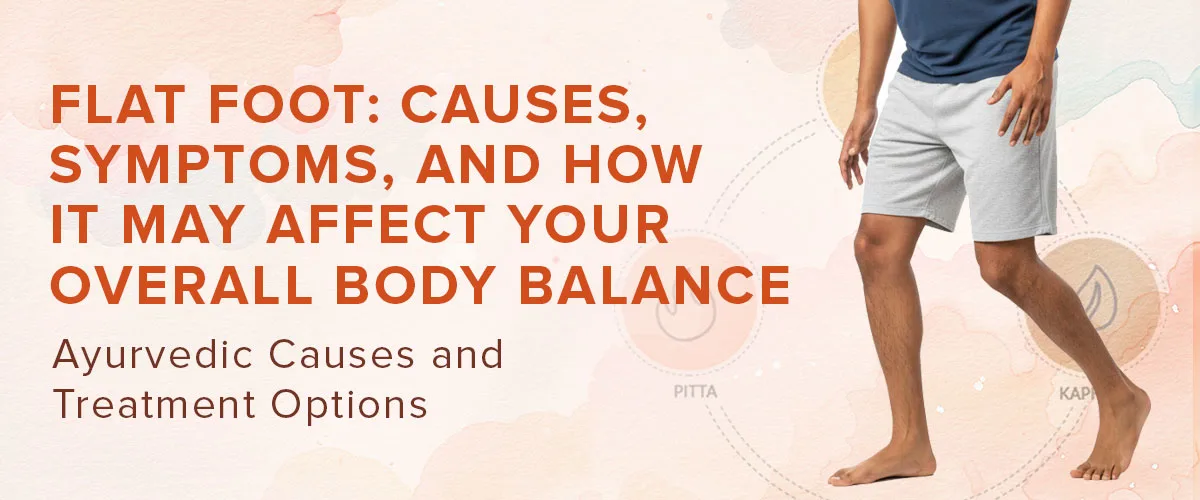
5194Flat foot or Pes Planus is often seen as an issue, but it can actually cause problems in many parts of the body, in the knees, hips, and spine. When we look at it, modern medicine usually focuses on the collapse of the arches in the foot.
Ayurveda, on the other hand, thinks that flat foot is a sign of a deeper problem with the body's tissues that are supposed to provide support. By combining these two views, we can understand that flat foot is not a physical characteristic. It's a sign that the body's foundation needs help in two main areas. The body needs strengthening to fix the flat foot, and it also needs internal balance to fix the energetic issues.
What is Flat Foot (Pes Planus)?
Flat foot, which is also known as Pes Planus, is a condition where the foot does not have an arch. The arch in the foot helps to absorb the shock of walking or running by distributing the weight of the body. When someone has a flat foot, the whole bottom of their foot touches the ground.
This changes the way the body moves. Because the foot is flat, the ankles tend to roll, which can cause problems all the way up to the knees, hips, and lower back. The flat foot is the problem that starts all of this. Flat feet can really affect the way the body works.
Types of Flat Foot: versus Rigid
Understanding the type of flat foot you have is important for finding the right way to manage it and make it stronger.
Flexible Flat Foot
- The Sign: You can see the arch when your foot is off the ground or when you are sitting. When you stand and put your weight on it, the arch disappears or "collapses".
- The Cause: This usually happens because the ligaments are too loose or the muscles that support the arch are weak. This type is very common. Often does not hurt too much at first.
Rigid Flat Foot
- The Sign: Your foot stays flat whether you are standing, sitting or lifting your foot. You cannot see the arch at all.
- The Cause: This is often due to a problem, like bone issues ( coalition), joint problems or serious tendon damage. A rigid flat foot can be painful. May need more treatment from a doctor.
How Foot Structure Influences Overall Body Balance
Feet act as the major foundation of the body and serve as the base on which the entire skeletal system depends. When there are issues with this foundation, such as those associated with flat foot, the misalignment is not limited to the ankle; it can trigger a chain reaction, causing imbalance to move upward through the body.
- Ankle Joint Instability: Flat feet often result in the inward rolling of the ankles (overpronation). Consequently, increased stress is placed on the ligaments and tendons that support and stabilise the lower leg.
- Misalignment of Knees: The rotation of the tibia due to inward rolling of the ankles can lead to the development of knock knees (Genu Valgum). This causes improper pressure distribution across the knee joint, resulting in wear and strain on the meniscus and ligaments.
- Compensatory Hip and Pelvic Imbalance (Bursitis): Due to the inward rotation of the legs, the pelvis may tilt and become unstable. This puts additional pressure on the hip muscles and can lead to conditions like bursitis.
- Back Problems: As the imbalance progresses upward, it may cause hyperextension of the lumbar spine or abnormal curvature, leading to persistent back pain.
Common Sign & Symptoms of Flat Foot
Flat foot is not always painful. However, when the arches collapse, the body has to adjust for the lack of natural support. This often leads to a series of problems, ranging from sore feet to tired muscles throughout the body.
- Foot Pain and Discomfort: You usually feel pain in the arch or heel, especially after standing for a long time or engaging in high-impact activities.
- Swelling Along the Inner Arch: You might notice swelling on the inside of your ankle and arch due to strain on the ligaments and tendons.
- Heel and Ankle Instability: Flat feet often cause your ankles to roll inward, making you feel unstable while walking. This happens because your feet lack proper arch support.
- Knee and Lower Back Pain: When your foot lacks a proper foundation, it can lead to problems in your knees and lower back. This is because the uneven stress travels upward through the body.
- Fatigue After Standing or Walking: Without the support of an arch, even short periods of activity can make your feet and legs feel tired. Flat feet can make everyday activities feel exhausting.
Common Causes of Flat Foot
Flat foot is not always painful. When the arches collapse, the body has to compensate for the lack of natural support. This often leads to a range of problems, from soreness in one area to a general feeling of fatigue throughout the body.
- Genetic Predisposition: Some people are born with flatter feet or more flexible ligaments, which they inherit from their parents. In such cases, the arch may never fully develop during childhood.
- Weak Foot Ligaments: The arch is supported by multiple muscles and tendons. If these are weak, they are unable to provide the necessary support to maintain the foot’s structure.
- Injury or Trauma: Injury to tendons, especially the posterior tibial tendon, can cause the foot to flatten suddenly or gradually over time.
- Obesity and Excess Weight: Excess body weight puts significant pressure on the arches. Over time, this can stretch the ligaments and lead to the collapse of the arch.
- Degeneration: As we age, the tendons in our feet may lose strength and flexibility. Over the years, this can contribute to the development of flat feet. It is more common in individuals with a genetic predisposition or those whose lifestyle habits put continuous strain on the feet.
How Is Flat Foot Diagnosed?
To determine whether you have flat feet, doctors examine the structure of your feet and how it affects your overall body alignment. They do this through observation and specific tests, which help them understand what is happening with your feet.
- Physical Examination: A doctor observes how your feet look while you are standing and walking. They check whether your ankles are rolling inward. This can often be identified if “many toes” are visible from behind the heel.
- Footprint Test: This test involves stepping onto a surface with wet feet. If your arch is normal, it will leave a gap in the footprint. In the case of flat foot, the footprint appears as a solid impression of the entire sole.
- Imaging Techniques: In more severe or painful cases, doctors may use X-rays or MRIs to examine the bones, joints, and tendons in the feet—especially the tendon at the back of the leg.
Risks and Complications of Untreated Flat Foot
Ignoring flat feet often leads to problems in the entire musculoskeletal system. This is because the body works like a chain; if there is a problem at the base, every joint above it has to compensate. Over time, this can cause wear and tear that affects much more than just the feet.
- Chronic Pain and Inflammation: Flat feet can cause continuous strain on the ligaments and tendons. This leads to pain in the arches and heels, which often worsens after physical activity. The ongoing strain makes flat foot pain a persistent and frustrating issue.
- Plantar Fasciitis: A common complication of flat foot is inflammation of the thick band of tissue at the bottom of the foot. Without an arch to absorb shock, this tissue becomes overstretched and develops small tears, leading to plantar fasciitis. This condition is often very painful and commonly seen in people with flat feet.
- Shin Splints (Medial Tibial Stress Syndrome): As the foot flattens, the lower leg tends to rotate inward. This places stress on the muscles attached to the shinbone, causing pain along the front or inner part of the lower leg. Shin splints associated with flat feet can be quite painful.
- Joint Degeneration: Over time, abnormal alignment due to flat foot places uneven pressure on the cartilage in the ankles, knees, and hips. This can lead to early-onset osteoarthritis and chronic stiffness, making joint degeneration a serious concern.
- Bunions and Hammertoes: The shift in weight distribution often pushes the big toe toward the second toe. This can result in bony bumps (bunions) or permanent curling of the smaller toes (hammertoes), both of which are commonly linked to flat feet.
- Secondary Spinal Issues: To compensate for inward-rolling ankles, the pelvis may tilt, leading to spinal misalignment. This can result in chronic lower back pain and poor posture. Flat foot can, therefore, affect the spine and contribute to ongoing back issues.
Ayurvedic Understanding of Flat Foot
In Ayurveda, flat foot is not considered merely a structural problem of the arch of the foot. It is viewed as a sign that the entire body is not functioning properly at the level of the Adhara (foundation of the body). This condition is mainly attributed to an imbalance of Vata Dosha, which governs movement, as well as the structure and coordination of muscles and bones.
The Role of Doshas and Dhatus
When the body is imbalanced, it affects the tissues of the feet in the following ways:
- Vata Aggravation: When Vata is excessively aggravated, the ligaments and tendons (known as Snayu) become dry, unstable, and weak. This leads to a loss of structural support, causing the arch of the foot to collapse. If the muscle tissue (Mamsa) and bone tissue (Asthi) do not receive adequate nourishment, the foot loses its strength and is unable to maintain its normal shape.
- The Agni Connection: When the digestive fire (Agni) is weak or impaired, it leads to the formation of toxins (Ama) in the body. These toxins block proper nutrient absorption and prevent nourishment from reaching the tissues. As a result, the feet become weak at the foundational level and more prone to collapse.
- Pitta and Kapha Roles: While Vata is responsible for instability, an imbalance of Pitta may lead to inflammation and burning pain. Similarly, an imbalance of Kapha can cause heaviness and a feeling of fatigue while walking.
By addressing these underlying imbalances through appropriate diet and therapies that pacify Vata, Ayurveda aims to restore strength, stability, and proper functioning of the feet. This not only improves foot health but also contributes to the overall well-being of the body.
Jiva Ayurveda’s Approach For Supporting Flat Foot
At Jiva Ayurveda, we do not view flat feet as a simple issue that can be corrected only with arch supports. We believe that the feet are the foundation of the body. Therefore, our approach focuses on strengthening the tissues and balancing Vata Dosha so that the body can heal from within.
The Jiva Holistic Protocol is used to address flat feet comprehensively:
- Ayurvedic Root-Cause Analysis: We begin by examining the pulse (Nadi Pariksha) to identify the underlying cause of the condition. We assess whether the issue is due to weak muscles, weakening bones, or an imbalance of Vata Dosha that is causing ligament laxity.
- Vata-Pacifying Nutrition: A customised diet plan is recommended, including nourishing foods such as ghee and warm, freshly prepared meals. These foods help support joints, tendons, and overall tissue strength.
- External Oil Therapies: Therapies such as Padabhyanga (foot massage) are performed using medicated oils like Mahanarayan Oil. These therapies help reduce stiffness, improve blood circulation, and strengthen the muscles that support the foot structure.
- Therapeutic Yoga & Strengthening: Instead of relying only on external supports, specific yoga postures such as Tadasana and Adho Mukha Svanasana are recommended. These poses help improve arch alignment and encourage proper foot function.
- Agni Correction: We also focus on improving digestive fire (Agni) to ensure proper digestion and nutrient absorption. This prevents toxin (Ama) accumulation, which can otherwise lead to joint pain and further imbalance.
At Jiva Ayurveda, the goal is to restore both foot health and overall body balance. The Jiva Holistic Protocol works by addressing Vata Dosha and strengthening body tissues, allowing the body to heal naturally from within.
Ayurvedic Medicines for Flat Foot
The Ayurvedic approach to treating flat feet focuses on strengthening the foot and balancing its movement. This helps in restoring the arch and improving overall foot stability.
- Ashwagandha and Shatavari: These herbs help strengthen the body’s muscle and bone tissues. They provide the necessary support for the foot to maintain its natural shape.
- Lakshadi Guggulu: This formulation supports the health of bones and connective tissues. It helps increase bone density and strengthens ligaments.
- Hadjod (Cissus Quadrangularis): This herb aids in the repair of tendons and improves the flexibility of the fascia in the sole.
- Yograj Guggulu and Shallaki: These are useful in reducing pain and inflammation in the heel and inner arch of the foot.
- Maharasnadi Kwath: This medicine helps balance movement within the foot, reduces stiffness, and improves overall stability.
Ayurvedic therapies for flat foot
Ayurvedic therapies for flat feet focus on strengthening and stabilising the foot. These treatments aim to nourish the ligaments and muscles, restore the arch, and improve overall body alignment.
- Padabhyanga (Medicated Foot Massage): Padabhyanga is a key therapy for flat feet. Warm medicated oils such as Mahanarayan Oil are used to massage specific points on the feet. This improves blood circulation, enhances tissue flexibility, and strengthens the muscles that support the arch.
- Snehana and Swedana (Oleation and Sudation): In this therapy, medicated oil is first applied, followed by herbal steam. This process helps soften tissues and improve the flexibility of ligaments, which is particularly beneficial for stiff flat feet.
- Pizhichil (Oil Bath Therapy): This therapy involves the continuous pouring of warm medicated oil over the body. It is especially helpful when flat foot has caused pain in the knees or lower back. It promotes smooth joint movement and strengthens the musculoskeletal system.
- Kati Basti (Lower Back Therapy): Since flat feet can lead to spinal misalignment, Kati Basti is used to support the lower back. In this therapy, a pool of warm medicated oil is retained over the lower back region, helping relieve pressure and improve spinal stability.
Diet Recommendations According to Ayurveda
| Food Category | Recommended (To Favour) | Avoid (To Limit) |
| Grains | Cooked oats, brown rice, whole wheat, quinoa. | Dry cereals, crackers, cold bread, millet. |
| Proteins | Mung dal, lentils, soaked nuts (almonds/walnuts), seeds. | Hard-to-digest red meat, cold deli meats. |
| Healthy Fats | Cow’s Ghee, sesame oil, olive oil, avocado. | Refined vegetable oils, margarine, and deep-fried food. |
| Vegetables | Cooked root vegetables (carrots, sweet potatoes, beets). | Raw salads, cold sprouts, cabbage, and cauliflower. |
| Fruits | Sweet, ripe fruits like bananas, mangoes, and soaked raisins. | Sour or unripe fruits, large amounts of dried fruit. |
| Dairy | Warm milk with turmeric, fresh paneer, and buttermilk. | Cold yoghurt, aged heavy cheeses. |
| Spices | Ginger, turmeric, ashwagandha powder, cumin, and garlic. | Excessive chilli, extremely bitter or astringent herbs. |
How Patients Are Assessed at Jiva Ayurveda (For Flat Foot)
Our assessment focuses on identifying the root cause of arch weakness and how structural imbalance is affecting overall body alignment to restore stability and proper movement.
- Detailed analysis of foot structure, walking pattern, and weight distribution to understand the extent of arch collapse.
- Assessment of symptoms such as foot pain, heel discomfort, ankle instability, and fatigue while standing or walking.
- Identification of the dominant imbalance, typically Vata (instability and weakness), Pitta (inflammation and pain), or Kapha (heaviness and stiffness).
- Examination of muscle strength, ligament support, and joint flexibility affecting the foot arch.
- Evaluation of posture and alignment, including its impact on knees, hips, and lower back.
- Comprehensive review of physical activity levels, daily strain on feet, and occupational habits.
- Evaluation of footwear habits (flat shoes, improper support, high heels) that may worsen the condition.
- Assessment of lifestyle patterns, body weight, and factors that may weaken foot structure over time.
Our Step-by-Step Care Process
At Jiva Ayurveda, every process of the treatment is carried out in an organised and structured manner to give you the best personalised experience of Ayurvedic treatment for thyroid and digestive issues.
1. Share Contact Details: After submitting your details, you can also reach out to us directly at 0129 4264323 to start the consultation process and get your metabolic issues treated.
2. Appointment Confirmation: An appointment with our experienced and well-trained Ayurvedic doctors specialising in thyroid and digestive issues is arranged for you. You can choose to consult with our doctors in the mode that best suits you:
- Clinic: We have over 80 Jiva clinics in different cities, and you can come to the nearest clinic to consult with our doctor face-to-face.
- Video Consultation (Rs. 49): In case you are not able to locate our clinics in your city, you can also consult with our doctor online, which will be available to you at a discounted price of Rs. 49 (regular price: Rs. 299). Simply give us a call at 0129 4264323 to connect with our experts from home itself.
3. Detailed Diagnosis: Our experienced doctor will consult with you to understand your thyroid issues, digestive problems, and “Agni” (metabolic fire) to diagnose the root cause of the problem in your body.
4. Root Cause-Based Treatment Plan: A personalised treatment plan is designed using herbal medicines and therapies to balance Kapha, regulate Vata, strengthen Agni, and reduce Ama. This approach targets the root cause of morning nasal congestion and helps prevent recurrence over time.
Healing Timeline: Restoring Foot Arch Strength (Flat Foot)
Initial Weeks (Building the Foundation): Early relief begins as the strain on the feet reduces. Pain and discomfort may decrease, and muscles and ligaments start responding to support therapies, creating a sense of stability.
1–3 Months (Structural Stabilisation): Noticeable improvement in foot strength and balance. Walking becomes more comfortable, ankle stability improves, and pressure on knees and lower back starts to reduce.
3–6 Months (Core Resilience): Significant strengthening of foot muscles and ligaments. The arch gains better support, posture improves, and overall body alignment becomes more stable and balanced.
What Results Can You Expect?
Ayurvedic treatment focuses on strengthening tissues, balancing doshas, and improving structural alignment. With consistency, you can expect:
- Reduced Foot Pain: Less discomfort in the arch, heel, and ankles.
- Improved Stability: Better balance while walking and standing.
- Enhanced Posture: Reduced strain on knees, hips, and lower back.
- Stronger Foot Muscles: Improved support to maintain the natural arch.
- Better Mobility: Easier movement with less fatigue.
- Long-Term Relief: Reduced chances of worsening or recurring issues with proper care.
Estimated Cost of Treatment at Jiva Ayurveda
Understanding the financial aspect of your treatment is important. At Jiva Ayurveda, transparent pricing helps you choose a plan suited to your condition and needs.
Treatment Cost
For patients seeking standard, ongoing care for post-nasal drip, the monthly cost of medicine and consultation typically ranges from Rs. 3,000 to Rs. 3,500. This is an estimated baseline and may vary based on individual condition and severity.
Protocol
For a structured and holistic approach, specialised package protocols are available. These focus on clearing mucus, improving respiratory health, and restoring long-term balance. The package includes:
- Medicine
- Consultation
- Mental well-being sessions
- Yoga and meditation
- Diet guidance
- Therapies
The cost of this protocol ranges from Rs. 15,000 to Rs. 40,000 for a treatment duration of 3 to 4 months.
Jivagram:
For individuals requiring intensive care, Jivagram offers an immersive healing environment that supports deep detoxification and respiratory strengthening. It includes:
- Authentic Panchakarma therapies
- Sattvic meals
- Modern healing services
- Comfortable accommodation
- Additional wellness facilities
An immersive stay at Jivagram costs approximately Rs. 1 Lakh for 7 days, providing continuous personalised care.
Why Patients Trust Jiva Ayurveda
Our method is centred around personalised, root cause-based treatment that works to heal the body from the inside out.
- Root Cause-Based Treatment: Our treatment strategy is to treat the root cause of the imbalance, not just the symptoms.
- Customised Care Plans: Our patients receive personalised care plans that are tailored to their individual Prakriti (constitution), diet, and lifestyle.
- Protocol-Based Analysis and Treatment: Our treatment protocols are evidence-based, Ayurvedic approaches to treating hormonal and digestive imbalances.
- Authentic Medicines: Our Ayurvedic medicines are genuine and made in licensed facilities to ensure safety and efficacy.
- Proven Scale & Expertise: Our physicians have seen over 8,000 patients daily and have extensive experience in treating complex chronic diseases.
- High Success Rate: Our patients have seen significant improvements in their health, with over 90% reporting positive changes in their health.
- Reduced Dependency: 88% of our patients can stop or greatly reduce their dependency on conventional medications.
The primary difference lies in the focus: modern medicine often looks to manage the physical cyst or its symptoms, while Ayurveda aims to fix the internal environment that allowed the cyst to grow in the first place.
Modern vs. Ayurvedic Approach to Flat Foot
| Feature | Modern Medicine Approach | Ayurvedic Approach |
| Primary Focus | Providing structural support and reducing pain | Strengthening foot structure and correcting internal imbalances |
| Method | Uses orthotics, supportive footwear, physiotherapy, or surgery | Focuses on balancing Doshas and strengthening muscles & ligaments |
| Diagnosis | Physical exam, footprint test, X-rays or imaging | Nadi Pariksha, Prakriti analysis, and body alignment assessment |
| Treatment | Arch supports, exercises, and pain management | Herbal oils, therapies (Abhyanga), exercises, and lifestyle correction |
| Side Effects | May give temporary relief without fixing the root cause | Natural healing with minimal side effects |
| Goal | Reduce discomfort and provide external support | Restore natural arch, improve posture, and ensure long-term stability |
When to Consult a Doctor
You must seek medical advice if:
- Persistent Foot Pain: Ongoing pain in the arch, heel, or ankle that does not improve.
- Difficulty Walking: Discomfort or imbalance while walking or standing.
- Swelling or Inflammation: Noticeable swelling along the inner foot or ankle.
- Postural Issues: Pain spreading to knees, hips, or lower back.
- Worsening Condition: Flattening of the arch is increasing over time.
- Limited Mobility: Reduced flexibility or stiffness in the feet.
- Impact on Daily Life: Difficulty performing routine activities due to foot discomfort.
Conclusion
Flat foot is often seen as just a structural concern, but it can significantly affect overall body balance and posture. Simply using supports or footwear may provide temporary relief, but it may not address the underlying weakness.
While modern treatments focus on external correction, long-term improvement comes from strengthening the body internally. By balancing Doshas, improving tissue strength, and supporting proper alignment, Ayurveda offers a holistic path to restoring stability, mobility, and overall well-being.