 Published on
14 Jul, 2026
Published on
14 Jul, 2026 Updated on 14 Jul, 2026
 5098
5098When you are going through a difficult emotional period, whether grieving a loss, navigating career uncertainty, or dealing with chronic anxiety, well-meaning friends often tell you to "just relax" or "think positive” When emotional distress hits, your brain's alarm system (the amygdala) overrides your rational brain (the prefrontal cortex). Your cortisol levels surge, breathing becomes shallow, and the autonomic nervous system locks into fight-or-flight mode.
In this state, cognitive approaches like talk therapy or positive affirmations can feel like trying to negotiate with a smoke alarm. You have to turn off the alarm first. Yoga works as a somatic (body-first) reset button, using physical posture, breathwork, and focused attention to signal physical safety directly to your nervous system.
Clinical Review Note
"When patients experience acute or chronic stress or grief, the nervous system gets trapped in sympathetic overdrive, what Ayurveda recognizes as severe Vata aggravation in the Manovaha Srotas (channels of the mind). This guide accurately bridges classical somatic yoga practices with modern neurobiology, offering safe, non-pharmacological tools to downregulate the hypothalamic-pituitary-adrenal (HPA) axis without making exaggerated medical claims."
The Neurobiology of Calm: How Yoga Resets Your Brain
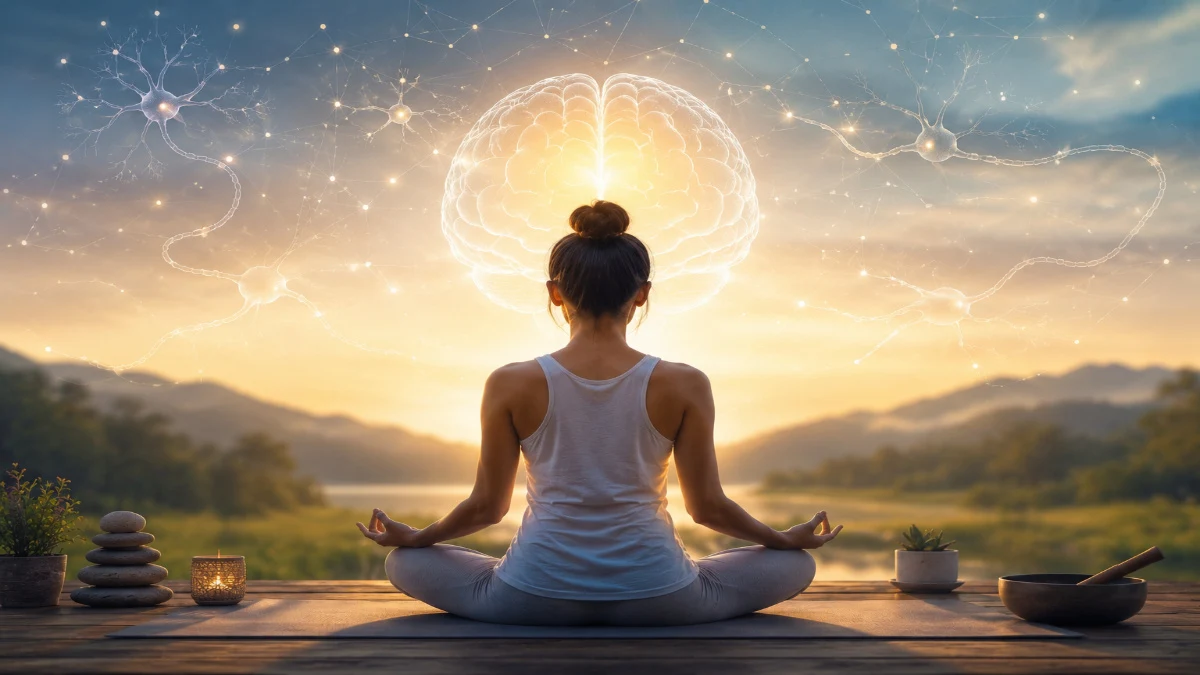
Modern neuroscience seems to be confirming what practitioners have, kind of, observed for millennia now. Namely that moving the body and regulating breath physically shifts brain chemistry.
The brain is affected by yoga due to the mix of movement, breathing, and mindfulness. Engaging in yoga regularly may lower stress levels in a person’s body. Practicing yoga includes deep breathing and meditation, which stimulate the parasympathetic nervous system and cause a sense of relaxation. Studies have shown that through yoga, the body produces balanced levels of gamma-aminobutyric acid, which is related to mental calmness.
The Ayurvedic Perspective: Pacifying Vata for Mental Stillness
In Ayurveda, the emotional state of a person is determined by the balance (Vata, Pitta, and Kapha) within the mind. During times of distress, anguish, and sorrow, Vata Dosha comes under stress. The results of this increased Vata energy flow in Manovaha Srotas (mental channels) could be sleeplessness, racing thoughts, and restlessness.
Ayurveda recommends using Langhana (calming and grounding techniques) to restore balance to the emotional state in times of crisis. The effect of combining slow and steady yoga postures with appropriate breathing brings Vata back to normal, restoring the warmth of the body and activating the mental processes.
4 Science-Backed Yoga Practices for Emotional Balance
During times of emotional distress, skip intense power yoga workouts. Instead, focus on grounding, restorative postures that actively trigger the parasympathetic ("rest-and-digest") nervous system.
Balasana (Child's Pose): The Safe Harbor
Balasana is a forward-bending resting posture that gently compresses the abdomen, stimulating the vagus nerve and lowering heart rate.
- How to practice: Kneel on your mat with big toes touching and knees spread hip-width apart. Exhale as you fold forward, resting your torso between your thighs and bringing your forehead to the floor (or a folded blanket). Extend your arms forward or rest them alongside your body.
- Duration: Hold for 3 to 5 minutes while breathing deeply into your back ribs.
- Safety note: If you have knee injuries, place a rolled towel between the backs of your thighs and your calves, or practice seated in a chair by folding forward over your desk.
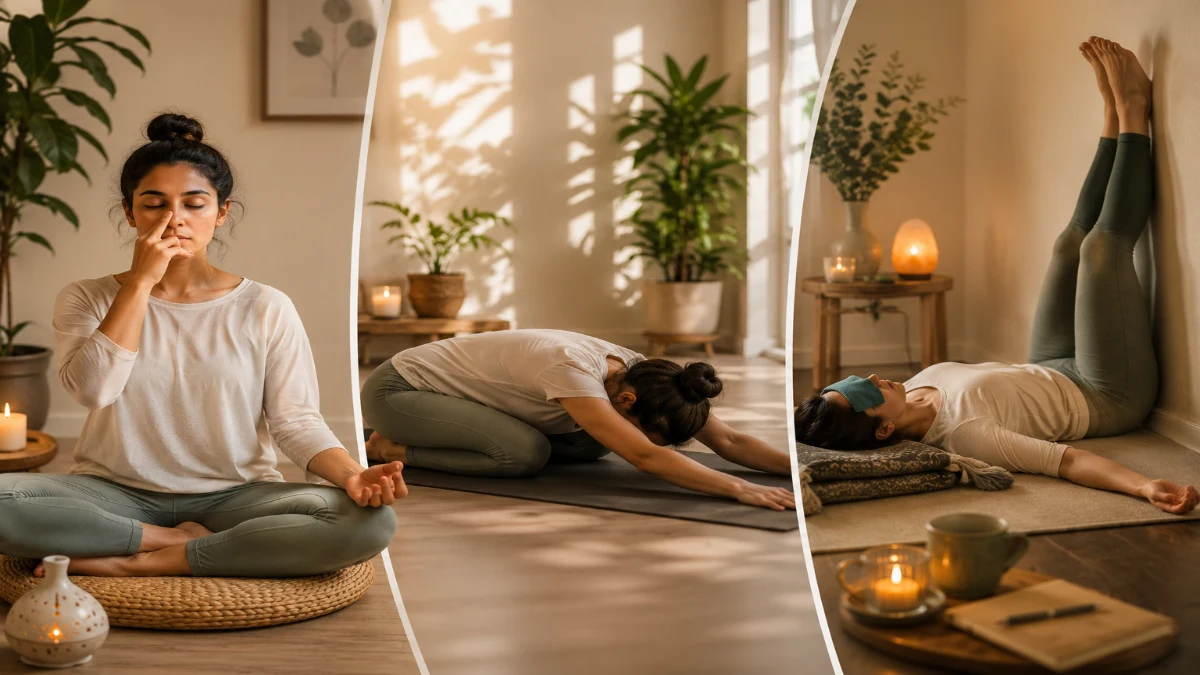
Viparita Karani (Legs-Up-the-Wall): The Nervous System Reset
Inversions reverse blood flow and change baroreceptor pressure in the blood vessels, sending an immediate neurological signal to slow down the cardiovascular system.
- How to practice: Sit sideways next to a blank wall. Swing your legs up onto the wall as you lower your back and head to the floor. Keep your hips within a few inches of the wall and let your arms rest palm-up by your sides.
- Duration: Stay here for 5 to 10 minutes with your eyes closed.
- Safety note: Avoid this posture if you have unmanaged hypertension, glaucoma, or a serious cervical spine injury.
Bhramari Pranayama (Humming Bee Breath): Acoustic Vagal Stimulation
The auditory vibration produced during humming physically resonates through the sinuses and throat, directly stimulating the vagus nerve and producing a calming wave across the brain.
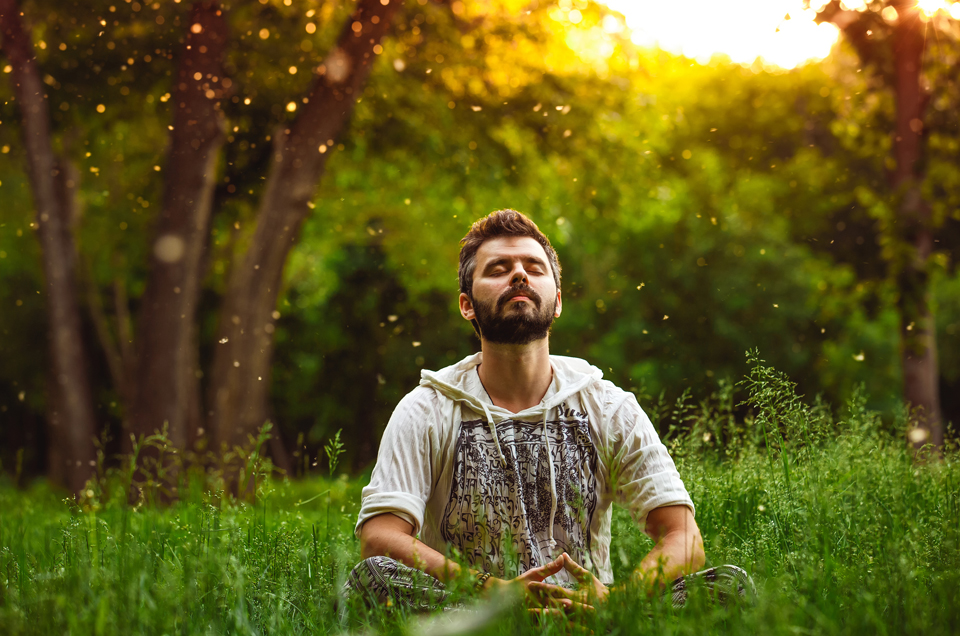
- How to practice:In order to practice this exercise, find a comfortable seated position with your back straight. Once seated, close your eyes and lightly plug your ears with your thumbs (placing your forefingers lightly on your eyes and forehead). Inhale deeply through your nostrils. As you exhale, produce a deep humming sound like that of a bee.
- Duration: Repeat for 6 to 10 breath cycles. Notice the vibrations in your facial bones and chest.
Supta Baddha Konasana (Reclined Bound Angle Pose): Releasing Somatic Tension
Emotional distress and trauma are often held as physical tension in the pelvic floor, psoas, and hip flexors. Opening these areas gently communicates somatic safety.
- How to practice: Lie on your back. Bring the soles of your feet together and allow your knees to fall open to the sides. Place cushions or yoga blocks under your outer knees so your hips can release entirely without straining. Place one hand on your heart and one on your belly.
- Duration: Hold for 5 to 8 minutes, matching the length of your inhalations to your exhalations.
How Different Yoga Practices Affect Your Nervous System
| Practice Type | Primary Physiological Target | Effect on Neurochemistry | Best Used For |
| Restorative Forward Folds (e.g., Balasana) | Vagus nerve & abdominal organs | Increases GABA; reduces acute cortisol | Acute anxiety, panic attacks, sensory overload |
| Gentle Inversions (e.g., Viparita Karani) | Baroreceptors & cardiovascular loop | Lowers heart rate; decreases blood pressure | Mental fatigue, grief, insomnia |
| Vibrational Breathwork (e.g., Bhramari) | Throat & facial vagal pathways | Boosts alpha brain waves; settles racing thoughts | Rumination, anger management, pre-sleep calming |
| Mindful Somatic Flow (e.g., Slow Hatha) | Proprioceptive brain networks | Balances dopamine and serotonin; reduces HPA reactivity | Chronic stress, depressive lethargy, emotional numbness |
Daily Emotional First-Aid Routine
to get your emotional equilibrium. What matters most is consistency, not the length. If you want to retrain your nervous system, then this small 15-minute pattern can fit right into your day. Ideally, early morning, during Vata time, or right after you finish work, when you feel you’re still carrying everything.
Minute 0–3:Sit quietly and do 8 rounds of Bhramari Pranayama to help you slide out of work mode.
Minute 3–7: Go into Balasana (Child’s Pose). Try to stay with the sensation; only notice how your ribcage expands, feel it against your thighs each inhale, like very gentle pressure and release.
Minute 7–15:Then ease into Viparita Karani (Legs-Up-the-Wall). Put an eye pillow on your eyes and let the breath turn effortless, even a little spontaneous.
When should you consult a Medical Professional?
Even though yoga and a few ayurvedic lifestyle refinements can be surprisingly helpful for emotional self-control, they’re really complementary supports, not a direct substitute for mental health treatment. You should, right away, talk with a doctor, clinical psychologist, or psychiatrist if any of these warning signs show up.

Difficulty handling everyday responsibilities: like staying stuck in bed, missing meals, failing to keep up basic hygiene, or not being able to meet work obligations, for more than about two weeks in a row.
Intense body symptoms: for example, unexplained chest pains, ongoing palpitations, long-lasting insomnia, or severe gut problems that simply do not ease with rest.
Trauma memories or panic attacks: if intrusive thoughts appear, they feel paralyzing, or panic attacks become so strong that the body starts to feel overwhelming and almost unsafe.
Thoughts about self-harm: if you’re having suicidal ideas, or thinking about hurting yourself, get emergency medical help immediately.
References
Yoga for Health: What the Science Says | NCCIH