 Published on
07 Aug, 2026
Published on
07 Aug, 2026 Updated on 29 Aug, 2026
 5073
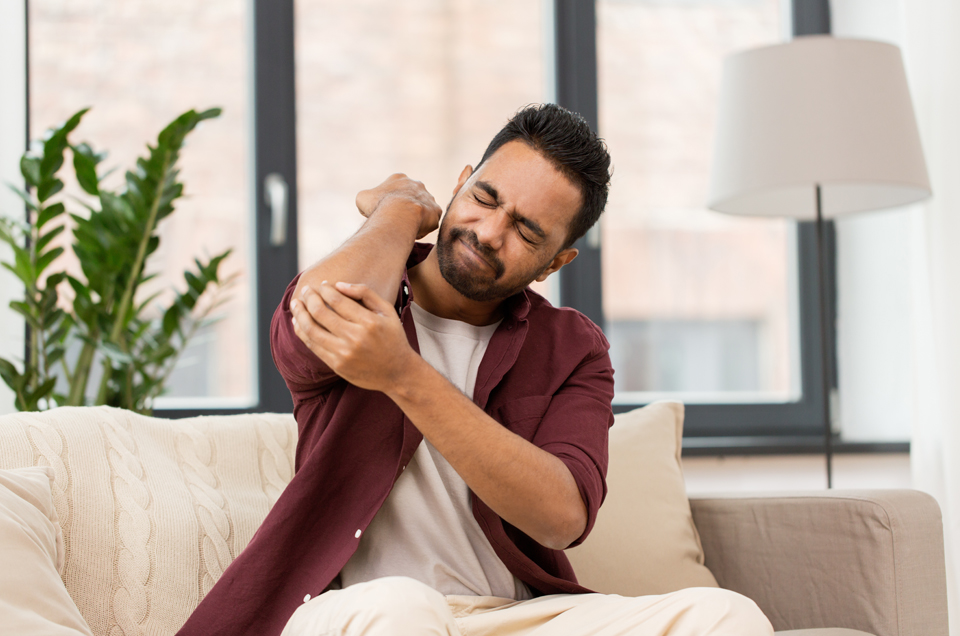
5073Do your joints feel stiff every morning when you wake up? Do you feel pain in your knees when climbing stairs, or unbearable discomfort in your joints while getting up and sitting down? As we age, our joints age too, becoming weaker over time, and old injuries can certainly come back to haunt us later in life.
Most of us assume these are the only reasons for joint pain, but that is not entirely true! Our daily lifestyle plays a massive role in our joint health. The way we sit, how we walk, and even our sleeping habits have a huge impact on them. Yet, we usually ignore these everyday factors, brushing the pain off as just a sign of aging or an old injury.
How Ayurveda Understands Joint Health?
In Ayurveda, joint pain occurs when Vata (air) in the body becomes out of control, and the grease between the joints begins to dry out. The bones begin to rub against each other, leading to cracking sounds, swelling, stiffness, and pain.
It's not just a result of "aging" but factors such as our lifestyle, sleeping habits, how we walk, how we sit, what we eat, when we eat, and how much we move all play a major role in the maintenance of healthy joints.
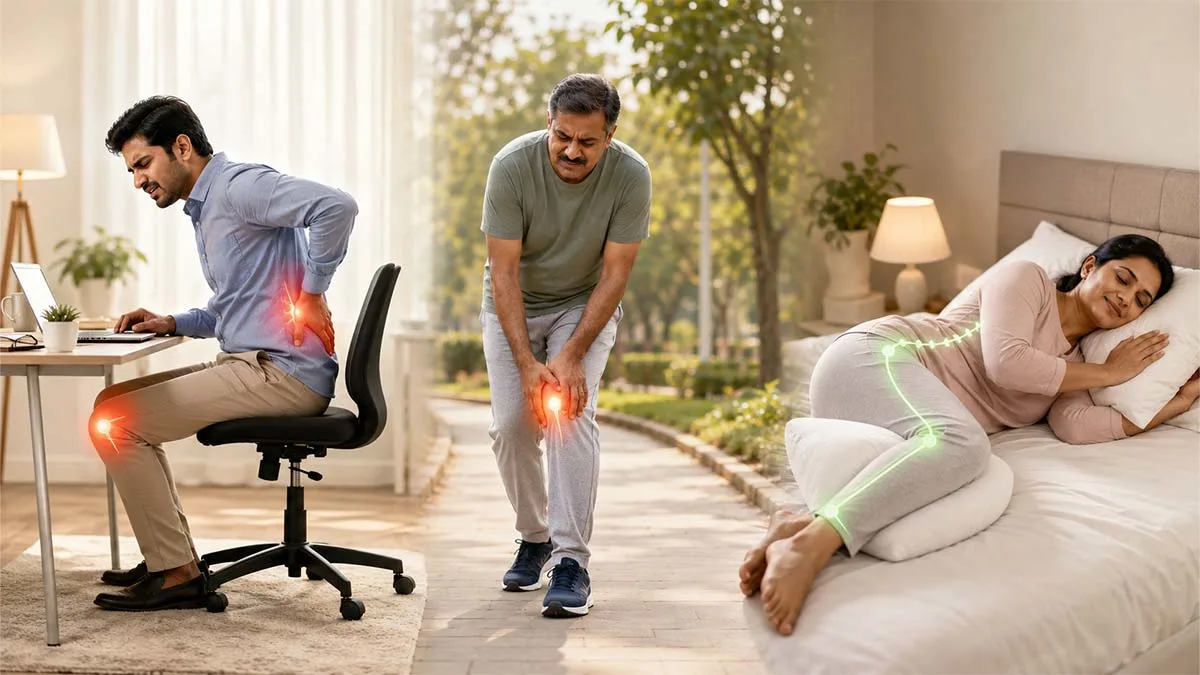
Joint Pain Checklist: Are Your Sitting Habits Hurting You?
Most adults spend six to ten hours a day just sitting, and they forget that their joints need air, too.
Bad posture: Leaning forward puts heavy stress on your neck and shoulders, throwing your whole body out of balance. If your shoulders roll forward and you lean into your screen, you need to sit up straight.
Sitting too long: Sitting still for hours slows down your blood flow and makes your hips and lower back very stiff. Just stand up and walk around for a couple of minutes every hour.
A bad desk setup: If your screen is too low, your neck will hurt. If your chair is too high, your hips take the hit. To fix this easily: Keep your feet flat on the floor, bend your knees at a 90-degree angle, put your screen right at eye level, and let your elbows rest naturally by your sides.
Crossing your legs frequently: Crossing your legs for a few minutes is fine, but doing it for hours puts uneven pressure on your muscles. Remember to keep shifting your position so one side doesn't do all the work.
Walking Habits That Can Increase Joint Pain
Our walking habits play an utmost importance in the health of our joints. The following are some of the common walking mistakes that we make which affect our joint health:
- Poor walking posture: If you walk down staring at your phone, it can affect your neck, shoulders, and knees. Just keep your head up while walking and let your hands swing naturally.
- Walking on a hard surface: Always walking on a hard surface can affect your legs. Try to walk on dusty or grassy surfaces so that you can give your legs a break.
- Wearing the wrong footwear: If you wear flat shoes or shoes without any cushioning, it can affect your ankles and joints severely. Try to pick shoes which has good surface so that your legs don't feel pressure while you walk.
- Walking too little or too much: If you do not walk at all, then it can make your legs stiff, which later on makes your joints and legs weaker. If you walk too much, then it can put pressure on your legs, making them weak. Keep a balance and walk accordingly with plenty of rest.
Sleeping Habits that Affect Your Joint Health
Sleeping is the process by which your body heals itself, and a bad sleeping posture can ruin the process, which can affect your joints severely.
Sleeping Position: Do not sleep on your stomach, avoid side sleeping without support, don't sleep on a flat or stacked pillow, or don't tuck your arms under the pillow, as all can affect your neck and shoulders severely. Sleep on your back, as it keeps your spine happy and straight.
Mattress & Pillow Support: Take a pillow and a mattress with good support that can help support your back, neck, and shoulders, and give you good sleep at night.
Nighttime Stiffness: It is completely normal to feel stiff in the morning as our joints stay still for hours. A gentle stretching can help in dealing with the stiffness, but it can be a problem when the stiffness stays all day and doesn’t go away even after the stretching.
Doctor’s Note
Fixing your posture and sleep habits can help ease everyday stiffness. But if your joint pain doesn't go away, wakes you up at night, or comes with swelling and redness, it's time to see a doctor. Severe pain needs medical treatment, not just lifestyle changes.
Morning Routine Checklist For Healthy Joints
The first hour of the day is the most important time of the day, which helps in setting the mood for your body.
Try these simple things in the morning for healthy joints:
- Do some stretches for a few minutes when you wake up.
- Drink a glass of warm water on an empty stomach.
- Walk around the house for a few minutes.
- Do not lift heavy things in the morning.
- Roll your shoulders, hips, and ankles.
- Stand straight while you brush your teeth.
Food & Nutrition That Support Joint Health
What you eat changes how your bones and muscles feel. A diet full of fresh veggies, fruits, whole grains, nuts, seeds, and healthy fats gives your body the nutrition it needs to stay strong. Drinking enough water is just as important because it keeps your tissues healthy. Also, try to avoid unhealthy processed foods and sugary drinks. This keeps your weight in check, which helps in removing the massive load from your joints.
Lifestyle Habits That Quietly Damage Your Joints
Some things quietly damage your joints, which are:
- Smoking cigarettes and drinking alcohol
- Carrying extra body fat
- Lifting heavy weights the wrong way
- Ignoring weak muscles and putting more pressure on them
- Wearing shoes that do not fit right
- Sitting all day without breaks
- Not getting enough sleep every night
Warning Signs that Should Not Be Ignored
Being a bit sore after a walk is fine, but you should definitely see a doctor if:
- Pain that lasts for weeks and doesn’t go away
- Swelling around joints
- You are not able to put weight on your leg
- Waking up with a stiff body and joints daily
- Having a fever for a long time with joint pain
- Losing your ability to move properly
Conclusion
Your everyday choices decide how your joints feel. The way you sit at work, walk down the street, and lie in bed really adds up over time. But the good part is that you can control all this by making some changes in your lifestyle. If you just improve your posture, get up to stretch, wear better shoes, and fix your bed, you will feel much better. If the pain persists, then see your doctor, as it can be a sign of a serious disease.
References
A practical approach to joint pain in primary care - PMC