 Published on
18 Jul, 2026
Published on
18 Jul, 2026 Updated on 24 Jul, 2026
 5093
5093Many people have experienced this situation. You wake up in the morning, swing your legs out of bed, and the moment your heel hits the floor, a sharp, shooting pain makes you wince. Or maybe it is your knees clicking and grinding every time you take the stairs.
Convinced that your diet finally caught up with you, you rush to the lab. You get your blood test back, expecting the worst. You scan the report, and right there in black and white: Uric Acid - 5.2 mg/dL. Your test results appear normal, but your joint pain continues.
The frustration of having a "normal" blood report while living with daily, visible joint pain leaves thousands of people completely baffled every year. If it is not uric acid, what exactly is happening inside your joints? Read to know the possible reasons from both modern medicine and Ayurveda perspectives.
Looking Deeper Than Your Bloodstream
Before we talk about kitchen remedies, we have to clear up a massive piece of confusion about how pain actually works in the body. Modern tests measure different markers present in the bloodstream. But your joint pain does not live in your blood; it lives in your Asthi (bones) and Sandhi (the joint spaces).
Just because the transport highway (your blood) is clear does not mean the destination (your joints) is healthy. When you look at it through the lens of traditional Indian medicine, uric acid is just one tiny piece of the puzzle. There are several conditions that can cause symptoms similar to high uric acid.
The "Bone-Dry" Joint: The Vata Problem
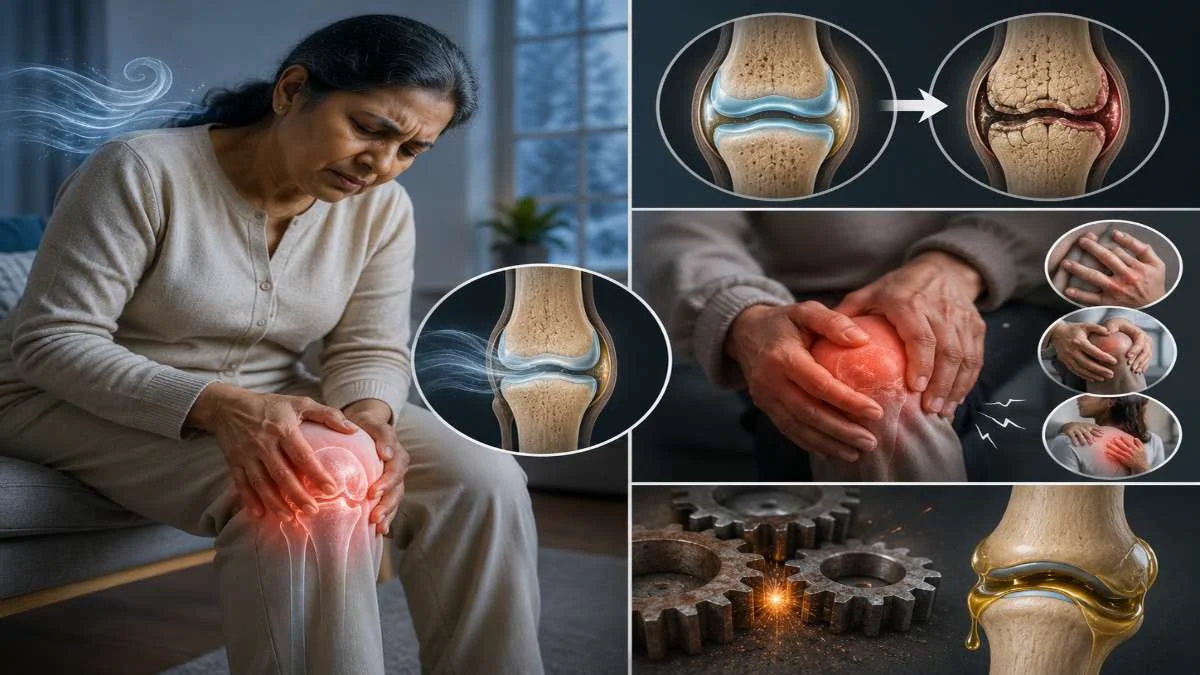
This is the mistake that trips up almost everyone. If you have a naturally dry, cold-prone body type, or if you are over the age of 40, your body easily accumulates Vata (the internal energy of wind and space).
Think of wind; it dries things out. Inside your joints, you have a natural, thick, oily lubricant called Sleshaka Kapha (synovial fluid). When excessive internal wind builds up, it literally dries out this fluid.
- The feeling: Grinding, clicking, popping, and stiff joints, especially in the early mornings or cold weather.
- The reality: There is no acid burning you. Your joints are simply running on metal-to-metal friction because the oil has dried up.
The Sticky Glue: When Ama Mimics Acid
If your pain feels heavy, swollen, and worse in damp weather, you are likely not dealing with acid at all. You are dealing with Ama.
Ama is the sticky, toxic residue of undigested food. When your digestive fire is weak, the food you eat doesn't convert into pure energy. It turns into a heavy, glue-like sludge that travels through your body and settles into the empty spaces of your joints, clogging up the natural movement.
- The feeling: Your joints feel heavy, stiff, and slightly swollen, accompanied by a feeling of general lethargy and a coated tongue in the morning.
- The reality: Taking standard uric acid medication for this will do nothing, because you need to fix your digestion, not your blood chemistry.
The Burning Sensation: A Pitta Overload
What if your joints are red, hot to the touch, and fiercely painful, but the uric acid is still normal? This is a classic Pitta (fire) flare.
If you have a hot-tempered body type, your system easily accumulates heat. When this excessive heat mixes with your blood (Rakta Pitta), it causes intense local inflammation in the smaller joints, usually the big toe or the fingers. It looks and acts exactly like gout, but without the uric acid crystals.
- The feeling: Sharp, burning pain, redness, and joints that feel hot when you touch them.
- The reality: Your body is dealing with systemic heat and inflammation, usually triggered by spicy, sour, or fermented foods.
Dietary Triggers You Might Be Ignoring
Some dietary habits may contribute to ongoing joint discomfort. Even if you have cut out the classic high-purine foods like spinach, you still need to watch out for these daily triggers:
- Cold, dry snacks: Chowing down on dry crackers, popcorn, or raw, cold salads increases the internal wind (Vata) and dries out the joint fluid faster.
- Stale, leftover food: Eating food cooked more than 24 hours ago creates that sticky Ama we talked about, directly plugging up the joint channels.
- Excessive sour foods: Fermented foods, old yogurt, and excessive vinegar aggravate the internal fire (Pitta), mimicking the burning sensation of a gout attack.

Daily Habits That Secretly Lock Your Joints
Sometimes, the way you structure your day does more damage to your knees and heels than what is sitting on your plate.
- Waking up into cold air: Stepping out of a warm bed onto a freezing tile floor immediately shocks the nerves and contracts the joint spaces. Always keep slippers beside your bed.
- Staying up past midnight: Skipping sleep aggravates the wind element drastically. The later you stay awake, the drier and stiffer your joints will feel the next day.
- Suppressing natural urges: Holding in sneezes, yawns, or bathroom trips forces the internal wind to travel in reverse, pushing pressure directly into the pelvic and knee joints.
Traditional Kitchen Fixes for Lubrication
We do not always need a pharmacy to find relief. Our kitchens are packed with powerful, time-tested tools to flush out toxins and rebuild the lost oil in our joints.
- The Castor Oil flush: For heavy, sticky pain, a small teaspoon of pure, food-grade castor oil in a cup of warm ginger water at bedtime helps sweep the digestive tract clear of sticky toxins.
- The Sesame Oil shield: For dry, clicking joints (Vata), gently warming cold-pressed sesame oil and massaging it around the knees and ankles before a warm shower rebuilds the lost lubrication.
- The Coriander cooler: For hot, red, burning joints (Pitta), soaking coriander seeds in water overnight and drinking the strained water in the morning may help provide a cooling effect according to Ayurvedic principles.
A Quick Doctor’s Note
While balancing your internal energies is powerful, you must always use common sense. Normal uric acid does not rule out other serious conditions. If your joint pain is accompanied by a high fever, if the joint looks visibly deformed, or if the pain is symmetrical (e.g., both wrists or both knees hurting equally at the exact same time), this could be a sign of Rheumatoid Arthritis, an autoimmune flare, or a structural tear. In these cases, you must consult a specialist to rule out internal damage before relying solely on kitchen remedies.
Conclusion
We spend so much time chasing numbers on a lab report that we forget to listen to the very real signals our bodies are sending us. Just because a machine says you are fine does not mean your pain isn't real.
Your joint pain is a living, breathing message. It might be asking for more warmth and oil, it might be begging you to fix your sluggish digestion, or it might be pleading for a break from heat and inflammation. Listen to your body carefully. Honor the natural wisdom of your unique constitution, bring a little warmth and lubrication back into your routine, and remember that true healing starts long before the blood test!
Reference:
Gout in Knee: Symptoms, Remedies, Triggers, Complications
Gout – symptoms, causes and treatment | healthdirect
The inflammation process of gout arthritis and its treatment - PMC