 Published on
13 Jul, 2026
Published on
13 Jul, 2026 Updated on 13 Jul, 2026
 5092
5092We have all been there. You wake up in the morning, ready to tackle a big day at work or attend a family event. You walk into the bathroom, look in the mirror, and there it is, a massive, angry, red pimple sitting right in the middle of your forehead or cheek.
Panic sets in. You immediately reach for that expensive salicylic acid face wash, dab on heavy spot-treatment creams, and maybe try to cover it up with layers of makeup before rushing out the door.
The market and the shelves of the pharmacy are full of fancy serums, chemical exfoliants, and overnight acne patches, but for most of us, we know how frustrating it is to get rid of an acne problem only for another one to crop up a week later. It takes thousands of rupees to pamper the surface of our skin! However, what if you're not looking in the right place at all? But is the cause of that red, angry, face-busting pimple not dirt on your face, but what's in your stomach?
Can your digestion really control what happens on your cheeks and jawline? Are they basically doing the same job? The answer is a potential yes. Let us break it down simply.
Why We Need to Look Deeper Than Just Our Pores?
We have all been told a million times to "wash your face twice a day" to stop acne. And yes, keeping your skin clean is essential. But healthy skin is about a lot more than just scrubbing away dead cells and excess oil.
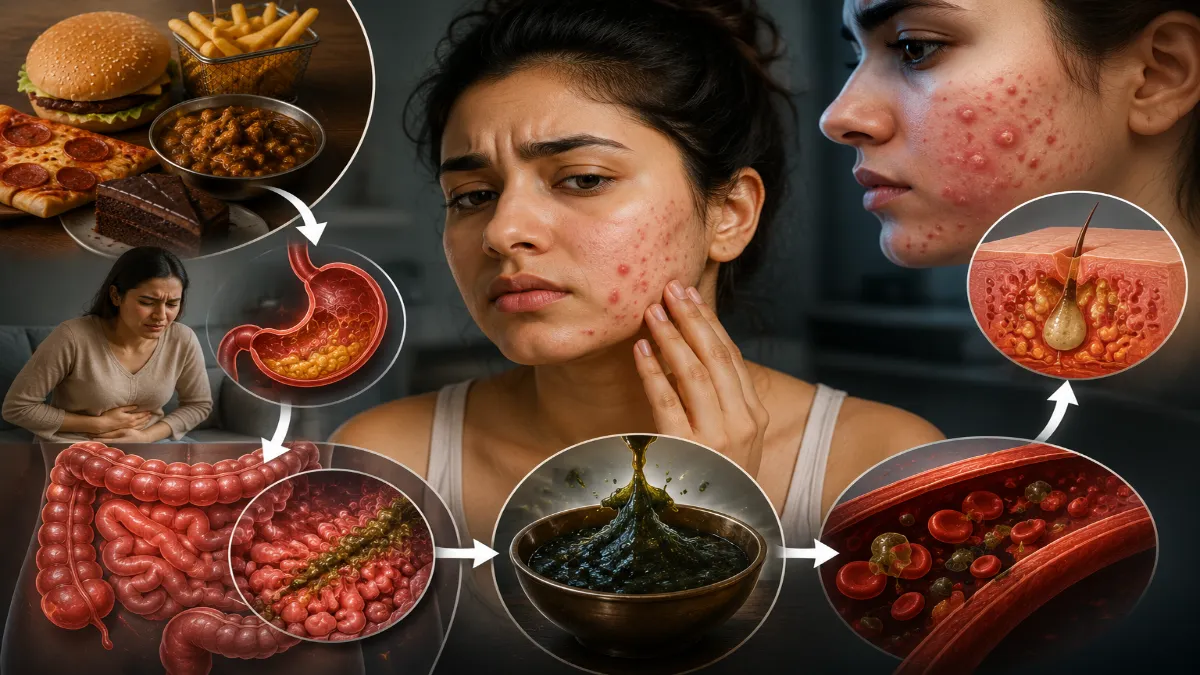
When you eat heavy, oily, or highly processed food, your stomach has to work incredibly hard to break it down. If your digestion is sluggish, that food just sits there.
In Ayurveda, this is the core of almost every disease. Your digestive fire is called Agni. When your Agni is weak, the undigested food turns into a sticky, toxic waste called Ama. If your body cannot clear this toxic waste out through regular, healthy bowel movements, it eventually enters your bloodstream (Rakta).
Your body is really smart, and it will eliminate these toxins wherever it can to get them out of your system, namely, through the biggest organ of elimination: your skin. So, if you're suffering from painful pimples down by your jawline or the redness or persistent acne on your cheeks? It's more than a skin disease. That's your body yelling out in extreme red flag mode, asking for assistance. Your skin is showing you what's happening in your gut.
Doctor’s Note
We must remember that while holistic gut healing is foundational for clear skin, acne can sometimes indicate complex internal issues. This is crucial for your safety and long-term health.
If you are dealing with severe, painful cystic acne that leaves deep scars, or sudden, explosive breakouts across your face and back, please consult a dermatologist. Severe acne can be a sign of deeper hormonal imbalances like PCOS (Polycystic Ovary Syndrome) or a stubborn bacterial infection that requires targeted medical treatment. Never suddenly stop taking the topical creams or medicines by mouth. The lifestyle changes and gut healing routines in Ayurveda should be used to give extra aid to your medical treatment, rather than a substitute for professional diagnosis and care to treat severe inflammatory skin diseases.
The Fire Element: Pitta Dosha and Breakouts
According to Ayurveda, inflammatory acne is primarily a Pitta Dosha problem. Pitta is the energy of heat, fire, and metabolism in the body.
If you continue to eat a lot of spicy curries, eat deep-fried food, eat sour food, or consume excessive quantities of coffee, then you are adding pure gasoline to the internal Pitta fire. This too much heat accumulates in the blood and in the liver. This fiery, hot energy combines with the toxic Ama (toxins) from poor digestion, and comes to the surface of the skin in the form of angry, red, pus-filled acne.
This is where traditional Indian kitchen wisdom comes to the rescue. To clear the skin, we do not just need to dry out the pimple from the outside. We need to cool the stomach, flush out the toxins, and balance that raging internal fire. Here are three incredibly simple, traditional gut-healing drinks that do exactly that.
The Morning Flush: Warm Lemon and Honey Water
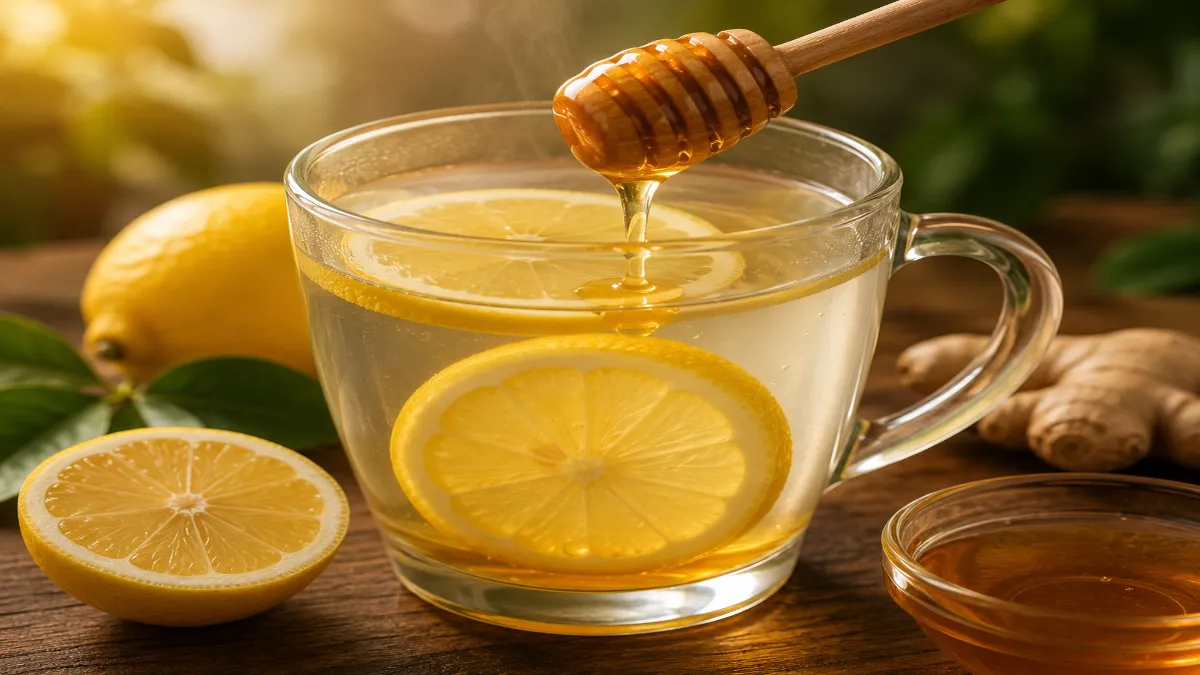
This is a deeply loved morning ritual across almost every health-conscious home in the country. It is incredibly simple to make. You take a glass of comfortably warm (not boiling hot) water, squeeze in half a fresh lemon, and stir in a spoonful of raw honey.
Unlike a heavy, milky coffee that can make your stomach instantly acidic and jittery, this drink is light, cleansing, and totally refreshing.
What Does It Do for You? This drink is basically a gentle wake-up call for your stomach. The warm water and lemon work together to kickstart your Agni (digestive fire) and gently scrape away the sticky Ama that has built up in your digestive tract overnight. The honey acts as a natural antibacterial agent. When you drink this, it helps flush out the bowels, ensuring that toxins go down the toilet instead of out through your facial pores.
When is the Best Time to Drink It? This is strictly an early morning drink. Have it on a completely empty stomach, right after you wake up and brush your teeth, at least 30 minutes before your breakfast.
The Cooling Shield: Coriander and Fennel Tea
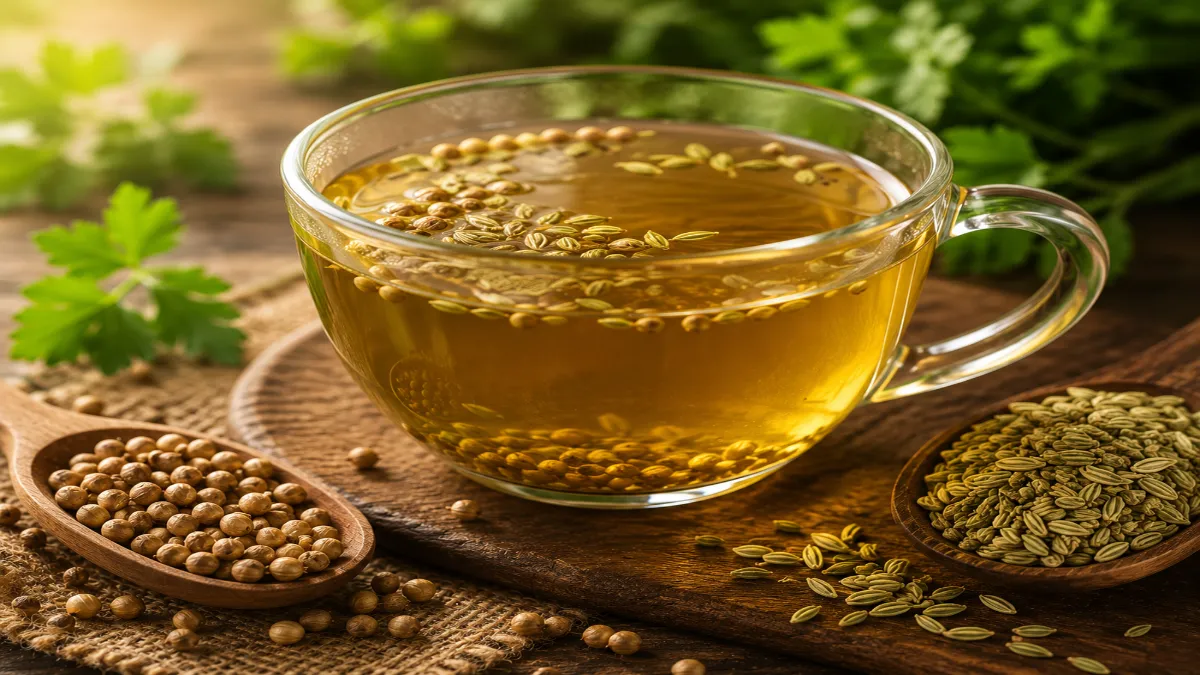
This is the beverage you should find in the kitchen waiting for you if your acne is red, throbbing, and hot. It is prepared with two teaspoons of coriander seeds (dhaniya), two teaspoons of fennel seeds (saunf), and a glass of water, which is soaked overnight. All you do in the morning is strain the water and drink it.
What Does It Do for You? Both coriander and fennel are brilliant Sheetala (cooling) spices. While they help digest your food, their main job is to put out the excess Pitta fire in your stomach and blood. Coriander specifically acts as a powerful blood purifier (Rakta shodhak). It cools your body down from the inside out and helps calm the deep inflammation that makes pimples look so angry and swollen.
When is the Best Time to Drink It? This is best enjoyed mid-morning or mid-afternoon. If you suffer from severe acidity, heartburn, or intense thirst along with your acne, drinking this slightly sweet, earthy water will instantly cool your core temperature and soothe your gut lining.
The Ultimate Healer: Triphala
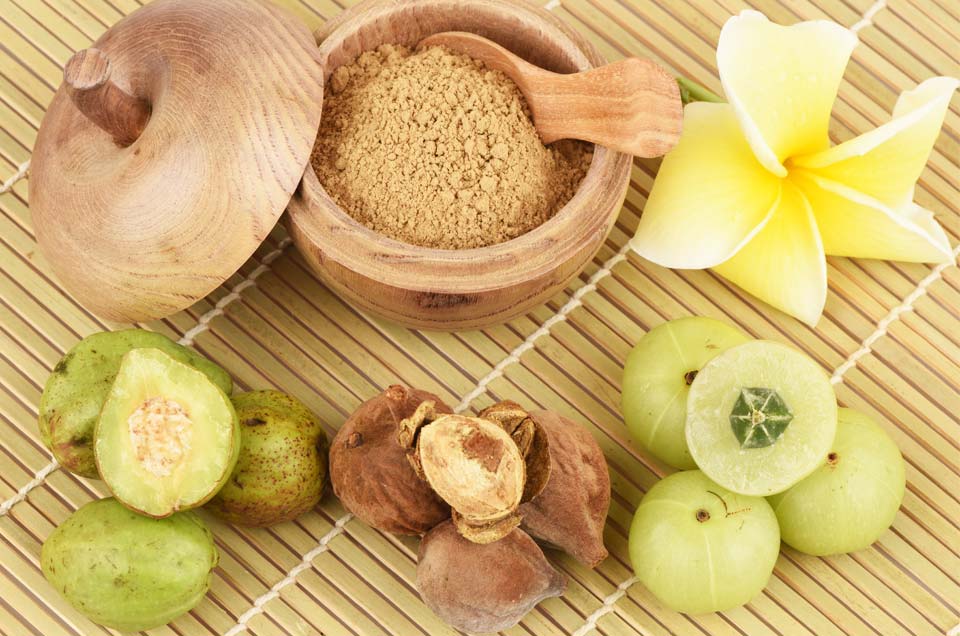
Where lemon water is a fast drink to start the day, Triphala is a long-lasting remedy for deep healing. Triphala is an ancient herbal formula from the Ayurveda system and is a combination of 3 strong fruits, namely Amla, Bibhitaki, and Haritaki. All you need to do is have half a teaspoon of it in a small glass of warm water before bed.
What Does It Do for You? Triphala is often called the ultimate gut superfood, and it is truly magic for the skin. It does not just force your bowels to move; it gently cleanses, tones, and heals the entire digestive lining. Amla is bursting with Vitamin C and powerful antioxidants (incredible for skin repair), while the other fruits ensure that all three doshas stay in perfect balance. It gives you a slow, steady detox that lasts all night.
When is the Best Time to Drink It? Triphala is incredibly effective when taken right before bed, at least an hour after your dinner. It works its magic while you sleep, ensuring that you wake up with a clean stomach and, eventually, a clear, glowing face.
Which Fix Should You Choose Today?
Since we aren't looking at a chart, let us just think about your day and match the remedy to your current need.
If your stomach feels heavy in the mornings and you struggle with mild constipation, go for the Warm Lemon and Honey. It will kickstart your digestion and clear out the daily sluggishness.
If you are feeling very hot, experiencing acid reflux, and your breakouts are intensely red and painful, grab a glass of Coriander and Fennel water. It will cool your blood, calm the inflammation, and soothe your stomach instantly.
If you have been dealing with chronic, stubborn acne for months and your digestion is completely unpredictable, Triphala is your best friend. Because it balances all the doshas, it will slowly rebuild your gut health from the ground up over time.
A Few Things to Keep in Mind
While these traditional drinks are wonderful, everyone's body is different. Here is who should be a little careful:
- If you are buying honey, make sure it is raw and unheated. Never put honey into boiling hot water. Ayurveda explicitly states that heated honey becomes toxic and actually clogs the body's channels, which will make your acne worse.
- If you are pregnant or breastfeeding, always check with a doctor before starting a daily habit of Triphala, as it has a downward-moving energy that needs to be monitored.
- If you are not used to herbal powders, Triphala can taste quite strong and earthy. Start with a very small pinch mixed in warm water to let your body adjust before moving up to a half-teaspoon.
Conclusion
We don't need to look for fancy, expensive, imported skin treatments to survive breakout season. Our grandmothers already figured out the best ways to keep our skin clear, bright, and healthy by focusing entirely on keeping our stomachs happy.
Warm lemon water, fennel tea, and Triphala have survived the test of time because they actually work at the root cause. You don't have to pick just one favorite. Listen to your body. Flush out the morning toxins, cool down that internal heat, and heal your digestion before bed. Fix your gut, and watch how beautifully your skin responds!
References:
Acne Types, Causes, & Risk Factors | NIAMS
Acne - treatments, causes and prevention | healthdirect
Potential Role of the Microbiome in Acne: A Comprehensive Review - PMC
Acne vulgaris, probiotics and the gut-brain-skin axis - back to the future? - PMC