 Published on
08 Aug, 2025
Published on
08 Aug, 2025 Updated on 25 May, 2026
 5554
5554According to the National Sample Survey 2023, nearly half of all Indians use some form of AYUSH health system each year for preventing or treating diseases, with Ayurveda being the most preferred. This suggests that you may heard the term “dosha”.
However, what you may not know is that Ayurveda offers a simple yet powerful tool to understand yourself through your dosha type. In this article, we will help you explore how your body, mind, and emotions naturally work, so you can shape your daily habits, diet, sleep, stress relief, and more for a healthier, calmer life.
What Does “Dosha” Mean in Ayurveda?
According to Ayurveda, doshas are the energies that make up your body and mind. These energies decide how you look, how your digestion works, how you react to stress, how active or lazy you feel, and even how emotional or calm you are.
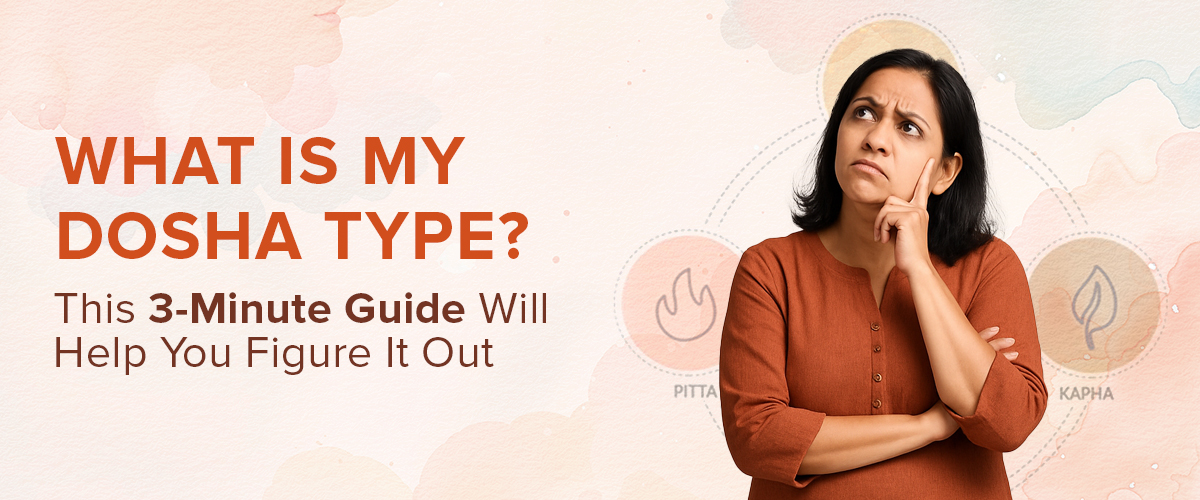
Ayurveda says that every person is born with a unique mix of three doshas, i.e., Vata, Pitta, and Kapha. These three are made from the five elements (air, water, fire, earth, and space), and they control all the functions in your body.
- Vata is linked to air and space. It controls movements, like breathing, blood flow, and even thoughts.
- Pitta is made of fire and water. It manages digestion, metabolism, and body temperature.
- Kapha comes from earth and water. It handles strength, immunity, and emotional stability.
Most people have a mix of two doshas, like Vata-Pitta or Pitta-Kapha, but one is usually stronger than the others. This dosha is the most important one for how you look, act, think, and feel.
For example, if you are thin, talkative, and move quickly, you might be Vata dominant.
You might be Pitta dominant if you are sharp, focused, and have a strong appetite.
You might be Kapha dominant if you are calm, strong, and steady.
Knowing your dosha is like knowing how your body works. You can start making better choices that fit your natural design instead of going against it once you know it.
How to Identify Your Dosha
Your dosha is your natural constitution, known in Ayurveda as Prakriti. It’s the unique blend of Vata, Pitta, and Kapha you were born with — your body’s original blueprint.
Most people are dominant in one dosha or a combination of two. Very few people are perfectly balanced in all three. Understanding your primary dosha helps you make choices that support your natural strengths instead of working against them.
Why Should You Know Your Dosha Type?
It's not just interesting to know your dosha. It's about being in harmony with who you really are. When your doshas are in balance, you feel good both inside and out. You might feel tired, anxious, irritable, or even get sick more often when they get out of balance.
Here's why it's important to know your dosha type:
1. Better Overall Health
You can do the following things when you know your dosha:
- Pick the right foods to eat. For example, Vata types need warm, oily foods, and Pitta types need cool foods.
- Do things every day that fit your energy level.
- Stay away from things that throw off your natural balance.
This can help you feel less bloated, tired, or sick all the time.
2. Clearer Thoughts and Feelings
Each dosha also has an effect on how you think and feel:
- People with vata types may get nervous easily.
- Pitta types may get mad quickly or act too competitive.
- Kapha types may feel tired or bored.
It's easier to deal with these moods and feel more emotionally stable when you follow dosha-based advice.
3. Making Better Choices in Life
You can do the following once you know your type:
- Choose the right kind of exercise for you. For example, calming yoga is good for Vata, and cooling activities are good for Pitta.
- Change the way you sleep.
- Plan your workday around when you have the most energy.
4. Preventing Health Problems Naturally
When one or more of your doshas get out of balance, most illnesses begin. If you understand your type, you can:
- Catch early signs of imbalance.
- Take simple steps to prevent illness, like changing your diet or routine with the seasons.
5. Stronger Self-Awareness
This test helps you understand why you are the way you are. You’ll know:
- What helps you feel your best.
- What pushes you into stress or illness?
- How to bounce back when things feel off.
In short, knowing your dosha gives you a simple plan for everyday living. It’s not about fixing what’s wrong; it’s about supporting what’s already right in you. And the best part? You don't need any chemical medicines or treatments to start.
What Are The Three Doshas: Vata, Pitta, and Kapha?
Ayurveda says that your body is made up of three main energies or forces: Vata, Pitta, and Kapha. These aren't just thoughts or ideas. They are real powers that affect how your body moves, digests, grows, and rests.
Everyone has all three doshas in their body, but one or two are usually stronger than the others. Let's look at each dosha in a simple way so you can figure out which one is the strongest in you.
1. Vata: The Energy of Movement, Air and Space
Vata controls all movement in the body and mind, including breathing, blood flow, heartbeat, and even thoughts.
Physical Traits:
- Slim build and often not enough weight
- Hands or feet that are cold and dry
- Has low stamina and gets tired quickly
Mental Traits:
- Very imaginative and full of new ideas
- Talks and thinks quickly
- Can easily forget or get sidetracked
Personality:
- Loves change and variety
- Excited about new things, but they might not be able to finish them
- When stressed, they often feel anxious or overwhelmed
2. Pitta: The Energy of Digestion and Change
Pitta's main job is to control your digestion, body temperature, metabolism, and sharp thinking.
Physical Traits:
- Medium build with strong muscles
- Body temperature is warm and often feels hot
- A strong appetite and quick digestion
Mental Traits:
- A sharp mind and a good memory
- Goal-oriented and focused
- Gets mad when things don't go as planned
Personality:
- Leader by nature, self-assured, and driven
- Enjoys competition and challenges
- Can get angry or violent when stressed
3. Kapha: The Energy of Strength and Stability
Kapha gives your body structure and helps you stay strong, healthy, and emotionally stable.
Physical Characteristics:
- Big and heavy, and they gain weight easily
- Skin that is smooth and oily and thick hair
- Slow digestion and less appetite
Mental Traits:
- Steady, calm, and loving
- Learns slowly but remembers things well
- Doesn't like change and takes a while to get used to it
Personality:
- Faithful and reliable
- Likes to be at peace and comfortable
- Can get lazy or too attached to their routines
You will start to see patterns in your habits, energy, and even health once you know which of these doshas is most dominant in you. This self-awareness is the first step toward feeling better every day.
Can You Be More Than One Type?
Absolutely. In Ayurveda, it’s very common to have a dual constitution. Many people are Vata–Pitta, Pitta–Kapha, or Vata–Kapha rather than strongly dominant in just one dosha.
A dual type simply means two energies are equally influential in your natural makeup. For example:
- A Vata–Pitta person may be creative and quick-thinking (Vata) but also ambitious and driven (Pitta).
- A Pitta–Kapha type might combine focus and leadership (Pitta) with steadiness and emotional resilience (Kapha).
- A Vata–Kapha individual may feel both imaginative and calm, yet occasionally struggle with inconsistency in energy.
A rare few people have a near-equal balance of all three doshas. This is sometimes considered an especially stable constitution, though even tri-doshic individuals can experience imbalance.
Does Your Type Ever Change?
Your core constitution (Prakriti) remains relatively stable throughout your life. It’s your baseline nature — like your eye color or bone structure. However, your current state of balance can absolutely shift.
Stress, poor sleep, seasonal changes, travel, emotional strain, aging, and diet can all disturb one or more doshas. For example:
- Chronic stress may aggravate Vata.
- Overworking and spicy foods may increase Pitta.
- Sedentary habits and heavy meals may elevate Kapha.
This temporary state of imbalance is different from your true constitution. The goal of Ayurveda isn’t to change who you are — it’s to gently guide your body back to its natural equilibrium.
How Can You Tell If a Dosha Is Out of Balance?
Your doshas are always shifting depending on your age, lifestyle, stress levels, food habits, and even the seasons. A dosha that is out of balance can make you feel bad physically, mentally, or emotionally.
Let's look at how to tell if each dosha is out of balance.
Vata Imbalance: Feeling Dry and Scattered
You might notice the following if Vata is too high:
- Worry, being restless, or having racing thoughts
- Having trouble falling asleep or waking up a lot at night
- Dry skin and lips, or nails that break easily
- Bloating or constipation
- Always feeling cold
Your life might also feel a little out of control. You might start a lot of things, but have trouble finishing them. You might switch between thoughts without being able to focus.
Pitta Imbalance: Getting Hot and Angry
Signs that Pitta is out of balance include:
- A lot of anger, irritability, or impatience
- Rashes, acne, or red patches on the skin
- Burning feeling in the stomach (heartburn or acidity)
- A lot of sweating and feeling too hot
- Headaches or swelling
You might notice that you are too competitive, work too much, or get angry with people easily.
Kapha Imbalance: Feeling Stuck and Heavy
You might feel:
- Being lazy, dull, or sleeping too much
- Gaining weight or feeling bloated
- Slow digestion or not wanting to eat
- Cough, cold, or stuffy chest
- Feeling stuck emotionally or too attached
You might have trouble starting new things, feel like you don't want to do anything, or want to stay in your comfort zone even when it's not helping you.
Dosha-Based Diet & Meal Tips
In Ayurveda, food is medicine. The goal is simple:
- balance like with opposite qualities
- If you feel dry, add moisture.
- If you feel overheated, add cooling foods.
- If you feel heavy, choose lighter meals.
Eating for Vata Balance
Since Vata is cold and dry, it benefits from warmth and nourishment.
Focus on:
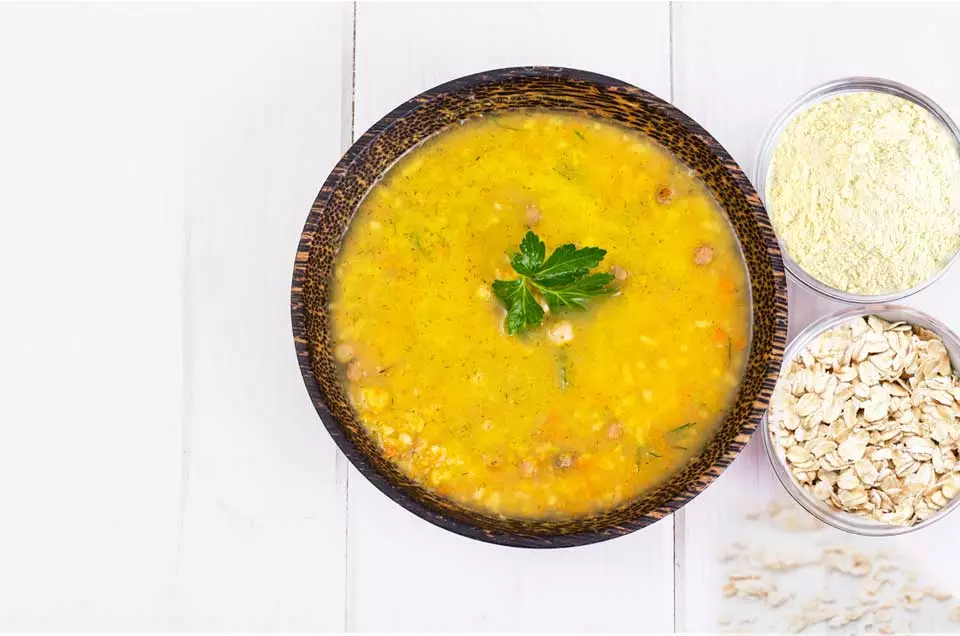
- Warm soups and stews
- Cooked grains like rice and oats
- Root vegetables
- Healthy fats like ghee and sesame oil
- Warm herbal teas
Reduce:
- Raw salads
- Cold smoothies
- Dry crackers or chips
- Skipping meals
Vata thrives on regular mealtimes and warm, comforting dishes.
Eating for Pitta Balance
Since Pitta is hot and intense, it needs cooling and calming foods.
Focus on:
- Sweet fruits like pears and melons
- Cucumbers and leafy greens
- Coconut and mint
- Whole grains like barley and rice
Reduce:
- Excess spicy food
- Fried or oily meals
- Too much caffeine
- Sour or fermented foods in excess
Pitta types benefit from eating in a relaxed environment and not working through meals.
Eating for Kapha Balance
Since Kapha is heavy and slow, it benefits from lightness and stimulation.
Focus on:
- Steamed or sautéed vegetables
- Legumes
- Light grains like quinoa or millet
- Warming spices such as ginger and black pepper
Reduce:
- Heavy dairy
- Fried foods
- Sugary desserts
- Overeating
Kapha often feels best with lighter dinners and occasional fasting (if appropriate).
Daily Routines for Each Dosha
Routine, or Dinacharya, is one of Ayurveda’s most powerful tools. Your body thrives on rhythm.
Ideal Routine for Vata
Vata needs structure and grounding.
- Wake up around 6 AM
- Practice gentle yoga or stretching
- Eat meals at consistent times
- Wind down early
- Sleep before 10 PM
Warm oil self-massage (abhyanga) is especially helpful for calming the nervous system.
Ideal Routine for Pitta
Pitta needs balance and cooling.
- Avoid working late into the night
- Exercise during cooler parts of the day
- Schedule breaks to reduce stress
- Practice calming breathing exercises
Pitta thrives when productivity is balanced with relaxation.
Ideal Routine for Kapha
Kapha needs stimulation and movement.
- Wake before 6 AM
- Start the day with invigorating exercise
- Keep meals light
- Avoid daytime naps
Kapha benefits from variety, social interaction, and new experiences.
How Seasons Impact Dosha Balance
Nature directly affects your internal balance. Ayurveda teaches seasonal living, or Ritucharya, to prevent imbalances before they begin.
Autumn & Early Winter —Vata Season
Cold, dry, and windy weather increases Vata.
Support yourself with:
- Warm meals
- Extra sleep
- Cozy routines
- Moisturizing oils
Summer — Pitta Season
Heat increases Pitta. Support yourself with:
- Cooling foods
- Hydration
- Less intense workouts
- Time in nature
Late Winter & Spring — Kapha Season
Dampness and heaviness increase Kapha. Support yourself with:
- Light detoxifying foods
- Movement
- Warming spices
- Decluttering your space
When you align with seasonal changes, your body adjusts more easily and stays resilient.
When to Talk to a Practitioner
Self-awareness is a powerful first step. Learning about your dosha, adjusting your meals, and building a supportive routine can create meaningful change. But sometimes, despite your best efforts, something still feels “off.” That’s when deeper guidance can make a real difference.
In Ayurveda, health is not just the absence of disease — it’s a state of balance between body, mind, and environment. When imbalances become persistent or complex, working with a qualified Ayurvedic practitioner can help you move beyond guesswork and into clarity.
Consider professional support if you experience:
- Chronic digestive issues such as bloating, constipation, acidity, or irregular appetite
- Persistent fatigue even after adequate rest
- Hormonal imbalances (irregular cycles, mood swings, low libido, thyroid concerns)
- Anxiety or stress that doesn’t improve with lifestyle changes
- Ongoing skin conditions like acne, eczema, or unexplained rashes
- Difficulty identifying your constitution or feeling confused between multiple doshas
While online quizzes and general advice are helpful starting points, they cannot replace individualized assessment.
Ready to Find Out Your Dosha Type?
If you're curious about your dosha, there’s no better time to explore it than now. Take a simple step today toward understanding yourself better, both physically and emotionally.
At Jiva Ayurveda, you can talk to certified experts who will help you find your true dosha type and guide you on how to balance it. Whether you’re dealing with health issues or just want to feel better in your daily life, this free consultation can point you in the right direction.
You can choose to speak over a phone call, through video, or visit a nearby Jiva clinic. Get started on the road to natural health and balance. Get in touch with a Jiva expert today to schedule your free consultation.
FAQs
1. How can I tell what body type I am according to Ayurveda?
You can take a short dosha quiz that asks about your habits, feelings, and physical traits. It helps you figure out what your main Ayurvedic body type is.
2. What type of dosha is the least common?
The least common type is when all three doshas, i.e., Vata, Pitta, and Kapha are in perfect harmony. This is a Tridoshic type, which is very rare.
3. What does someone with Vata look like?
People with vata are usually thin, have dry skin, cold hands or feet, and move quickly. They usually have small features and a thin body.
4. What does a Pitta female body look like?
A Pitta woman usually has a medium build, a body temperature that is warm, good digestion, and sharp features. She might get rashes on her skin or feel hot easily.
5. Can my dosha type change as I get older?
Your dosha balance can change as you get older, change your lifestyle, feel stressed, or due to seasonal changes. That's why it's a good idea to take the test again every now and then.