 Published on
29 Jun, 2026
Published on
29 Jun, 2026 Updated on 03 Jul, 2026
 5134
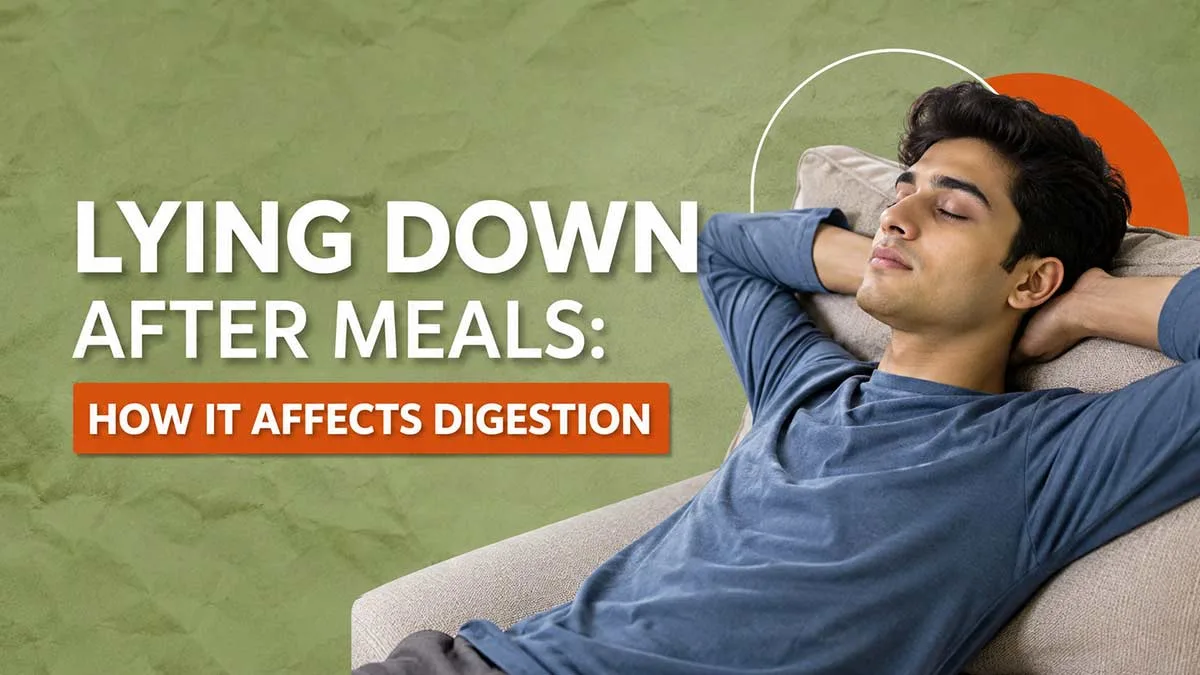
5134Picture this: you’ve just cleared a massive plate of your favorite lunch or wrapped up a cozy dinner. Your stomach is full, your muscles start to loosen up and all of a sudden, your bed or the living room couch feels like a magnet. It is a daily ritual for so many of us. We eat, we crash and we don't think twice about it.
But have you ever wondered if hitting the pillows right after a meal actually causes trouble inside your stomach? The short answer is yes, it absolutely can. While lying down once in a while might not cause an immediate disaster, making a habit of it can trigger a lot of unnecessary digestive drama. Let’s break down exactly what happens to your food when you switch from standing to lying flat, and why your body posture matters a lot more than you think.
What Happens Inside Your Body Right After You Eat?
Digestion isn't just about food dropping into your stomach like a bucket. It is actually a busy, ongoing process. As soon as you swallow, your food travels down your throat into your stomach, which acts like a mixer that swirls everything into a smooth liquid blend so your gut can absorb all the vitamins and energy.
Right where your food pipe meets your stomach, there is a small ring of muscle that acts like a strict, one-way trapdoor. Its only job is to open up to let the food in and then shut tightly so your stomach acids cannot splash back up. As long as you are sitting or standing, gravity acts as your natural helper, pushing down on your food and keeping those strong stomach juices resting safely at the bottom of the tank while your body does its job.
The Gravity Problem: What Shifts When You Lie Flat?
When you lie down flat right after eating, gravity can no longer help keep things in place. Without that downward pull, your food and stomach juices can easily move around. If your stomach is full, all that pressure pushes upward. This makes it very easy for harsh stomach acid to sneak out and travel back up into your food pipe.
If you make a habit of resting like this right after a meal, you might start noticing a few annoying symptoms:
- A heavy, stuck feeling right under your ribs
- Uncomfortable bloating that makes your pants feel tight
- Frequent burping or a sour taste in the back of your mouth
- A dull, tight ache in the center of your chest
Can It Cause Severe Acid Reflux and Heartburn?
The single biggest issue with resting right after a meal is acid reflux. When stomach acid escapes into your food pipe, it doesn't just sit there; it burns. Unlike your stomach, which has a thick, specialised, slimy lining built to handle harsh fluids, your food pipe is completely unprotected.
When acid splashes up, it causes that classic, fiery sensation we call heartburn. If you keep doing this day after day, that constant acid washing can irritate and inflame the delicate tissues of your throat. For anyone already dealing with GERD (gastroesophageal reflux disease), jumping straight into bed after eating is like pouring fuel on a fire. It can lead to a persistent, dry cough, a raspy voice in the morning, and the uncomfortable sensation that food is stuck in your throat.
Myth Busting: Does Lying Down Stop Digestion?
You might have heard a common rumor: if you sleep right after eating, your digestion completely stops and the food just rots in your stomach. That is actually a myth.
Your stomach and intestines work on their own. They will keep squeezing and pushing to break down your food, whether you are standing up, sitting down, or fast asleep.
However, the way you position your body does change how easily things flow. Lying flat makes your stomach empty out a lot slower, especially if you ate a heavy, oily, or greasy meal. So, while your digestion doesn't completely stop, lying down forces your body to work much harder and makes the whole process a lot more uncomfortable.
Who Needs to Be Extra Careful?
While anyone can get an upset stomach from crashing on the couch right after eating, some people will feel the bad effects much faster and worse than others. Here is who needs to be extra mindful:
- People with regular heartburn or acid reflux: The little "trapdoor" at the top of their stomach is already a bit weak. Without gravity holding things down, acid can easily escape back up.
- People with diabetes: High blood sugar can actually slow down how fast the stomach empties. When food just sits there for a much longer time, the chances of getting heartburn go way up.
- Pregnant women: A growing baby physically pushes up against the stomach. On top of that, pregnancy hormones naturally loosen up the stomach's trapdoor, making heartburn very common.
- Older adults: As we get older, our muscles naturally get a little weaker. This means the little muscle that keeps the top of the stomach closed might not shut as tightly as it used to.
The Ancient Perspective: What Ayurveda Teaches Us
Long before modern science figured out acid reflux, Ayurveda already had an answer for this. In Ayurveda, your digestion is seen as an internal fire called Agni. Think of it like a small campfire in your stomach that needs the right setup to burn well and process your food. When you lie down right after eating, it is basically like throwing a heavy, wet blanket over that fire. The fire smolders and just creates smoke.
Instead of turning your food into good energy, this smothered fire creates a sticky, toxic waste called Ama. This is exactly why you often wake up from a post-meal nap feeling completely foggy, heavy, and even more tired than before. Resting flat also spikes Kapha, which is the heavy, earthy energy in your body, leaving you feeling totally lazy and unmotivated.
To prevent this, ancient traditions recommend a simple trick called Shatapadi, which just means taking about 100 slow, easy steps right after your meal. This short, relaxing walk acts like a gentle breeze that fans your digestive fire, keeping your metabolism active and helping your food move smoothly downward instead of creeping back up.
What Should You Do Instead of Lying Down?
Adjusting your post-meal habits doesn’t mean you have to completely abandon relaxation. It is all about shifting how and when you rest. Try working these simple, practical habits into your daily routine:
- Give it two to three hours: Try to stay upright for at least two to three hours after your heaviest meals before you go to bed or lie completely flat.
- Embrace the 10-minute stroll: Instead of heading to the couch, clear your table and go for a very slow, relaxed 10-to-15-minute walk. Do not jog or lift weights; keep it gentle just to get things moving.
- Loosen your clothing: Avoid tight belts, restrictive jeans, or high-waisted bands during and after eating. Tight clothes squeeze your abdomen, physically forcing stomach acid upward.
- Eat an early dinner: Make it a rule to wrap up your final meal of the day a few hours before your head hits the pillow. If you eat a heavy dinner at 9:00 PM and sleep at 10:00 PM, your stomach will pay the price all night.
When It's Time to Talk to a Professional
An occasional heavy stomach or a random bout of heartburn after a massive holiday feast happens to everyone. But if you have changed your habits and find yourself still struggling, pay attention.
You should reach out to a healthcare provider or an Ayurvedic practitioner if you experience frequent heartburn multiple times a week, have trouble swallowing your food, deal with persistent vomiting, or feel unexplained chest pains. Your body uses these symptoms as warning signs, and a professional can help you build a personalized strategy to get your gut back on track.
The Bottom Line
Breaking the habit of crashing on the couch after a big meal is tough. But once you realize how much extra stress it puts on your stomach, it becomes a lot easier to make a change. You don't need a complicated routine to fix your digestion.
Just give your body the time it needs to do its work while you stay upright, let gravity help out, and take a gentle stroll to keep your internal fire burning bright. Swap that immediate post-meal nap for a little movement, and you will start waking up feeling lighter, more energized, and free from that annoying heartburn.
References
Physiology, Digestion - StatPearls - NCBI Bookshelf