Diabetes, arthritis, skin disorders & more! Get a free consultation with Top Ayurveda doctors - +91 9266714040 | No travel, No waiting – Consult Jiva’s doctors from home via video call! | Get up to 10% OFF! On Authentic Ayurveda Products! Best Prices only on the brand store. Visit : www.store.jiva.com
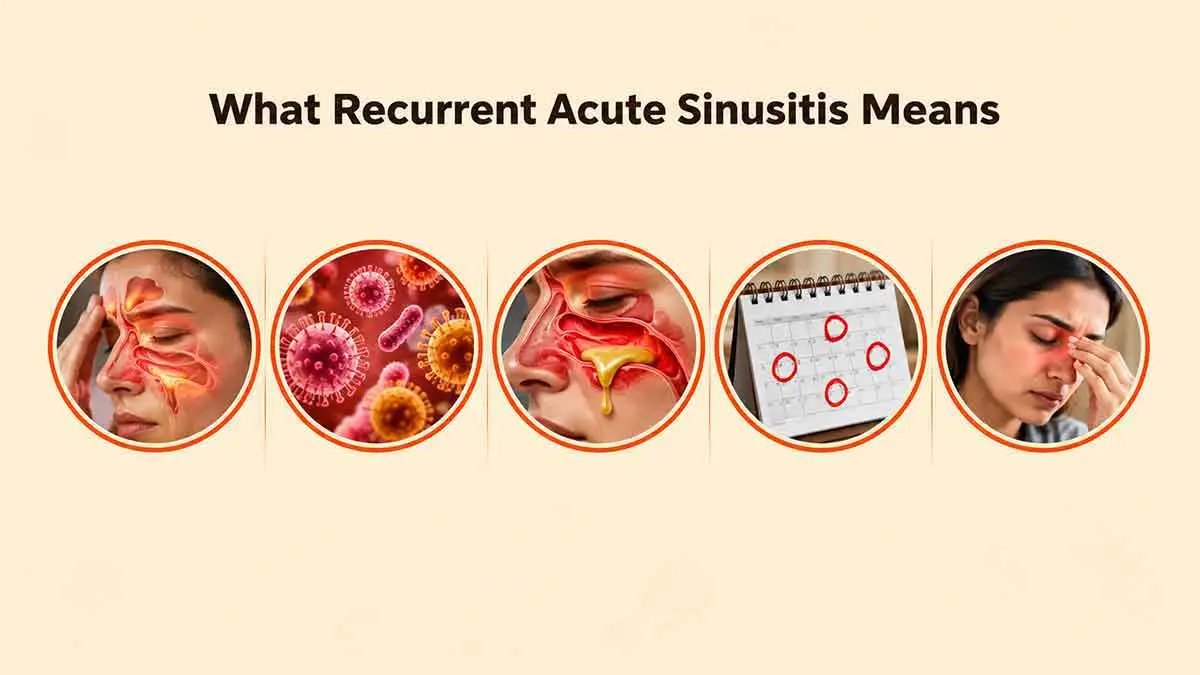
Clinically, recurrent acute rhinosinusitis (RARS) is defined as experiencing four or more distinct episodes of acute sinusitis within a single 12-month period. Each of these episodes involves intense, acute symptoms, severe facial pressure, and purulent (thick, discolored) nasal discharge, and profound congestion lasting less than four weeks at a time.
What sets a recurrent pattern apart from a chronic sinus issue is the recovery phase.
In recurrent sinusitis, you experience a complete and total resolution of symptoms between bouts. The mucosal lining of the sinus returns to normal, breathing clears, and the facial ache vanishes entirely. The sinuses function perfectly until the cycle is triggered again by the next viral cold or allergy spike.
Confirming Separate Episodes
To properly diagnose recurrent acute sinusitis, a physician must confirm that the infections are truly separate events, rather than a single, stubborn infection that temporarily responds to medication and then rebounds.
Clinicians look for a clear symptom-free interval, usually at least eight weeks between episodes. If you feel better while taking oral steroids or antibiotics but your symptoms return almost immediately upon finishing the prescription, this is generally considered a prolonged chronic infection, not a recurrent one. Accurately confirming separate episodes is vital, as the treatment strategy for a structural or allergic trigger is entirely different from managing a deeply entrenched chronic bacterial infection.
Allergy And Irritants
The most common driving force behind recurrent sinus infections is underlying environmental inflammation that primes the sinuses for failure.
Allergic rhinitis ( reaction to pollen, dust mites, or pet dander) keeps nasal mucosa in a state of baseline hyper-reactivity. When an allergy swells the mucosal lining, the drainage pathways narrow. A mild viral cold that a healthy sinus could easily drain suddenly becomes trapped in this narrowed space, rapidly deteriorating into an acute sinus infection.
Smoking and pollution also play a massive role in disabling the respiratory system’s natural defenses. The sinus lining is covered in microscopic hairs called cilia, which beat in a coordinated rhythm to sweep mucus and debris out of the nasal cavity. Cigarette smoke directly paralyzes these cilia, leaving mucus stagnant.
Furthermore, chronic exposure to airborne particulate pollution causes chemical irritation and oxidative stress in the nasal passages, directly damaging the tissue, drastically increasing your susceptibility to repeated infections.
Nasal Polyps Or Deviated Septum
Often, the root cause of recurrent infections is purely mechanical. The primary drainage pathway for the sinuses, known as the osteomeatal complex, is naturally narrow. If this pathway is physically compromised, there is very little margin for error when you catch a cold. A deviated septum occurs when the cartilage and bone dividing the nasal cavity are deviated and off-center or crooked. While many people have minor deviations, a severe deviation can crush the turbinates against the sinus opening, acting like a physical cork.
Similarly, nasal polyps are benign, fluid-filled growths that develop from chronically inflamed tissue and can act as physical traps. Even small polyps that don’t cause daily breathing issues can collect bacteria and block drainage the moment a minor cold causes additional swelling.
Dental sources
One of the most frequently overlooked causes of recurrent acute sinusitis, particularly when the infection is repeatedly isolated to one side of the face (Unilateral), is an underlying dental issue. The roots of the upper back teeth ( the maxillary premolars and molars) extend upward, coming dangerously close to the floor of the maxillary sinus.
In some individuals, the roots actually protrude directly into the sinus cavity, covered only by a paper-thin layer of bone or just the mucosal membrane itself.
If a tooth develops an apical abscess (a root infection), or if a patient undergoes an upper tooth extraction or root canal, bacteria can easily breach the sinus floor. This is known as odontogenic sinusitis. Until the infected tooth is properly treated by an endodontist or oral surgeon, the sinus infections will continually return, regardless of how many sinus medications you take.
I was suffering a lot due to allergy. I had severe difficulty in breathing and was facing a lot of trouble. Even in sunlight I would sneeze. Walking and moving around had become difficult, and I was also allergic to dust.
Then I thought about Ayurvedic medicine. I saw Jiva on Facebook and visited the nearby Jiva center in Lajpat Nagar. I met Dr. Sarika Rawat, who recommended some medicines to me and told me about Nasya, which is a part of Panchakarma. I also took 7 Nasya sessions. I got a lot of relief. I am feeling much better now.
I am very grateful to Jiva Lajpat Nagar.
Thanks,
Jiva Lajpat
Ms. Raji have done my sinus treatment and now I'm feeling very well. I couldn't get relief from allopathic medicines. I had a great experience of undergoing Panchkarma process at Jiva under their guidance and supervision.
Thank you Jeeva Ayurveda
I have sinusitis problem for which I am taking Nasya therapy. Now problem is almost cure. Razi is very good and polite in therapies. Thank you Jiva ayurveda
Immune-Health Review When Appropriate
When a patient presents with multiple severe bacterial sinus infections year after year, and anatomical or allergic causes have been completely ruled out, a physician may consider an immune system evaluation.
Recurrent respiratory infections can be an early warning sign of a mild immunodeficiency, such as Selective IgA Deficiency or Common Variable Immunodeficiency (CVID). IgA is an antibody specifically designed to protect mucosal surfaces, including the respiratory tract. If a patient lacks sufficient IgA, their sinuses are highly vulnerable to bacterial invasion. An immune workup is particularly indicated if the recurrent sinusitis is accompanied by a history of frequent ear infections, recurrent bronchitis, or unusual pneumonias.
Prevention And Nasal Care
Breaking the cycle of recurrent sinusitis requires shifting the focus from treating the infections to preventing the initial mucosal swelling from taking hold.
Avoid repeated antibiotics without reassessment: It is incredibly common for patients with recurrent sinus symptoms to use telehealth services to request antibiotics at the very first sign of facial pressure. However, reflexively taking antibiotics for every episode without a physical exam breeds dangerous antibiotic resistance and disrupts the gut microbiome. Since most acute episodes start as viral colds, antibiotics are frequently ineffective. A medical provider must reassess the symptoms each time to confirm a bacterial source before prescribing.
Daily Nasal Hygiene: High-volume, low-pressure saline irrigations (using a neti pot or squeeze bottle with distilled or previously boiled water) physically wash away allergens, pollutants, and excess mucus before they can trigger severe inflammation.
Proactive Corticosteroid Use: Using over-the-counter intranasal steroid sprays (like fluticasone) consistently during known allergy seasons can suppress baseline allergic swelling, keeping the ostia wide open when cold and flu season hits.
When ENT Testing Is Useful
If lifestyle modifications and allergy management fail to stop the cycle of infections, it is time to consult an Ear, Nose, and Throat (ENT) specialist. An ENT can perform specialized diagnostic testing that a general practitioner cannot.
Using a rigid, illuminated camera (nasal endoscopy), the ENT can look deep into the nasal cavity to spot hidden polyps or locate silent, low-grade inflammation near the sinus openings. Crucially, an ENT will often order a Computed Tomography (CT) scan during a symptom-free period. While a CT scan during an active infection only shows generalized fluid, a baseline scan provides a clear structural blueprint of your skull, revealing any permanent anatomical bottlenecks predisposing you to infection. Finally, if an infection is active during your visit, the ENT can take a direct culture swab of the mucus to identify the exact strain of bacteria driving the recurrences, ending the cycle of failed broad-spectrum antibiotics.

 Published on 12 Oct, 2026
 Updated on 14 Oct, 2026