.webp)
Diet Goals
A fatty liver diet isn't about completely giving up your favorite foods. The focus should be on what to eat, how much to eat, and how often to eat it. The practical diet should fit into your daily meals and be easy to follow over time.
The main goals of a fatty liver diet are:
- Reduce Excess Fat By Choosing a Balanced, Nutrient-Rich Diet
The first goal is to reduce excess fat stored in the liver. This can be supported by eating more vegetables, whole grains, pulses, and other minimally processed foods while cutting down on added sugar and unhealthy meals.
- Maintain A Healthy Weight Without Crash Dieting
A steady approach with sensible portions and regular physical activity is easier to maintain. So, if you're overweight, gradual weight management can help reduce liver fat. Cut only 300-500 calories daily. Avoid crash diets or skipping meals for long periods.
- Keep Blood Sugar Under Control
High blood sugar and insulin resistance are closely linked with fatty liver. Choose foods such as dal. Beans, high-fibre, and protein-rich options. Limit processed or sugary foods such as biscuits, soft drinks, packed juices, sweetened tea or coffee, cakes, mithai, pastries, and packed snacks. Keep these as occasional choices rather than everyday foods.
- Manage Cholesterol And Triglycerides
The diet should support healthy fats. Reduce frequent intake and strictly avoid fried food, excess ghee, butter, processed snacks, and food containing trans and saturated fats. Include nuts, whole grains, rice, oats, barley, millets, chickpeas, vegetables, and salad in appropriate proportions.
- Include Protein And Fiber
Protein can help keep you full and maintain muscles, and Fibre supports better blood sugar and cholesterol management. Include dal, chana, rajma, paneer, curd, milk, fruit, vegetables, and whole grains. Choose whole fruit over fruit juices.
- Build Sustainable Eating Habits
Make simple changes, such as replacing fried snacks with roasted options or sugary drinks with unsweetened beverages. Choose methods like steaming, boiling, grilling, roasting, or lightly sautéing, and keep the amount of oil used in the cooking moderate. These habits can make diet easier to follow consistently.
Indian Plate And Portion Structure
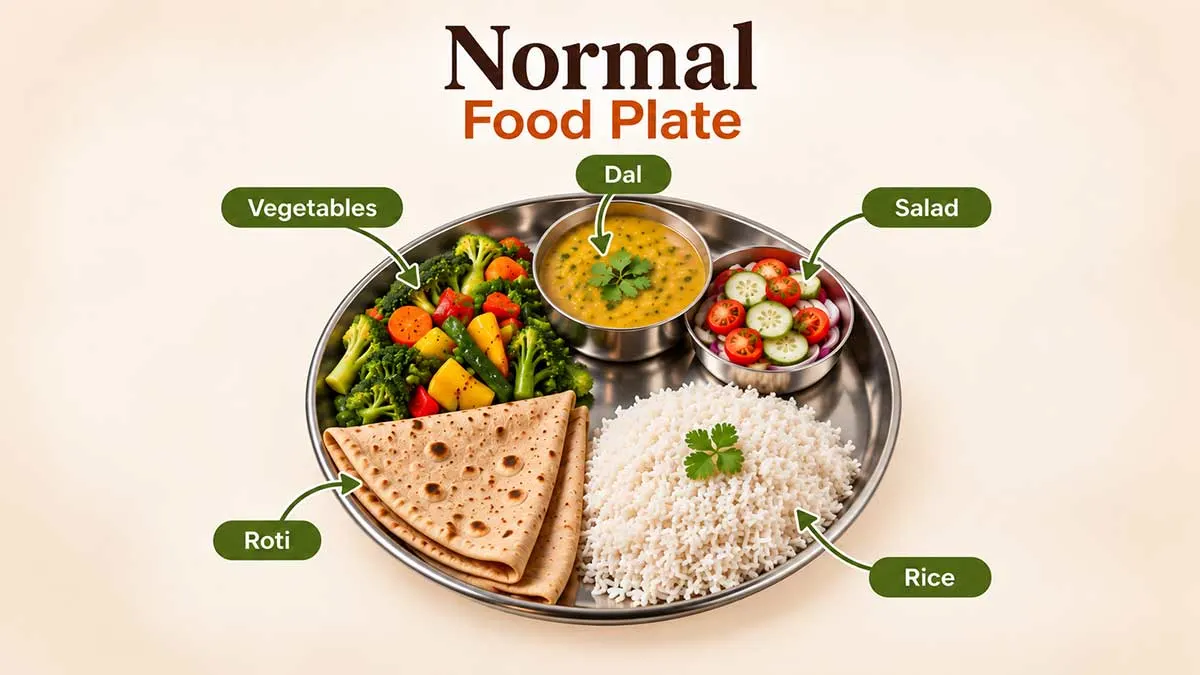
A simple Indian food plate can make portion control easier. Give more space to vegetables and protein while keeping cereals and other carbohydrates in moderate amounts. You can divide a standard 10-inch dinner plate into three primary sections:
- 50% Fiber And Antioxidants
Include ½ plate of leafy vegetables; choose beans, cauliflower, carrot, cucumber, palak, methi, sarson, broccoli, tomato, and other seasonal veggies. Prefer steamed or sautéed over fried preparations. Antioxidants support liver detoxification and prevent the rapid insulin spike.
Include ¼ plate of protein-rich foods; choose rajma, chana, sprouts, dal such as moong and masoor, soy, curd, paneer. Rotate different options through the week. Lean protein provides the amino acids that are necessary for liver cell regeneration and metabolic repair.
Include ¼ plate of complex carbohydrates, traditional whole grains like bajra, jowar, ragi, rotis, daliya, oats, and other whole grain options in the diet. Adding complex carbohydrates to the diet and stripping away refined carbs drastically reduces excess fat accumulation in the liver.
- Add a small portion of healthy fats; include nuts, seeds, or a moderate amount of oil in the meals
What To Limit On Your Plate?
| What To Limit |
Why (Ayurvedic Perspective |
Healthy Alternatives |
Refined Grains
(Maida, white rice, white bread, pasta) |
Increases Kapha and clogs body channels. |
Lighter Grains
Barley (Yava), oats, daliya (broken wheat), jowar, bajra, and old/aged red rice. |
Heavy & Cold Dairy
(Curd/yogurt, cheese, paneer, ice cream |
Difficult to digest; disrupts the Agni (digestive fire) |
Spiced Buttermilk
Freshly churned buttermilk diluted with water and a pinch of roasted cumin and ginger. |
Deep-Fried & Processed Oils
(Vanaspati, refined vegetable oils, fried snacks) |
Overloads the metabolic capacity and worsens Pitta or inflammation. |
Medicinal Cooking Mediums
Very small amounts of cow's ghee (which enhances Agni) or cold-pressed mustard oil. |
Excess Sugars & Sweet Fruits
(White sugar, jaggery, mangoes, bananas, juices |
Excess sweets convert into Meda Dhatu or liver fat and slow metabolism. |
Bitter & Astringent Foods
Amla (Indian gooseberry), pomegranate, papaya, and apples. |
Red Meat & Heavy Proteins
(Mutton, beef, processed meats) |
It takes too much time to digest and creates Ama (toxins). |
Light Plant Proteins
Green moong dal (whole or split) and masoor dal, which are easy on the liver. |
Sweet & Heavy Vegetables
(Potato, sweet potato, yam, taro root) |
It can cause liver stagnation because of its grounding and dense nature. |
Scraping Vegetables
Bitter gourd (Karela), bottle gourd (Lauki), ridge gourd, spinach, and fenugreek leaves (Methi). |
.webp)
Refined carbohydrate and sugary-drink reduction
Refined carbohydrates and sugary drinks can cause sugar spikes and excess fat accumulation. According to Ayurveda, fatty liver is caused by an imbalance of Kapha dosha and excess Meda dhatu (fat tissue) and creates Ama (toxins). Madhur Rasa (sweet taste) or heavy, sweet, and processed foods increase Kapha. Refined sugars and simple carbs like maida or white flour weaken Agni (digestive fire), leading to slow metabolism and fat accumulation in the liver. Excess sweet and sticky elements block Srotas (body channels), and reducing refined carbohydrates and sugary drinks from everyday life helps manage fatty liver.
What Can You Do?
- Replace sugary drinks with lemon water and herbal drinks like ginger tea and green tea.
- Use spices like Haridra (turmeric) and Lasuna (garlic) to balance Agni and burn Ama (toxins).
Protein, Fibre And Healthy Fats
According to Ayurveda, Protein helps repair Dhatu (liver tissue). However, it must be mild to prevent overtaxing weak Agni (digestive fire). It is not advised to eat heavy proteins like Urad dal (black gram). Fibers can scrape the Ama (toxins) accumulation; it improves insulin sensitivity and balance the excess fat accumulation.
The liver’s metabolic load is increased by heavy, saturated fats such as excessive ghee, butter, or fried foods, but Srotas (channels) can be greased with a small amount of unsaturated fats or therapeutic oils without adding congestion.
Indian Diet For Fatty Liver
An effective Indian diet can help balance fatty liver disease. The focus should be on high fiber, lean proteins, and healthy fats while eliminating refined carbohydrates and added sugar.
Foods To Include:
Brown rice, red rice, jowar, bajra, ragi, daliya, dals, legumes, sprouts, low-fat paneer, tofu, spinach (palak), methi, karela, garlic, ginger, haldi (turmeric), chia or flaxseeds, mustard oil or cold-pressed groundnut oil in minimal amounts.
Sugar & Sugary Drinks
Consumption of artificially sweetened drinks regularly can build up excess fat and increase the risk of fatty liver or MASLD. The liver turns extra fructose or sugar from beverages directly into fat. Excess sugar spikes insulin, which triggers fat accumulation in the liver.
Drinks To Avoid:
Packed fruit juices, energy drinks, sweet teas, and sodas pack because they contain high amounts of concentrated sugar, which can disrupt doshas in the body. Complete everyday water intake to support overall liver health.
Roti, Rice And Fruit In Context
According to Ayurveda, the diet for fatty liver must be Ranjaka Pitta (light, easy to digest, warm, and avoid overnutrition). On an everyday basis, the quality, preparation, and portion control of common foods like roti, rice, and fruit determine their suitability.
- Roti: Roti or flatbreads are generally considered Pathya (wholesome) for fatty liver. It is slower to digest than white rice; therefore, choose healthier options like Roti made from whole grains and millets like Jowar (sorghum), bajra, and ragi, which help scrape the excess fat from the liver.
- Rice: White rice is considered Apathya (unwholesome) for fatty liver because of its high glycemic index. Rice spikes insulin levels quickly and increases fat storage. You don't have to completely give up rice. Make the switch to unpolished varieties like brown, red, or parboiled rice. Ayurveda suggests that rice that has been stored for more than one year is easier to digest.
- Fruits: Fruits offer important antioxidants that reduce oxidative stress in the liver. Ayurveda suggests that their portion needs to be controlled because a surplus of sweetness (Madhur Rasa) aggravates Kapha dosha and develops fat. Fruits that are mildly sour, bitter, or astringent, like amla, papaya, apples, pears, and pomegranates, can promote liver function.
Controlling portion sizes and choosing high-fibre, low-glycemic options helps manage and reduce fat accumulation in the liver.
Sample Meal Pattern
A fatty liver meal pattern should be focused on balanced portions, more fibre, adequate protein, and less added sugar and fried foods. Here's an example:
| Time/ Meal |
Healthy Meal Sample |
| Morning |
Warm water, ginger tea, or lemon tea without sugar |
| Breakfast |
Oats or dalia with skim milk, topped with walnuts or chia seeds and fresh berries.
Or
Vegetable poha/upma
Or
Moong dal chillas |
| Mid-morning |
A small bowl of sprouted moong or fresh fruits like apple, guava, or pear. |
| Lunch |
½ plate vegetable salad + ¼ plate protein (dal, paneer, beans) + ¼ plate whole grains (2 multigrain rotis or a small portion of brown rice. |
| Evening Snack |
Roasted chana/ makhana/ nuts + unsweetened tea |
| Dinner |
Vegetable soup + dal + 1 or 2 multigrain rotis
Or
Vegetable khichdi + curd |
Alcohol Context
In Ayurveda, Alcohol is known as Madya, and excessive alcohol consumption acts as a potent toxin that severely vitiates the Pitta and Rakta (blood) doshas, which directly impairs the liver’s metabolic fire (Yakrit Agni) and causes liver inflammation.
Avoid alcohol, especially if fatty liver is already diagnosed. Even when fatty liver is related to metabolic factors rather than alcohol, drinking can place additional stress on the liver. If you drink regularly, discuss a safe approach to stopping with a healthcare professional.
Sustainable Changes And Myths
A fatty liver diet works best when the changes can be followed for months and years, not just for a few weeks. Instead of making quick or drastic changes, start with small habits to regulate regular meals.
Simple Changes That Can Last :
- Keep your regular mails focus on reasonable portions and at more vegetables and protein, and coffee, and limit sweets, mithai, desserts, and sugar
- Choose home-cooked food more often
- Make fried food occasional
- Choose whole fruits instead of fruit juices
- Use oil mindfully because healthy oil can have a lot of calories
- Plan meals before you get very hungry
- Pair diet with regular activities
Common Diet Myths
- Myth 1: You must completely stop eating rice.
Fact: Rice does not have to be completely removed, but the portion, type, overall meal, and frequency of intake matter.
- Myth 2: Fruits are bad because they contain sugar
Fact: Whole fruits provide fiber, vitamins, and other essential nutrients, but portion matters.
- Myth 3: Drinking a detox drink cleans the liver.
Fact: There is no special juice that can detoxify the liver. A balanced diet and addressing underlying causes are more beneficial.
- Myth 4: All fats must be eliminated.
Fact: Only trans fat and excessive saturated fats are the true concern, whereas healthy fats like olive oil, avocados, and nuts reduce inflammation.
- Myth 5: Rapid weight loss fixes the fat accumulation in the liver.
Fact: Only gradual weight loss of 0.5 kg to 1kg per week is ideal; crash diets can stress the liver.
Reference
Myths and facts about the role of diet in metabolic dysfunction-associated steatotic liver disease - PMC
Dietary recommendations for patients with nonalcoholic fatty liver disease - PMC
Eating, Diet, & Nutrition for NAFLD & NASH - NIDDK

 Published on 08 Oct, 2026
 Updated on 08 Oct, 2026