According to Ayurveda, chronic diarrhoea and inflammatory disorders trigger the Pravahika, Grahani, and other digestive afflictions. IBD treatment mainly focuses on controlling inflammation, easing symptoms, and keeping the disease under control. Depending on the type and severity of IBD, treatment may include medicine, dietary support, or surgery.
Ayurvedic care focuses on restoring Agni (digestive fire) and Shamana (soothing gut inflammation). You must consult with your doctor before taking any Ayurvedic herbs, as they may not be suitable during a flare.
Goals Of IBD Treatment
Ayurvedic support may focus on improving digestion, maintaining healthy eating habits, managing stress, and supporting overall health. It can be used alongside regular IBD treatment, especially when symptoms are under control. It should not be used instead of prescribed medicines, as controlling the inflammation is an important part of IBD care.
Medicines Used For Induction And Maintenance
In IBD, medicines are generally used only for two purposes: induction, which means getting active inflammation under control, and maintenance, which means keeping the disease in remission and reducing the chance of another flare.
The medicines used depend on whether a person has Crohn’s disease or ulcerative colitis, how active the disease is, where it affects the gut, and whether there are any complications. Treatment may include aminosalicylates, corticosteroids, immunomodulators, biologic medicines, and targeted small-molecule medicines. Steroids are generally used for short-term control of flares rather than long-term maintenance.
Ayurveda may connect some IBD symptoms with conditions such as Raktaj Pravahika (bloody diarrhoea), Grahani (digestive problems), and Abhyantara Vrana (internal ulcers), while modern medicines mainly work by reducing inflammation and controlling the immune response.
Biologics And Small-Molecule Treatments
These medicines may be used when IBD is moderate to severe or when other treatments are not working well. Biologics target specific parts of the immune system, while small-molecule medicines work inside cells to reduce inflammation. They can help control active disease and lower the risk of future flares. The choice of medicine depends on the type of IBD, how severe it is, previous treatments, and other health factors.
Surgery: When And Why
Surgery may be needed when IBD causes complications or when medicines are not able to control the disease well enough. In Crohn’s disease, surgery may be considered for problems such as strictures, blockages, fistulas, abscesses, or severely damaged areas of the bowel. In ulcerative colitis, surgery may be an option when severe disease does not respond to medicines or when serious complications develop. The type of surgery depends on the affected part of the bowel and the reason for surgery. Surgery can treat certain complications, but it does not mean that IBD has been permanently cured in every case.
Monitoring Response And Side Effects
IBD treatment needs regular follow-up to see whether it is working and to check for side effects. Your doctor may look at symptoms, blood tests, stool tests, weight, and sometimes scans or endoscopy. Tell your doctor about any new or worsening symptoms, unusual infections, allergic reactions, or other changes after starting a medicine. Treatment may be adjusted if the disease is still active or if side effects become a concern.
Adherence And Vaccination Questions
Taking your IBD medicines regularly can help keep symptoms under control and lower the chance of a flare. Even if you feel better, do not stop or change your medicine without speaking to your doctor first.
- Take your medicines as prescribed.
- If you miss a dose, ask your doctor or pharmacist what to do.
- Tell your doctor if side effects make it hard to continue a medicine.
- Keep up with regular check-ups and recommended tests.
- Ask about vaccinations before starting medicines that affect the immune system.
- Keep routine vaccinations up to date when advised.
- Check with your doctor before getting a live vaccine, as it may not be suitable with some IBD treatments.
Your doctor can check your current medicines and vaccination history and guide you on what is appropriate.
Ayurvedic Support: Realistic Goals
Ayurveda provides supportive care for inflammatory bowel disease (IBD). It is not a permanent solution to cure conditions like Crohn’s disease and Ulcerative colitis. In Ayurveda, IBD is not considered a single disease, but its symptoms closely resemble conditions such as Rakta Pittatisara, abhyantra Visarpa, Rakta Pravahika, Gudu Paka, and Dusta Vrana. It can be seen as Tridoshaja Vyadhi. Ayurvedic management focuses on correcting Agni Dusti, eliminating Ama, purifying Ama, calming the vitiated dosha, and Aushadha Chikitsa. Therapeutic practices are used to restore gut health and systemic harmony, such as:
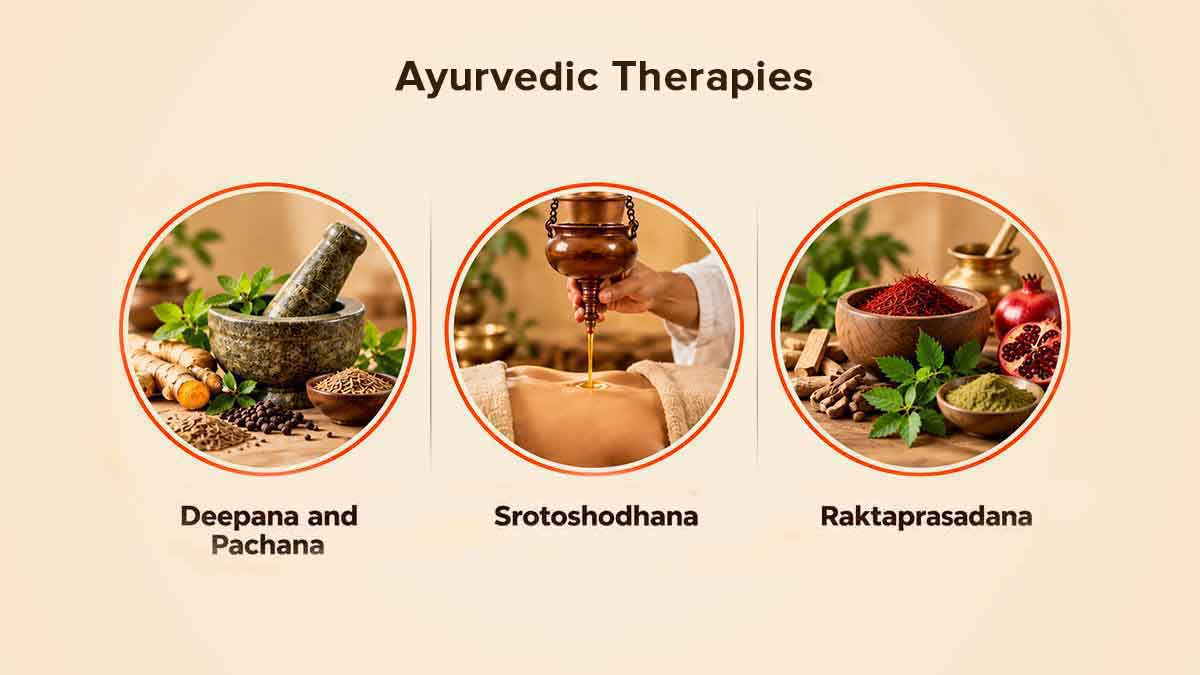
- Deepana and Pachana
- Srotoshodhana
- Raktaprasadana
Realistic Goals Of Ayurvedic Management:
- Support comfortable digestion and appetite.
- Help maintain good nutrients and energy.
- Support stress management and healthy daily routines.
- Improve overall well-being.
- Gently reduce symptoms such as bloating, cramping, and stool frequency.
- Avoid unnecessary food restrictions.
- Ayurvedic treatment does not replace prescribed medical care.
No Cure Or Reversal Claims
Ayurvedic support should not be described as a cure for IBD. It may help with digestion, nutrition symptoms, and overall well-being when used alongside regular treatment; avoid claims that Herbs or Ayurvedic therapy can permanently cure your IBD or replace prescribed medicines.
Herb–Medicine And Safety Checks
Ayurvedic herbs and spices are important in Ayurvedic treatment because they balance the food with their anti-inflammatory properties. These herbs regulate the gut microbiome and provide defense against infection. These herbs have anti-inflammatory properties that protect the gut from severe infections and inflammation. For example:
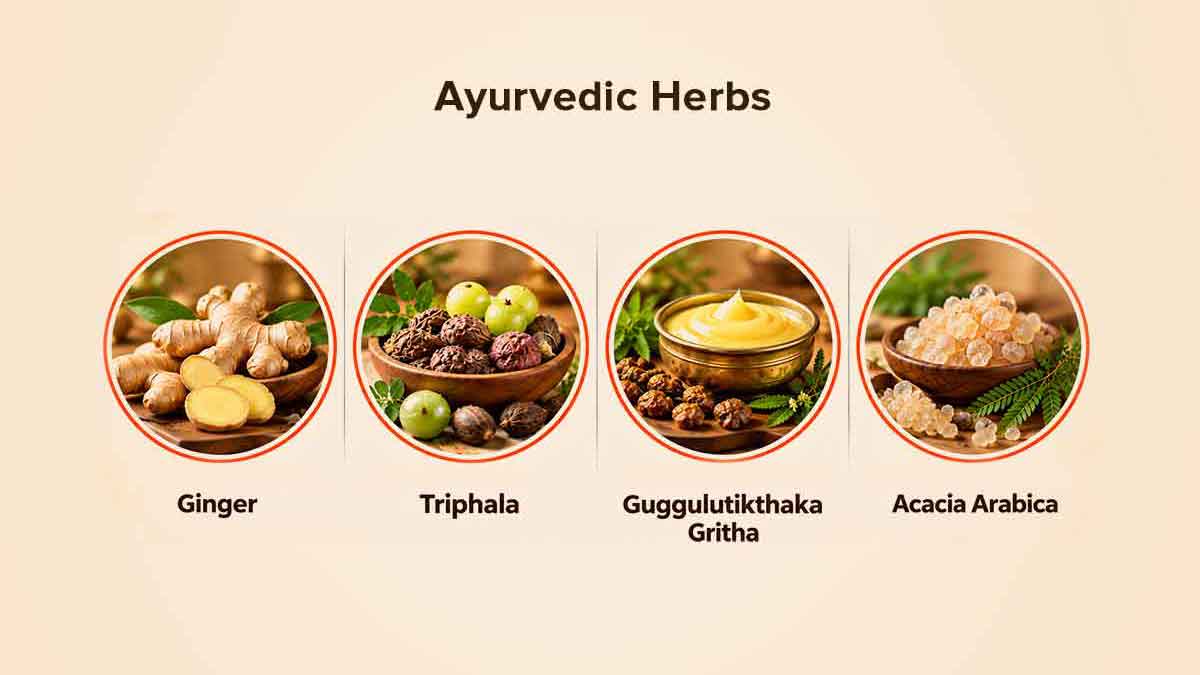
- Ginger is used to balance heavy-property food, and it can also help to treat indigestion, vomiting, cough, and cold.
- Triphala has prebiotic properties, and it helps improve gut microbiota.
- Guggulutikthaka gritha has properties that control hyperglucemia, hyperlipidemia, and inflammation
- Acacia arabica helps restore the balance.
Safety Measures
Use herbal medicines carefully, especially if you are taking prescription medicine. Before starting to take any Ayurvedic herbs or supplements, you should:
- Consult with your doctor about it.
- Check whether it can interact with your regular medicine.
- Use products from a reliable source with clear ingredients.
- Avoid taking herbal products together without professional advice.
- Seek immediate medical help if you notice any new or worsening reaction.
Steroids Are Not Long-Term Maintenance
Steroids can help bring an IBD flare under control, but they are generally not used as long-term maintenance treatment. Using them for a long time can increase the risk of side effects such as bone weakening, immune suppression, and hormonal and metabolic issues. It can also increase cardiovascular and vascular risks. Once the disease is controlled, doctors usually move to a suitable medicine to help keep remission going. Reduce steroids gradually, only as advised by your doctor, and do not stop them suddenly.
Do Not Stop Medicines Suddenly
Do not stop your medicines on your own, even if you feel better. Some medicines need to be reduced slowly, while stopping others suddenly may allow symptoms to return. If you are worried about side effects, cost, or whether you still need the medicine, speak with your doctor before making any changes.
No Herb Or Medicine Dosages
Do not start, stop, or change the doses of an Ayurvedic medicine or herbal product without speaking to your doctor; those depend on the medicine, your condition, other treatments, and your overall health. Ayurvedic Herbs should be used only after checking their safety and possible interactions with your regular medicines.
Pregnancy And Infection Safety
If you are pregnant or breastfeeding, talk with a doctor before taking any medicines and herbal supplements, as some may not be safe or well studied. The same applies if you have an infection or are taking medicines that affect your immune system. Postpartum and breastfeeding stages can increase the risk of experiencing a disease flare. Do not stop taking your ongoing medicines. Your doctor can help you choose the safest treatment, based on your situation.
Shared Care With A Gastroenterologist
Ayurvedic treatment should be used alongside regular care from a gastroenterologist. Keep your doctor informed about any herbs, supplements, dietary changes, and other treatments you are taking. This helps avoid possible interactions and makes sure your IBD inflammation is being monitored properly. Working together can make it easier to manage symptoms while keeping the main treatment on track.
When Treatment Needs Urgent Review
Contact your doctor if symptoms suddenly become worse or your usual treatment is no longer helping. Seek urgent medical care if you have:
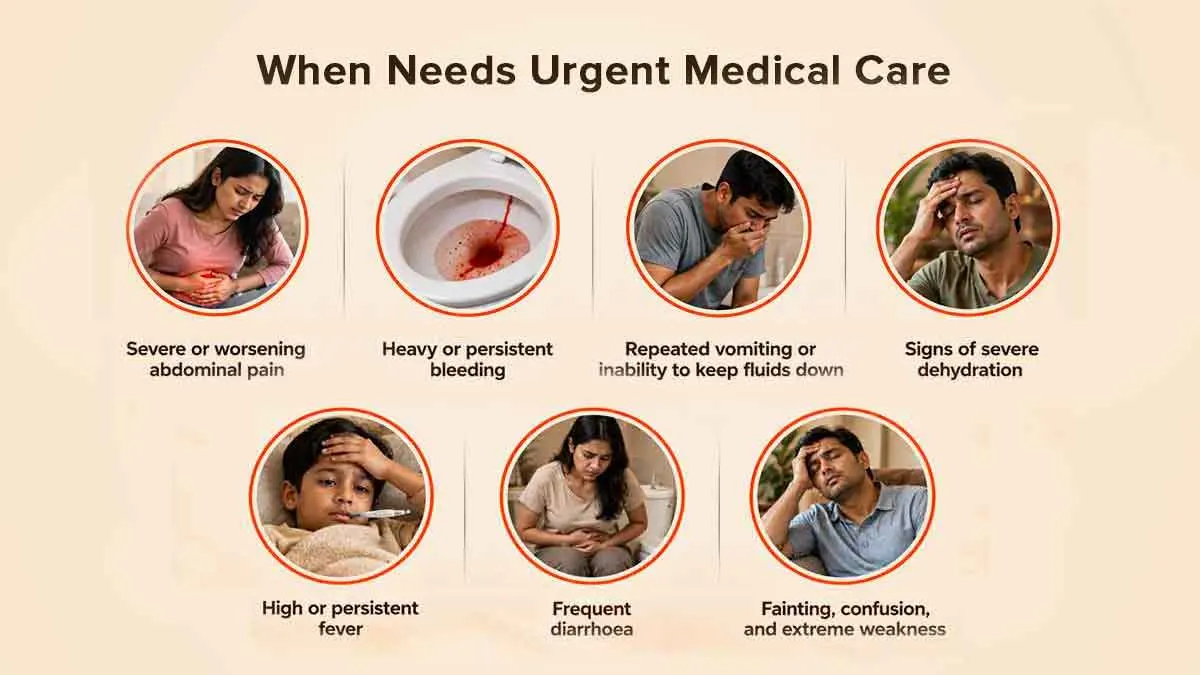
- Severe or worsening abdominal pain
- Heavy or persistent bleeding
- Repeated vomiting or inability to keep fluids down
- Signs of severe dehydration
- High or persistent fever
- Frequent diarrhoea
- Fainting, confusion, and extreme weakness
Reference
The Efficacy of Ayurvedic Herbs in the Prevention and Treatment of Inflammatory Bowel Disease: A Scoping Review - PMC
Herbal and plant therapy in patients with inflammatory bowel disease - PMC
The Use of Complementary and Alternative Medicine in Patients With Inflammatory Bowel Disease - PMC
Alternative Medicines as Emerging Therapies for Inflammatory Bowel Diseases - PMC
Pregnancy and medications in inflammatory bowel disease - PMC

 Published on 06 Oct, 2026
 Updated on 12 Oct, 2026