
Successful Treatments
Clinics
Doctors
IBD Diet & Nutrition: Food, Fibre & Nutrient Needs
 Published on 03 Oct, 2026
 Updated on 12 Oct, 2026

Explore Diet & Nutrition
- Home / Diseases & Ayurveda / Digestive Disorders / Ayurvedic Treatment For Inflammatory Bowel Disease (IBD) / IBD Diet & Nutrition: Food, Fibre & Nutrient Needs
Diet and nutrition play an important role in managing inflammatory bowel disease. But there is no single diet plan that works for everyone. Food choices may need to change depending on symptoms, disease activity, and individual tolerance. The focus should be on getting enough nutrition, staying hydrated, and identifying foods that may worsen the symptoms without any changes in diet.
What Diet Can And Cannot Do
Diet can help manage symptoms, support proper nutrition, maintain a healthy weight, and help the body recover during a flare. It may also help prevent nutritional deficiencies when planned carefully. However, diet alone cannot improve IBD or replace prescribed treatment. There is also no universal IBD diet that works for everybody. Foods that trigger symptoms can vary from person to person, so unnecessary food restrictions should be avoided.
Eating In Remission
When IBD is in remission, the aim is to eat a varied and balanced diet rather than unnecessarily avoiding foods. Include enough protein, fruits and vegetables, whole grains or other fibre-rich foods, and healthy fats like olive oil as tolerated. Stay hydrated and maintain regular meals to support overall digestion. Eat peeled and well-cooked food during strictures and mild sensitivities.
Eating During Active Symptoms
During an IBD flare, some foods are harder to digest, especially when you have diarrhoea, abdominal pain, or bloating. Choose foods that are soft, low-fibre, lactose-free, and easier to digest. Foods that do not irritate the digestive tract include:
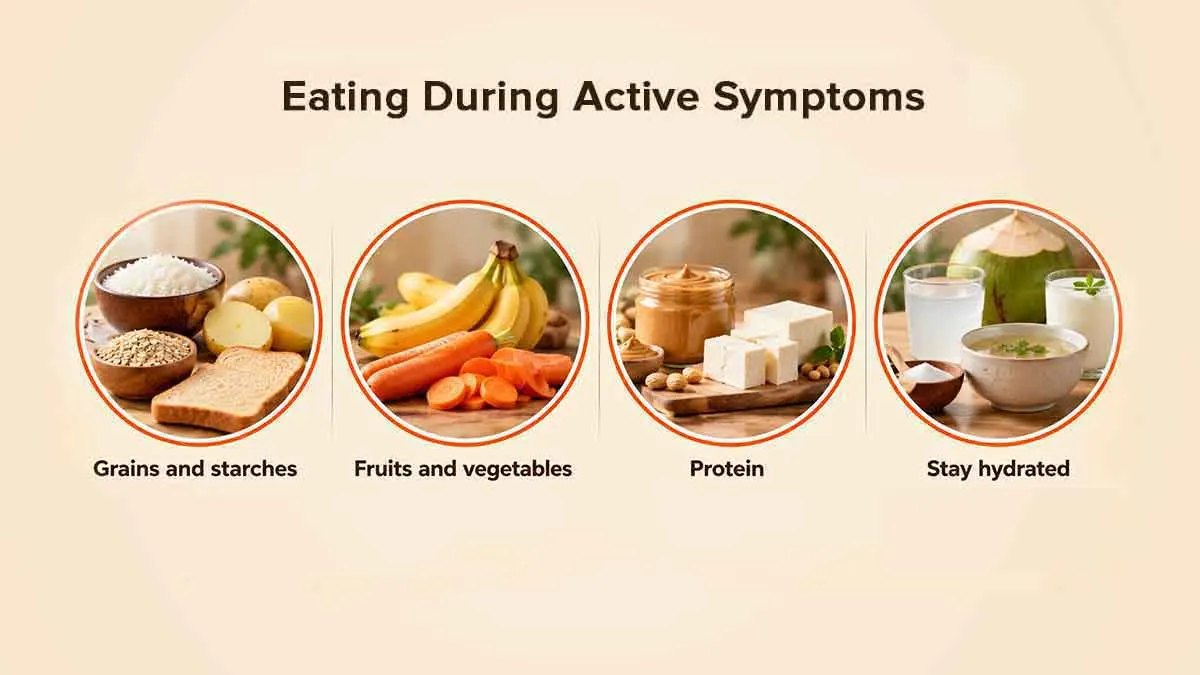
- Grains and starches, including white rice, boiled potatoes, plain oatmeal, and toast.
- Fruits and vegetables, including ripe bananas and skinless carrots.
- Protein, including smooth nut butters and tofu.
- Stay hydrated. Drink water regularly; oral rehydration solutions if needed. Coconut water, salted soups, and buttermilk also help with rehydration.
- Avoid high-fibre foods like raw vegetables, whole grains, nuts, and seeds.
- Avoid fried foods, heavy creams, alcohol, caffeine, artificial sweeteners, and sugary carbonated drinks.
- Strictly limit lactose-containing foods and spicy food because they are directly linked with bloating.
Indian Meal Examples
There is no single diet for IBD. In Indian meals, balance includes legumes, lentils, vegetables, whole grains, and probiotics. Foods that focus on soothing the agni (digestive fire) and calming doshas are considered good for IBD. Adjust meals based on whether you are in remission or having active symptoms, and base them on your personal tolerance. Some options include:
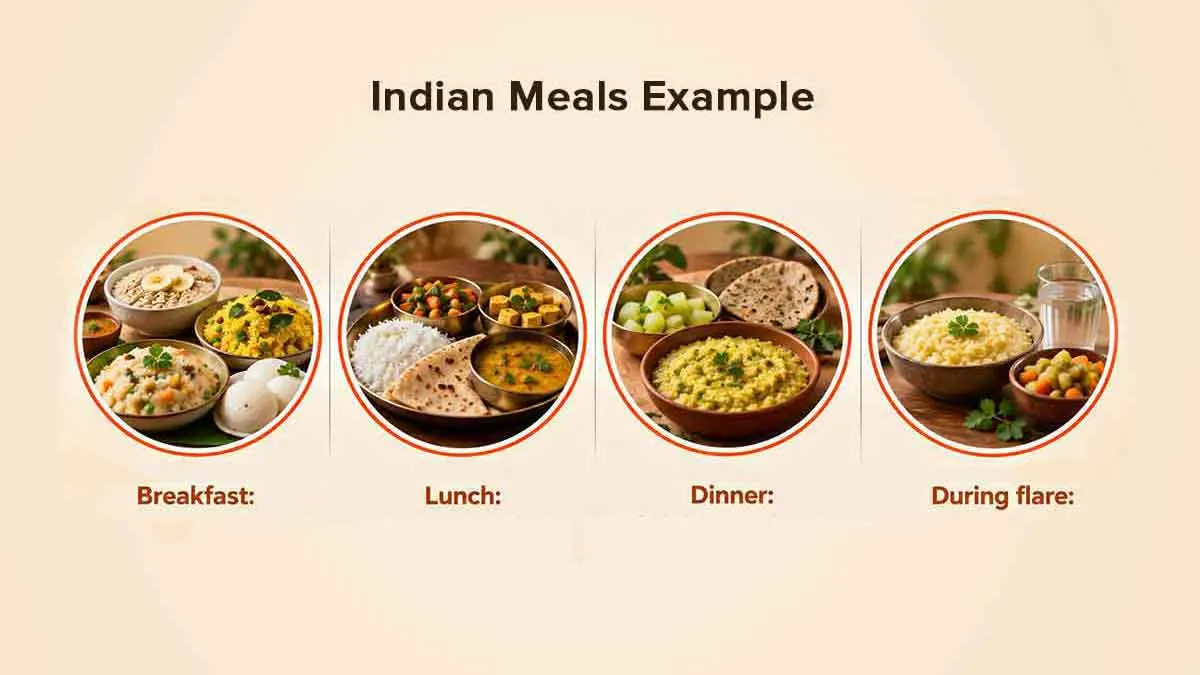
- Breakfast: Oats, poha, idli, or soft upma with well-cooked vegetables.
- Lunch: Rice or roti with dal, cooked vegetables, cur paneer, or tofu, depending on personal tolerance.
- Dinner: Soft khichdi, rice with moong dal, or bajra roti or millet roti with lightly cooked vegetables or lauki (bottle gourd), and a protein source.
- During flare: Soft, simpler meals such as rice, khichdi, moong dal, and well-cooked vegetables may be easier to digest. Keep protein smaller and drink enough fluids.
Protein, Calories, And Hydration
During IBD, getting enough protein and calories is important, especially during an active flare. When the body may need more nutrients, include protein-rich foods such as tofu and smooth nut butters. The body needs 1.0 to 1.5 grams of protein per kilogram of your body weight daily. It requires 30 to 35 calories per kilogram of your body weight daily to counter inflammation and malabsorption. Hydration is equally important, particularly if frequent diarrhoea and vomiting. Drink at least 8 to 10 glasses of water daily. Drink fluids regularly and replace lost electrolytes when needed. If you are struggling to eat or drink enough, you must consult with your doctor.
Iron, B12, Vitamin D, And Calcium
People with IBD can be at risk of iron, B12, vitamin D, and calcium deficiencies. These nutrients are important for energy, blood health, nerves, muscles, and bones.
- Iron: Found in lentils, beans, leafy greens, and fortified foods. Iron deficiency may also occur due to ongoing blood loss.
- Vitamin B12: Found in dairy products and fortified foods. The risk can be higher when Crohn’s disease affects the small intestine.
- Vitamin D: Found in fortified foods and some dairy products; sunlight helps the body make vitamin D. It is important for long-term bone health.
- Calcium: Found in dairy products, tofu, and some leafy greens. Calcium deficiency arises from poor absorption, and it’s crucial for bone health.
Doctors may recommend some supplements to balance these deficiencies. Do not overdose or prescribe any supplements on your own, as it depends on individual needs and blood levels.
Fibre: When To Adjust It
Fibre does not have to be avoided by everyone with IBD. Consuming an adequate amount during IBD supports gut health. During remission, many people include fibre as a part of the balanced diet. During an active flare, especially during diarrhoea, pain, narrowing of the bowel, or risk of blockage, your doctor may suggest that you temporarily avoid high-fibre foods; once symptoms improve, fibre can increase based on the individual's tolerance. Make sure to drink plenty of fluids with an increased amount of fibre.
Common Nutrient Deficiencies
People with IBD may develop nutritional deficienciesbecause og reduced food intake, poor absorption, inflammation, or blood loss. Common nutritional deficiencies include iron, vitamin D, calcium, zinc, folic acid & magnesium. The risk can vary depending on the type of IBD, affected part of the gut, and treatment being used. Regular monitoring and specific supplements can help doctors identify and manage these deficiencies.
Small Frequent Meals
Eating small portions and frequent meals rather than eating everything at once is better and easier to digest in IBD. Larger meals may cause bloating, abdominal pain, discomfort, urgency, and breathing difficulties for some people. Try having 4-5 smaller meals instead of a whole meal in a single day. Smaller meals also provide the same amount of calories and protein to your body. Choose simple foods that are easier to digest for you.
Avoid Unnecessary Elimination Diets
Cutting out large groups of food is not necessary for everyone with IBD. Unnecessary eliminations can lead to multi-nutrient deficiencies. If you notice that any food is worsening your symptoms. Discuss it with your doctor first because over-restricting food intake worsens muscle loss, electrolyte imbalances, and overall fatigue. A dietitian can help you find suitable alternatives so your diet remains balanced.
Food Diary And Personal Triggers
Keeping track of your diet with a physical diary or a digital diary can help you understand how your body responds to different foods, especially during a flare. Instead of completely avoiding food, track your symptoms and dietary patterns. Here are a few things you should note in your diary:
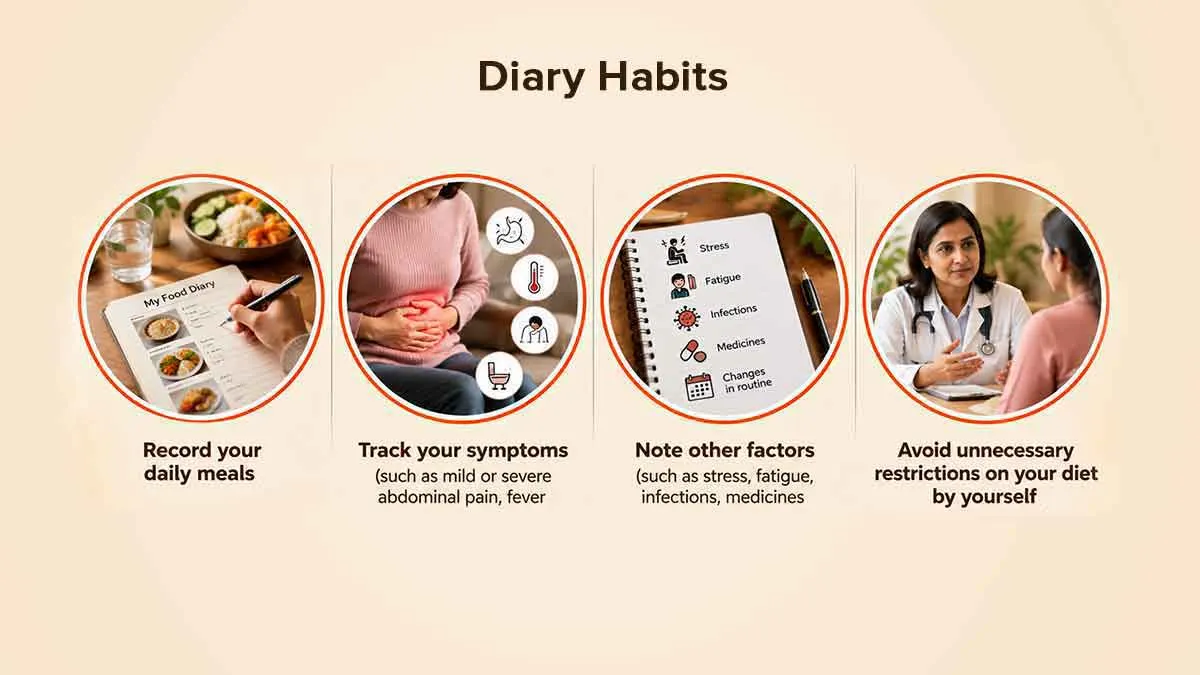
- Record your daily meals.
- Track your symptoms, such as mild or severe abdominal pain, fever, vomiting, and changes in bowel movements.
- Look for patterns if the same food causes the same symptoms.
- Note other factors such as stress, fatigue, infections, medicines, and changes in routine due to any symptoms.
- Avoid unnecessary restrictions on your diet by yourself; discuss them with your doctor before.
Lactose Only If Poorly Tolerated
People with IBD do not need to avoid lactose unless it causes symptoms. If milk or other dairy products lead to bloating, gas, abdominal pain, or diarrhoea, lactose may be difficult to tolerate for you, especially during a flare.
- Try smaller amounts of dairy to see how you respond.
- Choose lactose-free milk or dairy products if needed.
- Curd and cheese can be easier to digest for some people, though it’s harder for others.
- Avoid cutting out all dairy products without professional guidance because it can reduce calcium and vitamin D in your body, and it can lead to dangerous nutritional deficiencies.
Food Safety
People with IBD should follow basic food safety habits, especially when the immune system is affected by medicines. Infections caused by foods can sometimes worsen gastrointestinal symptoms.
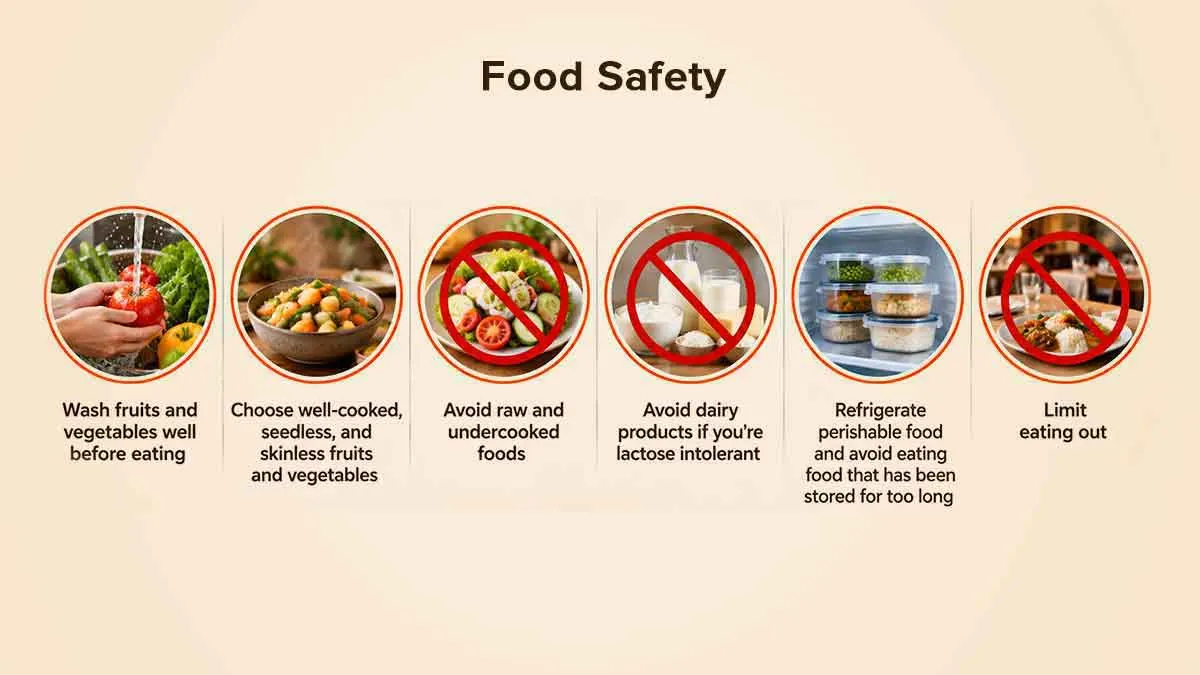
- Wash fruits and vegetables well before eating.
- Choose well-cooked, seedless, and skinless fruits and vegetables.
- Avoid raw and undercooked foods because they may carry harmful bacteria.
- Avoid dairy products if you're lactose intolerant.
- Refrigerate perishable food and avoid eating food that has been stored for too long.
- Limit eating out and try home-cooked food.
When To See A Dietitian
A dietitian can help create a diet plan that meets your nutritional requirements while considering your symptoms and food tolerance. Consider seeing a dietitian if:
- You are losing weight without even trying.
- You have difficulty eating regular foods.
- You have multiple nutritional deficiencies.
- You are avoiding many foods because of your symptoms.
- Diet changes are not helping your condition.
- You are unaware of what to eat during an ongoing inflammation or IBD.
Reference
Role of diet and nutrition in inflammatory bowel disease - PMC
Diet and nutritional factors in inflammatory bowel diseases - PMC
A cross-sectional study on nutrient intake and status in inflammatory bowel disease patients - PMC
Food Elimination Diet and Nutritional Deficiency in Patients with Inflammatory Bowel Disease - PMC
FAQs
No, there is no single diet that works for everyone with IBD. Food choices depend on symptoms, disease activity, and individual tolerance.
Not necessarily; if spicy food worsens your symptoms, then reducing it may help.
Yes, if you tolerate it. Lactose may cause symptoms, especially during a flare in some people. Lactose-free products are recommended in this situation.
No, diet cannot alone cure IBD. A healthy diet can support nutrient intake and may help manage some symptoms.
Ayurveda may be used as a complementary approach to support overall health and symptom management. But it cannot completely replace prescribed treatment.
Consult Experienced Ayurveda Doctors for IBD Diet & Nutrition: Food, Fibre & Nutrient Needs



















Our Happy Patients
-
 Sunita Malik - Knee Pain
 -
 Abhishek Mal - Diabetes
 -
 Vidit Aggarwal - Psoriasis
 -
 Shanti - Sleeping Disorder
 -
 Ranjana - Arthritis
 -
 Jyoti - Migraine
 -
 Renu Lamba - Diabetes
 -
 Kamla Singh - Bulging Disc
 -
 Rajesh Kumar - Psoriasis
 -
 Dhruv Dutta - Diabetes
 -
 Atharva - Respiratory Disease
 -
 Amey - Skin Problem
 -
 Asha - Joint Problem
 -
 Sanjeeta - Joint Pain
 -
 A B Mukherjee - Acidity
 -
 Deepak Sharma - Lower Back Pain
 -
 Vyjayanti - Pcod
 -
 Sunil Singh - Thyroid
 -
 Sarla Gupta - Post Surgery Challenges
 -
 Syed Masood Ahmed - Osteoarthritis & Bp
Home Remedies
- पेट में गैस, जलन या संक्रमण? इन घरेलू उपायों से पाएं राहत
- पेट में गैस, अपच और फुलाव का आयुर्वेदिक इलाज - मुफ़्त परामर्श
- एनल फिशर से परेशान हैं? ये आयुर्वेदिक नुस्खे देंगे राहत और आराम
- कब्ज़ का आयुर्वेदिक इलाज - मुफ़्त परामर्श
- एसिड रिफ्लक्स का घरेलू इलाज - मुफ़्त आयुर्वेदिक परामर्श
- Food Poisoning का आयुर्वेदिक इलाज - मुफ़्त परामर्श
- क्या बार-बार उल्टी हो रही है? इन घरेलू उपायों से पाएं तुरंत आराम
- क्या आप जानते हैं? इन नुस्खों से पेट दर्द जड़ से खत्म होता है!
- बार-बार एसिडिटी? ये देसी नुस्खे तुरंत देंगे आराम!
- दवा की ज़रूरत नहीं! लूज़ मोशन का रामबाण इलाज घर पर ही
- Home Remedies for Vomiting
- Home Remedies for Piles
- Home Remedies for Food Poisoning
- Home Remedies for Stomach Infection
- Home Remedies for Bloating
- Home Remedies for Anal Fissure
- Home Remedies for Constipation
- Home Remedies for Acid Reflux
- Home Remedies for Acidity
- Home Remedies for Stomach Pain
Related Disease
- Ayurvedic Treatment for Acid Reflux
- Ayurvedic Treatment for Anemia
- Ayurvedic Treatment For Anorexia
- Ayurvedic Treatment for Chronic Fatigue Syndrome
- Ayurvedic Treatment For Gastritis
- Ayurvedic Treatment For Colitis
- Ayurvedic Treatment For Crohn’s Disease
- Ayurvedic Treatment for Weakness and Fatigue
- Ayurvedic Treatment For Flatulence
- Ayurvedic Treatment for Gallstones
- Ayurvedic Treatment for Jaundice
- Ayurvedic Treatment for Liver Cirrhosis
- Ayurvedic Treatment for Sickle Cell Anaemia
- Ayurvedic Treatment For Piles And Fissure
- Ayurvedic Treatment for Irritable Bowel Syndrome (IBS)
- Ayurvedic Treatment For Hyperacidity
- Ayurvedic Treatment for Constipation
- Ayurvedic treatment for Coeliac Disease
- Ayurvedic Treatment for Peptic Ulcer
- Ayurvedic Treatment for Tapeworm
- Ayurvedic Treatment for Typhoid
- Ayurvedic Treatment for Diarrhea
- Ayurvedic Treatment for Diverticulitis
- Ayurvedic Treatment for Pinworms
- Ayurvedic Treatment for Cholera
- Ayurvedic Treatment for Emphysema
- Ayurvedic Treatment for Food Poisoning
- Ayurvedic Treatment for Atherosclerosis
- Ayurvedic Treatment for Thalassemia
- Ayurvedic Treatment for High Triglycerides
- Get Ayurvedic Treatment for Gastroenteritis
- Ayurvedic Treatment For Inflammatory Bowel Disease (IBD)
Latest Blogs
- बुजुर्गों का dinner बहुत जल्दी और breakfast बहुत देर से हो तो energy पर क्या असर पड़ सकता है?
- पीरियड्स से पहले Salty Food की Craving क्यों बढ़ सकती है?
- Can Ancient Dinacharya Be Practical For A Desk-Job Lifestyle?
- Why One ‘Perfect Breakfast’ Cannot Work For Every Body
- Mindful Eating नया Wellness Trend है या Ayurveda में यह Idea पहले से मौजूद था?
- Can Too Little Sleep Make Sugar Cravings Feel Stronger
- Seasonal Eating: Where Modern Nutrition And Ayurveda Meet
- हर चीज़ का health data track करना कब useful से obsessive बन सकता है
- Can Sleeping In An Overcooled Room Leave You Feeling Stiff In The Morning?
- Why Hair, Skin and Energy Often React to Aggressive Dieting
- बच्चों में weekend sleep timing बदलना Monday mood को कैसे प्रभावित कर सकता है
- Is Fasted Intense Exercise a Good Idea for Every Woman
- Health Tracking Every Hour: Helpful Awareness Or Another Source Of Stress?
- फोन देखते हुए चलना सिर्फ accident risk नहीं—posture और breathing पर क्या असर पड़ता है
- Bloating Before a Period: Why Lifestyle Can Change How It Feels
- बहुत जल्दी खाना खाने से पेट भरने का signal देर से क्यों मिलता है
- ‘No Added Sugar’ Doesn’t Automatically Mean Low Sugar—Here’s Why
- Online meetings के बीच zero movement दिन के अंत में stiffness क्यों बढ़ाता है?
- Screen brightness और late-night work sleep readiness को कैसे बदलते हैं
- Warm Vs Cold Foods: How To Discuss The Ayurvedic Idea Without Turning It Into A Myth
Ayurvedic Doctor In Top Cities
- Ayurvedic Doctors in Bangalore
- Ayurvedic Doctors in Pune
- Ayurvedic Doctors in Delhi
- Ayurvedic Doctors in Hyderabad
- Ayurvedic Doctors in Indore
- Ayurvedic Doctors in Mumbai
- Ayurvedic Doctors in Lucknow
- Ayurvedic Doctors in Kolkata
- Ayurvedic Doctors in Patna
- Ayurvedic Doctors in Vadodara
- Ayurvedic Doctors in Ahmedabad
- Ayurvedic Doctors in Chandigarh
- Ayurvedic Doctors in Gurugaon
- Ayurvedic Doctors in Jaipur
- Ayurvedic Doctors in Kanpur
- Ayurvedic Doctors in Noida
- Ayurvedic Doctors in Ranchi
- Ayurvedic Doctors in Bhopal
- Ayurvedic Doctors in Ludhiana
- Ayurvedic Doctors in Dehradun