
Successful Treatments
Clinics
Doctors
Weight Loss and Malnutrition in IBD
 Published on 06 Oct, 2026
 Updated on 14 Oct, 2026

Explore Diet & Nutrition
- Home / Diseases & Ayurveda / Digestive Disorders / Ayurvedic Treatment For Inflammatory Bowel Disease (IBD) / IBD Diet & Nutrition: Food, Fibre & Nutrient Needs / Weight Loss and Malnutrition in IBD
Lack of proper nutrients is known as malnutrition, and it is the main cause of chronic weight loss. When the disease is active, weight loss is very common with inflammatory bowel disease (IBD). Ongoing diarrhoea, abdominal pain, poor appetite, nausea, and other conditions make it hard for individuals to get enough nutrients. In some people, inflammation also increases the body’s nutritional needs. Individuals with Crohn’s disease are affected more than those with ulcerative colitis. Over time, this may lead to unwanted weight loss, weakness, or loss of muscle.
.webp)
Why IBD Can Cause Weight Loss
Weight loss in IBD can happen for several reasons, especially during a flare. The main reasons for weight loss include low nutrient intake, ongoing inflammation, certain medicines, and malabsorption. Crohn’s disease can sometimes affect how well nutrients are absorbed. Some people also avoid certain types of food because they are worried about triggering symptoms, which can further reduce their calorie and protein intake.
IBD symptoms can lead to weight loss, such as:
- Diarrhea, which causes dehydration and means the body does not get enough fluids, can lead to severe weight loss.
- Frequent bowel movements can also put you at risk of malnourishment.
- Appetite loss or reduced food intake due to ongoing symptoms makes it harder to get enough calories and nutrients.
- Rectal bleeding can lead to anemia and iron deficiency, which may be a reason for sudden weight loss.
Signs Of Malnutrition
Malnutrition isn't always obvious, and a person can have nutritional deficiencies without being underweight. Some possible signs include:
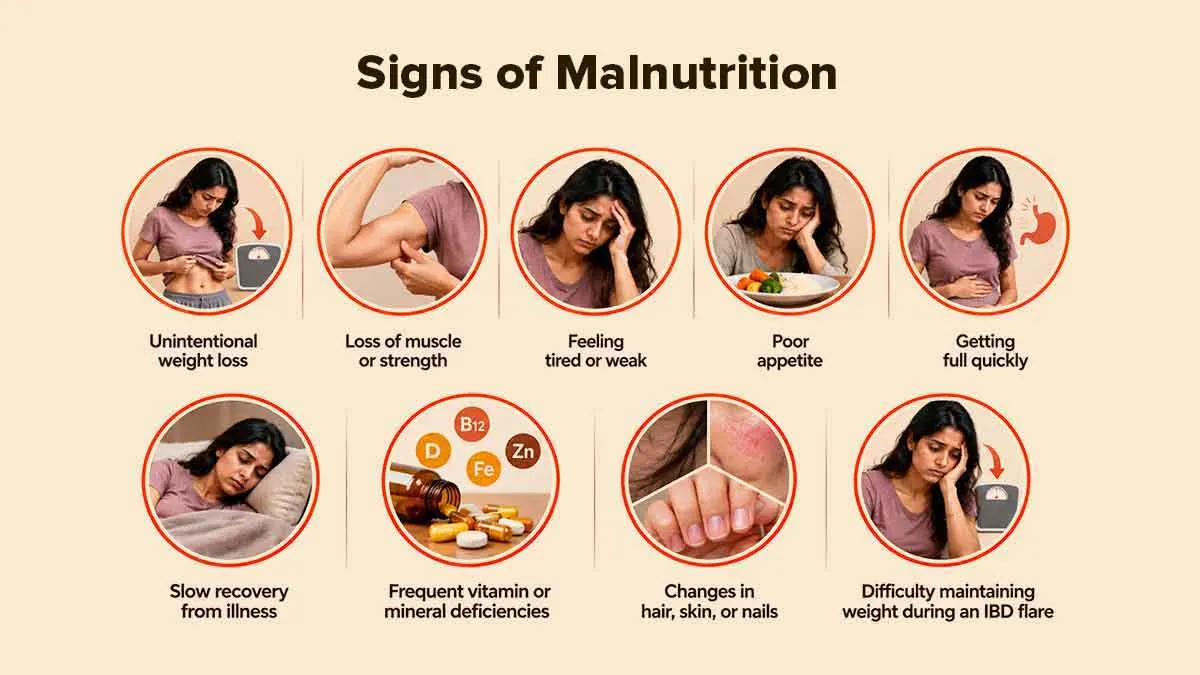
- Unintentional weight loss
- Loss of muscle or strength
- Feeling tired or weak
- Poor appetite
- Getting full quickly
- Slow recovery from illness
- Frequent vitamin or mineral deficiencies
- Changes in hair, skin, or nails
- Difficulty maintaining weight during an IBD flare
These signs can have other causes, so a doctor or dietitian may need to assess you to identify malnutrition.
Tests For Deficiencies
Doctors may use blood tests along with symptoms, diet, and weight history to check for nutritional deficiencies. Common tests include:
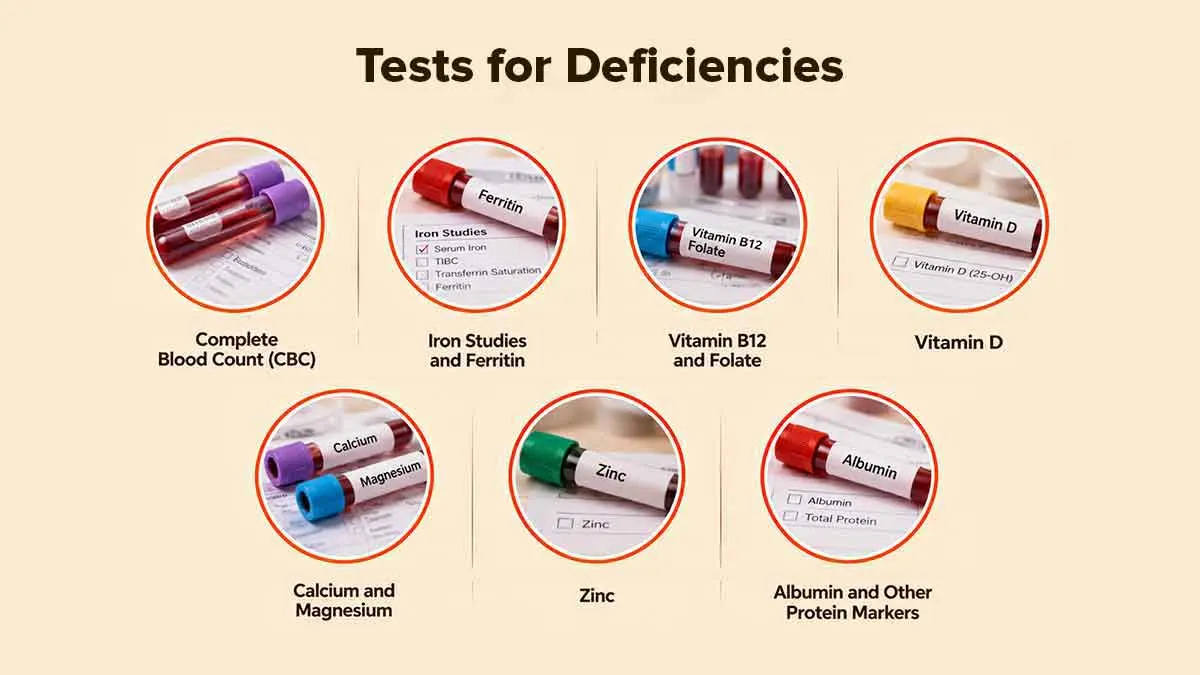
- Complete Blood Count (CBC): It helps look for anaemia and other blood changes.
- Iron Studies and Ferritin: They check iron stores and help identify iron deficiency.
- Vitamin B12 and Folate: These tests are useful for checking deficiencies that can lead to anaemia and weakness.
- Vitamin D: It helps identify low vitamin D levels.
- Calcium and Magnesium: These tests check important minerals needed for bones, muscles, and normal body function.
- Zinc: It may be checked when there is ongoing diarrhoea, poor intake, or suspected deficiency.
- Albumin and Other Protein Markers: Can provide information about nutritional status, although they can also change because of inflammation.
The test results depend on the individual's symptoms, type of IBD, disease location, diet, and previous bowel surgery, if any.
Increasing Energy And Protein
If you are losing weight because of IBD, try to make each meal count. Instead of eating large meals, have smaller meals and snacks throughout the day, especially when your appetite is low. Include a source of protein in your meals, such as dal, paneer, curd, eggs, tofu, or other foods you can comfortably tolerate. You can also add a little extra oil, nut butter, seeds, or full-fat dairy to meals to increase calories without making the portion much bigger. During a flare, choose foods that feel easier on your stomach and adjust them according to what you tolerate.
B12, Folate, And Vitamin D
Low levels of vitamin B12, folate, and vitamin D can occur in people with IBD. This may happen because of poor food intake, reduced absorption, or bowel surgery. A deficiency can cause problems such as tiredness, weakness, anaemia, or weak bones. Simple blood tests can check these levels, and supplements may be recommended if they are low.
Muscle Loss
During an IBD flare, eating less and ongoing inflammation can cause the body to lose muscle along with weight. This can make you feel weak or tired. Getting enough protein and calories can help maintain muscle, and gentle strength exercises may help when you are well enough.
Anaemia
Anaemia can happen in IBD because of blood loss, inflammation, or low levels of iron, vitamin B12, or folate. It can make you feel tired, weak, dizzy, or short of breath. A blood test can help find the cause and guide treatment.
Managing Poor Appetite And Nausea
Poor appetite and nausea can make it difficult to eat enough during an IBD flare. Try small amounts more frequently throughout the day instead of eating larger meals. Choose simple, familiar foods that you can tolerate and eat slowly. Keep fluids with small sips, especially if diarrhoea or vomiting is also present. Strong smells, very spicy or greasy foods may make nausea worse for some people, so avoid them if you notice a connection. If nausea keeps coming back, makes it hard to eat or drink, or is accompanied by repeated vomiting or weight loss, consult with your doctor.
Oral Nutrition And Specialist Support
If regular meals are not providing enough calories or protein, your doctor or dietitian may suggest oral nutrition supplements. These can help fill nutritional gaps and may be useful when appetite is poor, weight is falling, or eating becomes difficult during a flare. They are not meant to replace all meals unless specifically advised by a healthcare professional.
A dietitian can help choose a suitable supplement, adjust the amount based on an individual’s needs, and make sure you're getting enough nutrients. If weight loss continues, your doctor may look for other causes such as active inflammation, poor nutrient absorption, and ongoing symptoms.
Children And Growth Concerns
IBD can affect a child’s growth when inflammation, poor appetite, diarrhoea, or poor nutrient absorption makes it difficult to get enough nutrition. Some children may lose weight or grow more slowly than expected. This is why height, weight and growth patterns should be checked regularly, rather than looking at weight alone. Children with ongoing poor appetite, weight loss or slower growth may need support from a specialised doctor or a dietitian.
When Weight Loss Needs Prompt Review
Weight loss should not be ignored when it is unintentional, ongoing, or happening quickly. It is important to speak to your doctor if you are steadily losing weight, struggling to eat enough, feeling unusually weak, or having ongoing diarrhoea, vomiting, or poor appetite. Prompt review is especially important if you cannot keep food or fluids down, have signs of dehydration, or are losing a noticeable amount of weight without trying. Your doctor may check whether active inflammation, nutrient deficiencies, or another problem is contributing to the weight loss.
Dietitian Referral
A dietitian can be helpful if you are losing weight, struggling to eat enough, or worried about nutrient deficiencies. They can help you plan meals that provide enough calories and protein while fitting your symptoms and food preferences. They can also suggest suitable supplements when needed and help you avoid unnecessary food restrictions.
Reference
Nutrition and IBD: Malnutrition and/or Sarcopenia? A Practical Guide - PMC
Oral Diets and Nutrition Support for Inflammatory Bowel Disease: What Is the Evidence? - PubMed
Nutritional Status and Its Detection in Patients with Inflammatory Bowel Diseases - PMC
FAQs
Yes, active inflammation, diarrhoea, poor appetite, nausea, reduced food intake, and poor nutrient absorption can all contribute to weight loss.
Yes, a person can have a normal weight but still have low protein, calorie, iron, vitamin, or other nutrients.
Try smaller, more frequent meals. Include enough protein, calories, and nutrients in your diet. Choose food that you can tolerate, especially during a flare. Consult with a medical professional if your weight is still reducing.
They may help when regular food is not enough. A doctor or dietitian can suggest a suitable supplement based on your needs. An overdose or eating without consulting a professional about supplements can be dangerous due to side effects.
Consult Experienced Ayurveda Doctors for Weight Loss and Malnutrition in IBD





















Our Happy Patients
-
 Sunita Malik - Knee Pain
 -
 Abhishek Mal - Diabetes
 -
 Vidit Aggarwal - Psoriasis
 -
 Shanti - Sleeping Disorder
 -
 Ranjana - Arthritis
 -
 Jyoti - Migraine
 -
 Renu Lamba - Diabetes
 -
 Kamla Singh - Bulging Disc
 -
 Rajesh Kumar - Psoriasis
 -
 Dhruv Dutta - Diabetes
 -
 Atharva - Respiratory Disease
 -
 Amey - Skin Problem
 -
 Asha - Joint Problem
 -
 Sanjeeta - Joint Pain
 -
 A B Mukherjee - Acidity
 -
 Deepak Sharma - Lower Back Pain
 -
 Vyjayanti - Pcod
 -
 Sunil Singh - Thyroid
 -
 Sarla Gupta - Post Surgery Challenges
 -
 Syed Masood Ahmed - Osteoarthritis & Bp
Home Remedies
- पेट में गैस, जलन या संक्रमण? इन घरेलू उपायों से पाएं राहत
- पेट में गैस, अपच और फुलाव का आयुर्वेदिक इलाज - मुफ़्त परामर्श
- एनल फिशर से परेशान हैं? ये आयुर्वेदिक नुस्खे देंगे राहत और आराम
- कब्ज़ का आयुर्वेदिक इलाज - मुफ़्त परामर्श
- एसिड रिफ्लक्स का घरेलू इलाज - मुफ़्त आयुर्वेदिक परामर्श
- Food Poisoning का आयुर्वेदिक इलाज - मुफ़्त परामर्श
- क्या बार-बार उल्टी हो रही है? इन घरेलू उपायों से पाएं तुरंत आराम
- क्या आप जानते हैं? इन नुस्खों से पेट दर्द जड़ से खत्म होता है!
- बार-बार एसिडिटी? ये देसी नुस्खे तुरंत देंगे आराम!
- दवा की ज़रूरत नहीं! लूज़ मोशन का रामबाण इलाज घर पर ही
- Home Remedies for Vomiting
- Home Remedies for Piles
- Home Remedies for Food Poisoning
- Home Remedies for Stomach Infection
- Home Remedies for Bloating
- Home Remedies for Anal Fissure
- Home Remedies for Constipation
- Home Remedies for Acid Reflux
- Home Remedies for Acidity
- Home Remedies for Stomach Pain
Related Disease
- Ayurvedic Treatment for Acid Reflux
- Ayurvedic Treatment for Anemia
- Ayurvedic Treatment For Anorexia
- Ayurvedic Treatment for Chronic Fatigue Syndrome
- Ayurvedic Treatment For Gastritis
- Ayurvedic Treatment For Colitis
- Ayurvedic Treatment For Crohn’s Disease
- Ayurvedic Treatment for Weakness and Fatigue
- Ayurvedic Treatment For Flatulence
- Ayurvedic Treatment for Gallstones
- Ayurvedic Treatment for Jaundice
- Ayurvedic Treatment for Liver Cirrhosis
- Ayurvedic Treatment for Sickle Cell Anaemia
- Ayurvedic Treatment For Piles And Fissure
- Ayurvedic Treatment for Irritable Bowel Syndrome (IBS)
- Ayurvedic Treatment For Hyperacidity
- Ayurvedic Treatment for Constipation
- Ayurvedic treatment for Coeliac Disease
- Ayurvedic Treatment for Peptic Ulcer
- Ayurvedic Treatment for Tapeworm
- Ayurvedic Treatment for Typhoid
- Ayurvedic Treatment for Diarrhea
- Ayurvedic Treatment for Diverticulitis
- Ayurvedic Treatment for Pinworms
- Ayurvedic Treatment for Cholera
- Ayurvedic Treatment for Emphysema
- Ayurvedic Treatment for Food Poisoning
- Ayurvedic Treatment for Atherosclerosis
- Ayurvedic Treatment for Thalassemia
- Ayurvedic Treatment for High Triglycerides
- Get Ayurvedic Treatment for Gastroenteritis
- Ayurvedic Treatment For Inflammatory Bowel Disease (IBD)
Latest Blogs
- बुजुर्गों का dinner बहुत जल्दी और breakfast बहुत देर से हो तो energy पर क्या असर पड़ सकता है?
- पीरियड्स से पहले Salty Food की Craving क्यों बढ़ सकती है?
- Can Ancient Dinacharya Be Practical For A Desk-Job Lifestyle?
- Why One ‘Perfect Breakfast’ Cannot Work For Every Body
- Mindful Eating नया Wellness Trend है या Ayurveda में यह Idea पहले से मौजूद था?
- Can Too Little Sleep Make Sugar Cravings Feel Stronger
- Seasonal Eating: Where Modern Nutrition And Ayurveda Meet
- हर चीज़ का health data track करना कब useful से obsessive बन सकता है
- Can Sleeping In An Overcooled Room Leave You Feeling Stiff In The Morning?
- Why Hair, Skin and Energy Often React to Aggressive Dieting
- बच्चों में weekend sleep timing बदलना Monday mood को कैसे प्रभावित कर सकता है
- Is Fasted Intense Exercise a Good Idea for Every Woman
- Health Tracking Every Hour: Helpful Awareness Or Another Source Of Stress?
- फोन देखते हुए चलना सिर्फ accident risk नहीं—posture और breathing पर क्या असर पड़ता है
- Bloating Before a Period: Why Lifestyle Can Change How It Feels
- बहुत जल्दी खाना खाने से पेट भरने का signal देर से क्यों मिलता है
- ‘No Added Sugar’ Doesn’t Automatically Mean Low Sugar—Here’s Why
- Online meetings के बीच zero movement दिन के अंत में stiffness क्यों बढ़ाता है?
- Screen brightness और late-night work sleep readiness को कैसे बदलते हैं
- Warm Vs Cold Foods: How To Discuss The Ayurvedic Idea Without Turning It Into A Myth
Ayurvedic Doctor In Top Cities
- Ayurvedic Doctors in Bangalore
- Ayurvedic Doctors in Pune
- Ayurvedic Doctors in Delhi
- Ayurvedic Doctors in Hyderabad
- Ayurvedic Doctors in Indore
- Ayurvedic Doctors in Mumbai
- Ayurvedic Doctors in Lucknow
- Ayurvedic Doctors in Kolkata
- Ayurvedic Doctors in Patna
- Ayurvedic Doctors in Vadodara
- Ayurvedic Doctors in Ahmedabad
- Ayurvedic Doctors in Chandigarh
- Ayurvedic Doctors in Gurugaon
- Ayurvedic Doctors in Jaipur
- Ayurvedic Doctors in Kanpur
- Ayurvedic Doctors in Noida
- Ayurvedic Doctors in Ranchi
- Ayurvedic Doctors in Bhopal
- Ayurvedic Doctors in Ludhiana
- Ayurvedic Doctors in Dehradun