
Successful Treatments
Clinics
Doctors
IBD Types & Key Differences
 Published on 28 Sep, 2026
 Updated on 09 Oct, 2026

Explore Types & Key Differences
- Home / Diseases & Ayurveda / Digestive Disorders / Ayurvedic Treatment For Inflammatory Bowel Disease (IBD) / IBD Types & Key Differences
What IBD Means
IBD, or inflammatory bowel disease, is caused by a dysregulated immune response. It is an idiopathic condition triggered by the patient's intestinal microbiota. In simple terms, IBD refers to a group of lifelong diseases affecting the intestines. When healthy bowel cells are attacked by the body’s natural defence system, IBD occurs. Usually, it causes inflammation or severe swelling and irritation in the digestive tract.
Inflammation Versus Irritation
Irritation means the gut lining is being disturbed, which can lead to temporary discomfort, bloating, or changes in bowel habits. It does not necessarily mean there is ongoing inflammation or tissue damage. Whereas Inflammation is a stronger response from the body’s immune system and can cause swelling, pain, and changes to the gut lining.
In IBD, inflammation can continue for longer periods and may damage the bowel if it is not controlled. In short, irritation and inflammation can feel similar, but they are not the same.
IBD Types
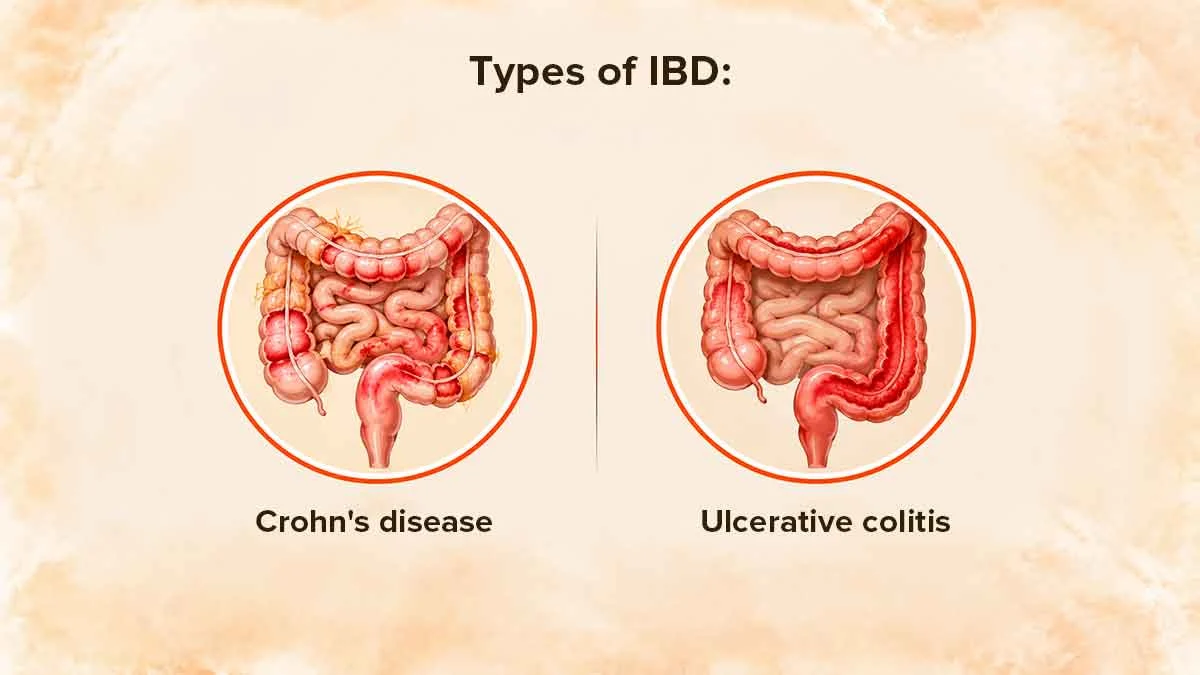
The two major forms of inflammatory bowel disease are Ulcerative colitis and Crohn’s disease. They can cause symptoms outside of the intestines. UC is limited to the colon, and CD includes the gastrointestinal (GI) tract; patients with these are more prone to develop cancer due to abnormal cells.
Crohn’s Disease
Crohn’s disease is a chronic inflammatory bowel disease that often affects the small intestine and the colon. It can impact the quality of life. It inflames the intestinal wall and causes patches; in simple terms, it causes intestinal wall thickening and can affect any part of the digestive tract, from the mouth to the anus. Crohn’s disease puts people at high risk of developing other health conditions like ulcers and anal fissures. Some of these complications seriously need professional attention, like abscesses, fistulas, and intestinal strictures. Common symptoms include diarrhoea, abdominal pain, fatigue, reduced appetite, and mouth sores. Crohn’s disease can be treated with proper medications, lifestyle changes, and surgery in severe cases.
Ulcerative Colitis
Ulcerative colitis is a type of inflammatory bowel disease that affects the large intestine (colon). It can impact the overall quality of life. UC causes severe inflammation, which further weakens the walls of the colon and creates open sores or ulcers. It causes swelling and ulcers, which damage the healthy tissues. Ulcerative colitis puts people at high risk, and it can lead to a torn colon and toxic megacolon if ignored for a long time; this condition needs strict monitoring to avoid these complications and deeper tissue damage. Common symptoms include diarrhea, abdominal pain, rectal pain, and blood or mucus in the stool. Ulcerative colitis can be treated with anti-inflammatory drugs and advanced therapies that target specific immune proteins; surgery in severe cases is recommended.
Indeterminate Or Unclassified IBD
Indeterminate IBD and Unclassified IBD (IBDU) are used when a person clearly has inflammatory bowel disease, but doctors cannot confirm whether it is Crohn’s disease or ulcerative colitis. This can happen when symptoms, tests such as colonoscopy, biopsy, and imaging findings overlap between the two conditions. It does not mean that the person does not have IBD; rather, it compares both CD and UC symptoms, tests, and imaging to identify the type of disease. Over time, the disease often reveals itself.
Where Each Condition Can Affect The Gut
- Crohn’s disease can affect any part of the digestive tract from mouth to anus. However, it most often involves the small intestine, especially the ileum, and the beginning of the colon. The inflammation does not always affect the whole bowel continuously. Instead, there may be inflamed areas separated by healthy sections. Because Crohn’s disease can involve deeper layers of the bowel wall, it may sometimes lead to narrowing, fistulas, or abscesses.
- Ulcerative colitis is limited to the colon and rectum. It usually begins in the rectum and may extend into the rest of the colon. The inflammation generally follows a continuous pattern rather than appearing in separate patches. It mainly affects the inner lining of the bowel, which is why bloody diarrhea, rectal bleeding, urgency, and frequent bowel movements are common symptoms.
In simple terms. Crohn’s disease can affect anywhere along the digestive tract, while ulcerative colitis is limited to the colon and rectum.
IBD Is Not Contagious
IBD, or inflammatory bowel disease, is not contagious and cannot be passed through air, water, physical contact, or sharing food with another person. Crohn’s disease and Ulcerative colitis are long-term inflammatory conditions linked to a complex mix of immune, genetic, and environmental factors. Having IBD is not the result of catching an infection from another person.
How Symptoms And Complications Differ
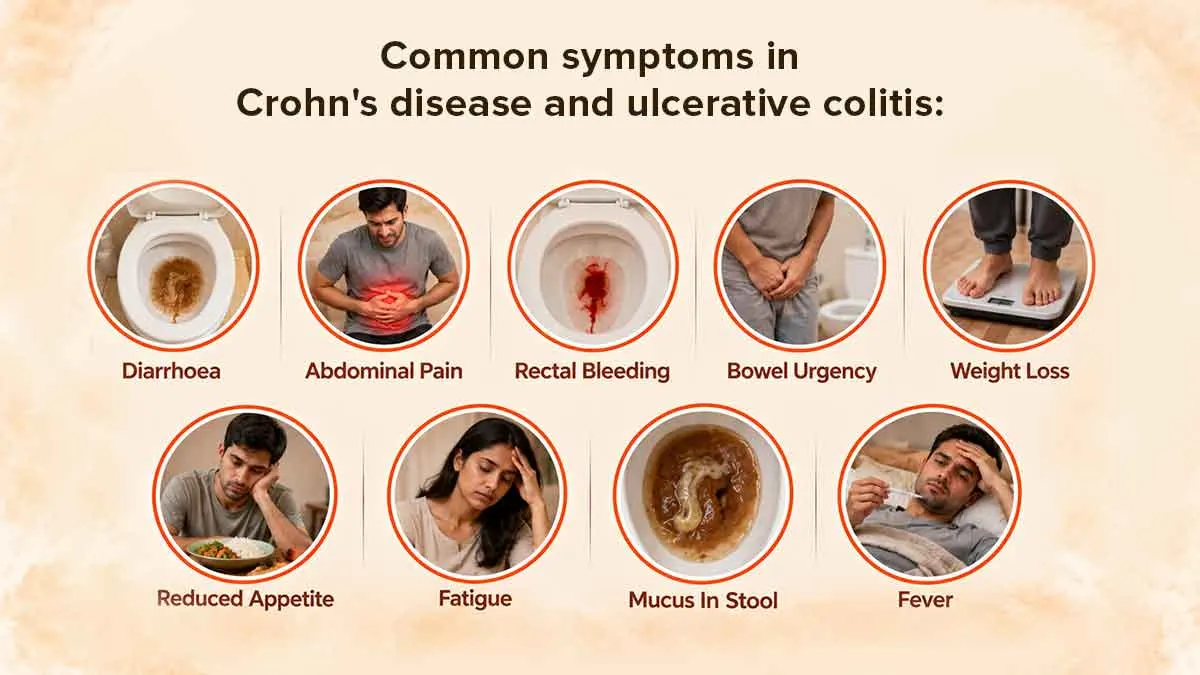
| Symptoms/Complications | Crohn’s Disease | Ulcerative Colitis |
| Diarrhoea | Common and may continue for a long time. Blood may or may not be present. | Common and it often comes with blood or mucus. |
| Abdominal Pain | Often noticeable and may occur in the lower right side of the abdomen when the small intestine is affected. | Usually feels more like cramping, often around the time of bowel movement. |
| Rectal Bleeding | Can happen, especially when the colon is involved. | Varies; common during active disease. |
| Bowel Urgency | Can occur | Often a major symptom with a sudden need to use the toilet. |
| Weight Loss | More common and severe due to malabsorption in the small intestine. | Can happen due to prolonged inflammation. |
| Appetite | Appetite may reduce. | Reduced appetite due to ongoing inflammation. |
| Fatigue | Common and may be linked to anaemia, poor nutrient absorption, or ongoing inflammation. | Common when bleeding or inflammation is ongoing. |
| Mucus In Stool | May occur when the colon is affected. | Common when the rectum is inflamed. |
| Fever | May occur during a flare or more severe inflammation | May occur during a flare or more severe inflammation |
Crohn’s disease often has more abdominal pain, diarrhoea, and weight loss, while Ulcerative colitis more often causes bloody stools, rectal bleeding, and bowel urgency. There is an overlap in the symptoms; that's why symptoms alone cannot tell the type of IBD.
Do Not Treat Symptoms As A Self-Diagnosis
Symptoms such as diarrhoea, abdominal pain, bloating, fatigue, and changes in bowel habits can happen for many different reasons. Having these symptoms does not automatically mean that you have IBD. Crohn’s disease and Ulcerative colitis need proper medical evaluation, usually involving an individual’s symptoms, medical history, blood and stool tests, and, when needed, endoscopy or imaging. It is better not to start treatment or self-treatment on the basis of self- diagnosis because it can worsen the case, but you can take small steps like tracking your eating habits, switching to healthy alternatives, choosing easily digestible foods, and staying hydrated. IBD diagnosis requires medical supervision.
How Doctors Confirm The Type
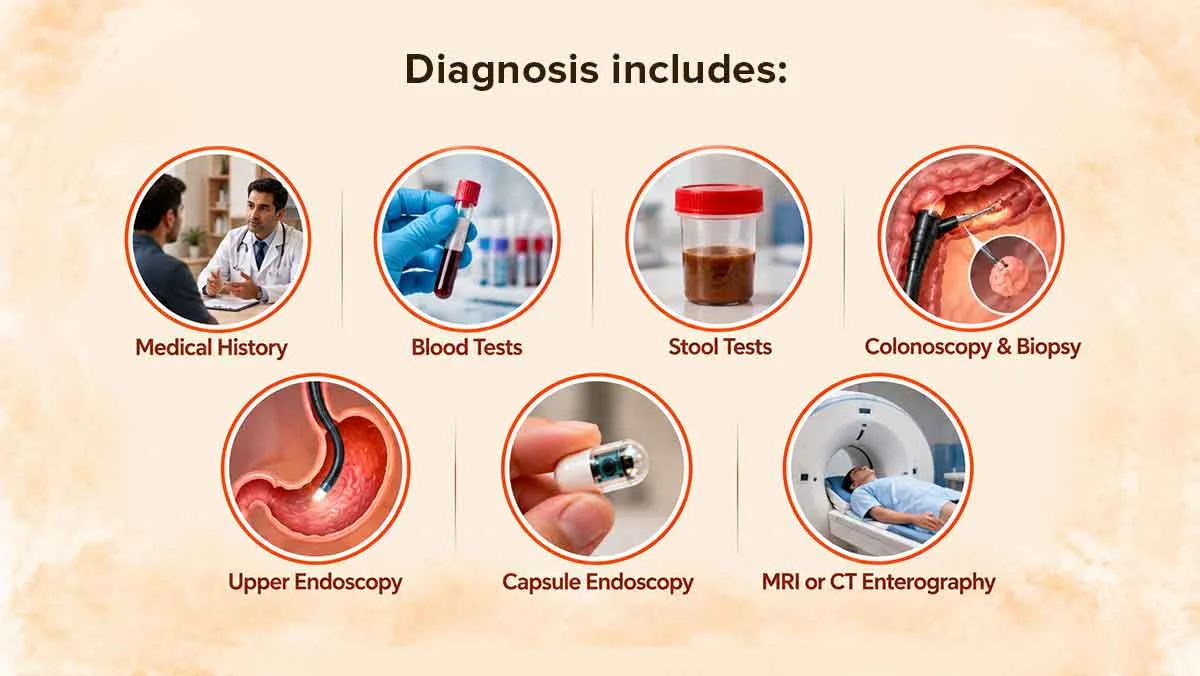
There is no single test that can confirm whether a person has Crohn’s disease or ulcerative colitis. Doctors usually look at the symptoms, medical history, blood and stool tests, imaging or endoscopy, and colonoscopy to see where the inflammation is.
| Tests | It Helps To Understand |
| Medical History | Pattern of diarrhoea, bleeding, pain, weight loss, and other symptoms. |
| Blood Tests | Signs of inflammation, anemia, and nutritional problems. |
| Stool Tests | Help check for intestinal inflammation and rule out infections. |
| Colonoscopy & Biopsy | Shows video images of the colon and the pattern of the inflammation. |
| Upper Endoscopy | May be used when Crohn’s disease affecting the upper digestive tract is suspected. |
| Capsule Endoscopy | Helps examine parts of the small intestine that are difficult to reach with standard endoscopy. |
| MRI or CT Enterography | Examines the parts of the small intestine and deeper bowel involvement, particularly in Crohn’s disease. |
What The Diagnosis Means For Treatment
The type of IBD helps doctors choose a treatment plan because Crohn’s disease and ulcerative colitis affect different parts of the digestive tract and can behave differently. Treatment also depends on how active the disease is, where it is located, and whether complications are present.
- In Crohn's disease, treatment focuses on controlling inflammation, reducing symptoms, and preventing complications such as strictures, fistulas, and abscesses. Medicines may include steroids for short-term control and biologics or other immune- targeting medicines for longer-term management. Surgery may be needed when complications develop, although the disease can return after surgery.
- In Ulcerative colitis, treatment focuses on controlling inflammation in the colon and maintaining remission. Depending on severity, doctors may use medicines such as 5-ASA or 5-aminosalicylates, steroids, immunomodulators, or biologic therapies. Surgery may be considered when medicines do not control the disease or when serious complications occur.
Overall, the diagnosis helps guide treatment, but the exact plan is tailored to the person’s symptoms, disease activity, and response to treatment.
Reference
Inflammatory Bowel Disease (IBD) Basics
Inflammatory bowel disease unclassified - PMC
Self-Care Among Patients With Inflammatory Bowel Disease: An Interview Study - PMC
Testing and Diagnosis for Inflammatory Bowel Disease (IBD)
https://www.cd c.gov/inflammatory-bowel-disease/living-with/index.html
FAQs
The two main types are Crohn’s disease and Ulcerative colitis.
Crohn’s disease can affect any part of the digestive tract, while ulcerative colitis affects the colon and the rectum.
Yes, it commonly affects the small intestine, but it can occur anywhere from the mouth to the anus.
IBD symptoms can overlap with other digestive conditions, and Crohn’s disease and ulcerative colitis can look similar. Proper tests are needed to confirm the diagnosis and identify the type of IBD.
NO, IBD is not an infectious or contagious disease.
Consult Experienced Ayurveda Doctors for IBD Types And Key Differences





















Our Happy Patients
-
 Sunita Malik - Knee Pain
 -
 Abhishek Mal - Diabetes
 -
 Vidit Aggarwal - Psoriasis
 -
 Shanti - Sleeping Disorder
 -
 Ranjana - Arthritis
 -
 Jyoti - Migraine
 -
 Renu Lamba - Diabetes
 -
 Kamla Singh - Bulging Disc
 -
 Rajesh Kumar - Psoriasis
 -
 Dhruv Dutta - Diabetes
 -
 Atharva - Respiratory Disease
 -
 Amey - Skin Problem
 -
 Asha - Joint Problem
 -
 Sanjeeta - Joint Pain
 -
 A B Mukherjee - Acidity
 -
 Deepak Sharma - Lower Back Pain
 -
 Vyjayanti - Pcod
 -
 Sunil Singh - Thyroid
 -
 Sarla Gupta - Post Surgery Challenges
 -
 Syed Masood Ahmed - Osteoarthritis & Bp
Home Remedies
- पेट में गैस, जलन या संक्रमण? इन घरेलू उपायों से पाएं राहत
- पेट में गैस, अपच और फुलाव का आयुर्वेदिक इलाज - मुफ़्त परामर्श
- एनल फिशर से परेशान हैं? ये आयुर्वेदिक नुस्खे देंगे राहत और आराम
- कब्ज़ का आयुर्वेदिक इलाज - मुफ़्त परामर्श
- एसिड रिफ्लक्स का घरेलू इलाज - मुफ़्त आयुर्वेदिक परामर्श
- Food Poisoning का आयुर्वेदिक इलाज - मुफ़्त परामर्श
- क्या बार-बार उल्टी हो रही है? इन घरेलू उपायों से पाएं तुरंत आराम
- क्या आप जानते हैं? इन नुस्खों से पेट दर्द जड़ से खत्म होता है!
- बार-बार एसिडिटी? ये देसी नुस्खे तुरंत देंगे आराम!
- दवा की ज़रूरत नहीं! लूज़ मोशन का रामबाण इलाज घर पर ही
- Home Remedies for Vomiting
- Home Remedies for Piles
- Home Remedies for Food Poisoning
- Home Remedies for Stomach Infection
- Home Remedies for Bloating
- Home Remedies for Anal Fissure
- Home Remedies for Constipation
- Home Remedies for Acid Reflux
- Home Remedies for Acidity
- Home Remedies for Stomach Pain
Related Disease
- Ayurvedic Treatment for Acid Reflux
- Ayurvedic Treatment for Anemia
- Ayurvedic Treatment For Anorexia
- Ayurvedic Treatment for Chronic Fatigue Syndrome
- Ayurvedic Treatment For Gastritis
- Ayurvedic Treatment For Colitis
- Ayurvedic Treatment For Crohn’s Disease
- Ayurvedic Treatment for Weakness and Fatigue
- Ayurvedic Treatment For Flatulence
- Ayurvedic Treatment for Gallstones
- Ayurvedic Treatment for Jaundice
- Ayurvedic Treatment for Liver Cirrhosis
- Ayurvedic Treatment for Sickle Cell Anaemia
- Ayurvedic Treatment For Piles And Fissure
- Ayurvedic Treatment for Irritable Bowel Syndrome (IBS)
- Ayurvedic Treatment For Hyperacidity
- Ayurvedic Treatment for Constipation
- Ayurvedic treatment for Coeliac Disease
- Ayurvedic Treatment for Peptic Ulcer
- Ayurvedic Treatment for Tapeworm
- Ayurvedic Treatment for Typhoid
- Ayurvedic Treatment for Diarrhea
- Ayurvedic Treatment for Diverticulitis
- Ayurvedic Treatment for Pinworms
- Ayurvedic Treatment for Cholera
- Ayurvedic Treatment for Emphysema
- Ayurvedic Treatment for Food Poisoning
- Ayurvedic Treatment for Atherosclerosis
- Ayurvedic Treatment for Thalassemia
- Ayurvedic Treatment for High Triglycerides
- Get Ayurvedic Treatment for Gastroenteritis
- Ayurvedic Treatment For Inflammatory Bowel Disease (IBD)
Latest Blogs
- बुजुर्गों का dinner बहुत जल्दी और breakfast बहुत देर से हो तो energy पर क्या असर पड़ सकता है?
- पीरियड्स से पहले Salty Food की Craving क्यों बढ़ सकती है?
- Can Ancient Dinacharya Be Practical For A Desk-Job Lifestyle?
- Why One ‘Perfect Breakfast’ Cannot Work For Every Body
- Mindful Eating नया Wellness Trend है या Ayurveda में यह Idea पहले से मौजूद था?
- Can Too Little Sleep Make Sugar Cravings Feel Stronger
- Seasonal Eating: Where Modern Nutrition And Ayurveda Meet
- हर चीज़ का health data track करना कब useful से obsessive बन सकता है
- Can Sleeping In An Overcooled Room Leave You Feeling Stiff In The Morning?
- Why Hair, Skin and Energy Often React to Aggressive Dieting
- बच्चों में weekend sleep timing बदलना Monday mood को कैसे प्रभावित कर सकता है
- Is Fasted Intense Exercise a Good Idea for Every Woman
- Health Tracking Every Hour: Helpful Awareness Or Another Source Of Stress?
- फोन देखते हुए चलना सिर्फ accident risk नहीं—posture और breathing पर क्या असर पड़ता है
- Bloating Before a Period: Why Lifestyle Can Change How It Feels
- बहुत जल्दी खाना खाने से पेट भरने का signal देर से क्यों मिलता है
- ‘No Added Sugar’ Doesn’t Automatically Mean Low Sugar—Here’s Why
- Online meetings के बीच zero movement दिन के अंत में stiffness क्यों बढ़ाता है?
- Screen brightness और late-night work sleep readiness को कैसे बदलते हैं
- Warm Vs Cold Foods: How To Discuss The Ayurvedic Idea Without Turning It Into A Myth
Ayurvedic Doctor In Top Cities
- Ayurvedic Doctors in Bangalore
- Ayurvedic Doctors in Pune
- Ayurvedic Doctors in Delhi
- Ayurvedic Doctors in Hyderabad
- Ayurvedic Doctors in Indore
- Ayurvedic Doctors in Mumbai
- Ayurvedic Doctors in Lucknow
- Ayurvedic Doctors in Kolkata
- Ayurvedic Doctors in Patna
- Ayurvedic Doctors in Vadodara
- Ayurvedic Doctors in Ahmedabad
- Ayurvedic Doctors in Chandigarh
- Ayurvedic Doctors in Gurugaon
- Ayurvedic Doctors in Jaipur
- Ayurvedic Doctors in Kanpur
- Ayurvedic Doctors in Noida
- Ayurvedic Doctors in Ranchi
- Ayurvedic Doctors in Bhopal
- Ayurvedic Doctors in Ludhiana
- Ayurvedic Doctors in Dehradun