
Successful Treatments
Clinics
Doctors
IBD Symptoms & Flare Recognition
 Published on 29 Sep, 2026
 Updated on 09 Oct, 2026

Explore Symptoms & Flare
- Home / Diseases & Ayurveda / Digestive Disorders / Ayurvedic Treatment For Inflammatory Bowel Disease (IBD) / IBD Symptoms & Flare Recognition
Inflammatory bowel disease, mainly Crohn’s disease and Ulcerative colitis, can cause symptoms that change over time. Some people have mild symptoms, while others may notice more noticeable problems during a flare. Recognising a change from your usual pattern can help you know when to consult a doctor.
Common Bowel Symptoms
Bowel symptoms are often the first noticeable signs of IBD. They can vary depending on the type of IBD, the area affected, and whether the disease is active. These symptoms can become more noticeable during a flare:
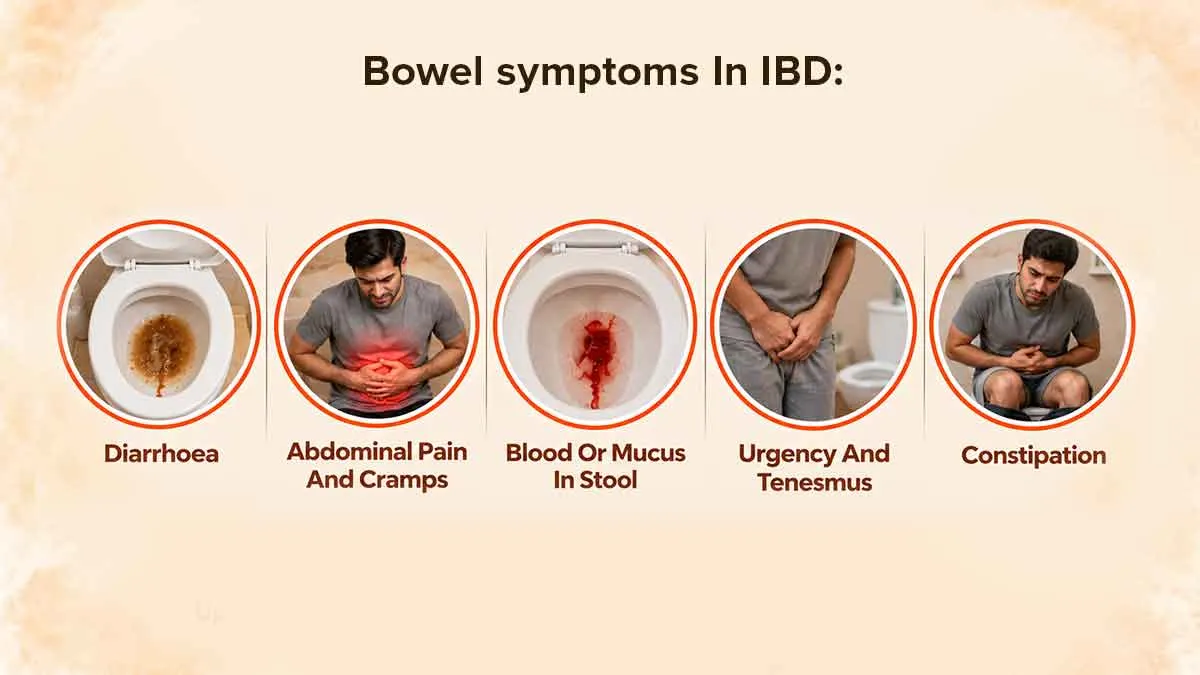
Diarrhoea
Stool may become watery or very loose and can occur several times a day. Ongoing diarrhoea is more concerning when it is accompanied by blood, pain, fever, or weight loss.
Abdominal Pain And Cramps
Cramping can occur before or during bowel movements. You may feel soreness or sharp pain in the lower abdomen. It is usually caused by inflammation. The location and intensity can vary depending on which part of the digestive tract is affected.
Blood Or Mucus In Stool
Blood may appear as bright red streaks, mixed with the stool, or on the toilet paper, and it is common when inflammation affects the rectum or the lower part of the colon. Mucus may look like a clear, white, or slightly cloudy substance in the stool. It can occur when the lining of the bowel becomes inflamed.
Urgency And Tenesmus
Urgency means having a sudden, strong need to pass stool that can be difficult to hold. It can happen when inflammation makes the rectum more sensitive. Tenesmus is slightly different. It is the feeling that you still need to pass stool even after you have already used the toilet, and it is painful.
Constipation
Although diarrhoea is more commonly associated with IBD, some people can also experience constipation. It may occur for different reasons, including inflammation of the rectum or narrowing of the bowel.
Whole-Body Symptoms
IBD does not only affect the digestive system. Ongoing inflammation can also affect how you feel more generally, especially when the disease is active. These symptoms can occur during IBD flare-ups:
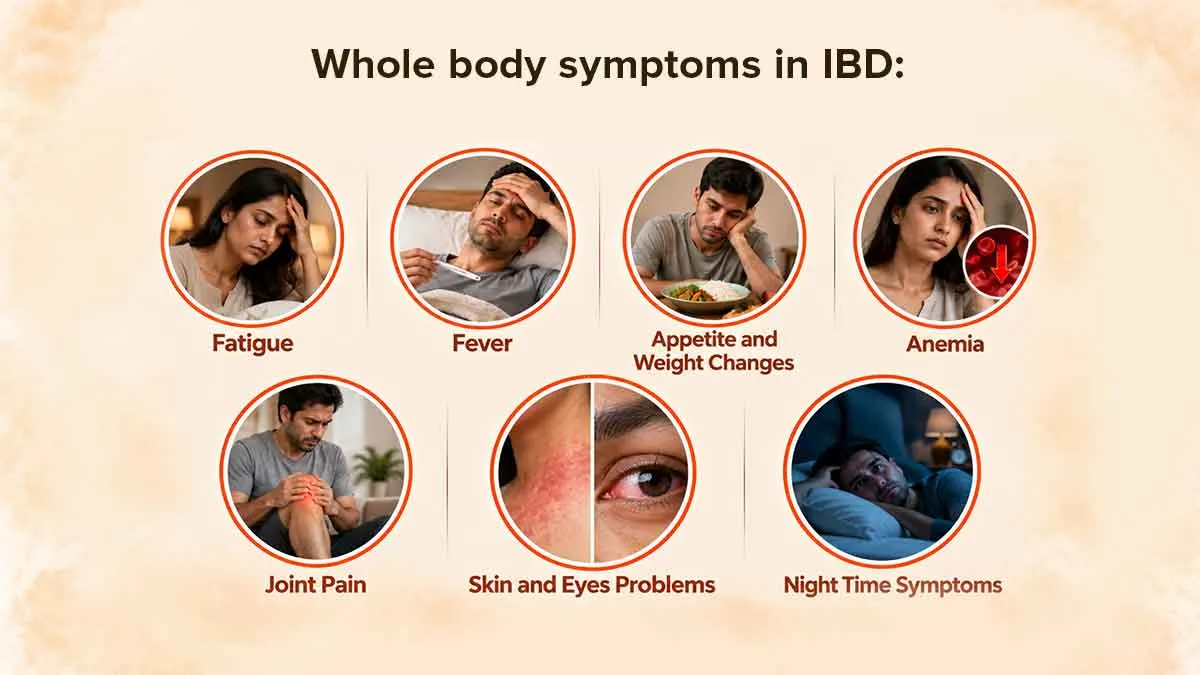
Fatigue
Feeling unusually tired or drained even after getting enough rest. It can be related to inflammation, anaemia, poor sleep, or reduced nutrition.
Fever
A rise in body temperature can occur when inflammation is active, although fever can also have other causes such as infection.
Appetite And Weight Changes
Abdominal pain, nausea, or active inflammation may make you less interested in food, and unplanned weight loss may happen when appetite decreases, nutrients are not absorbed well, or symptoms make eating difficult.
Anemia
Blood loss or low iron levels can contribute to tiredness, weakness, dizziness, headaches, or breathlessness.
Joint Pain
Some people with IBD develop pain, stiffness, or swelling in the joints, which can occur alongside or independently of bowel movements. It usually affects large joints or the spine.
Skin & Eyes Problem
Some people may develop skin changes like rashes, nodules, lesions, ulcers, or painful, red eyes, and sensitivity as part of inflammation.
Night-Time Symptoms
IBD may sometimes cause symptoms that disturb sleep, such as diarrhoea, sudden bowel movements, repeated trips to the toilet, or abdominal cramps. Some people may also experience fever or night sweats when inflammation is high. Night-time bowel symptoms can be a sign of active inflammation, especially when they are new or getting worse.
Crohn’s And Ulcerative Colitis Symptom Patterns
Crohn’s and Ulcerative Colitis share many symptoms, including diarrhoea, abdominal pain, fatigue, and weight loss, but they often follow different patterns. In Crohn’s disease, abdominal pain may occur anywhere in the abdomen; it is often felt in the lower right side of the abdomen. Diarrhea may or may not contain blood, and symptoms can vary depending upon which part of the digestive tract is affected. Some people also experience mouth sores, anal pain or drainage, and problems such as fistulas or narrowing of the bowel. In ulcerative colitis, symptoms mainly involve the colon and rectum. Frequent diarrhoea with blood or mucus, abdominal cramps, a sudden urge to pass stool, and a feeling of incomplete bowel are common symptoms and may become more noticeable during flare-ups and settle during periods of remission. Both can also cause fever, reduced appetite, and tiredness when inflammation is active, but symptoms alone cannot confirm which type of IBD a person has.
What AN IBD Flare Means
An IBD flare is a period when inflammation in the digestive tract becomes active again, and symptoms worsen. It may cause diarrhoea, abdominal pain, cramps, blood or mucus in stool, urgency, tenesmus, fatigue, low appetite, or weight loss. The symptoms can vary depending on whether the person has Crohn’s disease or Ulcerative colitis and where the inflammation is located. Flares can be followed by periods of remission, when symptoms are reduced or absent. A change in symptoms does not always mean a flare-up, so doctors may use blood tests, stool tests, and other imaging or medical tests to check whether inflammation is active or not.
Common Flare Triggers And Look-Alikes
IBD symptoms can worsen for different reasons, and not every increase in symptoms means an actual flare. Some factors trigger or worsen inflammation, while other conditions can cause similar symptoms. Common flare triggers are:
- Infections such as stomach or intestinal infections caused by viruses and bacteria.
- Missing or stopping medicines prescribed for IBD.
- NSAIDs or non-steroidal anti-inflammatory painkillers such as aspirin and ibuprofen.
- Certain foods which may worsen symptoms when they do not directly cause inflammation.
- Stress or poor sleep, which can make symptoms harder to manage.
Conditions That Can Look Like A Flare:
- Gut infections causing diarrhoea or abdominal pain.
- IBS, which can cause bowel changes and cramps without active inflammation.
- Food intolerance, such as lactose intolerance.
- Medication side effects.
- Small intestine bacterial overgrowth.
- Bile Acid Malabsorption, particularly in some people with Crohn’s disease.
How To Track Symptoms
A simple symptoms diary or a dedicated IBD app can make it easier to understand how your symptoms change over time. You can track:
- Bowel Movements: How often you go and whether the stool has blood or mucus.
- Discomfort or Pain: Where it hurts, how severe the pain is, and how long it lasts.
- Medicines: Track down new medicines you started or any missed doses.
- Food and Routine: Note any major food changes, stress, or sleep changes around the time symptoms change or get worse.
- General Wellbeing: Whether symptoms are affecting sleep quality, work, studies, or normal activities
When To Contact The Care Team
You need to reach doctors if your symptoms are getting worse day by day or becoming more difficult to manage. You need serious medical care when:
- Diarrhoea or abdominal pain is becoming more frequent or severe.
- Blood in stool is increasing or keeps coming back.
- You have frequent urgency or bowel movements, especially at night.
- You are losing weight without any changes in lifestyle or workout.
- Having painful sores in your mouth.
- You have a fever over 101 degree fahrenheit, unusual tiredness, or signs of dehydration.
- Your symptoms are not improving with ongoing treatment.
- Missed several doses or are having problems with medicines.
Emergency Warning Signs
Most IBD symptoms can be managed with routine medical care, but some signs need urgent medical supervision. These include:
- Heavy or ongoing bleeding from the rectum.
- Severe or rapidly worsening abdominal pain.
- A swollen or very tender abdomen.
- Repeated vomiting or inability to keep fluids.
- Severe dehydration, dizziness, or fainting.
- Severe fever or symptoms of an infection.
- Confusion, extreme weakness, or feeling seriously unwell.
Reference
Case-control study of factors that trigger inflammatory bowel disease flares - PMC
Inflammatory Bowel Disease (IBD) Basics
Inflammatory bowel disease | Office on Women's Health
What Is a Flare? The Manitoba Living With IBD Study - PMC
A113 WHAT IS A FLARE OF IBD? THE MANITOBA LIVING WITH IBD STUDY - PMC
FAQs
Common symptoms include diarrhoea, abdominal pain, blood in stool, appetite loss, severe fatigue, and weight loss. Symptoms can vary according to the type and the location.
An IBD flare means a period when the disease becomes more active.
Stress does not directly cause IBD, but it can worsen the symptoms and may be linked with more severe flares in some people.
IBD cannot be completely cured because of the inflammation, but it can be managed with a healthy lifestyle, a balanced diet, anti-inflammatory herbs, and regular exercise. Ayurveda focuses on the root causes rather than depending solely on medicines.
Yes, gut infections can cause similar symptoms, so testing is needed.
Consult Experienced Ayurveda Doctors for IBD Symptoms & Flare Recognition





















Our Happy Patients
-
 Sunita Malik - Knee Pain
 -
 Abhishek Mal - Diabetes
 -
 Vidit Aggarwal - Psoriasis
 -
 Shanti - Sleeping Disorder
 -
 Ranjana - Arthritis
 -
 Jyoti - Migraine
 -
 Renu Lamba - Diabetes
 -
 Kamla Singh - Bulging Disc
 -
 Rajesh Kumar - Psoriasis
 -
 Dhruv Dutta - Diabetes
 -
 Atharva - Respiratory Disease
 -
 Amey - Skin Problem
 -
 Asha - Joint Problem
 -
 Sanjeeta - Joint Pain
 -
 A B Mukherjee - Acidity
 -
 Deepak Sharma - Lower Back Pain
 -
 Vyjayanti - Pcod
 -
 Sunil Singh - Thyroid
 -
 Sarla Gupta - Post Surgery Challenges
 -
 Syed Masood Ahmed - Osteoarthritis & Bp
Home Remedies
- पेट में गैस, जलन या संक्रमण? इन घरेलू उपायों से पाएं राहत
- पेट में गैस, अपच और फुलाव का आयुर्वेदिक इलाज - मुफ़्त परामर्श
- एनल फिशर से परेशान हैं? ये आयुर्वेदिक नुस्खे देंगे राहत और आराम
- कब्ज़ का आयुर्वेदिक इलाज - मुफ़्त परामर्श
- एसिड रिफ्लक्स का घरेलू इलाज - मुफ़्त आयुर्वेदिक परामर्श
- Food Poisoning का आयुर्वेदिक इलाज - मुफ़्त परामर्श
- क्या बार-बार उल्टी हो रही है? इन घरेलू उपायों से पाएं तुरंत आराम
- क्या आप जानते हैं? इन नुस्खों से पेट दर्द जड़ से खत्म होता है!
- बार-बार एसिडिटी? ये देसी नुस्खे तुरंत देंगे आराम!
- दवा की ज़रूरत नहीं! लूज़ मोशन का रामबाण इलाज घर पर ही
- Home Remedies for Vomiting
- Home Remedies for Piles
- Home Remedies for Food Poisoning
- Home Remedies for Stomach Infection
- Home Remedies for Bloating
- Home Remedies for Anal Fissure
- Home Remedies for Constipation
- Home Remedies for Acid Reflux
- Home Remedies for Acidity
- Home Remedies for Stomach Pain
Related Disease
- Ayurvedic Treatment for Acid Reflux
- Ayurvedic Treatment for Anemia
- Ayurvedic Treatment For Anorexia
- Ayurvedic Treatment for Chronic Fatigue Syndrome
- Ayurvedic Treatment For Gastritis
- Ayurvedic Treatment For Colitis
- Ayurvedic Treatment For Crohn’s Disease
- Ayurvedic Treatment for Weakness and Fatigue
- Ayurvedic Treatment For Flatulence
- Ayurvedic Treatment for Gallstones
- Ayurvedic Treatment for Jaundice
- Ayurvedic Treatment for Liver Cirrhosis
- Ayurvedic Treatment for Sickle Cell Anaemia
- Ayurvedic Treatment For Piles And Fissure
- Ayurvedic Treatment for Irritable Bowel Syndrome (IBS)
- Ayurvedic Treatment For Hyperacidity
- Ayurvedic Treatment for Constipation
- Ayurvedic treatment for Coeliac Disease
- Ayurvedic Treatment for Peptic Ulcer
- Ayurvedic Treatment for Tapeworm
- Ayurvedic Treatment for Typhoid
- Ayurvedic Treatment for Diarrhea
- Ayurvedic Treatment for Diverticulitis
- Ayurvedic Treatment for Pinworms
- Ayurvedic Treatment for Cholera
- Ayurvedic Treatment for Emphysema
- Ayurvedic Treatment for Food Poisoning
- Ayurvedic Treatment for Atherosclerosis
- Ayurvedic Treatment for Thalassemia
- Ayurvedic Treatment for High Triglycerides
- Get Ayurvedic Treatment for Gastroenteritis
- Ayurvedic Treatment For Inflammatory Bowel Disease (IBD)
Latest Blogs
- बुजुर्गों का dinner बहुत जल्दी और breakfast बहुत देर से हो तो energy पर क्या असर पड़ सकता है?
- पीरियड्स से पहले Salty Food की Craving क्यों बढ़ सकती है?
- Can Ancient Dinacharya Be Practical For A Desk-Job Lifestyle?
- Why One ‘Perfect Breakfast’ Cannot Work For Every Body
- Mindful Eating नया Wellness Trend है या Ayurveda में यह Idea पहले से मौजूद था?
- Can Too Little Sleep Make Sugar Cravings Feel Stronger
- Seasonal Eating: Where Modern Nutrition And Ayurveda Meet
- हर चीज़ का health data track करना कब useful से obsessive बन सकता है
- Can Sleeping In An Overcooled Room Leave You Feeling Stiff In The Morning?
- Why Hair, Skin and Energy Often React to Aggressive Dieting
- बच्चों में weekend sleep timing बदलना Monday mood को कैसे प्रभावित कर सकता है
- Is Fasted Intense Exercise a Good Idea for Every Woman
- Health Tracking Every Hour: Helpful Awareness Or Another Source Of Stress?
- फोन देखते हुए चलना सिर्फ accident risk नहीं—posture और breathing पर क्या असर पड़ता है
- Bloating Before a Period: Why Lifestyle Can Change How It Feels
- बहुत जल्दी खाना खाने से पेट भरने का signal देर से क्यों मिलता है
- ‘No Added Sugar’ Doesn’t Automatically Mean Low Sugar—Here’s Why
- Online meetings के बीच zero movement दिन के अंत में stiffness क्यों बढ़ाता है?
- Screen brightness और late-night work sleep readiness को कैसे बदलते हैं
- Warm Vs Cold Foods: How To Discuss The Ayurvedic Idea Without Turning It Into A Myth
Ayurvedic Doctor In Top Cities
- Ayurvedic Doctors in Bangalore
- Ayurvedic Doctors in Pune
- Ayurvedic Doctors in Delhi
- Ayurvedic Doctors in Hyderabad
- Ayurvedic Doctors in Indore
- Ayurvedic Doctors in Mumbai
- Ayurvedic Doctors in Lucknow
- Ayurvedic Doctors in Kolkata
- Ayurvedic Doctors in Patna
- Ayurvedic Doctors in Vadodara
- Ayurvedic Doctors in Ahmedabad
- Ayurvedic Doctors in Chandigarh
- Ayurvedic Doctors in Gurugaon
- Ayurvedic Doctors in Jaipur
- Ayurvedic Doctors in Kanpur
- Ayurvedic Doctors in Noida
- Ayurvedic Doctors in Ranchi
- Ayurvedic Doctors in Bhopal
- Ayurvedic Doctors in Ludhiana
- Ayurvedic Doctors in Dehradun