
Successful Treatments
Clinics
Doctors
IBD Flare: Signs, Self-Care And When To Get Help
 Published on 29 Sep, 2026
 Updated on 12 Oct, 2026

Explore Symptoms & Flare
- Home / Diseases & Ayurveda / Digestive Disorders / Ayurvedic Treatment For Inflammatory Bowel Disease (IBD) / IBD Symptoms & Flare Recognition / IBD Flare: Signs, Self-Care And When To Get Help
An IBD flare happens when symptoms become more active or worsen due to increased inflammation. The pattern can vary from person to person.
What Counts As An IBD Flare
Reappearance of IBD symptoms is known as an IBD Flare. An IBD flare means that symptoms have become more active because of increased inflammation. Symptoms like abdominal pain, fatigue, changes in bowel habits, and other symptoms are signals that the disease is becoming active again. A flare does not always look the same each time. Symptoms can also overlap with infections, food-related problems, and other digestive conditions, so symptoms cannot tell you alone about an IBD flare.
Early And Worsening Signs
Early signs include frequent bowel movements, increased urgency, mild abdominal pain, blood or mucus in stool, increased tiredness, and mild appetite loss. Worsening signs include:
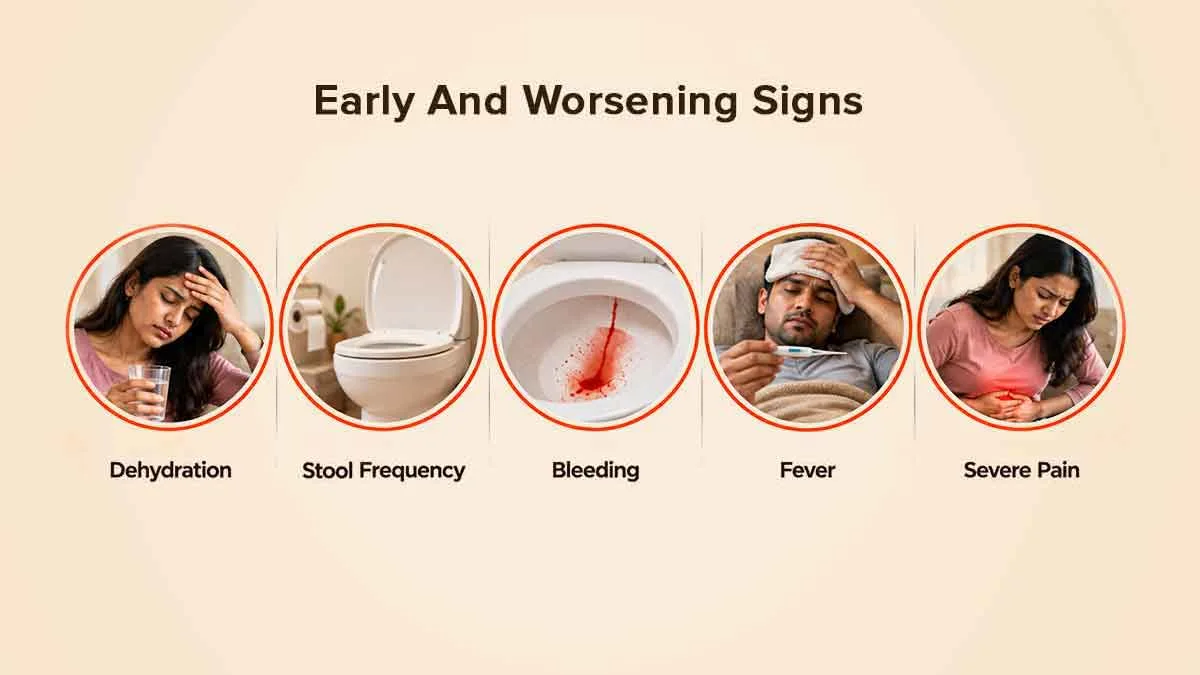
Dehydration Signs
Feeling very thirsty, having a dry mouth, passing less urine, often feeling dizzy, or unusual weakness. It can happen commonly with diarrhoea, bleeding, and vomiting.
Stool Frequency
Urgent need to pass stool even after not eating anything for a long period, especially with blood, cramps, or night-time bowel movements, could be a sign of worsening symptoms.
Bleeding
Passing visible blood in stool, which may appear bright red or make the stool look very dark. Heavy or ongoing bleeding needs urgent medical care.
Fever
A rise in body temperature, often occurring with infection or inflammation. Fever with worsening bowel movements needs serious medical care.
Severe Pain
Intense or worsening abdominal pain that is difficult to tolerate, especially when it is sudden, persistent, or accompanied by vomiting, fever, or abdominal swelling.
Possible Triggers And Infections
These are the common patterns that provoke IBD flare-ups:
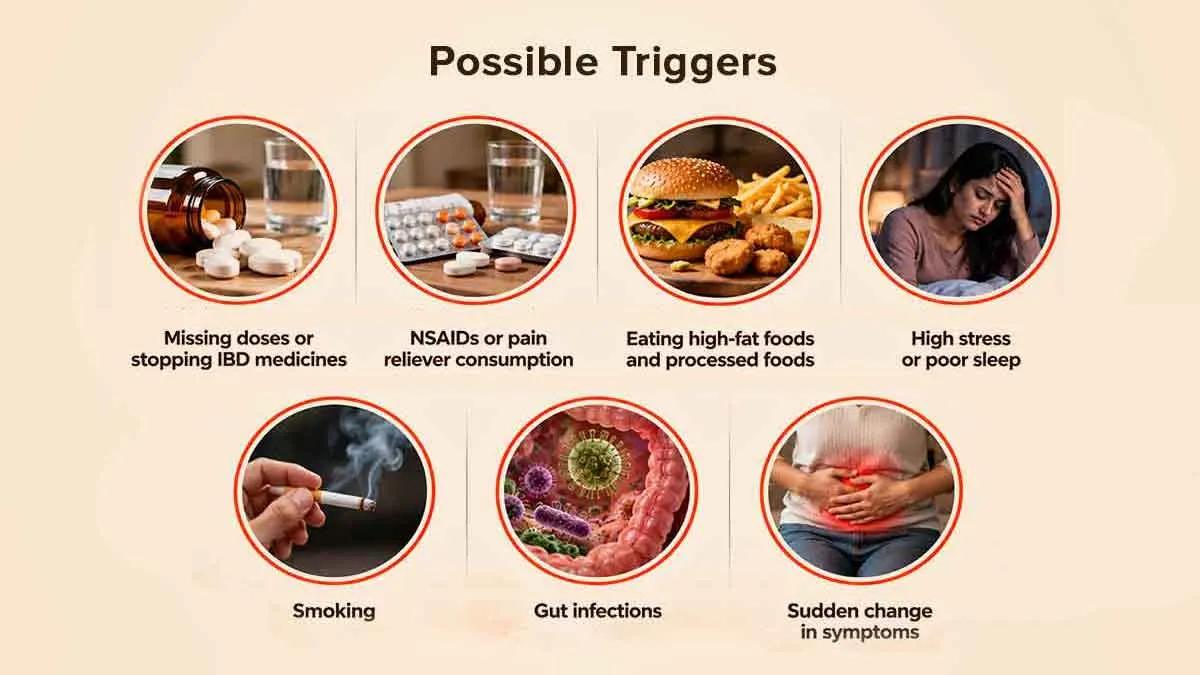
- Missing doses or stopping IBD medicines
- NSAIDs or pain reliever consumption, as they increase inflammation
- Eating high-fat foods, processed foods, or food that does not suit you
- High stress or poor sleep
- Smoking even after IBD diagnosis
- Gut infections caused by bacteria can provoke the immune system.
- A sudden change in symptoms may need to be checked by a healthcare professional because it can worsen the ongoing problems.
What To Record
Keep a simple track of your bowel movements, including how often they happen and whether you notice blood or mucus. Note any pain, urgency, fever, or other symptoms. It can also help to write down what you eat, which medicines you take, any missed doses, your sleep, stress levels, and possible triggers. This gives a doctor a clearer picture of how your condition is changing and what changes in treatment may be needed.
Food, Fluids And Rest During A Flare
During a flare, the focus should be on staying hydrated, eating foods you can tolerate, and giving your body enough rest. These are some important points you should remember:
- Choose foods that are easier to digest and avoid foods that clearly worsen your symptoms.
- Keep up with your fluids; drink water regularly, especially when you have frequent diarrhoea. Oral rehydration solutions may help if you are losing lots of fluids.
- Eat smaller meals because 5 or 6 small meals are easier to digest than larger meals when symptoms are active.
- Get enough sleep and take breaks when needed.
- Try to maintain adequate nutrition unless your doctor has advised specific dietary restrictions.
- Avoid high-fat meals, fried food, spicy food, raw vegetables, whole nuts, alcohol, sugary drinks, and heavy caffeine.
- Eat well-cooked foods; include ripe bananas, skinless carrots, and plain oatmeal in your diet.
Why Medicines Should Not Be Changed Alone
Don't stop, start, or change IBD medicines without consulting your doctor. Symptoms can have different causes, including infection and inflammation levels, and changing treatment without any assessment may make things worse. Dose adjustments may cause severe side effects and severe flare-ups. That's why only a healthcare professional should adjust your medicines based on your diet and medical diagnosis.
When To Call The IBD Team
Contact the IBD team if:
- Your symptoms are getting worse or changing from the usual pattern
- Diarrhoea becomes more frequent
- You notice more blood in stool
- Abdominal pain increases
- You develop a fever
- Symptoms continue even after the treatment
- Your medicines are not working on the ongoing symptoms.
When To Seek Urgent Care
Seek immediate medical help in case of:
- Heavy bleeding from the rectum
- Severe abdominal pain
- A swollen or very tender abdomen
- Repeated vomiting or inability to keep fluids
- Severe diarrhoea and dehydration
- Severe dizziness, fainting, or extreme weakness
- High fever
- Rapid worsening of the symptoms
Reference
Case-control study of factors that trigger inflammatory bowel disease flares - PMC
When Should Therapy for Inflammatory Bowel Disease Be Stopped? - PMC
FAQs
You may notice more frequent bowel movements, diarrhoea, blood or mucus in stool, abdominal pain, urgency, and tiredness.
Choose foods you tolerate well; eat smaller meals if needed and avoid foods that clearly make your symptoms worse.
Drink fluids regularly, especially if you have frequent diarrhoea and vomiting.
No, do not stop or change your medicines without discussing it with your doctor.
Yes, a sudden change in symptoms can happen and is sometimes related to an infection or another problem, so significant worsening should be checked.
Consult Experienced Ayurveda Doctors for IBD Flare: Signs, Self-Care And When To Get Help














Our Happy Patients
-
 Sunita Malik - Knee Pain
 -
 Abhishek Mal - Diabetes
 -
 Vidit Aggarwal - Psoriasis
 -
 Shanti - Sleeping Disorder
 -
 Ranjana - Arthritis
 -
 Jyoti - Migraine
 -
 Renu Lamba - Diabetes
 -
 Kamla Singh - Bulging Disc
 -
 Rajesh Kumar - Psoriasis
 -
 Dhruv Dutta - Diabetes
 -
 Atharva - Respiratory Disease
 -
 Amey - Skin Problem
 -
 Asha - Joint Problem
 -
 Sanjeeta - Joint Pain
 -
 A B Mukherjee - Acidity
 -
 Deepak Sharma - Lower Back Pain
 -
 Vyjayanti - Pcod
 -
 Sunil Singh - Thyroid
 -
 Sarla Gupta - Post Surgery Challenges
 -
 Syed Masood Ahmed - Osteoarthritis & Bp
Home Remedies
- पेट में गैस, जलन या संक्रमण? इन घरेलू उपायों से पाएं राहत
- पेट में गैस, अपच और फुलाव का आयुर्वेदिक इलाज - मुफ़्त परामर्श
- एनल फिशर से परेशान हैं? ये आयुर्वेदिक नुस्खे देंगे राहत और आराम
- कब्ज़ का आयुर्वेदिक इलाज - मुफ़्त परामर्श
- एसिड रिफ्लक्स का घरेलू इलाज - मुफ़्त आयुर्वेदिक परामर्श
- Food Poisoning का आयुर्वेदिक इलाज - मुफ़्त परामर्श
- क्या बार-बार उल्टी हो रही है? इन घरेलू उपायों से पाएं तुरंत आराम
- क्या आप जानते हैं? इन नुस्खों से पेट दर्द जड़ से खत्म होता है!
- बार-बार एसिडिटी? ये देसी नुस्खे तुरंत देंगे आराम!
- दवा की ज़रूरत नहीं! लूज़ मोशन का रामबाण इलाज घर पर ही
- Home Remedies for Vomiting
- Home Remedies for Piles
- Home Remedies for Food Poisoning
- Home Remedies for Stomach Infection
- Home Remedies for Bloating
- Home Remedies for Anal Fissure
- Home Remedies for Constipation
- Home Remedies for Acid Reflux
- Home Remedies for Acidity
- Home Remedies for Stomach Pain
Related Disease
- Ayurvedic Treatment for Acid Reflux
- Ayurvedic Treatment for Anemia
- Ayurvedic Treatment For Anorexia
- Ayurvedic Treatment for Chronic Fatigue Syndrome
- Ayurvedic Treatment For Gastritis
- Ayurvedic Treatment For Colitis
- Ayurvedic Treatment For Crohn’s Disease
- Ayurvedic Treatment for Weakness and Fatigue
- Ayurvedic Treatment For Flatulence
- Ayurvedic Treatment for Gallstones
- Ayurvedic Treatment for Jaundice
- Ayurvedic Treatment for Liver Cirrhosis
- Ayurvedic Treatment for Sickle Cell Anaemia
- Ayurvedic Treatment For Piles And Fissure
- Ayurvedic Treatment for Irritable Bowel Syndrome (IBS)
- Ayurvedic Treatment For Hyperacidity
- Ayurvedic Treatment for Constipation
- Ayurvedic treatment for Coeliac Disease
- Ayurvedic Treatment for Peptic Ulcer
- Ayurvedic Treatment for Tapeworm
- Ayurvedic Treatment for Typhoid
- Ayurvedic Treatment for Diarrhea
- Ayurvedic Treatment for Diverticulitis
- Ayurvedic Treatment for Pinworms
- Ayurvedic Treatment for Cholera
- Ayurvedic Treatment for Emphysema
- Ayurvedic Treatment for Food Poisoning
- Ayurvedic Treatment for Atherosclerosis
- Ayurvedic Treatment for Thalassemia
- Ayurvedic Treatment for High Triglycerides
- Get Ayurvedic Treatment for Gastroenteritis
- Ayurvedic Treatment For Inflammatory Bowel Disease (IBD)
Latest Blogs
- बुजुर्गों का dinner बहुत जल्दी और breakfast बहुत देर से हो तो energy पर क्या असर पड़ सकता है?
- पीरियड्स से पहले Salty Food की Craving क्यों बढ़ सकती है?
- Can Ancient Dinacharya Be Practical For A Desk-Job Lifestyle?
- Why One ‘Perfect Breakfast’ Cannot Work For Every Body
- Mindful Eating नया Wellness Trend है या Ayurveda में यह Idea पहले से मौजूद था?
- Can Too Little Sleep Make Sugar Cravings Feel Stronger
- Seasonal Eating: Where Modern Nutrition And Ayurveda Meet
- हर चीज़ का health data track करना कब useful से obsessive बन सकता है
- Can Sleeping In An Overcooled Room Leave You Feeling Stiff In The Morning?
- Why Hair, Skin and Energy Often React to Aggressive Dieting
- बच्चों में weekend sleep timing बदलना Monday mood को कैसे प्रभावित कर सकता है
- Is Fasted Intense Exercise a Good Idea for Every Woman
- Health Tracking Every Hour: Helpful Awareness Or Another Source Of Stress?
- फोन देखते हुए चलना सिर्फ accident risk नहीं—posture और breathing पर क्या असर पड़ता है
- Bloating Before a Period: Why Lifestyle Can Change How It Feels
- बहुत जल्दी खाना खाने से पेट भरने का signal देर से क्यों मिलता है
- ‘No Added Sugar’ Doesn’t Automatically Mean Low Sugar—Here’s Why
- Online meetings के बीच zero movement दिन के अंत में stiffness क्यों बढ़ाता है?
- Screen brightness और late-night work sleep readiness को कैसे बदलते हैं
- Warm Vs Cold Foods: How To Discuss The Ayurvedic Idea Without Turning It Into A Myth
Ayurvedic Doctor In Top Cities
- Ayurvedic Doctors in Bangalore
- Ayurvedic Doctors in Pune
- Ayurvedic Doctors in Delhi
- Ayurvedic Doctors in Hyderabad
- Ayurvedic Doctors in Indore
- Ayurvedic Doctors in Mumbai
- Ayurvedic Doctors in Lucknow
- Ayurvedic Doctors in Kolkata
- Ayurvedic Doctors in Patna
- Ayurvedic Doctors in Vadodara
- Ayurvedic Doctors in Ahmedabad
- Ayurvedic Doctors in Chandigarh
- Ayurvedic Doctors in Gurugaon
- Ayurvedic Doctors in Jaipur
- Ayurvedic Doctors in Kanpur
- Ayurvedic Doctors in Noida
- Ayurvedic Doctors in Ranchi
- Ayurvedic Doctors in Bhopal
- Ayurvedic Doctors in Ludhiana
- Ayurvedic Doctors in Dehradun