
Successful Treatments
Clinics
Doctors
IBD Complications, Related Conditions And Safety
 Published on 07 Oct, 2026
 Updated on 12 Oct, 2026

Explore Complications
- Home / Diseases & Ayurveda / Digestive Disorders / Ayurvedic Treatment For Inflammatory Bowel Disease (IBD) / IBD Complications, Related Conditions And Safety
IBD doesn't always affect only the gut; in some people, ongoing inflammation can lead to complications or affect other parts of the body. Complications in IBD can occur for different reasons. Long-term complications can increase the risk of morbidity and mortality. Understanding these complications can help clinicians diagnose and manage them during medical emergencies.
Why Complications Occur
Complications in IBD can occur for different reasons. Ongoing inflammation may damage the bowel or affect other parts of the body. In some people, repeated inflammation can lead to problems like narrowing of the intestine and fistulas. Long-lasting, unmanaged immune system attacks can lead to complications such as tissue damage, scarring, and structural changes in the digestive tract.
Poor appetite, reduced food intake, and difficulty absorbing nutrients can contribute to deficiencies and weight loss. Some complications are also related to medicines or infections. The risk is not the same for everyone and can depend on the type of IBD, how active the disease is, and how well it is controlled.
Severe complications or emergencies can also develop in patients during inflammatory bowel disease (IBD), including colitis, abdominal abscesses, malignancy, primary sclerosing cholangitis, and pouchitis. Complications caused by Crohn’s disease and ulcerative colitis can increase morbidity and mortality rates. Understanding these complications is important for further diagnosis and the treatment process.
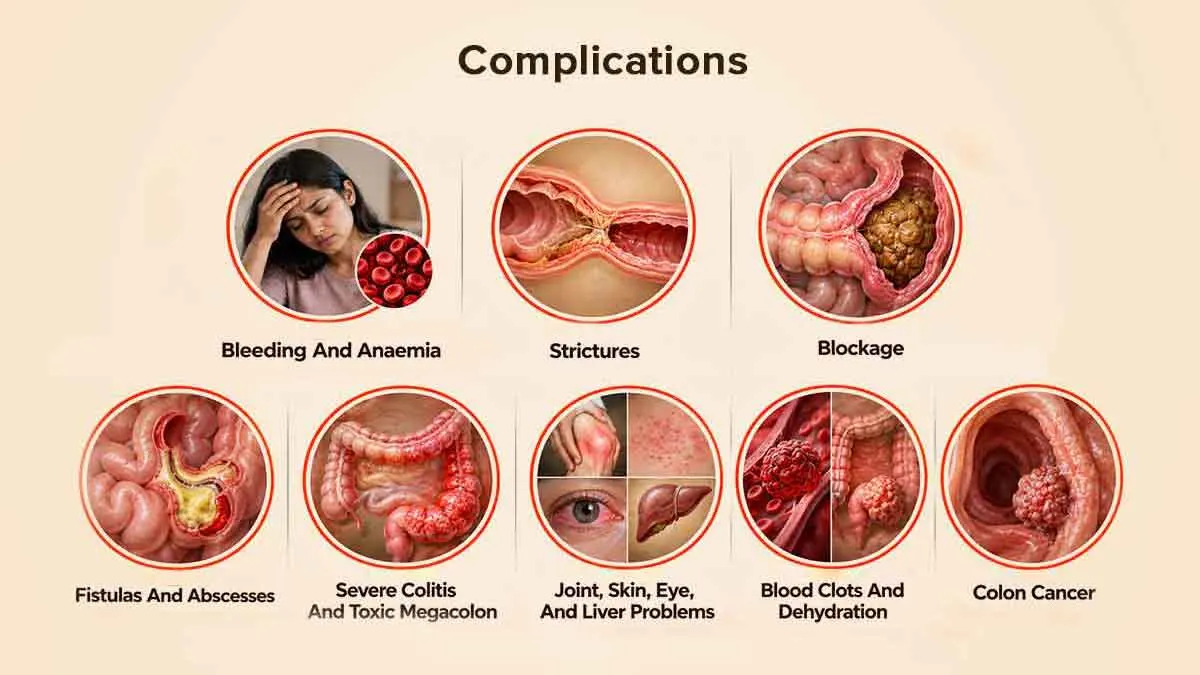
Bleeding And Anaemia
Bleeding from the bowel can occur during an active IBD flare, especially with ulcerative colitis. If bleeding is frequent or continues for a long time, the body may lose more iron and red blood cells than it can replace, leading to Anemia.
Anemia can cause fatigue, weakness, dizziness, shortness of breath, and a faster heartbeat. But not all anemia in IBD is caused by blood loss; it can also be caused by inflammation, iron, and multinutritional deficiencies. Treatment aims to reduce inflammation to reduce bleeding. To reduce the nutritional deficiencies, oral iron and vitamin supplements are also suggested by doctors . Severe symptoms during anemia, such as heavy bleeding, should be addressed by a professional.
Strictures, Blockage, Fistulas And Abscesses
These complications are more commonly associated with Crohn’s disease, although the risk varies from person to person. Long-term inflammation can cause strictures, where part of the intestine becomes narrowed because of swelling or scar tissue. A severe narrowing may lead to a blockage, causing cramping, bloating, vomiting, or difficulty in bowel movements.
Inflammation can also create fistulas, an abnormal passage between the intestine and another organ or the skin. A fistula can cause drainage, recurring infection, or pain around the affected area. An abscess is a collection of pus caused by infection and may cause pain, swelling, and fever. These problems need medical assessment and should not be treated at home.
Severe Colitis And Toxic Megacolon
Severe colitis means that inflammation in the colon has become intense and may cause frequent diarrhoea, significant bleeding, fever, weakness, and abdominal pain. In rare cases, severe inflammation can lead to toxic megacolon; it is a serious condition where the colon becomes greatly swollen and stops working normally. It may cause severe abdominal swelling, pain, fever, increased heartbeat, and marked illness. Toxic megacolon is a medical emergency and requires immediate treatment.
Joint, Skin, Eye, And Liver Problems
IBD can sometimes affect parts of the body outside the digestive system. These problems are called extraintestinal manifestations and may appear during a flare or, in some cases, even when bowel symptoms are quiet. These complications include:
- Joint: Joint pain, stiffness, or swelling can occur, particularly in the knees, ankles, or other larger joints.
- Skin: Some people may develop tender, red bumps, painful skin ulcers, or other inflammatory skin changes.
- Eyes: Eye inflammation can cause redness, pain, light sensitivity, or blurred vision and should be checked regularly.
- Liver and Bile Duct: IBD can be associated with liver and biliary complications, which may sometimes be found through blood tests or imaging even before symptoms appear.
Not every joint, skin, eye, or liver problem is associated with IBD. New or frequent symptoms may be serious and need strict medical care.
Blood Clots And Dehydration
People with IBD may have a higher risk of blood clots, particularly when the disease is actively inflamed, or the person is less mobile. Hospitalization, immobility, surgery, and certain medications can also trigger the risk. A clot can develop in the leg or travel to the lungs. Pain or swelling in one leg, sudden chest pain, or difficulty breathing should be treated as warning signs and require urgent medical help.
Dehydration is another concern, particularly during diarrhoea and vomiting. Losing too much fluid can cause thirst, dry mouth, dizziness, weakness, dark urine, or less frequent urination. Severe dehydration causes electrolyte imbalance, acute kidney stones or kidney failure, and thickened blood. Drinking enough fluids and replacing lost electrolytes can help, but severe dehydration may need strict medical attention.
Colon Cancer Surveillance
People with long-standing IBD, especially when the colon is affected, may have a higher risk of colorectal cancer. Regular monitoring may be suggested to find early changes in the bowel lining. It is commonly done with colonoscopies. The timing of the surveillance depends on factors such as how long the person has had IBD, how much colon is affected, and other individual risk factors. Following the gastroenterologist's recommended screening can help diagnose changes early.
Urgent Warning Signs And Where To Seek Care
Most IBD symptoms can be managed with planned follow-up, but some symptoms need urgent medical help. Heavy rectal bleeding, severe abdominal pain, repeated vomiting, difficulty in bowel movements, severe dehydration, or breathing problems need serious medical attention. Sudden chest pain, difficulty breathing, or painful swelling in one leg may also indicate a blood clot and need immediate care.
For these warning signs, go to the nearest hospital or emergency department rather than waiting for a routine appointment. For new or worsening symptoms that are not immediately severe, contact your doctor or a gastroenterologist.
Perianal Symptoms
Perianal problems are more commonly seen in Crohn’s disease and can include pain, swelling, irritation, drainage, or a small opening near the anus. A perianal fistula or abscess may cause persistent pain, pus-like discharge, or fever. Bleeding, itching, or discomfort can also occur for other reasons, so these symptoms should not automatically be assumed to be caused by IBD. It can be diagnosed by MRI and managed with anti-TNF medicines and surgery in severe cases.
Common Perianal Symptoms are:
- Perianal abscesses or painful pus-filled pockets of infection near the anus.
- Perianal fistulas, causing chronic drainage, pus, and irritation
- Anal fissures or small tears in the lining of the anus that cause sharp pain.
- Skin tags or fleshy growths of skin around the anal area due to chronic inflammation.
- Anal strictures or narrowing of the anal canal caused by scarring from chronic inflammation.
- Ulcers or deep and painful open sores in the perianal tissue.
Medication Complications
IBD medicines can sometimes cause side effects or increase the risk of infections. Some treatments may also affect the liver, kidneys, or blood counts, so regular monitoring may be needed. Report unusual symptoms to your doctor and do not stop prescribed medicines suddenly, especially steroids.
Pregnancy Planning
Planning for pregnancy can help keep both mother and baby safe. Ideally, discuss pregnancy with your gastroenterologist beforehand so that the doctor may help control the disease and medicines can be reviewed for pregnancy safety. Do not stop IBD treatment on your own, as uncontrolled inflammation can also create risks during pregnancy.
- Aim for stable disease before conception.
- Review all medicines, supplements, and herbal products with your doctor.
- Check for and correct nutritional deficiencies.
- Continue regular IBD and pregnancy care.
- Discuss any flare, bleeding, weight loss, or poor food intake regularly.
Children: Growth Delay
IBD can sometimes affect a child's growth, especially when inflammation is ongoing. Poor appetite, difficulty eating, nutritional deficiencies, and increased nutritional needs can also contribute to slow growth or delayed height growth. Regular monitoring of height, weight, and growth patterns is important if growth is falling behind; the child’s gastroenterologist and dietitian can help identify appropriate nutrition and treatment.
Emergency Symptoms Must Be Prominent
Some IBD symptoms need immediate medical attention; do not wait for a routine appointment if any of these occur
- Heavy or continuous rectal bleeding
- Severe or worsening abdominal pain
- Severe abdominal swelling with vomiting
- High fever with weakness or feeling unwell
- Fainting, confusion, or severe dehydration
- Sudden chest pain or difficulty breathing
- Painful swelling or sudden pain in one leg
If any of these symptoms occur, seek emergency care at the nearest hospital or emergency department. If you are unsure how serious the symptoms are, contact your doctor and ask for help.
Reference
Anemia and inflammatory bowel diseases - PMC
Crohn’s disease complicated by strictures: a systematic review - PMC
Perforated Toxic Megacolon: The Dreaded Complication in Ulcerative Colitis - PMC
FAQs
Yes, IBD can sometimes affect the joints, skin, eyes, liver and bile ducts.
Small amounts of bleeding can occure during a flare, but heavy or continuous bleeding needs urgent medical attention.
Severe cramping or abdominal pain, bloating vomiting and being unable to pass stool or gas can be warning signs.
Many people with IBD have healthy pregnancies. Planning ahead and reviewing disease control and medicines with the doctor is important.
Consult Experienced Ayurveda Doctors for IBD Complications, Related Conditions and Safety





















Our Happy Patients
-
 Sunita Malik - Knee Pain
 -
 Abhishek Mal - Diabetes
 -
 Vidit Aggarwal - Psoriasis
 -
 Shanti - Sleeping Disorder
 -
 Ranjana - Arthritis
 -
 Jyoti - Migraine
 -
 Renu Lamba - Diabetes
 -
 Kamla Singh - Bulging Disc
 -
 Rajesh Kumar - Psoriasis
 -
 Dhruv Dutta - Diabetes
 -
 Atharva - Respiratory Disease
 -
 Amey - Skin Problem
 -
 Asha - Joint Problem
 -
 Sanjeeta - Joint Pain
 -
 A B Mukherjee - Acidity
 -
 Deepak Sharma - Lower Back Pain
 -
 Vyjayanti - Pcod
 -
 Sunil Singh - Thyroid
 -
 Sarla Gupta - Post Surgery Challenges
 -
 Syed Masood Ahmed - Osteoarthritis & Bp
Home Remedies
- पेट में गैस, जलन या संक्रमण? इन घरेलू उपायों से पाएं राहत
- पेट में गैस, अपच और फुलाव का आयुर्वेदिक इलाज - मुफ़्त परामर्श
- एनल फिशर से परेशान हैं? ये आयुर्वेदिक नुस्खे देंगे राहत और आराम
- कब्ज़ का आयुर्वेदिक इलाज - मुफ़्त परामर्श
- एसिड रिफ्लक्स का घरेलू इलाज - मुफ़्त आयुर्वेदिक परामर्श
- Food Poisoning का आयुर्वेदिक इलाज - मुफ़्त परामर्श
- क्या बार-बार उल्टी हो रही है? इन घरेलू उपायों से पाएं तुरंत आराम
- क्या आप जानते हैं? इन नुस्खों से पेट दर्द जड़ से खत्म होता है!
- बार-बार एसिडिटी? ये देसी नुस्खे तुरंत देंगे आराम!
- दवा की ज़रूरत नहीं! लूज़ मोशन का रामबाण इलाज घर पर ही
- Home Remedies for Vomiting
- Home Remedies for Piles
- Home Remedies for Food Poisoning
- Home Remedies for Stomach Infection
- Home Remedies for Bloating
- Home Remedies for Anal Fissure
- Home Remedies for Constipation
- Home Remedies for Acid Reflux
- Home Remedies for Acidity
- Home Remedies for Stomach Pain
Related Disease
- Ayurvedic Treatment for Acid Reflux
- Ayurvedic Treatment for Anemia
- Ayurvedic Treatment For Anorexia
- Ayurvedic Treatment for Chronic Fatigue Syndrome
- Ayurvedic Treatment For Gastritis
- Ayurvedic Treatment For Colitis
- Ayurvedic Treatment For Crohn’s Disease
- Ayurvedic Treatment for Weakness and Fatigue
- Ayurvedic Treatment For Flatulence
- Ayurvedic Treatment for Gallstones
- Ayurvedic Treatment for Jaundice
- Ayurvedic Treatment for Liver Cirrhosis
- Ayurvedic Treatment for Sickle Cell Anaemia
- Ayurvedic Treatment For Piles And Fissure
- Ayurvedic Treatment for Irritable Bowel Syndrome (IBS)
- Ayurvedic Treatment For Hyperacidity
- Ayurvedic Treatment for Constipation
- Ayurvedic treatment for Coeliac Disease
- Ayurvedic Treatment for Peptic Ulcer
- Ayurvedic Treatment for Tapeworm
- Ayurvedic Treatment for Typhoid
- Ayurvedic Treatment for Diarrhea
- Ayurvedic Treatment for Diverticulitis
- Ayurvedic Treatment for Pinworms
- Ayurvedic Treatment for Cholera
- Ayurvedic Treatment for Emphysema
- Ayurvedic Treatment for Food Poisoning
- Ayurvedic Treatment for Atherosclerosis
- Ayurvedic Treatment for Thalassemia
- Ayurvedic Treatment for High Triglycerides
- Get Ayurvedic Treatment for Gastroenteritis
- Ayurvedic Treatment For Inflammatory Bowel Disease (IBD)
Latest Blogs
- बुजुर्गों का dinner बहुत जल्दी और breakfast बहुत देर से हो तो energy पर क्या असर पड़ सकता है?
- पीरियड्स से पहले Salty Food की Craving क्यों बढ़ सकती है?
- Can Ancient Dinacharya Be Practical For A Desk-Job Lifestyle?
- Why One ‘Perfect Breakfast’ Cannot Work For Every Body
- Mindful Eating नया Wellness Trend है या Ayurveda में यह Idea पहले से मौजूद था?
- Can Too Little Sleep Make Sugar Cravings Feel Stronger
- Seasonal Eating: Where Modern Nutrition And Ayurveda Meet
- हर चीज़ का health data track करना कब useful से obsessive बन सकता है
- Can Sleeping In An Overcooled Room Leave You Feeling Stiff In The Morning?
- Why Hair, Skin and Energy Often React to Aggressive Dieting
- बच्चों में weekend sleep timing बदलना Monday mood को कैसे प्रभावित कर सकता है
- Is Fasted Intense Exercise a Good Idea for Every Woman
- Health Tracking Every Hour: Helpful Awareness Or Another Source Of Stress?
- फोन देखते हुए चलना सिर्फ accident risk नहीं—posture और breathing पर क्या असर पड़ता है
- Bloating Before a Period: Why Lifestyle Can Change How It Feels
- बहुत जल्दी खाना खाने से पेट भरने का signal देर से क्यों मिलता है
- ‘No Added Sugar’ Doesn’t Automatically Mean Low Sugar—Here’s Why
- Online meetings के बीच zero movement दिन के अंत में stiffness क्यों बढ़ाता है?
- Screen brightness और late-night work sleep readiness को कैसे बदलते हैं
- Warm Vs Cold Foods: How To Discuss The Ayurvedic Idea Without Turning It Into A Myth
Ayurvedic Doctor In Top Cities
- Ayurvedic Doctors in Bangalore
- Ayurvedic Doctors in Pune
- Ayurvedic Doctors in Delhi
- Ayurvedic Doctors in Hyderabad
- Ayurvedic Doctors in Indore
- Ayurvedic Doctors in Mumbai
- Ayurvedic Doctors in Lucknow
- Ayurvedic Doctors in Kolkata
- Ayurvedic Doctors in Patna
- Ayurvedic Doctors in Vadodara
- Ayurvedic Doctors in Ahmedabad
- Ayurvedic Doctors in Chandigarh
- Ayurvedic Doctors in Gurugaon
- Ayurvedic Doctors in Jaipur
- Ayurvedic Doctors in Kanpur
- Ayurvedic Doctors in Noida
- Ayurvedic Doctors in Ranchi
- Ayurvedic Doctors in Bhopal
- Ayurvedic Doctors in Ludhiana
- Ayurvedic Doctors in Dehradun