
Successful Treatments
Clinics
Doctors
IBD And Anaemia: Symptoms, Tests and Treatment
 Published on 08 Oct, 2026
 Updated on 14 Oct, 2026

Explore Complications
- Home / Diseases & Ayurveda / Digestive Disorders / Ayurvedic Treatment For Inflammatory Bowel Disease (IBD) / IBD Complications, Related Conditions And Safety / IBD And Anaemia: Symptoms, Tests and Treatment
.webp)
Anemia is the most serious and most common complication of Inflammatory bowel disease (IBD). Anemia is linked with chronic blood loss and iron deficiency. It happens due to gut inflammation, blood loss, and nutritional deficiencies. You may notice symptoms like fatigue, dizziness, rapid heartbeat, insomnia, and poor concentration during anaemia. Doctors may suggest some tests such as CBC, CRP, TSAT, and serum ferritin to study gut inflammation and severity of disease.
Why Anaemia Happens In IBD
Anemia in IBD usually has more than one cause. The main causes are:
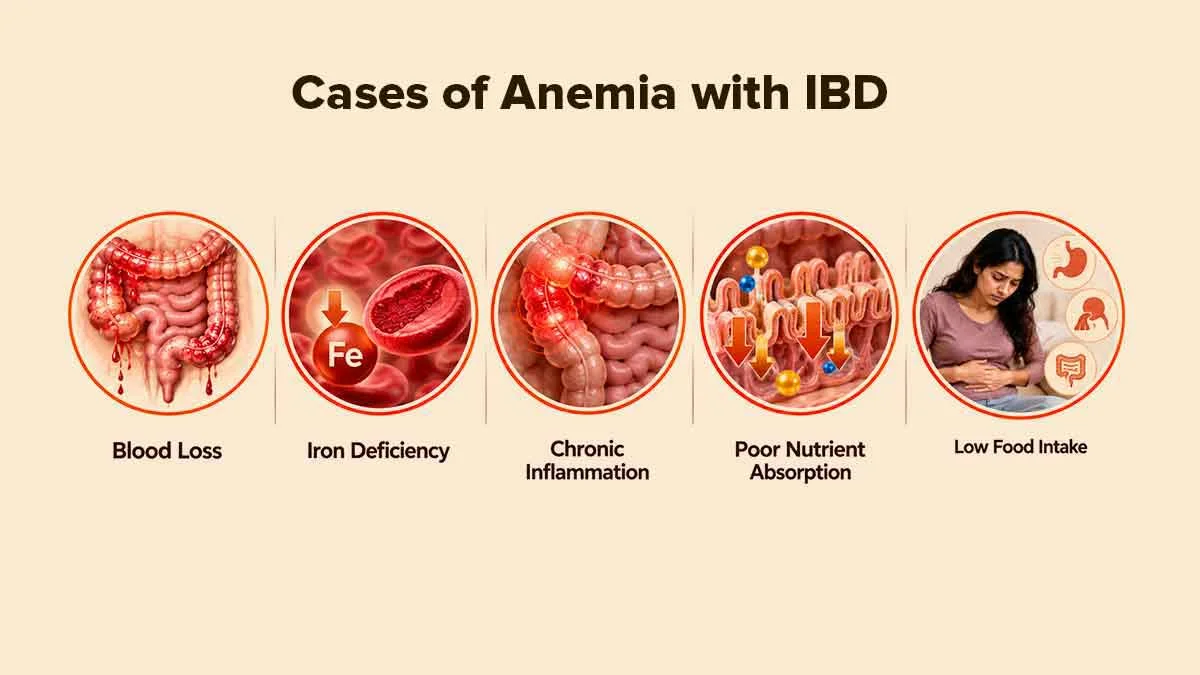
- Blood Loss: Ulcers and intestinal inflammation can cause ongoing blood loss, especially during a flare.
- Iron Deficiency: Blood loss can reduce the body's iron stores.
- Chronic Inflammation: Ongoing inflammation affects how the body uses and stores iron, making it harder to produce enough hemoglobin.
- Poor Nutrient Absorption: When the small intestine is affected during Crohn’s disease or has been removed surgically. Can reduce nutrient absorption such as iron and vitamin B12.
- Low Food Intake: Abdominal pain, nausea, diarrhoea, or a reduced appetite during a flare may make it harder to get enough nutrients.
- Medications or Other Conditions: Some medications or unrelated health problems can also contribute.
Symptoms To Notice
Anemia in IBD can develop slowly, so the signs may be easy to overlook. You may notice:
- Fatigue or feeling weak more often
- Getting breathless with normal activity
- Dizziness or light-headedness
- Headaches
- Pale skin
- Rapid or fast heartbeats
- Poor concentration or feeling mentally foggy
- Irritability and insomnia
- Feeling less able to keep up with your usual activities
Blood Tests Used
Doctors may use a few blood tests to find out whether anemia is present and what is causing it. Doctors generally use these tests together rather than relying on one test:
- CBC (Complete Blood Count): It checks hemoglobin, red blood cells, and their size. It is generally measured as Hb < 13 g/dL in males and <12 g/dL in females.
- Ferritin: It shows the body’s stored iron, but inflammation can reverse the result, so it cannot be tested alone.
- Serum Iron and Transferrin Saturation (TSAT): These tests measure how much iron is available for making red blood cells.
- Vitamin B12 and Folate: These tests check for nutritional deficiencies that can cause anemia.
- CRP and ESR: These tests measure inflammation and can help identify anemia related to active IBD.
- Reticulocyte Count: It shows whether the bone marrow is producing new red blood cells properly.
Iron Deficiency Versus Inflammation
In IBD, anemia can be caused by iron deficiency, ongoing inflammation, or both at the same time. Iron deficiency often happens because of blood loss from the digestive tract or reduced iron intake and poor nutrient absorption. During IBD, the iron is already low, so ferritin and transferrin saturation (TSAT) may also be low. With inflammation-related anemia, the body may have enough stored iron, but inflammation makes it harder for the body to use that iron to make hemoglobin. Ferritin is often low with iron deficiency, while it may be normal or high during inflammation. This is why doctors usually look at TSAT, CBC, ferritin, and inflammation markers together before deciding treatment.
Food Sources Of Iron
Eating iron-rich foods can help support healthy hemoglobin levels, although food alone may not be enough when deficiencies are significant. Plant-based sources are especially useful for a vegetarian diet. During an active flare, choose options that you tolerate well.
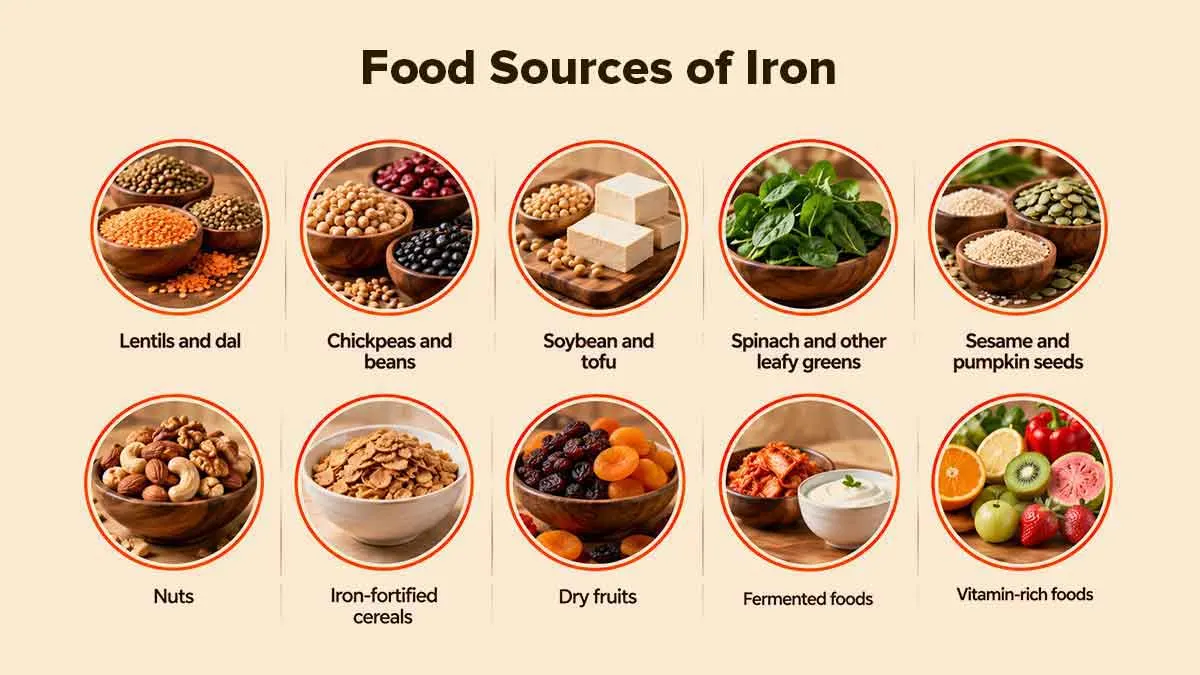
Good Food Sources Include:
- Lentils and dal
- Chickpeas and beans
- Soybean and tofu
- Spinach and other leafy greens
- Sesame and pumpkin seeds
- Nuts
- Iron-fortified cereals
- Dry fruits such as raisins and apricots
- Fermented foods such as kimchi and yogurt
- Vitamin-rich foods such as kiwi, lemon, guava, oranges, strawberries, amla, and bell peppers.
Oral Versus Intravenous Iron Overview
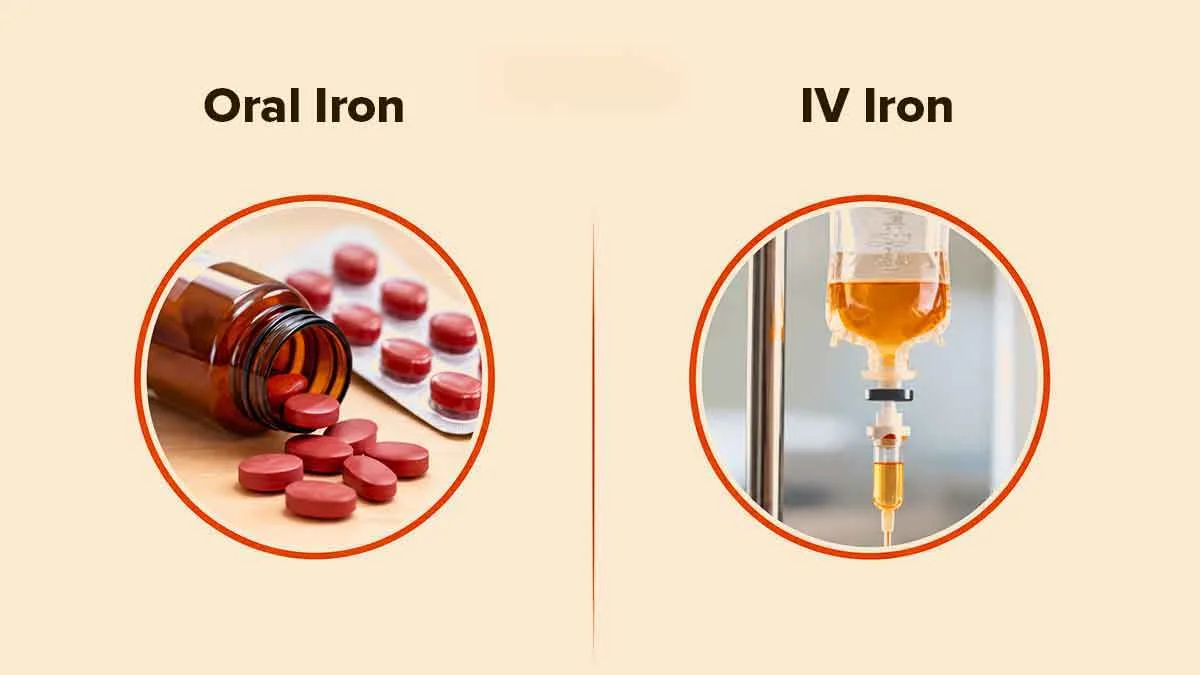
Both oral and intravenous (IV) iron can be used to treat iron deficiency in IBD. The choice depends on the severity of the anemia, disease activity, how well the person tolerates oral iron, and whether the body is likely to absorb it properly.
Oral Iron is taken as a tablet, capsule, or liquid form, and it is convenient and inexpensive for many people. However, it can sometimes cause nausea, stomach discomfort, constipation, or diarrhoea, which may be difficult to manage during an IBD flare. Oral iron requires 3-4 months of consistency.
IV Iron is given directly into the veins or bloodstream. It does not depend on intestinal absorption. It may be considered when oral iron is not tolerated, cannot be absorbed properly, is not working well, or iron needs to be replaced more quickly. Intravenous iron delivers a large amount of iron in a single short series, but the limitation is that it is expensive and carries a high risk of hypersensitivity reactions or allergies.
The right option varies from person to person and depends on the person’s blood results, IBD activity, and medical history. Iron treatment should be guided by a professional.
Treating Active IBD
When anemia is confirmed with IBD, treatment focuses on replacing the lost iron and managing the reason it was lost. If active intestinal inflammation or ongoing bleeding is present, treating the IBD is also important so the anemia does not keep coming back.
- Oral Iron may be used when anemia is mild, and the person can tolerate it.
- IV Iron may be considered when oral iron causes troublesome side effects, is not absorbed well, or when quicker replacement is needed.
- Active inflammation and bleeding should be assessed and treated as appropriate.
- Blood tests and repeated tests may be needed to check whether haemoglobin and iron levels are improving.
Ayurvedic Approach
Ayurveda sees anemia with IBD as Grahani Roga or Raktatisaar and focuses on healing the gut lining over aggressive supplementation. Oral supplements are generally highly astringent in nature; taking them during an active flare can trigger severe cramping, inflammation, and worsen diarrhoea; that’s why Ayurvedic treatment focuses on stopping blood loss, calming Pitta dosha, and restoring the gut’s absorbing power with different Ayurvedic therapies. The core Ayurvedic treatment includes:
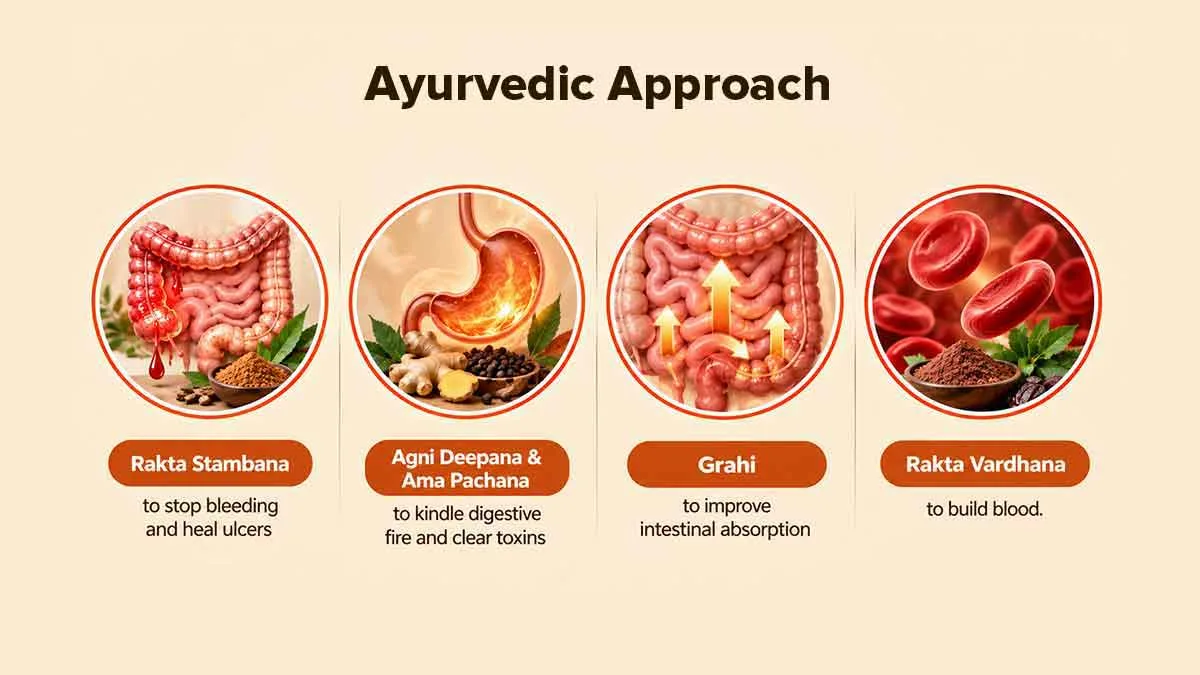
- Rakta Stambana to stop bleeding and heal ulcers
- Agni Deepana & Ama Pachana to kindle digestive fire and clear toxins
- Grahi to improve intestinal absorption
- Rakta Vardhana to build blood.
During a flare, an Ayurvedic expert may suggest Takra kalpana, Picha basti, soothing herbs like Kutuja, Bilva, Dadima, and Licorice to stop diarrhoea, reduce inflammation, and cool the GI tract. Dietary measures are also introduced to maintain remission and cool the gut.
When Symptoms Need Prompt Care
Most anemia symptoms can develop slowly, but some signs need medical attention early. Contact your doctor if tiredness, dizziness, breathlessness, or weakness is getting worse, especially if you have known IBD and your symptoms are affecting daily activities. Seek urgent medical care if you have heavy or ongoing rectal bleeding, black or bloody stools, fainting, chest pain, irregular heartbeat, or extreme weakness. These symptoms may include significant blood loss or severe anemia and should not be ignored.
B12 And Folate
B12 and folate help the body make healthy red blood cells. In IBD, low levels can occur due to poor intake, reduced absorption, or bowel surgery. Dairy products, fortified foods, leafy greens, beans, lentils, and citrus fruits can help. Tests can identify the deficiencies. The doctor may recommend some supplements if levels are low.
Blood Loss
Inflammation and ulcers in the digestive tract can cause ongoing blood loss in IBD. Even small amounts of hidden bleeding over time can reduce iron stores and lead to anaemia. It includes rectal bleeding, blood in stools, hidden blood loss, low iron, and low hemoglobin.
Do Not Start Supplements Without Checking The Cause
Do not start iron, B12, or other supplements without first checking the cause of anaemia. Different types of anaemia need different treatment, and unnecessary supplements may not address the actual problem blood test can help identify whether the issue is iron deficiency, inflammation, vitamin deficiency, or blood loss.
Reference
Diagnosis and treatment of anemia in patients with inflammatory bowel disease - PMC
Iron deficiency anemia in inflammatory bowel disease - PMC
Iron deficiency or anemia of inflammation?
Pathogenesis and treatment of anemia in inflammatory bowel disease - PMC
FAQs
Anemia can happen due to blood loss, iron deficiency, ongoing inflammation, poor nutrient intake, or reduced absorption of iron, vitamins, and folate.
CBC checks hemoglobin and red blood cells. Doctors may also check ferritin, iron, transferrin saturation, B12, folate, and inflammation markers.
Chickpeas, dal, lentils, beans, tofu, leafy greens, seeds, nuts, and fortified cereals can provide iron.
It varies from person to person. Oral iron may be suitable for some people, while IV iron may be considered when oral iron is not working or is not tolerated.
Consult Experienced Ayurveda Doctors for IBD And Anaemia: Symptoms, Tests and Treatment



















Our Happy Patients
-
 Sunita Malik - Knee Pain
 -
 Abhishek Mal - Diabetes
 -
 Vidit Aggarwal - Psoriasis
 -
 Shanti - Sleeping Disorder
 -
 Ranjana - Arthritis
 -
 Jyoti - Migraine
 -
 Renu Lamba - Diabetes
 -
 Kamla Singh - Bulging Disc
 -
 Rajesh Kumar - Psoriasis
 -
 Dhruv Dutta - Diabetes
 -
 Atharva - Respiratory Disease
 -
 Amey - Skin Problem
 -
 Asha - Joint Problem
 -
 Sanjeeta - Joint Pain
 -
 A B Mukherjee - Acidity
 -
 Deepak Sharma - Lower Back Pain
 -
 Vyjayanti - Pcod
 -
 Sunil Singh - Thyroid
 -
 Sarla Gupta - Post Surgery Challenges
 -
 Syed Masood Ahmed - Osteoarthritis & Bp
Home Remedies
- पेट में गैस, जलन या संक्रमण? इन घरेलू उपायों से पाएं राहत
- पेट में गैस, अपच और फुलाव का आयुर्वेदिक इलाज - मुफ़्त परामर्श
- एनल फिशर से परेशान हैं? ये आयुर्वेदिक नुस्खे देंगे राहत और आराम
- कब्ज़ का आयुर्वेदिक इलाज - मुफ़्त परामर्श
- एसिड रिफ्लक्स का घरेलू इलाज - मुफ़्त आयुर्वेदिक परामर्श
- Food Poisoning का आयुर्वेदिक इलाज - मुफ़्त परामर्श
- क्या बार-बार उल्टी हो रही है? इन घरेलू उपायों से पाएं तुरंत आराम
- क्या आप जानते हैं? इन नुस्खों से पेट दर्द जड़ से खत्म होता है!
- बार-बार एसिडिटी? ये देसी नुस्खे तुरंत देंगे आराम!
- दवा की ज़रूरत नहीं! लूज़ मोशन का रामबाण इलाज घर पर ही
- Home Remedies for Vomiting
- Home Remedies for Piles
- Home Remedies for Food Poisoning
- Home Remedies for Stomach Infection
- Home Remedies for Bloating
- Home Remedies for Anal Fissure
- Home Remedies for Constipation
- Home Remedies for Acid Reflux
- Home Remedies for Acidity
- Home Remedies for Stomach Pain
Related Disease
- Ayurvedic Treatment for Acid Reflux
- Ayurvedic Treatment for Anemia
- Ayurvedic Treatment For Anorexia
- Ayurvedic Treatment for Chronic Fatigue Syndrome
- Ayurvedic Treatment For Gastritis
- Ayurvedic Treatment For Colitis
- Ayurvedic Treatment For Crohn’s Disease
- Ayurvedic Treatment for Weakness and Fatigue
- Ayurvedic Treatment For Flatulence
- Ayurvedic Treatment for Gallstones
- Ayurvedic Treatment for Jaundice
- Ayurvedic Treatment for Liver Cirrhosis
- Ayurvedic Treatment for Sickle Cell Anaemia
- Ayurvedic Treatment For Piles And Fissure
- Ayurvedic Treatment for Irritable Bowel Syndrome (IBS)
- Ayurvedic Treatment For Hyperacidity
- Ayurvedic Treatment for Constipation
- Ayurvedic treatment for Coeliac Disease
- Ayurvedic Treatment for Peptic Ulcer
- Ayurvedic Treatment for Tapeworm
- Ayurvedic Treatment for Typhoid
- Ayurvedic Treatment for Diarrhea
- Ayurvedic Treatment for Diverticulitis
- Ayurvedic Treatment for Pinworms
- Ayurvedic Treatment for Cholera
- Ayurvedic Treatment for Emphysema
- Ayurvedic Treatment for Food Poisoning
- Ayurvedic Treatment for Atherosclerosis
- Ayurvedic Treatment for Thalassemia
- Ayurvedic Treatment for High Triglycerides
- Get Ayurvedic Treatment for Gastroenteritis
- Ayurvedic Treatment For Inflammatory Bowel Disease (IBD)
Latest Blogs
- बुजुर्गों का dinner बहुत जल्दी और breakfast बहुत देर से हो तो energy पर क्या असर पड़ सकता है?
- पीरियड्स से पहले Salty Food की Craving क्यों बढ़ सकती है?
- Can Ancient Dinacharya Be Practical For A Desk-Job Lifestyle?
- Why One ‘Perfect Breakfast’ Cannot Work For Every Body
- Mindful Eating नया Wellness Trend है या Ayurveda में यह Idea पहले से मौजूद था?
- Can Too Little Sleep Make Sugar Cravings Feel Stronger
- Seasonal Eating: Where Modern Nutrition And Ayurveda Meet
- हर चीज़ का health data track करना कब useful से obsessive बन सकता है
- Can Sleeping In An Overcooled Room Leave You Feeling Stiff In The Morning?
- Why Hair, Skin and Energy Often React to Aggressive Dieting
- बच्चों में weekend sleep timing बदलना Monday mood को कैसे प्रभावित कर सकता है
- Is Fasted Intense Exercise a Good Idea for Every Woman
- Health Tracking Every Hour: Helpful Awareness Or Another Source Of Stress?
- फोन देखते हुए चलना सिर्फ accident risk नहीं—posture और breathing पर क्या असर पड़ता है
- Bloating Before a Period: Why Lifestyle Can Change How It Feels
- बहुत जल्दी खाना खाने से पेट भरने का signal देर से क्यों मिलता है
- ‘No Added Sugar’ Doesn’t Automatically Mean Low Sugar—Here’s Why
- Online meetings के बीच zero movement दिन के अंत में stiffness क्यों बढ़ाता है?
- Screen brightness और late-night work sleep readiness को कैसे बदलते हैं
- Warm Vs Cold Foods: How To Discuss The Ayurvedic Idea Without Turning It Into A Myth
Ayurvedic Doctor In Top Cities
- Ayurvedic Doctors in Bangalore
- Ayurvedic Doctors in Pune
- Ayurvedic Doctors in Delhi
- Ayurvedic Doctors in Hyderabad
- Ayurvedic Doctors in Indore
- Ayurvedic Doctors in Mumbai
- Ayurvedic Doctors in Lucknow
- Ayurvedic Doctors in Kolkata
- Ayurvedic Doctors in Patna
- Ayurvedic Doctors in Vadodara
- Ayurvedic Doctors in Ahmedabad
- Ayurvedic Doctors in Chandigarh
- Ayurvedic Doctors in Gurugaon
- Ayurvedic Doctors in Jaipur
- Ayurvedic Doctors in Kanpur
- Ayurvedic Doctors in Noida
- Ayurvedic Doctors in Ranchi
- Ayurvedic Doctors in Bhopal
- Ayurvedic Doctors in Ludhiana
- Ayurvedic Doctors in Dehradun