
Successful Treatments
Clinics
Doctors
Explore High Uric Acid Without Gout
 Published on 26 Sep, 2026
 Updated on 06 Oct, 2026

Explore Causes
- Home / Diseases & Ayurveda / Joint & Muscle Pain / Ayurvedic treatment for Gout / Ulcerative Colitis Causes: Medical & Ayurvedic View / Explore High Uric Acid Without Gout
What Asymptomatic Hyperuricaemia Means
In medical terms, having elevated blood uric acid without any physical symtoms is called “ asymptomatic hyperuricaemia .”Hyper” means high; “uricemia” refers to uric acid in the blood, and “asymptomatic” means exactly that you feel absolutely fine.
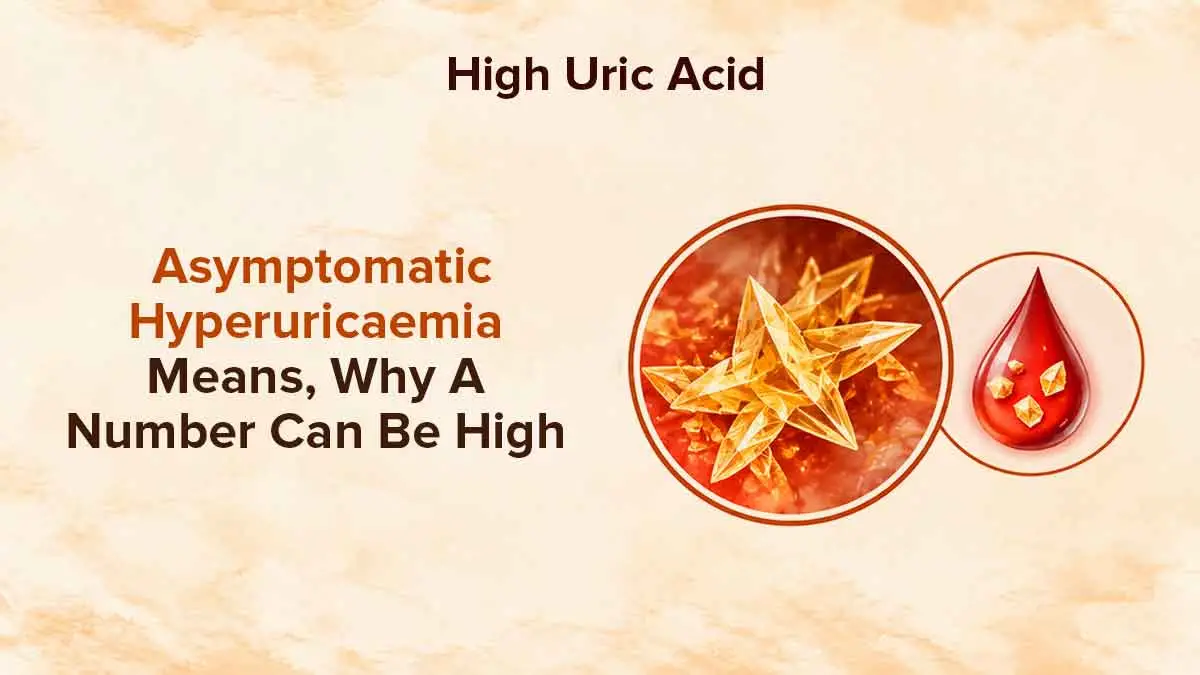
Chemically, it means your blood uric acid concentration has exceeded the normal saturation point, typically above 6.8 mg/dL. At this threshold, the blood physically struggles to keep uric acid dissolved in solution. The vital distinction to understand is that gout is an inflammatory joint disease, whereas hyperuricemia is simply a laboratory measurement. You can have high levels of this chemical circulating through your veins for decades without it ever sparking the severe immune response required to trigger a gout attack.
Why A Number Can Be High
A high uric acid reading is ultimately a sign of a supply and demand mismatch in your body. Either your system is producing too much uric acid, or your kidneys are struggling to filter it out. In the vast majority of cases, the kidneys are simply under-excreting the chemical. This sluggish filtration can be driven by a variety of everyday factors. Mild dehydration on the day of your blood test can concentrate your blood and artificially inflate the reading. A recent heavy weekend of consuming purine-rich foods, alcohol, or sugary sodas can cause a temporary spike. However, a consistently high number usually points towards underlying genetic factors that dictate how your kidneys process waste, or toward broader metabolic shifts in how your body handles insulin and fat storage.
Does It Always Become Gout?
The short, measuring answer is no. In fact, the majority of people walking around with high uric acid will never experience a single gout flare in their lifetime. Medical studies estimate that only about 20 % to 25% of individuals with asymptomatic hyperuricemia will eventually develop clinical gout.
For a gout attack to occur, the uric acid must first precipitate out of the blood and form microscopic crystals in the joints. But even then, crystals in the joints. But even then, crystal formation alone is not enough. Your immune system has to actively recognise those crystals as a threat and launch a massive, violent inflammatory attack against them. Many people with asymptomatic hyperuricemia have silent, microscopic crystal deposits in their tissues that their immune systems simply ignore, unless a specific trigger like a joint injury, a sudden illness, or a severe temperature drop forces the immune system to react; the condition remains entirely painless.
Health History And Medicines Review
When your doctor spots a high uric acid number, their first step is usually not to prescribe gout medication, but to play detective. They will conduct a thorough review of your health history and current daily medications to identify potential culprits.
Several very common prescription drugs actively interfere with how your kidneys excrete
Uric acid levels. Low-dose aspirin, certain immunosuppressants, and high doses of niacin ( Vitamin B3 ) can also cause significant spikes. If medication is identified as the cause, your doctor will carefully weigh the benefits of that drug against the risks of your high uric acid before deciding if a prescription change is necessary.
Kidney And Metabolic Checks
Even if you never develop joint pain, doctors do not simply ignore asymptomatic hyperuricemia. A high uric acid level is increasingly recognised as a vital biomarker a warning light on your body’s dashboard indicating that other interconnected bodily systems might be under stress.
Elevated uric acid is heavily linked to metabolic syndrome, a cluster of conditions that includes insulin resistance, type 2 diabetes, high blood pressure and abnormal cholesterol levels. Furthermore, because the kidneys are responsible for filtering uric acid, a high level can be an early indicator of declining kidney function or chronic kidney disease. Your doctor will likely order a comprehensive metabolic panel to check your kidney filtration rate ( eGFR ), fasting glucose, and lipid levels to ensure your vital organs are healthy and functioning optimally.
Lifestyle Foundations
If your lab numbers are high but your joints are fine. The first line of defense is always rooted in foundational lifestyle adjustments. This is not about adopting a restrictive, miserable diet; rather, it is about supporting your kidneys’ natural ability to clear waste.
Aggressive, consistent hydration is the single most effective step you can take. Drinking plenty of water throughout the day dilutes the blood and forces the kidneys to flush out uric acid. Weight management is equally critical; losing even a moderate amount of excess body fat reduces insulin resistance, which in turn frees the kidneys to excrete uric acid more efficiently. Finally, limiting high -fructose corn syrup, moderating alcohol consumption ( especially beer), and eating a balanced, heart-healthy diet will naturally guide your uric acid levels downward without the need for medical intervention.
When Treatment May Be Discussed
Current guidelines from major rheumatology organizations generally recommend against prescribing urate-lowering therapies ( like allopurinol ) for purely asymptomatic hyperuricemia. Because the risk of actually developing gout is relatively low, exposing a patient to the potential side effects of daily, lifelong medication is usually deemed unnecessary. However, there are a few rare, specific exceptions where a doctor might intervene medically. If your uric levels are high, if you have a history of painful uric acid kidney stones, or if you are undergoing aggressive chemotherapy that causes a massive, rapid release of cellular purines, your doctor may prescribe medication to protect your kidneys from acute damage.
Why Supplements Or Medicines Should Not Be Self-Started
Self-starting medications or supplements for asymptomatic high uric acid is highly discouraged for several critical reasons:
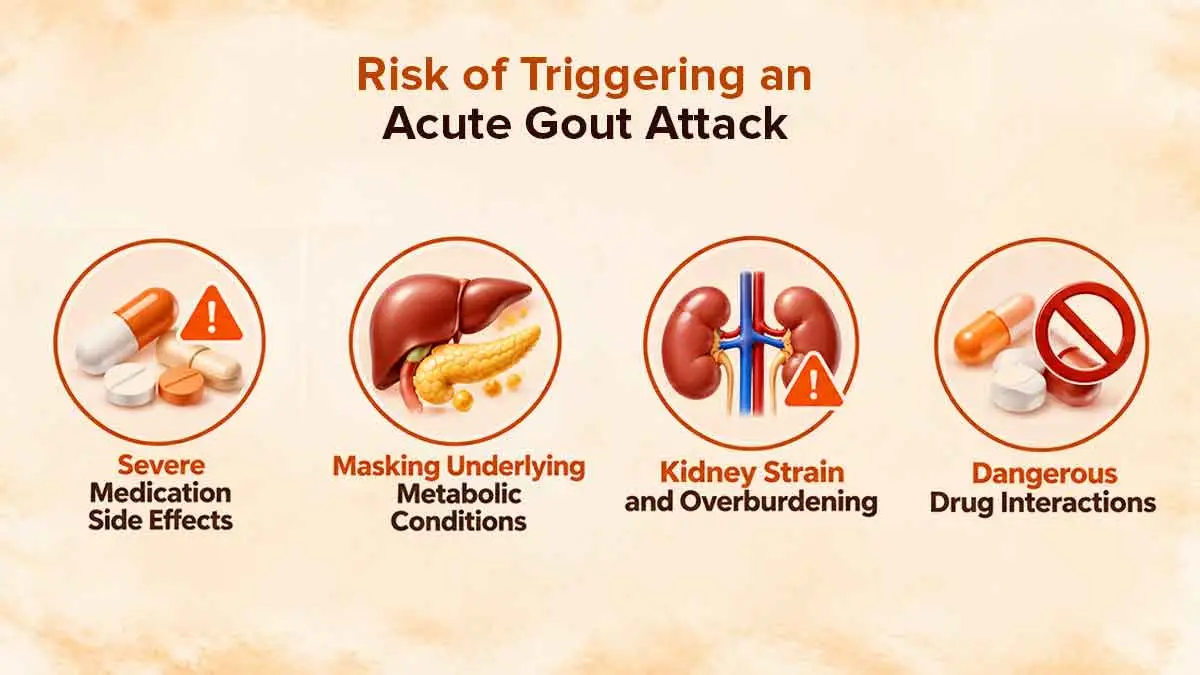
Risk of Triggering an Acute Gout Attack: Ironically, rapidly dropping your uric acid levels can cause microscopic urate crystals stored silently in your tissues to partially dissolve and shed directly into the joint space. This sudden shift frequently triggers the exact painful, acute gout flare you were attempting to avoid.
Severe Medication Side Effects: Standard prescription urate-lowering medications like allopurinol require strict, doctor-supervised dosage titration. Self-prescribing carries a risk of dangerous, potentially life-threatening drug reactions, such as Allopurinol Hypersensitivity Syndrome or Stevens-Johnson syndrome.
Masking Underlying Metabolic Conditions: Asymptomatic hyperuricemia rarely occurs in isolation; it frequently serves as a biological red flag for underlying issues like insulin resistance, high blood pressure, metabolic syndrome, or early-stage kidney disease. Taking self-selected supplements to lower the uric acid level artificially can mask these critical, root-cause conditions and delay proper medical treatment.
Kidney Strain and Overburdening: Uricosuric agents or intensive supplements designed to flush out uric acid work by forcing the kidneys to excrete more urate through your urine. If taken without knowing your baseline renal function or hydration status, these can heavily burden your organs and inadvertently cause uric acid kidney stones or acute kidney injury.
Dangerous Drug Interactions: Many daily medications you might already take, such as low-dose aspirin, water pills (diuretics), or beta-blockers, directly alter how your body handles uric acid. Introducing random supplements without a physician's oversight can cause adverse pharmacological interactions, fluctuating your levels dangerously.
References
Why Does Hyperuricemia Not Necessarily Induce Gout? - PMC
Uric Acid Test: MedlinePlus Medical Test
Nonpharmacological Management of Gout and Hyperuricemia: Hints for Better Lifestyle - PMC
Consult Experienced Ayurveda Doctors for gout





















Our Happy Patients
-
 Sunita Malik - Knee Pain
 -
 Abhishek Mal - Diabetes
 -
 Vidit Aggarwal - Psoriasis
 -
 Shanti - Sleeping Disorder
 -
 Ranjana - Arthritis
 -
 Jyoti - Migraine
 -
 Renu Lamba - Diabetes
 -
 Kamla Singh - Bulging Disc
 -
 Rajesh Kumar - Psoriasis
 -
 Dhruv Dutta - Diabetes
 -
 Atharva - Respiratory Disease
 -
 Amey - Skin Problem
 -
 Asha - Joint Problem
 -
 Sanjeeta - Joint Pain
 -
 A B Mukherjee - Acidity
 -
 Deepak Sharma - Lower Back Pain
 -
 Vyjayanti - Pcod
 -
 Sunil Singh - Thyroid
 -
 Sarla Gupta - Post Surgery Challenges
 -
 Syed Masood Ahmed - Osteoarthritis & Bp
Diagnostic Marker
Blogs
- What is Gout? Causes and home treatment
- Are you suffering from Gout pain? Try these 5 natural home remedies
- List Of Foods To Avoid With Gout & Why
- Ayurvedic Approach to Gout Home Remedies in India
- सर्दियों में यूरिक एसिड और गाउट क्यों बढ़ते हैं? आयुर्वेद से जानिए दर्द से राहत का प्राकृतिक तरीका
- गाउट में बार-बार दवाइयाँ लेने से किडनी पर क्या असर होता है? और आयुर्वेद कैसे राहत देता है
- Gout के मरीज़ को किन चीजों से तुरंत सावधान हो जाना चाहिए?
- Uric Acid Test Normal आया पर Joint Pain बना हुआ है — Pseudo-Gout हो सकता है
- Gout Attack बार-बार क्यों लौटता है जबकि दवा चालू है? असली Trigger समझिए
- क्या सिर्फ खान-पान से uric acid control हो सकता है? पूरा सच जानिए
Home Remedies
Related Disease
- Ayurvedic Treatment for Ankylosing Spondylitis
- Ayurvedic Treatment For Cervical Spondylosis
- Ayurvedic Treatment For Arthritis
- Ayurvedic Treatment for Osteoarthritis
- Ayurvedic treatment for Gout
- Ayurvedic Treatment for Sciatica
- Ayurvedic Treatment for Rheumatoid Arthritis
- Ayurvedic Treatment for Frozen Shoulder
- Ayurvedic Treatment for Deep Vein Thrombosis (DVT)
- Ayurvedic Treatment for Achilles Tendon Disorders
- Ayurvedic Treatment for Rickets
- Ayurvedic Treatment for Ganglion Cyst
- Ayurvedic Treatment for Osteoporosis
- Get Ayurvedic Treatment for AVN Avascular Necrosis
- Get Ayurvedic Treatment For Osteomyelitis
- Cerebral Palsy Treatment in Ayurveda
Latest Blogs
- बच्चों में weekend sleep timing बदलना Monday mood को कैसे प्रभावित कर सकता है
- Is Fasted Intense Exercise a Good Idea for Every Woman
- Health Tracking Every Hour: Helpful Awareness Or Another Source Of Stress?
- फोन देखते हुए चलना सिर्फ accident risk नहीं—posture और breathing पर क्या असर पड़ता है
- Bloating Before a Period: Why Lifestyle Can Change How It Feels
- बहुत जल्दी खाना खाने से पेट भरने का signal देर से क्यों मिलता है
- ‘No Added Sugar’ Doesn’t Automatically Mean Low Sugar—Here’s Why
- Online meetings के बीच zero movement दिन के अंत में stiffness क्यों बढ़ाता है?
- Screen brightness और late-night work sleep readiness को कैसे बदलते हैं
- Warm Vs Cold Foods: How To Discuss The Ayurvedic Idea Without Turning It Into A Myth
- Noise-cancelling headphones घंटों पहनना mental fatigue को कम करता है या बढ़ा सकता है?
- Sugar-Free Biscuits: Better Choice Or A Health Halo?
- Why a Long Afternoon Nap Can Make Bedtime Surprisingly Difficult
- Scrolling While Eating: The Habit That Makes Meals Harder to Remember
- The Forward-Head Posture You Don’t Notice Until Evening
- Are Seed Mixes Useful—Or Just Easy To Overeat?
- Laptop on the Sofa: Why Neck and Hip Stiffness Show Up Later
- Why Your Eyes Feel Tired Even When Screen Brightness Seems Fine
- Is A Standing Desk A Complete Fix For Too Much Sitting?
- Why a Damp Bathroom Can Affect More Than Just the Walls
Ayurvedic Doctor In Top Cities
- Ayurvedic Doctors in Bangalore
- Ayurvedic Doctors in Pune
- Ayurvedic Doctors in Delhi
- Ayurvedic Doctors in Hyderabad
- Ayurvedic Doctors in Indore
- Ayurvedic Doctors in Mumbai
- Ayurvedic Doctors in Lucknow
- Ayurvedic Doctors in Kolkata
- Ayurvedic Doctors in Patna
- Ayurvedic Doctors in Vadodara
- Ayurvedic Doctors in Ahmedabad
- Ayurvedic Doctors in Chandigarh
- Ayurvedic Doctors in Gurugaon
- Ayurvedic Doctors in Jaipur
- Ayurvedic Doctors in Kanpur
- Ayurvedic Doctors in Noida
- Ayurvedic Doctors in Ranchi
- Ayurvedic Doctors in Bhopal
- Ayurvedic Doctors in Ludhiana
- Ayurvedic Doctors in Dehradun