
Successful Treatments
Clinics
Doctors
Driving With Sciatica
 Published on 23 Sep, 2026
 Updated on 15 Oct, 2026

Explore Sciatica While Sitting
- Home / Diseases & Ayurveda / Joint & Muscle Pain / Ayurvedic Treatment for Sciatica / Sciatica While Sitting: Desk Work, Posture and Driving / Driving With Sciatica
Who This Driving With Sciatica Guide Is For
This guide is for someone who feels a heavy, burning pain down their leg while driving. If you dread getting into your car every morning for work, this is for you. Driving should not feel like a painful chore. This guide is built for the everyday person who wants real relief without confusing medical jargon. We will show you simple, natural ways to make your daily commute or road trip comfortable again.
Why the problem occurs
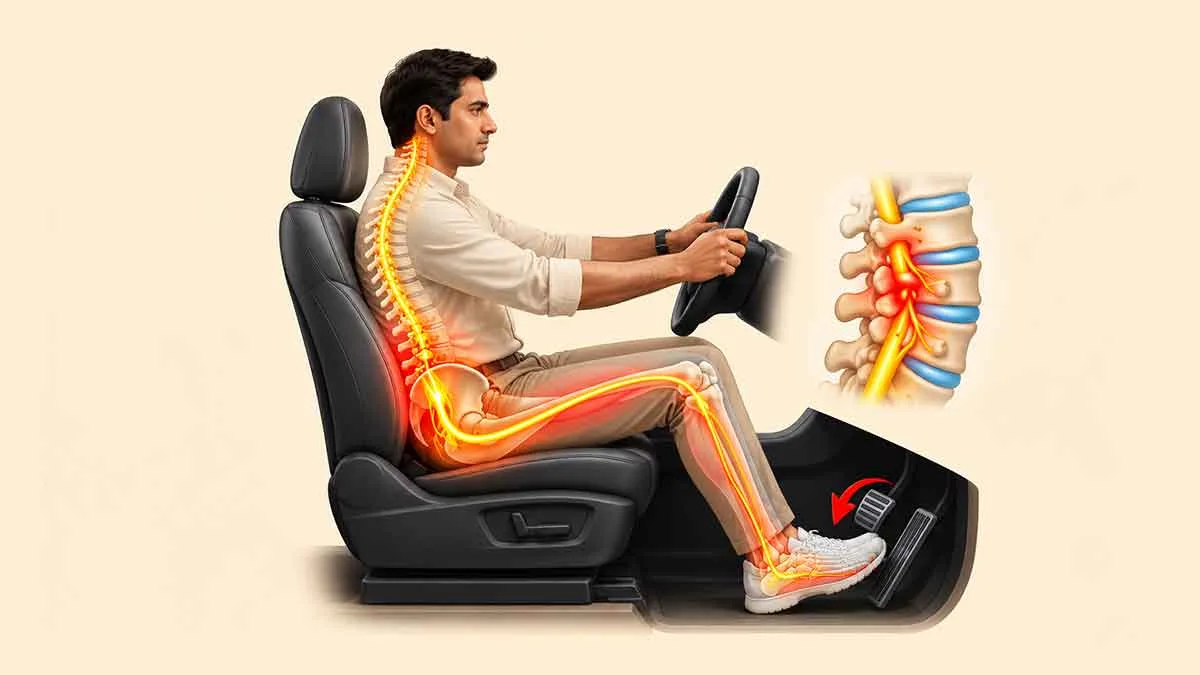
Why does your car hurt your back so much more than your office chair? The answer is simple. When you drive, your body is completely trapped. You cannot easily shift your weight around to get comfortable. First, your legs have to reach forward to constantly press the pedals. This awkward forward reach pulls tightly on your lower back muscles and heavily stretches your fragile sciatic nerve.
Second, the car is constantly moving. As you drive, the heavy engine and the bumpy road send endless vibration right up through your seat and into your spine. This constant shaking deeply irritates your pinched nerve
Finally, sitting perfectly still blocks your body's natural energy. In Ayurveda, the energy of movement is called vata. When you are stuck, this vital energy stops flowing. Your lower back loses its natural warmth and moisture. Your muscles quickly become dry, cold, and stiff, which clamps down hard on your sensitive nerve.
Immediate Practical Modifications
You can make the following physical changes to stop and manage the pain while driving:
- Empty your pockets: Never sit on your wallet, keys, or phone in your back pocket. Because it tilts the hips to one side. This quietly but constantly grinds your nerve with every single bump in the road
- Fix your seat distance: Pull your car seat much closer to the steering wheel. If you have to stretch your legs far to reach the brakes, you are dangerously pulling on your tight lower back.
- Support your spine: Most car seats are shaped like a deep, sinking bucket. This forces your back to slouch. Place a small, rolled towel or a firm cushion right behind your lower back to keep your spine straight and supported.
- Adjust your mirror for posture: Sit up perfectly straight, then adjust your rearview mirror. If you start to slouch later in the drive, your mirror will look wrong. This is a great, natural alarm to remind you to sit up tall again.
- Use the heated seats: Cold AC makes the muscles freeze. Turn up the heated seats instead. The deep heat acts like a soothing blanket, keeping your back muscles soft and relaxed while you steer.
Step-By-Step Safe Routine
Healing your nerve means changing how you handle your entire trip. Follow this very easy routine:
Getting in the car: Do not just twist your body and drop into the seat. That sharp twisting motion heavily strains your back. Instead, stand with your back facing th e open door. Then, keep your knees close together and carefully swing both legs into the car at the same time.
During the drive: You absolutely must pull over every single hour. Do not try to even drive for a long time. Stop the car and get out, walk around for five easy minutes. Gently reach your arms up to the sky to stretch your tired spine.
Getting out of the car: Keep your knees together and swing both legs out of the door at the same time. Plant both of your feet firmly on the solid ground before you try to stand up.
After the drive: When you get home, your lower back will feel heavy and tired. Gently rub some warm sesame oil on your back and take a warm shower to melt the deep driving tension away.
Progression And Pacing
The biggest mistake people make is expecting overnight relief. But healing a badly pinched nerve takes a lot of time. At first, you may be able to sit only for a short time. But this is completely normal. So do not force yourself to sit for hours while driving without a break. Pushing yourself when you are in pain will only make the pain worse. If you have sciatica, you have to be patient. When you start learning the art of pacing, you will start noticing results gradually. The more you have to do is learn and understand your body- what it wants and how it works. This will help in better management of sciatica pain.
What To Avoid
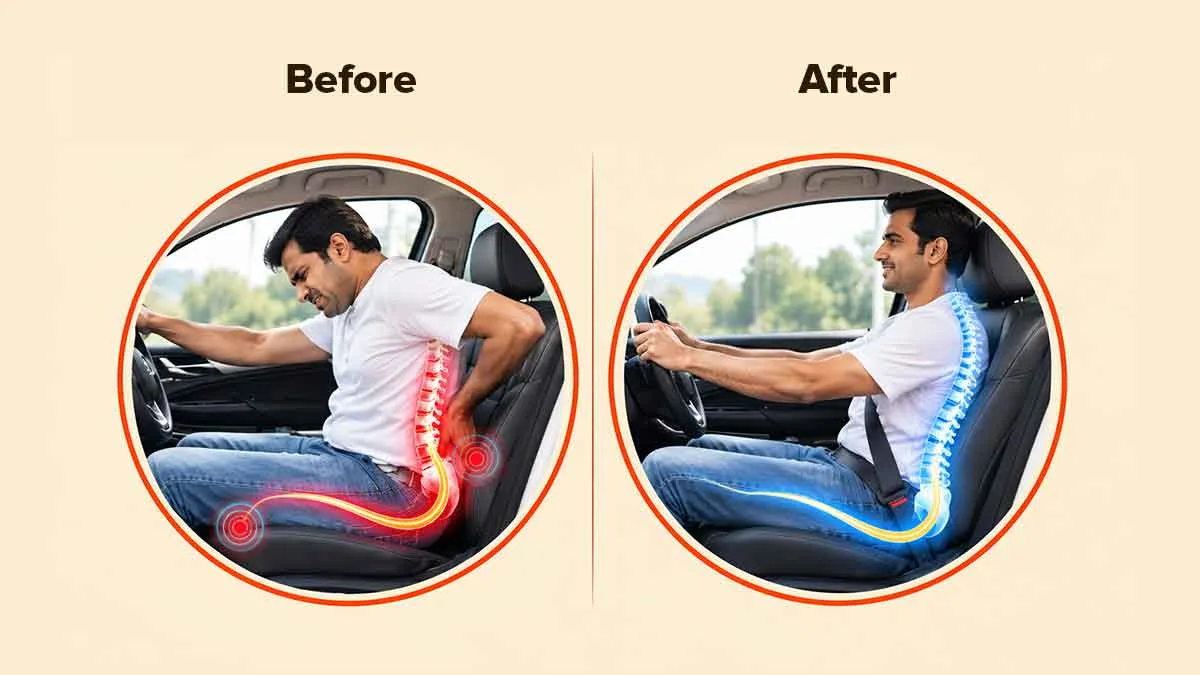
Driving is one of the most painful tasks that a person has to do when he is dealing with sciatica. To protect your nerve while driving on a long day trip, here are the most important habits that you must completely avoid:
- Sitting Too Far Back: Avoid putting your seat too far away from your steering wheel. If you have to reach forward to steer, you naturally lose your lower back curve and pull heavily on your already tight spine.
- Driving For Hours Without Stopping: Avoid sitting for hours while driving. Take breaks every hour or two to walk, stretch, and gently move your legs to calm down the stiff muscles.
- Driving With Items In Your Pocket: Don't keep your wallet, keys, or phone in your back pocket while driving. It tilts your hips unevenly, which constantly grinds your pinched nerve with every single bump on the road.
- Sitting In A Curve: Maintaining good posture and using lumbar support is very important to reduce stress on the back. Do not tilt your back to make the shape of the letter C. It will only put more pressure on your spine.
Stop Signs And Medical Review
A good routine indeed helps in managing and calming the pain, but certain signs must not be ignored:
- If you cannot control your bladder or bowels.
- If your pain gets steadily worse or does not improve after a few weeks of self-care.
- If you have unexplained weight loss, fever, night sweats, or chills, as it signals severe infection.
- If your legs become so weak that you cannot lift them in front of your feet.
- If you suddenly lose all feeling in your inner thigh or groin area.
These warning signs must not be ignored and require urgent medical help.
References
Sciatica - StatPearls - NCBI Bookshelf
FAQs
When you drive, your legs are busy reaching for pedals, and the car's engine sends constant, heavy vibrations directly into your seat. This endless shaking deeply irritates your trapped nerve, while the awkward leg reach pulls tightly on your tired lower back muscles.
Always pull your seat closer. If you sit too far back, you are forced to stretch your legs forward to safely reach the brakes. This stretching naturally ruins your lower back curve and pulls heavily on your already painful spine.
Yes, it is incredibly important. Sitting on a thick wallet or a heavy phone tilts your hips unevenly. This constant, quiet tilt grinds your sensitive sciatic nerve against your tight muscles with every single bump you hit on the road.
Yes, heat is wonderful for your daily commute. Cold air conditioning freezes your muscles and sharply increases nerve stiffness. Heated seats keep your deep back muscles soft, warm, and completely relaxed while you steer through traffic.
You absolutely must pull over every single hour. Do not try to push through the sharp pain just to save a little time. Stop the car, get out, and walk around for five easy minutes to give your trapped nerve the space it desperately needs to breathe.
Never twist your body and drop heavily into the seat. Stand facing away from the open door, sit backward onto the seat first, keep your knees tightly together, and carefully swing both legs inside at the exact same time to protect your spine.
Yes, especially if your car seat sinks deeply like a bucket. A firm lower back cushion or a tightly rolled towel placed right behind your spine stops your back from collapsing into a painful "C" shape while you drive.
If it is safe to do so on the open highway, using cruise control is a great idea. It allows you to rest your right foot flat on the floor. Keeping your foot flat stops the constant forward-reaching motion, immediately taking heavy pressure off your lower back.
Consult Experienced Ayurveda Doctors for Driving















Our Happy Patients
-
 Sunita Malik - Knee Pain
 -
 Abhishek Mal - Diabetes
 -
 Vidit Aggarwal - Psoriasis
 -
 Shanti - Sleeping Disorder
 -
 Ranjana - Arthritis
 -
 Jyoti - Migraine
 -
 Renu Lamba - Diabetes
 -
 Kamla Singh - Bulging Disc
 -
 Rajesh Kumar - Psoriasis
 -
 Dhruv Dutta - Diabetes
 -
 Atharva - Respiratory Disease
 -
 Amey - Skin Problem
 -
 Asha - Joint Problem
 -
 Sanjeeta - Joint Pain
 -
 A B Mukherjee - Acidity
 -
 Deepak Sharma - Lower Back Pain
 -
 Vyjayanti - Pcod
 -
 Sunil Singh - Thyroid
 -
 Sarla Gupta - Post Surgery Challenges
 -
 Syed Masood Ahmed - Osteoarthritis & Bp
Diagnostic Marker
Blogs
- Ayurvedic Diet & Lifestyle Tips to deal with Sciatica
- 3 Yoga Asanas that Help Ease Sciatica Pain & Bring Relief
- Sciatica Pain? Try These 3 Home Remedies
- 5 Powerful Wonder Herbs to Relieve Sciatica Pain
- How to Sleep Peacefully With Sciatica Pain
- सायटिका का इलाज: जानिए कमर और पैरों की झनझनाहट से राहत पाने के आयुर्वेदिक तरीके
- Difference Between Sciatica and General Backache: What to Know
- क्या हीट थेरेपी या मसाज सायटिका में ठीक है? आयुर्वेद बताता है कब करना है और कब नहीं
- क्या स्लिप डिस्क और साइटिका एक जैसे हैं? दोनों में फर्क और आयुर्वेदिक उपचार समझिए
- लंबे समय तक ड्राइविंग या गलत बैठने से साइटिका क्यों ट्रिगर होता है? आयुर्वेद बताता है उपचार का सही मार्ग
Home Remedies
Related Disease
- Ayurvedic Treatment for Ankylosing Spondylitis
- Ayurvedic Treatment For Cervical Spondylosis
- Ayurvedic Treatment For Arthritis
- Ayurvedic Treatment for Osteoarthritis
- Ayurvedic treatment for Gout
- Ayurvedic Treatment for Sciatica
- Ayurvedic Treatment for Rheumatoid Arthritis
- Ayurvedic Treatment for Frozen Shoulder
- Ayurvedic Treatment for Deep Vein Thrombosis (DVT)
- Ayurvedic Treatment for Achilles Tendon Disorders
- Ayurvedic Treatment for Rickets
- Ayurvedic Treatment for Ganglion Cyst
- Ayurvedic Treatment for Osteoporosis
- Get Ayurvedic Treatment for AVN Avascular Necrosis
- Get Ayurvedic Treatment For Osteomyelitis
- Cerebral Palsy Treatment in Ayurveda
Latest Blogs
- Mindful Eating Is Trending—But Ayurveda Has Long Focused on How You Eat
- घर में बार-बार Snacks सामने दिखना बच्चों और Adults दोनों की Eating को कैसे बदलता है?
- गीले बाल बांधकर सोना कितना Harmless है?
- Why Dust Builds Up Faster Around Electronics and Workstations
- The ‘Clean Home’ Myth: When Fragrance Is Mistaken for Fresh Air
- बुजुर्गों का dinner बहुत जल्दी और breakfast बहुत देर से हो तो energy पर क्या असर पड़ सकता है?
- पीरियड्स से पहले Salty Food की Craving क्यों बढ़ सकती है?
- Can Ancient Dinacharya Be Practical For A Desk-Job Lifestyle?
- Why One ‘Perfect Breakfast’ Cannot Work For Every Body
- Mindful Eating नया Wellness Trend है या Ayurveda में यह Idea पहले से मौजूद था?
- Can Too Little Sleep Make Sugar Cravings Feel Stronger
- Seasonal Eating: Where Modern Nutrition And Ayurveda Meet
- हर चीज़ का health data track करना कब useful से obsessive बन सकता है
- Can Sleeping In An Overcooled Room Leave You Feeling Stiff In The Morning?
- Why Hair, Skin and Energy Often React to Aggressive Dieting
- बच्चों में weekend sleep timing बदलना Monday mood को कैसे प्रभावित कर सकता है
- Is Fasted Intense Exercise a Good Idea for Every Woman
- Health Tracking Every Hour: Helpful Awareness Or Another Source Of Stress?
- फोन देखते हुए चलना सिर्फ accident risk नहीं—posture और breathing पर क्या असर पड़ता है
- Bloating Before a Period: Why Lifestyle Can Change How It Feels
Ayurvedic Doctor In Top Cities
- Ayurvedic Doctors in Bangalore
- Ayurvedic Doctors in Pune
- Ayurvedic Doctors in Delhi
- Ayurvedic Doctors in Hyderabad
- Ayurvedic Doctors in Indore
- Ayurvedic Doctors in Mumbai
- Ayurvedic Doctors in Lucknow
- Ayurvedic Doctors in Kolkata
- Ayurvedic Doctors in Patna
- Ayurvedic Doctors in Vadodara
- Ayurvedic Doctors in Ahmedabad
- Ayurvedic Doctors in Chandigarh
- Ayurvedic Doctors in Gurugaon
- Ayurvedic Doctors in Jaipur
- Ayurvedic Doctors in Kanpur
- Ayurvedic Doctors in Noida
- Ayurvedic Doctors in Ranchi
- Ayurvedic Doctors in Bhopal
- Ayurvedic Doctors in Ludhiana
- Ayurvedic Doctors in Dehradun