
Successful Treatments
Clinics
Doctors
Sciatica Pain While Sitting
 Published on 22 Sep, 2026
 Updated on 15 Oct, 2026

Explore Sciatica While Sitting
- Home / Diseases & Ayurveda / Joint & Muscle Pain / Ayurvedic Treatment for Sciatica / Sciatica While Sitting: Desk Work, Posture and Driving / Sciatica Pain While Sitting
Who this Sciatica Pain While Sitting guide is for
If sitting down for dinner, working at your desk, or driving causes a heavy, burning pain down in your leg, then this guide is for you. It is written for anyone who is tired of relying on temporary painkillers and looking for a lasting, root-cause solution.
This guide provides easy daily habits for people who struggle with sitting. Just by making small changes in your everyday life, such as how you sit, you can finally relieve the pressure on your nerves and get lasting relief.
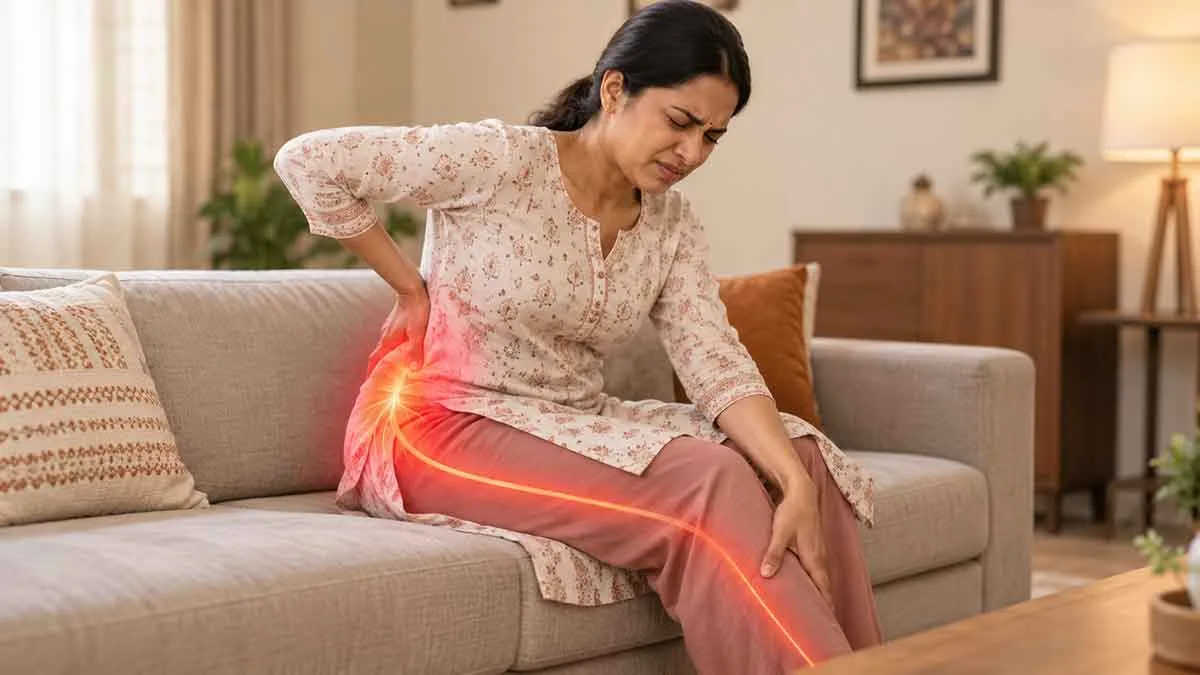
Why the problem occurs
To fix the pain, you need to understand why sitting is difficult for your back. When you sit for long hours, it completely changes how your body handles its weight and internal energy. Here is what happens in your lower back when you sit for long:
- Increased Disc Pressure: Sitting puts far more weight on your lower spine than standing does. This heavy load directly squashes the soft cushions (discs) in your back, pushing them into your sensitive nerves.
- Slouching & Bending Forward: When you slouch over your keyboard, your lower back loses its healthy, natural curve. This bad posture increases the heavy strain on your spine, leading to pain and stiffness.
- Tight, locked Muscles: Staying in one sitting position for hours causes the muscles around your back and hips to lose their flexibility, and as a result they become stiff and hard; when you stand up or change your position, they start hurting badly.
- Deep Muscle Pressure: You have a specific muscle in your buttocks called the piriformis. When you sit on it all day, this muscle gets extremely tight and physically squeezes the sciatic nerve that runs tightly underneath it.
Immediate Practical Modifications
You don't need to wait for days to feel better. Just making changes in the way you sit can help in getting relief. Try these steps:
- Feet flat on the floor: When your feet have a solid base, it can make it more comfortable to sit, as it takes some strain off your back and hips. Hence, keeping your feet flat on a solid surface helps you feel supported while sitting.
- Use a back support: Put a small cushion or pillow behind your lower back; this stops you from slouching, which causes nerve pressure.
- Knees at hip level: When your knees are down or up from your hip level, it puts extra pressure on the back and spine. So keep your knees at the level of your hips, as it will help reduce the pressure that surrounds your sciatic nerve.
- Empty your back pockets: When you have stuff in your back pockets, it makes it uncomfortable to sit, and it also puts stress on the buttocks muscles.
Making these changes can help your in relieving the pain caused by sciatica. So try implementing these practical steps in your sciatica treatment journey for better relief.
Step-By-Step Safe Routine
Fixing your chair can be a great start, but healing your nerve pain takes a full-day effort. Here is what you can do to help calm the sciatica pain:
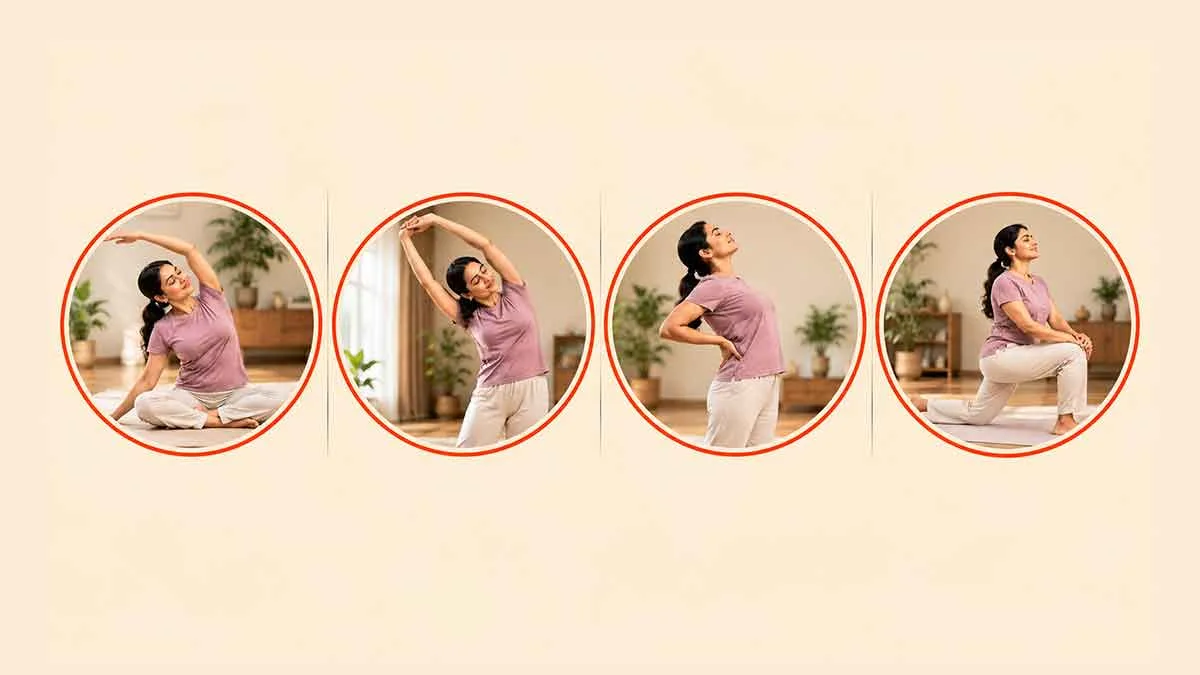
The Morning Routine
Start your day by drinking lukewarm water on an empty stomach in the morning. Ayurveda teaches that digestion is the absolute foundation of the body. Before you sit down to eat breakfast, do gentle stretching and back bends for fifteen minutes. This easily warms up your body and spine, and gets your joints moving smoothly before they have to carry body weight all day.
During Work
When you are at the office, set a timer on your watch or mobile phone every thirty minutes. Do not just sit all day long; take a quick break at your desk. You don't have to do heavy stretches; just do some gentle stretches such as head up or down, shoulder rolls, straightening your back, or go for a quick one- to two-minute walk. These constant breaks help your spine not get stiff because of all-day sitting.

Evening Routine
After a long day at work, your lower back needs deep relaxation. You can use a simple Ayurvedic oil massage at home. Warm a little bit of sesame oil and gently rub it directly into your tight lower back and hips. Right after this, take a warm shower or put a warm heating pad on your back. This deep heat therapy helps calm the heavy tension built up while working at your desk all day.
Progression And Pacing
Healing a badly pinched nerve takes a lot of time to fix, so do not rush. You need to take it very slow. At first you might only be able to sit without pain for ten minutes. This is normal. Do not force yourself to sit for an hour just because you think you have to. Pushing through the sharp pain will never make you stronger. It only hurts your weak nerve much more. Your main goal is to get better slowly. Always listen to your body before it starts loudly yelling. If you feel a small ache starting deep in your hip, that is your sign to stand up right away. Do not wait for that small ache to turn into a huge burning electric shock. Ayurveda teaches that deep healing takes a long time because you are slowly rebuilding the lost muscle and strength inside your spine.
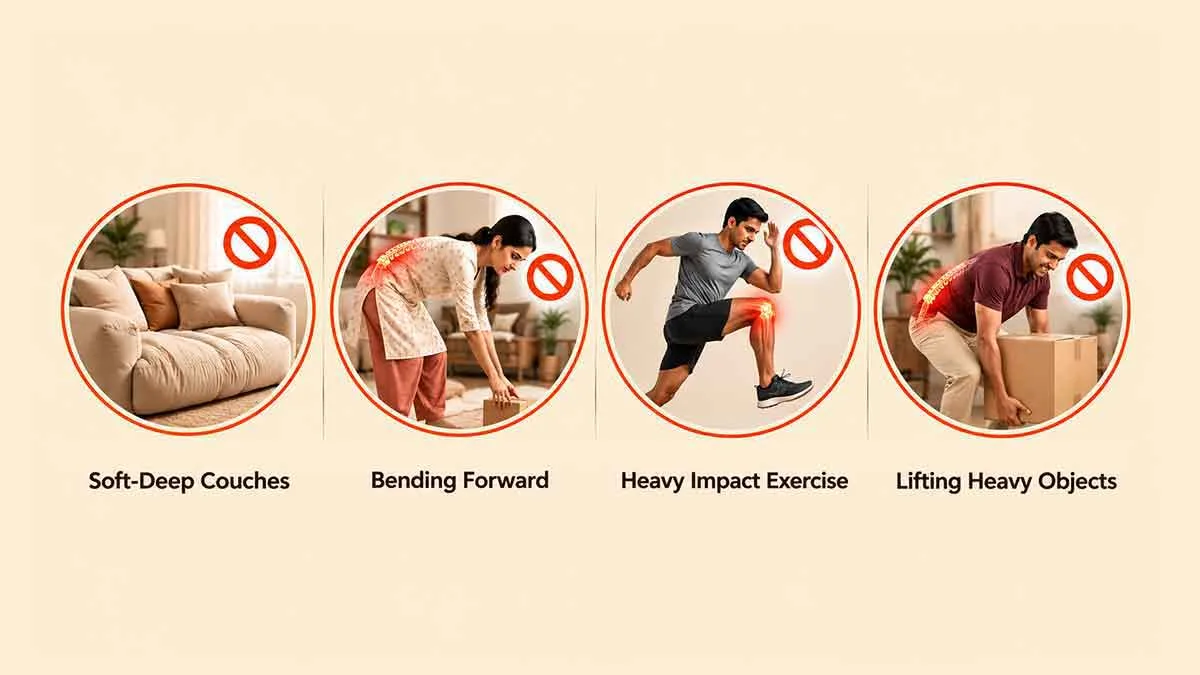
What To Avoid?
It is very important to know the things that you must avoid if you have sciatica, as it is important to know what you should do when you have it. Avoiding these things can help in cutting out the sciatica symptoms and for better management of the pain:
- Soft-Deep Couches: A soft, shrinking sofa might feel cozy, but it forces your spine to bend into a C-shape and puts heavy pressure on your lower back.
- Bending forward and crossing your legs: Never cross your legs while sitting; it directly twists your hips and directly pinches the nerve on one side. Also, constantly bending forward pulls heavily on your already tight muscles.
- Heavy Impact Exercise: Avoid doing exercises such as jumping or jogging, as they put heavy pressure on your back muscles.
- Slumping or Slouching: Rolling your lower back backward flattens your natural lumbar curve and pushes your spinal disc into your nerve.
- Lifting Heavy Objects: Avoid lifting heavy objects as they put excessive pressure on your lower back muscles.
Stop Signs And Medical Review
While a good routine and knowing what to do and what not to do can help in managing the pain, but their are certain warning signs that our body gives which must not be ignored:
- If you cannot control your bladder or bowels.
- If your legs become so weak that you cannot lift them in front of your feet.
- If you suddenly lose all feeling in your inner thigh or groin area.
- If your pain gets steadily worse or does not improve after a few weeks of self-care.
- If you have unexplained weight loss, fever, night sweats, or chills, as it signals severe infection.
These symptoms must not be ignored as they can be a sign of a serious problem, and neglecting them can result in loss of bone or movement for life.
References
Sciatica - StatPearls - NCBI Bookshelf
FAQs
No, it is not a magic fix. Standing in one spot all day makes your lower back tired and tight. The real secret is switching between sitting and standing every thirty minutes to keep your spine moving.
Buy a firm cushion with a small cutout at the back, called a tailbone cushion. This shape lets your tailbone float, taking heavy pressure off your lower spine and nerves.
By evening, gravity has pushed down heavily on your spinal discs for hours. Your tired back muscles let your posture collapse. This physical exhaustion directly crushes your nerve before you finish work.
You can, but you must take breaks. Car engines send vibrations into your seat, irritating the nerve. Pull over every single hour, get out, and walk for five minutes to relax your spine.
Keep both feet flat on the floor with knees bent. If your feet dangle, your lower back takes the strain. Never cross your legs; this twists your hips and pinches the nerve.
Yes, heat is wonderful for tight muscles. Turn on heated seats during your drive. The warmth keeps tissues soft and stops cold air conditioning from freezing your lower back.
Never push through sharp pain. That shooting feeling is an alarm telling you the nerve is crushed. If pain builds, stand up and take a short walk right away.
Yes, walking is an easy natural remedy. It pumps fresh blood to your spine, prevents stiffness, and stretches tight hip muscles without putting harsh pressure on your back.
Consult Experienced Ayurveda Doctors for Sciatica Pain While Sitting




















Our Happy Patients
-
 Sunita Malik - Knee Pain
 -
 Abhishek Mal - Diabetes
 -
 Vidit Aggarwal - Psoriasis
 -
 Shanti - Sleeping Disorder
 -
 Ranjana - Arthritis
 -
 Jyoti - Migraine
 -
 Renu Lamba - Diabetes
 -
 Kamla Singh - Bulging Disc
 -
 Rajesh Kumar - Psoriasis
 -
 Dhruv Dutta - Diabetes
 -
 Atharva - Respiratory Disease
 -
 Amey - Skin Problem
 -
 Asha - Joint Problem
 -
 Sanjeeta - Joint Pain
 -
 A B Mukherjee - Acidity
 -
 Deepak Sharma - Lower Back Pain
 -
 Vyjayanti - Pcod
 -
 Sunil Singh - Thyroid
 -
 Sarla Gupta - Post Surgery Challenges
 -
 Syed Masood Ahmed - Osteoarthritis & Bp
Diagnostic Marker
Blogs
- Ayurvedic Diet & Lifestyle Tips to deal with Sciatica
- 3 Yoga Asanas that Help Ease Sciatica Pain & Bring Relief
- Sciatica Pain? Try These 3 Home Remedies
- 5 Powerful Wonder Herbs to Relieve Sciatica Pain
- How to Sleep Peacefully With Sciatica Pain
- सायटिका का इलाज: जानिए कमर और पैरों की झनझनाहट से राहत पाने के आयुर्वेदिक तरीके
- Difference Between Sciatica and General Backache: What to Know
- क्या हीट थेरेपी या मसाज सायटिका में ठीक है? आयुर्वेद बताता है कब करना है और कब नहीं
- क्या स्लिप डिस्क और साइटिका एक जैसे हैं? दोनों में फर्क और आयुर्वेदिक उपचार समझिए
- लंबे समय तक ड्राइविंग या गलत बैठने से साइटिका क्यों ट्रिगर होता है? आयुर्वेद बताता है उपचार का सही मार्ग
Home Remedies
Related Disease
- Ayurvedic Treatment for Ankylosing Spondylitis
- Ayurvedic Treatment For Cervical Spondylosis
- Ayurvedic Treatment For Arthritis
- Ayurvedic Treatment for Osteoarthritis
- Ayurvedic treatment for Gout
- Ayurvedic Treatment for Sciatica
- Ayurvedic Treatment for Rheumatoid Arthritis
- Ayurvedic Treatment for Frozen Shoulder
- Ayurvedic Treatment for Deep Vein Thrombosis (DVT)
- Ayurvedic Treatment for Achilles Tendon Disorders
- Ayurvedic Treatment for Rickets
- Ayurvedic Treatment for Ganglion Cyst
- Ayurvedic Treatment for Osteoporosis
- Get Ayurvedic Treatment for AVN Avascular Necrosis
- Get Ayurvedic Treatment For Osteomyelitis
- Cerebral Palsy Treatment in Ayurveda
Latest Blogs
- Mindful Eating Is Trending—But Ayurveda Has Long Focused on How You Eat
- घर में बार-बार Snacks सामने दिखना बच्चों और Adults दोनों की Eating को कैसे बदलता है?
- गीले बाल बांधकर सोना कितना Harmless है?
- Why Dust Builds Up Faster Around Electronics and Workstations
- The ‘Clean Home’ Myth: When Fragrance Is Mistaken for Fresh Air
- बुजुर्गों का dinner बहुत जल्दी और breakfast बहुत देर से हो तो energy पर क्या असर पड़ सकता है?
- पीरियड्स से पहले Salty Food की Craving क्यों बढ़ सकती है?
- Can Ancient Dinacharya Be Practical For A Desk-Job Lifestyle?
- Why One ‘Perfect Breakfast’ Cannot Work For Every Body
- Mindful Eating नया Wellness Trend है या Ayurveda में यह Idea पहले से मौजूद था?
- Can Too Little Sleep Make Sugar Cravings Feel Stronger
- Seasonal Eating: Where Modern Nutrition And Ayurveda Meet
- हर चीज़ का health data track करना कब useful से obsessive बन सकता है
- Can Sleeping In An Overcooled Room Leave You Feeling Stiff In The Morning?
- Why Hair, Skin and Energy Often React to Aggressive Dieting
- बच्चों में weekend sleep timing बदलना Monday mood को कैसे प्रभावित कर सकता है
- Is Fasted Intense Exercise a Good Idea for Every Woman
- Health Tracking Every Hour: Helpful Awareness Or Another Source Of Stress?
- फोन देखते हुए चलना सिर्फ accident risk नहीं—posture और breathing पर क्या असर पड़ता है
- Bloating Before a Period: Why Lifestyle Can Change How It Feels
Ayurvedic Doctor In Top Cities
- Ayurvedic Doctors in Bangalore
- Ayurvedic Doctors in Pune
- Ayurvedic Doctors in Delhi
- Ayurvedic Doctors in Hyderabad
- Ayurvedic Doctors in Indore
- Ayurvedic Doctors in Mumbai
- Ayurvedic Doctors in Lucknow
- Ayurvedic Doctors in Kolkata
- Ayurvedic Doctors in Patna
- Ayurvedic Doctors in Vadodara
- Ayurvedic Doctors in Ahmedabad
- Ayurvedic Doctors in Chandigarh
- Ayurvedic Doctors in Gurugaon
- Ayurvedic Doctors in Jaipur
- Ayurvedic Doctors in Kanpur
- Ayurvedic Doctors in Noida
- Ayurvedic Doctors in Ranchi
- Ayurvedic Doctors in Bhopal
- Ayurvedic Doctors in Ludhiana
- Ayurvedic Doctors in Dehradun