
Successful Treatments
Clinics
Doctors
Grade 2 Fatty Liver
 Published on 11 Sep, 2026
 Updated on 28 Sep, 2026

Explore Grades And Severity
- Home / Diseases & Ayurveda / Liver & Gall / Ayurvedic Treatment for Fatty Liver: Diet, Lifestyle & Liver Health / Fatty Liver Grades And Severity: Grade 1, 2 And 3 Explained / Grade 2 Fatty Liver
Fatty liver is graded from Grade 1 to Grade 3. These grades are based on the percentage of fat accumulated in the liver cells. These grades help in a better understanding of the disease and are responsible for better treatment.
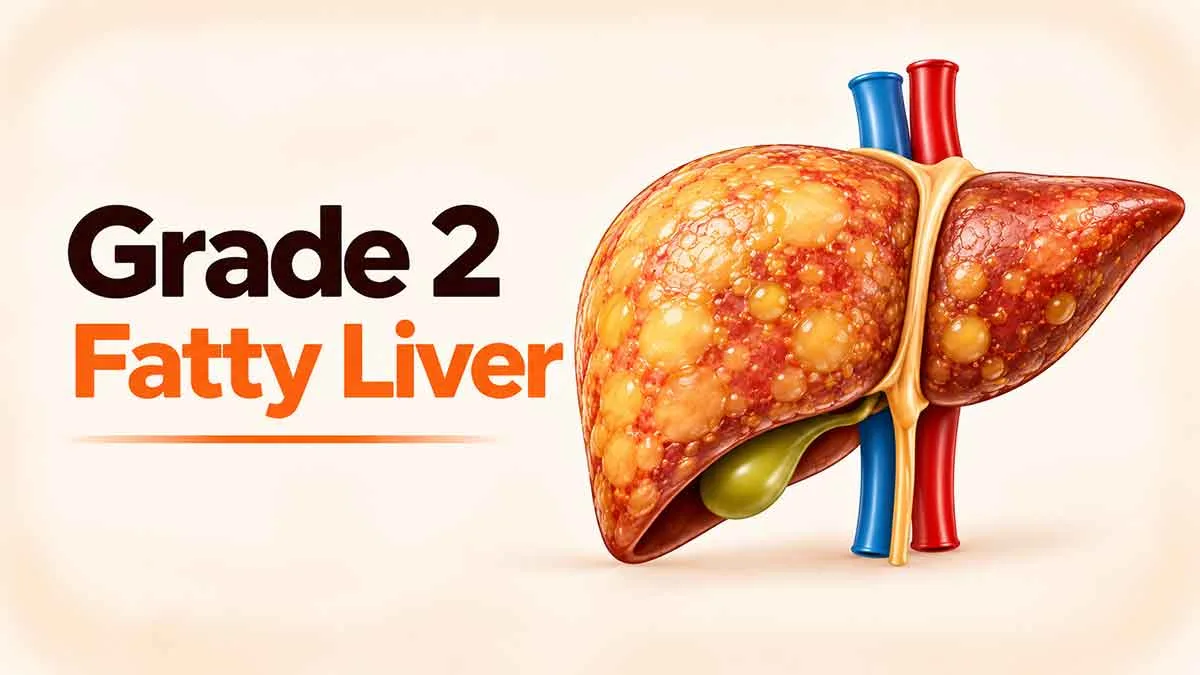
What Does Grade 2 Fatty Liver Test Mean?
Grade 2 fatty liver (Yakrit Roga) is also known as ‘Moderate Hepatic Steatosis’. It is the second stage of nonalcoholic fatty liver disease (NAFLD) that can impact your overall health. It occurs when a moderate amount of fat (Meda) accumulates in the liver cells. Many people may have it without knowing.
In this grade, the liver may appear enlarged (hepatomegaly). This stage can affect the liver’s functional ability. Up to 33% to 66% fat accumulates in the liver in grade 2 and can be detected through blood and imaging tests, where the liver appears more inflamed than usual due to fat deposits, but liver function tests (LFTs) are often within the normal range in most of the cases. At this point, the accumulated fat can cause major inflammation, tissue damage, or scarring in the liver if not treated on time.
Grade 2 stage is also reversible but requires a lot of effort and time. Ayurveda can help reverse this stage by focusing on the root causes.
Patient Success Stories
What It Can And Cannot Prove
| It can prove: | It cannot prove: |
| Your body is dealing with metabolic imbalance. | Internal liver stiffness or fibrosis (advanced scarring). |
| The liver is under stress, and the abdomen may have low-level inflammation or swelling. | That you have permanent liver damage or cirrhosis. |
| Fat accumulation can be fixed itself and with medical supervision. | In this grade, people may not have any symptoms; this does not prove any signs of sickness. |
| This condition acts as a serious warning to change in lifestyle and needs medical supervision. | The real cause of fat build-up whether it’s metabolic factors or alcohol consumption. |
Common Reasons For The Finding
The most common reasons for grade 2 fatty liver include:
- Obesity
- Poor diet
- Sedentary lifestyle
- High blood pressure
- High blood sugar
- Abnormal cholesterol
- Alcohol consumption
- Insulin resistance or type 2 diabetes
How It Relates To Fatty Liver Disease
According to Ayurveda, Grade 2 fatty liver (Yakrit Roga) is associated with Medoroga (fat tissue disorder), which is categorised as a Santarpanajanya Vyadhi; a disease caused by overnutrition and metabolic disorder. Agnimandya, or weak digestive fire, creates Ama (toxins). Kapha dosha mixes with Ama, which corrupts nutrients and blocks Srotorodha (body channels). And when Pitta dosha gets involved with Kapha, it triggers the liver tissue and causes mild irritation or early inflammation.
Ayurveda can manage Grade 2 fatty liver with Ama pachana (detoxification), Srotoshodhana (channel clearing), and common herbs like Bhumyamalaki, Guduchi, and Arogyavardhini vati.
Can Grade 2 Fatty Liver Improve?
Grade 2 fatty liver indicates moderate fat accumulation, meaning up to 33% to 66% fat stored in the liver cells. This stage can often be reversed or improved significantly through serious lifestyle adjustments and medical supervision. In Ayurveda, the main focus relies on Deepana and Pachana to fix Agni (digestive fire), srotoshodhana (clear channel blockages), and balance Kapha and Pitta dosha. This stage can be treated with a healthy (Ahara) diet, vihara (lifestyle), herbs (like giloy, bhumiamalaki, kutki), and physician guidance and treatment. If you are diagnosed with grade 2 fatty liver, then consult today with Jiva’s health expert.
What To Review Next With A Doctor
Grade 2 can be reversible through strict guidance or a personalized lifestyle modification. These are the key topics to discuss with your doctor:
- Blood tests or LFTs (including ALT, AST, GGP)
- Metabolic health (including blood sugar and cholesterol)
- Medications and supplements
- Status of Agni and Ama (digestion and toxins)
- Dosha imbalance
- Dietary adjustments
- Lifestyle plan
Monitoring And Follow-Up
Ayurveda suggests that monitoring and follow-up for grade 2 fatty liver need regular tracking of metabolic markers, Agni (digestive fire), and clinical progress. This helps in maintaining a healthy lifestyle:
- Regular assessments: Continue consultation with Jiva’s Ayurvedic physician to assess agni, appetite, bowel habits, and overall metabolic health.
- Modern monitoring: Ayurveda can maintain this stage with regular medical monitoring, including liver enzymes (LFT tests), imaging (ultrasounds or fibrosis), and metabolic parameters (blood sugar, blood pressure, or cholesterol).
- Dietary discipline: Reduce oily, processed, refined carbohydrate meals and add fresh, healthy, light, or easy-to-digest meals to your diet.
- Physical activity: Avoid a sedentary routine and work out regularly for at least 30 minutes. It helps to maintain excess Meda (tissue fat) and support metabolic health.
- Weight monitoring: Excess weight gain can be dangerous for the body; a slight weight reduction according to the doctor's advice and a healthy diet can be beneficial.
- Monitor Agni: Body changes like indigestion, heaviness, sleep disorders, or appetite loss may indicate imbalanced Agni and should be addressed.
- Herbs re-evaluation: To avoid long-term mineral toxicity, traditional formulas such as Triphala guggulu and Arogyavardhini vati should be periodically reviewed under Ayurvedic expert guidance.
- Avoid self-medication: Ayurvedic medicines are prescribed by specialists, especially for a particular condition, and self-medication can lead to Vata and Pitta imbalance in the body.
Red Flags: When To Seek Medical Care.
Grade 2 fatty liver often occurs with mild symptoms, and certain signs should not be ignored. Seek Jiva’s Ayurvedic evaluation if you experience:
- Severe fatigue: Feeling exhausted even after taking proper rest.
- Jaundice: Yellowing of skin and eyes
- Fluid retention: Unusual swelling in legs, abdomen, or feet
- Systemic indicators: Constant high blood sugar, high cholesterol or high blood pressure
- Indigestion: Bloating after eating meals or a feeling of fullness.
- Bleeding tendencies: Easy bruising or unusual bleeding from minor cuts.
- Cognitive changes: Severe confusion, brain fog, difficulty in concentrating, or extreme sleep disorders.
- Severe abdominal pain: Sharp pain in the upper right side of the abdomen
- Vomiting blood or black stool: These signals need emergency medical care.
- Nausea: Mild nausea, especially after eating meals.
- Weight changes: Sudden weight changes, including weight gain and loss, can be a signal of Grade 2 fatty liver disease.
References
Fatty Liver - StatPearls - NCBI Bookshelf
Nonalcoholic fatty liver disease: A clinical approach and review - PMC
FAQs
Yes, Grade 2 fatty liver can be reversed with a healthy diet, regular exercise, weight loss, and metabolic management, but it requires a lot of effort and time.
It usually takes 6-12 months of consistency to reduce (Meda) fat accumulation from the liver.
Not usually, because it can be managed with multiple medicinal or Ayurvedic therapies, but it can be dangerous in case of ignorance, and it can increase the risk of fibrosis or cirrhosis and Grade 3 fatty liver or permanent tissue damage.
Because Ayurveda focuses on the root causes and treats metabolic disorders with liver-protective herbs and supervised detoxification.
Having a healthy diet including fruits, vegetables, and whole grains in meals, and avoid eating oily and sugary foods, can be beneficial for Grade 2 fatty liver disease.
Find Jiva Ayurveda Clinics for Fatty-liver Treatment Near You
Consult Experienced Ayurveda Doctors for Fatty-liver





Our Happy Patients
-
 Sunita Malik - Knee Pain
 -
 Abhishek Mal - Diabetes
 -
 Vidit Aggarwal - Psoriasis
 -
 Shanti - Sleeping Disorder
 -
 Ranjana - Arthritis
 -
 Jyoti - Migraine
 -
 Renu Lamba - Diabetes
 -
 Kamla Singh - Bulging Disc
 -
 Rajesh Kumar - Psoriasis
 -
 Dhruv Dutta - Diabetes
 -
 Atharva - Respiratory Disease
 -
 Amey - Skin Problem
 -
 Asha - Joint Problem
 -
 Sanjeeta - Joint Pain
 -
 A B Mukherjee - Acidity
 -
 Deepak Sharma - Lower Back Pain
 -
 Vyjayanti - Pcod
 -
 Sunil Singh - Thyroid
 -
 Sarla Gupta - Post Surgery Challenges
 -
 Syed Masood Ahmed - Osteoarthritis & Bp
Diagnostic Marker
Blogs
- Can Ayurveda Cure Fatty Liver Diseases?
- Lifestyle and Diet For Reducing a Fatty Liver
- Fatty Liver की वजह बन रही है आपकी 9-5 की नौकरी? आयुर्वेद से पाएं रामबाण इलाज
- फैटी लिवर बढ़ने से पहले पहचानिए संकेत और करें ये 5 आसान आयुर्वेदिक उपाय
- Maida, processed food और refined oil कैसे लिवर में जहर की तरह काम कर रहे हैं?
- Cold drinks, junk food, और packaged snacks कैसे लिवर में धीरे-धीरे फैट जमा कर रहे हैं?
- Liver में Fat जमा होने के पहले संकेत क्या हैं?
- Fatty Liver Grade 1 — दवा बिना Reverse हो सकता है? आयुर्वेद का जवाब
- Fatty Liver में Ghee खाएँ या नहीं? आयुर्वेद और Modern Science
- USG में Fatty Liver पर LFT Normal — कितनी चिंता करनी चाहिए?
Related Disease
- Ayurvedic Treatment for Gallstones: Symptoms, Causes, Diet & Care
- Ayurvedic Treatment for Jaundice: Symptoms, Causes, Diet & Care
- Ayurvedic Treatment for Liver Cirrhosis: Symptoms, Causes, Diet & Care
- Ayurvedic Treatment for Fatty Liver: Diet, Lifestyle & Liver Health
- Ayurvedic Treatment for hepatomegaly: Symptoms, Causes & Management
- Ayurvedic Treatment for Hepatitis A: Symptoms, Causes & Care Options
- Ayurvedic Treatment for Hepatitis B: Symptoms, Causes & Care Options
Latest Blogs
- Late Dinner Plus Poor Sleep: Why Ayurveda Looks At The Pattern, Not One Habit
- परिवार के साथ बैठकर खाना खाने से Portion और Eating Speed पर क्या फर्क पड़ सकता है?
- कब्ज़ में इंडियन-स्टाइल टॉयलेट बेहतर है? टॉयलेट पोस्चर के बारे में क्या पता है
- दूध, दही और लस्सी से IBS के लक्षण कब बढ़ सकते हैं?
- कभी कब्ज़, कभी दस्त? बार-बार बदलती पेट की आदतों को कैसे समझें
- क्या आयरन, कैल्शियम या कुछ दवाओं से कब्ज़ हो सकती है? डॉक्टर से कब बात करें
- पीरियड्स के दौरान IBS के लक्षण कुछ लोगों में क्यों बढ़ सकते हैं?
- व्रत या उपवास में कब्ज़ बढ़ जाती है? नवरात्रि में किन बातों का ध्यान रखें
- सफ़र में कब्ज़ क्यों हो जाती है? यात्रा से पहले क्या तैयारी करें
- खूब पानी पीने के बाद भी कब्ज़ क्यों बनी रह सकती है?
- बुज़ुर्ग माता-पिता को कब्ज़ रहती है? परिवार किन बातों का ध्यान रखे
- क्या खूनी बवासीर में ऑपरेशन ही एकमात्र विकल्प है? इलाज के विकल्प समझें
- शौच में खून देखकर घबरा गए? जानिए पहले क्या समझें और क्या करें
- रोटी, चावल और दही: कब्ज़ होने पर खाने में क्या बदलाव मदद कर सकते हैं?
- रोज़ बाइक से ऑफिस जाते हैं और बवासीर की सूजन परेशान करती है? जानिए सफ़र का असर
- IBS में दवा से राहत मिलने के बाद भी लक्षण दोबारा क्यों हो सकते हैं?
- IBS में कौन-सा खाना परेशानी बढ़ाता है? फ़ूड डायरी कैसे मदद कर सकती है
- मानसून में पेट की परेशानी बढ़ती लगती है? IBS और मौसम के संबंध को समझें
- बवासीर में सिट्ज़ बाथ कैसे करें? फायदे, सावधानियाँ और कब बचें
- बवासीर के मस्से बाहर निकलते हैं? ग्रेड 1 से 4 का मतलब समझें
Ayurvedic Doctor In Top Cities
- Ayurvedic Doctors in Bangalore
- Ayurvedic Doctors in Pune
- Ayurvedic Doctors in Delhi
- Ayurvedic Doctors in Hyderabad
- Ayurvedic Doctors in Indore
- Ayurvedic Doctors in Mumbai
- Ayurvedic Doctors in Lucknow
- Ayurvedic Doctors in Kolkata
- Ayurvedic Doctors in Patna
- Ayurvedic Doctors in Vadodara
- Ayurvedic Doctors in Ahmedabad
- Ayurvedic Doctors in Chandigarh
- Ayurvedic Doctors in Gurugaon
- Ayurvedic Doctors in Jaipur
- Ayurvedic Doctors in Kanpur
- Ayurvedic Doctors in Noida
- Ayurvedic Doctors in Ranchi
- Ayurvedic Doctors in Bhopal
- Ayurvedic Doctors in Ludhiana
- Ayurvedic Doctors in Dehradun