
Successful Treatments
Clinics
Doctors
Lean Fatty Liver
 Published on 12 Sep, 2026
 Updated on 28 Sep, 2026

Explore Metabolic Causes
- Home / Diseases & Ayurveda / Liver & Gall / Ayurvedic Treatment for Fatty Liver: Diet, Lifestyle & Liver Health / Metabolic causes of Fatty Liver / Lean Fatty Liver
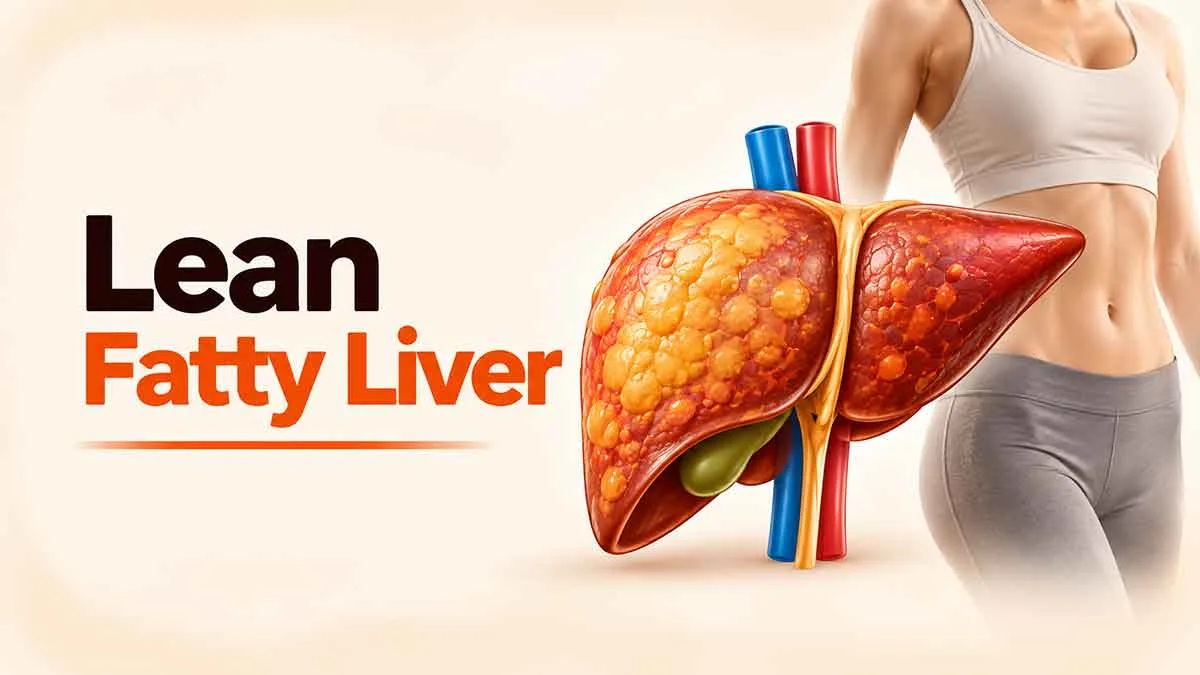
What Lean Fatty Liver May Mean?
A normal weight does not always mean a healthy liver. Lean fatty liver is a condition in which excess fat accumulates in the liver, even when your BMI (Body mass index) remains in the same normal or healthy range. It is formally called lean NAFLD or lean MASLD.
What Does Ayurveda Know About Lean Fatty Liver?
According to Ayurveda, lean fatty liver is a metabolic condition under Yakrit Vikar (liver disorders) and Medoraga (fat metabolism disorders), caused by Agnimandya (weak digestive fire or low metabolism), which prevents proper food breakdown. In the case of indigestion, food turns into sticky toxins (Ama) that settle down in the Yakrut (liver).
Lean fatty liver is a hidden metabolic crisis that shows a complicated cross-vitiation of Pitta and Vata dosha lying behind a slow metabolism (Agnimanda)
Lean fatty liver is also related to doshic imbalance, where Kapha dosha and Rakta dusti (vitiated blood) disrupt normal lipid metabolism by blocking the body's Srotorodha (subtle channels).
Common Patterns And Triggers
Ayurveda says A fatty liver develops in a lean body according to these metabolic factors:
- Manda-Agni (weak digestive fire): A lean body type is generally less likely to store fat, and due to an unstable digestive fire, digestion remains inconsistent, which creates Ama (toxins), and it backs up directly into the liver.
- Pitta Prakopa (Liver inflammation): The liver is highly sensitive to Pitta aggravation in a lean body; without gaining fat, the Agni of the liver remains corrupted. This triggers deep cellular inflammation.
- Srotodusti (Channel blockage): In a condition of metabolic breakdown, the body stores lipids in the liver after losing its ability to use them appropriately. In case of a lean body, microchannels (Medovaha and Raktavaha srotas) turn into bottlenecks.
Ayurvedic Triggers For Lean Fatty Liver:
- Adhyasana and Vishamashana (Irregular eating patterns)
- Vidahi and Abhisyandi foods (spicy, processed, sugary, refined, highly fermented foods)
- Starvation and skipping meals (Vata-Pitta constitutions can overheat the liver and force it to mobilize internal fats abnormally).
- Atichinta (chronic mental fatigue)
- Avyayama (less physical activity)
- Ratri Jagarana (sleeping late at night), it disrupts the liver’s natural detox and rejuvenation window.
Why Can It Happen?
Common factors include:
- Insulin resistance or high blood sugar levels
- High triglycerides or Cholesterol
- Poor diet
- Genetic factors
- Lack of physical activity
- Poor muscle mass
- Overconsumption of Alcohol
- Certain medical or metabolic conditions
Other metabolic conditions include:
- Type-2 diabetes
- High blood pressure
- Dyslipidaemia, etc.
What Can You Do?
If you have lean fatty liver, then the focus should be not only on weight management but also on liver health, improving metabolism, and overall lifestyle.
- Eat a balanced diet
- Maintain healthy body composition
- Exercise regularly
- Prioritise sleep
- Monitor metabolic health
- Avoid excessive alcohol
- Avoid self-prescribing supplements
- Follow an Ayurvedic approach
Patient Success Stories
Ayurvedic Management
Ayurveda focuses on Agni (digestive fire), clearing Ama (toxins), soothing the anxious Meda (fat tissue), and Kapha that accumulate in the liver to address fatty liver. It includes:
- Shodhana (purification): It includes Mridu Virechana, which aims at gentle cleansing or mild laxative therapies under professional guidance.
- Srotas- clearing: It aims to clear obstruction in the tissue channels where fat metabolizes improperly.
- Deepana and Pachana: Using hot, pungent, and bitter herbs (such as ginger, cumin, and Katuki) to stimulate the internal fire (agni) and break down metabolic waste.
Herbs That Can Help Treat Lean Fatty Liver And Balance Doshas:
- Kutki (Picrorhiza kurroa): In Ayurveda, this herb is known as a hepatoprotective herb that has antioxidant qualities that help shield hepatocytes and reduce liver inflammation.
- Kalmegh (Andrographis paniculata): It helps control hepatic inflammation and metabolism. It is known for its bitter properties and stimulates Agni (digestive fire).
- Bhumi-Amla or Bhumyamalaki (Phyllanthus niruri): It has cooling, anti-inflammatory properties and lipid-lowering effects to support liver cell recovery.
- Arogyavradhini Vati: It is traditionally prescribed for metabolic correction and liver disorders, containing purified metals and multiple hepatoprotective herbs.
- Triphala: It supports digestion and reduces Ama (toxins) from the body. It has shown anti-inflammatory and antioxidant properties vital to liver function.
How Is It Assessed?
Generally, Lean fatty liver can be assessed using a mix of physical assessments and blood testing:
- Abdominal ultrasound
- Transient elastography (FibroScan)
- CT scans and MRI
- Liver biopsy
- Blood tests including ALT and ASTs
- Clinical evaluation includes blood sugar, blood pressure, diet, medical history, lipids examination.
How Does Ayurveda Assess It?
According to Ayurveda, this condition is diagnosed using a multi-step Ayurvedic assessment. These assessments include:
- Darshana (Observation), Sparshana (Palpation), and Prashana (Interrogation): In this, the doctor observes the physical marks (dark spots) on the patient's skin, in advanced cases feels the abdomen, and understands the patient's lifestyle, sleep patterns, and appetite, etc., by interrogating them.
- Nadi Pariksha: It helps in understanding the movement of Vatta, Pitta, and Kapha by reading the pulse. This is part of Ashtavidha Pariksha.
- Assessing Agni (digestive fire): Practitioners focus on weak metabolic fire (Agnimandya) and nutritional fluid (Ahara rasa), which results in abnormal fat accumulation.
- Determining Ama (toxins): Slow metabolism creates Ama that can clog the body. By identifying Ama, we can manage it.
- Ashtasthana Pariksha: Ayurvedic doctors examine the abdomen, overall body mass, and skin.
When To Seek Care?
Lean fatty liver can be silent for a long period, so don't wait for symptoms. Consider seeing a healthcare professional if:
- Have been diagnosed with fatty liver on ultrasound or other scan
- Have abnormal blood tests
- Have diabetes, prediabetes, high cholesterol, or high blood pressure
- Have abdominal fat
- Experience persistent fatigue
- Facing discomfort in the upper abdomen
- Have a genetic history
- Have a history of alcohol consumption
Seek Immediate Medical Help In Case Of:
- Fluid buildup creating swelling in legs or abdomen
- Jaundice (yellowing of eyes and skin
- Cognitive changes like brain fog and confusion.
References:
Lean nonalcoholic fatty liver disease and sarcopenia - PMC
Non-alcoholic Fatty Liver Disease in Lean Subjects: Characteristics and Implications - PMC
FAQs
Insulin resistance or high blood sugar levels, high triglycerides or cholesterol, poor diet, genetic factors, lack of physical activity, poor muscle mass, overconsumption of alcohol, and certain medical or metabolic conditions can contribute to fatty liver in lean people.
Highly processed, overly spicy, sugary, refined carbohydrates, highly fermented, deep-fried, and packed foods should be avoided in lean fatty liver. Overconsumption of these can cause metabolic disorders.
Ayurveda aims to improve fat metabolism, reduce inflammation with different methods, and can help manage early stages of NAFLD, but medical monitoring is required for advanced liver disease.
Mild fatty liver can improve within 3-6 months with a healthy lifestyle, regular workouts, and proper Ayurvedic treatment. Severe stages may take longer.
You can eat a balanced diet containing vegetables, whole grains, pulses, legumes, nuts, and seeds along with adequate protein.
Yes, people with normal weight can be at risk of fatty liver.
Find Jiva Ayurveda Clinics for Fatty-liver Treatment Near You
Consult Experienced Ayurveda Doctors for Fatty-liver






Our Happy Patients
-
 Sunita Malik - Knee Pain
 -
 Abhishek Mal - Diabetes
 -
 Vidit Aggarwal - Psoriasis
 -
 Shanti - Sleeping Disorder
 -
 Ranjana - Arthritis
 -
 Jyoti - Migraine
 -
 Renu Lamba - Diabetes
 -
 Kamla Singh - Bulging Disc
 -
 Rajesh Kumar - Psoriasis
 -
 Dhruv Dutta - Diabetes
 -
 Atharva - Respiratory Disease
 -
 Amey - Skin Problem
 -
 Asha - Joint Problem
 -
 Sanjeeta - Joint Pain
 -
 A B Mukherjee - Acidity
 -
 Deepak Sharma - Lower Back Pain
 -
 Vyjayanti - Pcod
 -
 Sunil Singh - Thyroid
 -
 Sarla Gupta - Post Surgery Challenges
 -
 Syed Masood Ahmed - Osteoarthritis & Bp
Diagnostic Marker
Blogs
- Can Ayurveda Cure Fatty Liver Diseases?
- Lifestyle and Diet For Reducing a Fatty Liver
- Fatty Liver की वजह बन रही है आपकी 9-5 की नौकरी? आयुर्वेद से पाएं रामबाण इलाज
- फैटी लिवर बढ़ने से पहले पहचानिए संकेत और करें ये 5 आसान आयुर्वेदिक उपाय
- Maida, processed food और refined oil कैसे लिवर में जहर की तरह काम कर रहे हैं?
- Cold drinks, junk food, और packaged snacks कैसे लिवर में धीरे-धीरे फैट जमा कर रहे हैं?
- Liver में Fat जमा होने के पहले संकेत क्या हैं?
- Fatty Liver Grade 1 — दवा बिना Reverse हो सकता है? आयुर्वेद का जवाब
- Fatty Liver में Ghee खाएँ या नहीं? आयुर्वेद और Modern Science
- USG में Fatty Liver पर LFT Normal — कितनी चिंता करनी चाहिए?
Related Disease
- Ayurvedic Treatment for Gallstones: Symptoms, Causes, Diet & Care
- Ayurvedic Treatment for Jaundice: Symptoms, Causes, Diet & Care
- Ayurvedic Treatment for Liver Cirrhosis: Symptoms, Causes, Diet & Care
- Ayurvedic Treatment for Fatty Liver: Diet, Lifestyle & Liver Health
- Ayurvedic Treatment for hepatomegaly: Symptoms, Causes & Management
- Ayurvedic Treatment for Hepatitis A: Symptoms, Causes & Care Options
- Ayurvedic Treatment for Hepatitis B: Symptoms, Causes & Care Options
Latest Blogs
- Late Dinner Plus Poor Sleep: Why Ayurveda Looks At The Pattern, Not One Habit
- परिवार के साथ बैठकर खाना खाने से Portion और Eating Speed पर क्या फर्क पड़ सकता है?
- कब्ज़ में इंडियन-स्टाइल टॉयलेट बेहतर है? टॉयलेट पोस्चर के बारे में क्या पता है
- दूध, दही और लस्सी से IBS के लक्षण कब बढ़ सकते हैं?
- कभी कब्ज़, कभी दस्त? बार-बार बदलती पेट की आदतों को कैसे समझें
- क्या आयरन, कैल्शियम या कुछ दवाओं से कब्ज़ हो सकती है? डॉक्टर से कब बात करें
- पीरियड्स के दौरान IBS के लक्षण कुछ लोगों में क्यों बढ़ सकते हैं?
- व्रत या उपवास में कब्ज़ बढ़ जाती है? नवरात्रि में किन बातों का ध्यान रखें
- सफ़र में कब्ज़ क्यों हो जाती है? यात्रा से पहले क्या तैयारी करें
- खूब पानी पीने के बाद भी कब्ज़ क्यों बनी रह सकती है?
- बुज़ुर्ग माता-पिता को कब्ज़ रहती है? परिवार किन बातों का ध्यान रखे
- क्या खूनी बवासीर में ऑपरेशन ही एकमात्र विकल्प है? इलाज के विकल्प समझें
- शौच में खून देखकर घबरा गए? जानिए पहले क्या समझें और क्या करें
- रोटी, चावल और दही: कब्ज़ होने पर खाने में क्या बदलाव मदद कर सकते हैं?
- रोज़ बाइक से ऑफिस जाते हैं और बवासीर की सूजन परेशान करती है? जानिए सफ़र का असर
- IBS में दवा से राहत मिलने के बाद भी लक्षण दोबारा क्यों हो सकते हैं?
- IBS में कौन-सा खाना परेशानी बढ़ाता है? फ़ूड डायरी कैसे मदद कर सकती है
- मानसून में पेट की परेशानी बढ़ती लगती है? IBS और मौसम के संबंध को समझें
- बवासीर में सिट्ज़ बाथ कैसे करें? फायदे, सावधानियाँ और कब बचें
- बवासीर के मस्से बाहर निकलते हैं? ग्रेड 1 से 4 का मतलब समझें
Ayurvedic Doctor In Top Cities
- Ayurvedic Doctors in Bangalore
- Ayurvedic Doctors in Pune
- Ayurvedic Doctors in Delhi
- Ayurvedic Doctors in Hyderabad
- Ayurvedic Doctors in Indore
- Ayurvedic Doctors in Mumbai
- Ayurvedic Doctors in Lucknow
- Ayurvedic Doctors in Kolkata
- Ayurvedic Doctors in Patna
- Ayurvedic Doctors in Vadodara
- Ayurvedic Doctors in Ahmedabad
- Ayurvedic Doctors in Chandigarh
- Ayurvedic Doctors in Gurugaon
- Ayurvedic Doctors in Jaipur
- Ayurvedic Doctors in Kanpur
- Ayurvedic Doctors in Noida
- Ayurvedic Doctors in Ranchi
- Ayurvedic Doctors in Bhopal
- Ayurvedic Doctors in Ludhiana
- Ayurvedic Doctors in Dehradun