
Successful Treatments
Clinics
Doctors
Gout Attack: What to Do and When to Get Help
 Published on 25 Sep, 2026
 Updated on 05 Oct, 2026

Explore Symptoms and Acute Attacks
- Home / Diseases & Ayurveda / Joint & Muscle Pain / Ayurvedic treatment for Gout / Symptoms of Ulcerative Colitis: Signs & Ayurvedic View / Gout Attack: What to Do and When to Get Help
Check Whether This Is A First Attack
Before reaching for leftover medications from the cabinet or applying ice packs, take a brief moment to evaluate your medical history. If you have never been officially diagnosed with gout by a medical professional, and this is the very first time you are experiencing a sudden, red, hot, and intensely swollen joint, do not attempt to treat it yourself at home. You must see a doctor immediately.
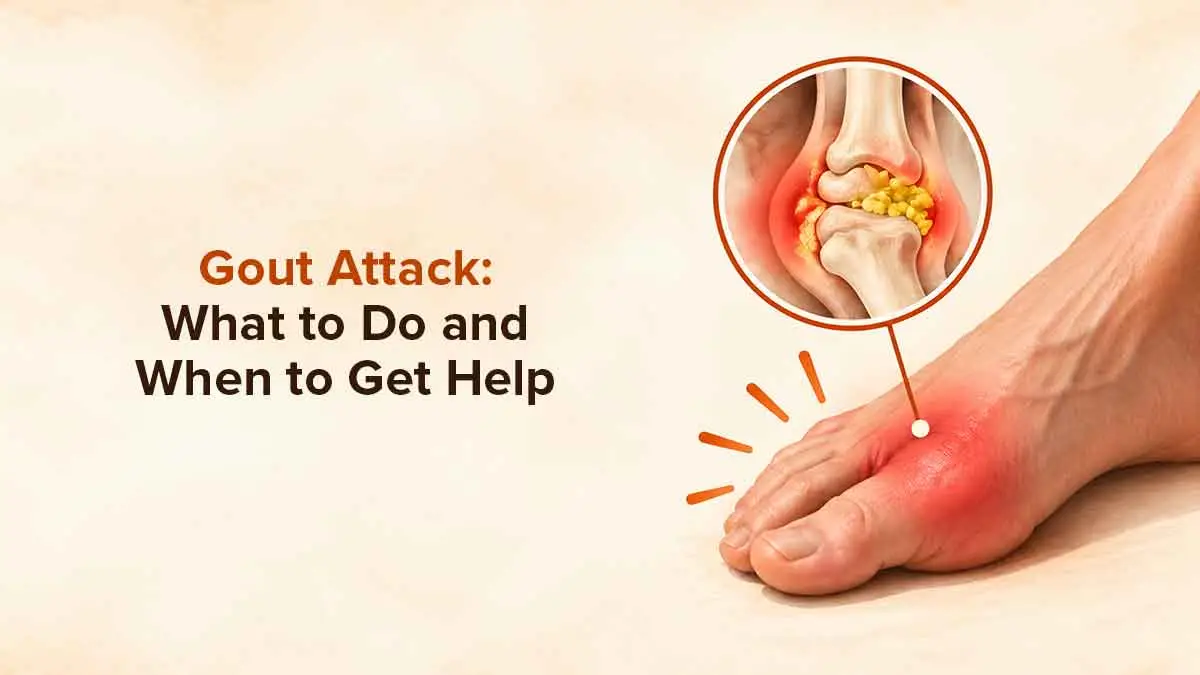
A first-time severe joint flare can easily mimic septic arthritis, a highly dangerous, rapidly progressing bacterial infection inside the joint capsule that can destroy bone and cartilage if not treated quickly with antibiotics. However, if you are a known gout patient with a pre-established diagnosis, and it feels identical to your familiar flares, you can immediately initiate your standard acute care action plan.
Rest And Protect The Joint
During an active gout flare, the affected joint capsule is packed with microscopic, needle-like uric acid crystals. Every time you move, bend, or put weight on that joint, those sharp crystals physically grind against your inflamed tissues, causing excruciating pain and prolonging your immune system’s inflammatory response. Immediate and absolute rest is mandatory to keep the joint fully immobilized, and elevate it above the level of your heart as much as possible, using pillows or cushions, to help the localised swelling drain naturally. Because a gout-afflicted joint is incredibly hypersensitive, even the weight of a standard bedsheet can be unbearable; construct a makeshift “tent” or use a bed cradle or place a sturdy cardboard box over your foot while you sleep to protect the joint from any accidental physical contact.
Cold Comfort Measures
Applying targeted cold therapy is one of the most effective, non - pharmacological ways to numb the intense pain signals and slow down the raging local inflammation. Cold temperatures help constrict local blood vessels, reducing the massive rush of white blood cells and inflammatory chemicals into the joint space.
Wrap an ice pack or a bag of frozen peas, or a gel pack in a thin, dry towel; never apply ice directly to your bare skin, as the intense cold can quickly cause frostbite and damage the skin. Gently rest the wrapped ice pack against the injured joint for 15 to 20 minutes at a time. Remove it and allow the skin to return to normal temperature before reapplying. You can repeat this icing process several times throughout the day for temporary relief.
Hydration Without Forcing Excess Fluid
Water is your body’s primary biological vehicle for flushing out excess uric acid. As soon as you feel the familiar, dull twinge of an impending attack, consciously increase your water intake. Adequate hydration dilutes the concentration of uric acid circulating in your bloodstream and actively stimulates your kidneys to excrete the chemical through your urine. Aim to drink steadily throughout the day, targeting around 8 to 12 tall glasses of water, depending on your body size and the ambient climate. However, hydrate intelligently; there is no need to aggressively force massive, uncomfortable volumes of fluid in panic, which can lead to an unsafe condition called water intoxication. Stick to plain water, herbal teas, or water with a squeeze of lemon and strictly avoid sugary fruit juices or caffeinated energy drinks.
Use Prescribed Flare Medicine As Directed
Time is your absolute biggest enemy during a gout attack. The faster you intervene with potent anti - inflammatory medications, the shorter and less severe the flare is likely to be. If your doctor has previously provided you with a pill-in-the-pocket rescue plan, execute it immediately at the first sign of a twinge.
This plan usually involves high-dose nonsteroidal anti-inflammatory drugs (NSAIDs like Indomethacin or Naproxen), oral corticosteroids (like Prednisone), or Colchicine is exceptionally effective at stopping the immune response, but it must be taken within the first 12 to 24 hours of the attack to work properly. Never mix these potent prescription medications unless specifically instructed by your physician, and always take them exactly as prescribed. While standard over-the-counter ibuprofen might take the edge off a mild ache, it is rarely strong enough to halt a full-blown gout flare on its own.
Foods And Alcohol During A Flare
What you consume during an active attack can either help extinguish the systemic fire or pour gasoline directly onto it.
Immediately halt all alcohol consumption. You must maintain a strict zero-tolerance policy for beer and hard liquor during a flare, as alcohol directly impairs your kidneys' ability to filter and excrete uric acid.
Focus on complex carbohydrates and fresh vegetables, and low-fat dairy. Fruits, particularly tart cherries or unsweetened tart cherry juice, contain natural antioxidant compounds that have been shown to help lower inflammation and subtly support uric acid excretion. Keep your meals very light and easy to digest while your body battles the flare.
What Not To Do
Knowing what to avoid is just as crucial as knowing what to do. First, never apply a heating pad; use a hot compress or submerge the joint in a hot bath during an acute flare. Heat actively dilates blood vessels, driving more blood, warmth, and inflammatory cells into the joint, which will dramatically worsen your throbbing pain. Second, never massage vigorously, rub, or attempt to “pop” or stretch a gouty joint. Physical manipulation will only drive the sharp uric acid crystals deeper into your delicate cartilage and soft tissues. Finally, if you are not already taking a daily urate-lowering medication ( such as allopurinol), do not start taking one in the middle of a flare; sudden shifts in blood uric acid can prolong the attack. Conversely, if you are already on a daily preventive pill, do not stop taking it during a flare unless instructed by your doctor.
When Fever Or Severe Symptoms Need Urgent Care
While standard gout pain is famously agonizing, certain overlapping symptoms indicate a severe medical emergency rather than a routine flare. You must seek urgent medical care or go to the emergency room if your severe medical emergency rather than a routine flare. You must seek urgent medical care or go to the emergency room if your severe joint pain is accompanied by a high fever ( above 100.4 F or 38 C) or severe chills or uncontrollable shivering.
Watch closely for red streaks spreading up your leg or arm from the affected joint, or if the skin over the joint becomes dangerously hot, breaks open, or begins draining pus. These are classic red flags for septic arthritis or aggressive, rapidly spreading bacterial infections that can quickly become life-threatening or cause permanent limb damage. If you feel physically ill, nauseous, dizzy, or if the severe pain is spreading rapidly to multiple new joints at once, bypass your normal clinic and seek immediate emergency care.
Plan Follow-Up After The Flare
Surviving the acute attack is only half the battle. Once the intense pain, severe redness, and swelling have completely subsided, which usually takes anywhere from a few days to two weeks, it is time to address the underlying root cause.
A gout flare is a loud, painful alarm bell from your body signaling that your baseline uric acid levels are dangerously uncontrolled. Do not ignore the condition just because the pain has temporarily vanished; the crystals are still in your joints, waiting to strike again. Schedule a prompt follow-up appointment with your primary care physician or a rheumatologist. You will need follow-up blood work to check your current uric acid levels and to have a serious, forward-looking discussion about starting or adjusting daily urate - lowering discussion about starting or adjusting daily urate - lowering thrapies to ensure you never have to endure another painful attack.
References
Consult Experienced Ayurveda Doctors for gout









Our Happy Patients
-
 Sunita Malik - Knee Pain
 -
 Abhishek Mal - Diabetes
 -
 Vidit Aggarwal - Psoriasis
 -
 Shanti - Sleeping Disorder
 -
 Ranjana - Arthritis
 -
 Jyoti - Migraine
 -
 Renu Lamba - Diabetes
 -
 Kamla Singh - Bulging Disc
 -
 Rajesh Kumar - Psoriasis
 -
 Dhruv Dutta - Diabetes
 -
 Atharva - Respiratory Disease
 -
 Amey - Skin Problem
 -
 Asha - Joint Problem
 -
 Sanjeeta - Joint Pain
 -
 A B Mukherjee - Acidity
 -
 Deepak Sharma - Lower Back Pain
 -
 Vyjayanti - Pcod
 -
 Sunil Singh - Thyroid
 -
 Sarla Gupta - Post Surgery Challenges
 -
 Syed Masood Ahmed - Osteoarthritis & Bp
Diagnostic Marker
Blogs
- What is Gout? Causes and home treatment
- Are you suffering from Gout pain? Try these 5 natural home remedies
- List Of Foods To Avoid With Gout & Why
- Ayurvedic Approach to Gout Home Remedies in India
- सर्दियों में यूरिक एसिड और गाउट क्यों बढ़ते हैं? आयुर्वेद से जानिए दर्द से राहत का प्राकृतिक तरीका
- गाउट में बार-बार दवाइयाँ लेने से किडनी पर क्या असर होता है? और आयुर्वेद कैसे राहत देता है
- Gout के मरीज़ को किन चीजों से तुरंत सावधान हो जाना चाहिए?
- Uric Acid Test Normal आया पर Joint Pain बना हुआ है — Pseudo-Gout हो सकता है
- Gout Attack बार-बार क्यों लौटता है जबकि दवा चालू है? असली Trigger समझिए
- क्या सिर्फ खान-पान से uric acid control हो सकता है? पूरा सच जानिए
Home Remedies
Related Disease
- Ayurvedic Treatment for Ankylosing Spondylitis
- Ayurvedic Treatment For Cervical Spondylosis
- Ayurvedic Treatment For Arthritis
- Ayurvedic Treatment for Osteoarthritis
- Ayurvedic treatment for Gout
- Ayurvedic Treatment for Sciatica
- Ayurvedic Treatment for Rheumatoid Arthritis
- Ayurvedic Treatment for Frozen Shoulder
- Ayurvedic Treatment for Deep Vein Thrombosis (DVT)
- Ayurvedic Treatment for Achilles Tendon Disorders
- Ayurvedic Treatment for Rickets
- Ayurvedic Treatment for Ganglion Cyst
- Ayurvedic Treatment for Osteoporosis
- Get Ayurvedic Treatment for AVN Avascular Necrosis
- Get Ayurvedic Treatment For Osteomyelitis
- Cerebral Palsy Treatment in Ayurveda
Latest Blogs
- बच्चों में weekend sleep timing बदलना Monday mood को कैसे प्रभावित कर सकता है
- Is Fasted Intense Exercise a Good Idea for Every Woman
- Health Tracking Every Hour: Helpful Awareness Or Another Source Of Stress?
- फोन देखते हुए चलना सिर्फ accident risk नहीं—posture और breathing पर क्या असर पड़ता है
- Bloating Before a Period: Why Lifestyle Can Change How It Feels
- बहुत जल्दी खाना खाने से पेट भरने का signal देर से क्यों मिलता है
- ‘No Added Sugar’ Doesn’t Automatically Mean Low Sugar—Here’s Why
- Online meetings के बीच zero movement दिन के अंत में stiffness क्यों बढ़ाता है?
- Screen brightness और late-night work sleep readiness को कैसे बदलते हैं
- Warm Vs Cold Foods: How To Discuss The Ayurvedic Idea Without Turning It Into A Myth
- Noise-cancelling headphones घंटों पहनना mental fatigue को कम करता है या बढ़ा सकता है?
- Sugar-Free Biscuits: Better Choice Or A Health Halo?
- Why a Long Afternoon Nap Can Make Bedtime Surprisingly Difficult
- Scrolling While Eating: The Habit That Makes Meals Harder to Remember
- The Forward-Head Posture You Don’t Notice Until Evening
- Are Seed Mixes Useful—Or Just Easy To Overeat?
- Laptop on the Sofa: Why Neck and Hip Stiffness Show Up Later
- Why Your Eyes Feel Tired Even When Screen Brightness Seems Fine
- Is A Standing Desk A Complete Fix For Too Much Sitting?
- Why a Damp Bathroom Can Affect More Than Just the Walls
Ayurvedic Doctor In Top Cities
- Ayurvedic Doctors in Bangalore
- Ayurvedic Doctors in Pune
- Ayurvedic Doctors in Delhi
- Ayurvedic Doctors in Hyderabad
- Ayurvedic Doctors in Indore
- Ayurvedic Doctors in Mumbai
- Ayurvedic Doctors in Lucknow
- Ayurvedic Doctors in Kolkata
- Ayurvedic Doctors in Patna
- Ayurvedic Doctors in Vadodara
- Ayurvedic Doctors in Ahmedabad
- Ayurvedic Doctors in Chandigarh
- Ayurvedic Doctors in Gurugaon
- Ayurvedic Doctors in Jaipur
- Ayurvedic Doctors in Kanpur
- Ayurvedic Doctors in Noida
- Ayurvedic Doctors in Ranchi
- Ayurvedic Doctors in Bhopal
- Ayurvedic Doctors in Ludhiana
- Ayurvedic Doctors in Dehradun