
Successful Treatments
Clinics
Doctors
Gout in the Big Toe: Signs and Look-Alikes
 Published on 25 Sep, 2026
 Updated on 06 Oct, 2026

Explore Symptoms and Acute Attacks
- Home / Diseases & Ayurveda / Joint & Muscle Pain / Ayurvedic treatment for Gout / Symptoms of Ulcerative Colitis: Signs & Ayurvedic View / Gout in the Big Toe: Signs and Look-Alikes
Why Gout Often Affects The Big Toe
The big toe’s vulnerability comes down to a perfect storm of basic anatomy, physics, and body temperature. Uric acid is highly sensitive to temperature. Uric acid is highly sensitive to temperature; it remains dissolved in warm blood but rapidly crystallizes when it gets cold. The joint at the base of the big toe, the metatarsophalangeal (MTP) joint, is the furthest major joint from your heart, meaning it receives less blood flow and operates at a naturally lower temperature than the rest of your core body.
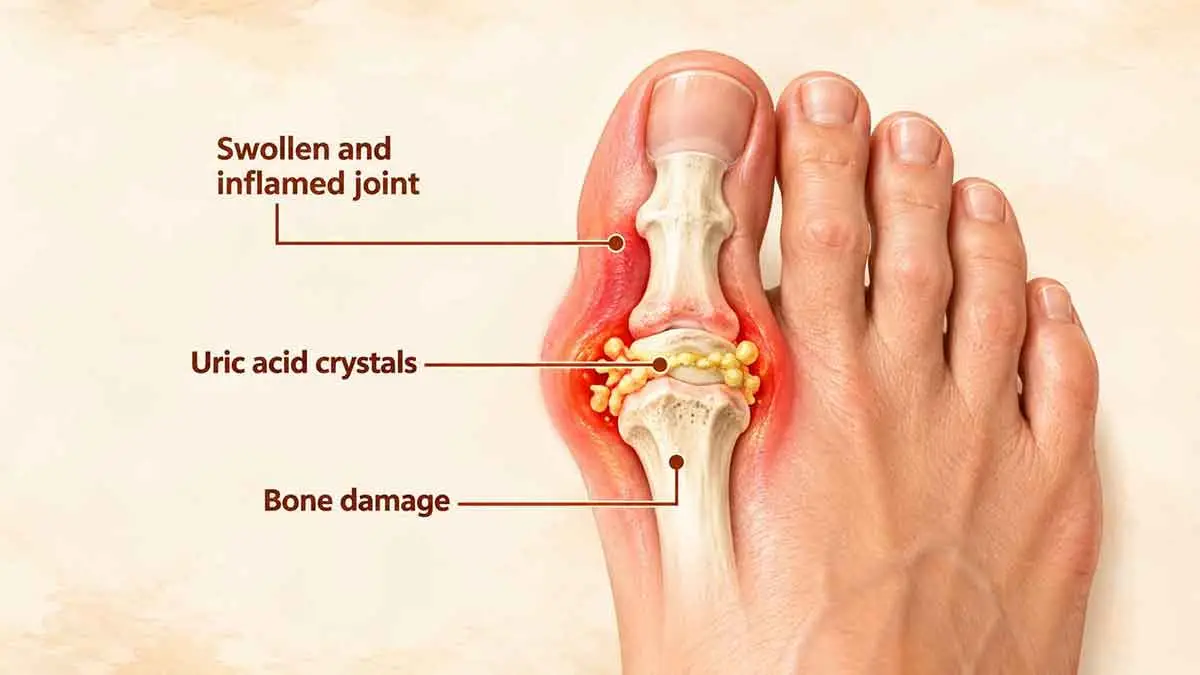
Additionally, this tiny joint bears enormous physical stress. Every single time you take a step, leap, or walk up a flight of stairs, the MTP joint supports a massive percentage of your entire body weight. This constant daily micro - trauma and mechanical wear and tear create a microscopically roughened environment within the joint. This provides the perfect textured surface for cold uric acid crystals to easily snag, settle, and rapidly accumulate over time.
Typical Signs Of Podagra
A podagra attack is rarely subtle. It famously strikes without warning, frequently waking the patient from a deep sleep in the middle of the night. The affected big toe joint will appear dramatically swollen, completely losing its normal bony contours. The skin stretched over the joint becomes taut, intensely shiny, and takes on a deeply red or purplish hue, often resembling a severely scalded tomato.
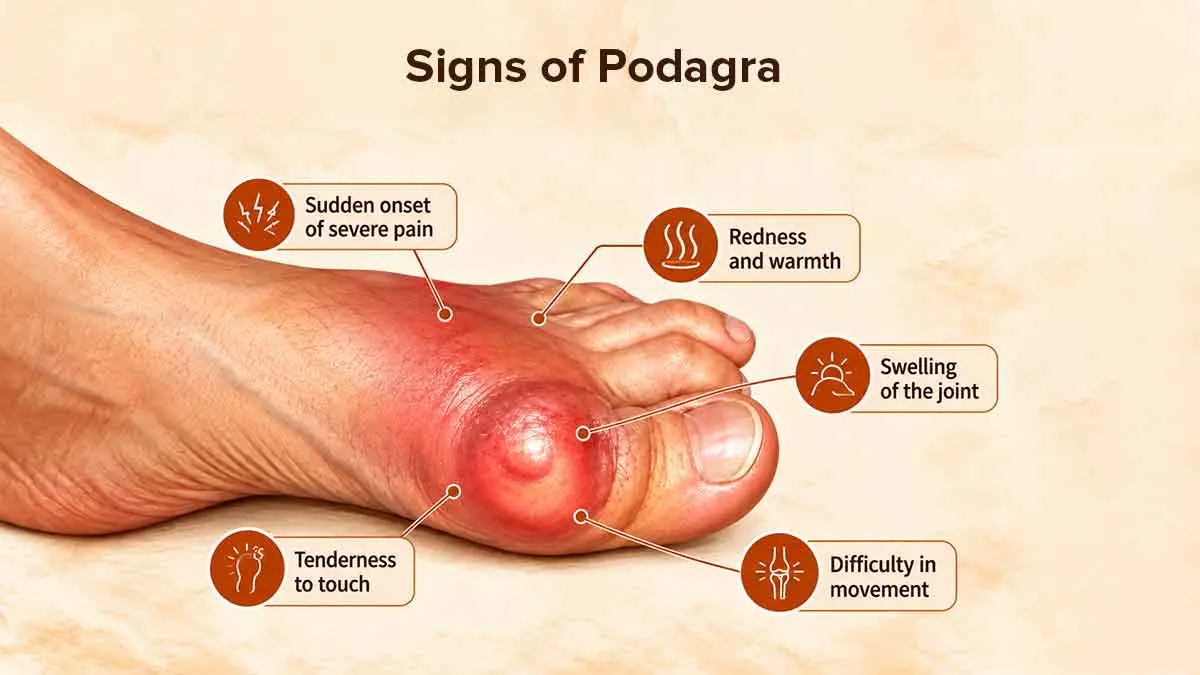
The joint will radiate noticeable heat that you can feel simply by hovering your hand over the skin. The most defining characteristic, however, is the agonizing hyper-sensitivity. The pain is so severe that wearing a sock, putting on a shoe, or even allowing the weight of a light cotton bedsheet to rest on the toe feels physically impossible and entirely unbearable.
Gout Versus Bunion Or Injury
Because the big toe is prone to various issues, it is crucial to differentiate gout from mechanical problems. A bunion is a structural bone deformity that forces the big toe to angle inward, creating a hard bony bump at the base. While bunions can become inflamed and painful, they develop very slowly over years and years. Gout, in stark contrast, explodes overnight in a previously normal-looking toe.
Similarly, physical injuries like a stubbed toe or a turf toe sprain, or a micro-fracture will also cause severe pain and swelling. However, a physical injury is always immediately preceded by a specific, memorable traumatic event. If you want to be feeling perfectly fine, you did not kick any furniture in the dark and woke up in agonizing pain, gout is the far more likely culprit.
Gout Versus Skin Or Joint Infection
The most dangerous look-alikes to podagra are severe bacterial infections, specifically cellulitis ( a deep skin infection ) or septic arthritis ( an infection inside the joint capsule itself). To the naked eye, an infected toe and a gouty toe look nearly identical; both are swollen, red, hot, and fiercely painful.
However, there are vital differences. Infections often feature a visible entry wound, such as a severe cut, a puncture, or a severe ingrown toenail. Furthermore, infections frequently trigger systemic illness; a red, painful toe is accompanied by a high fever, severe chills, or red streaks traveling up your foot and ankle. This is a massive red flag. If you are ever unsure whether you have gout or an infection, treat it as a medical emergency, as joint infections can cause permanent bone damage within days if left untreated.
How It Is Diagnosed
While a doctor can often suspect podagra just by looking at your painfully glowing toe, a definitive diagnosis requires medical confirmation. The absolute gold standard for diagnosing big toe gout is joint aspiration. A doctor will use a tiny needle to draw a drop of fluid directly from the swollen MTP joint and examine it under a polarized light microscope to physically identify the needle-shaped uric acid crystals.
X-rays are frequently taken during a first attack, not to see the gout itself, but to decisively rule out hairline fractures or severe bunions. Additionally, modern musculoskeletal ultrasounds are increasingly used to detect the "double contour sign," a visible, frosty coating of uric acid crystals clinging to the cartilage of the big toe joint.
Attack Treatment Overview
Treating podagra is all about localized damage control. The immediate priority is resting the foot entirely; walking on the inflamed toe will actively grind the uric acid crystals into your delicate cartilage, prolonging the severe flare. Keep the foot elevated to drain swelling, and apply ice packs wrapped in towels to numb the pain (never use heat on an active gout flare).
Medically, your doctor will likely prescribe aggressive, fast-acting anti-inflammatory medications. High-dose NSAIDs, oral corticosteroids, or Colchicine are the frontline defenses. If the pain is utterly unmanageable and oral medications are not working quickly enough, a physician can perform a targeted corticosteroid injection directly into the big toe joint, which often provides profound, rapid relief within just a few hours.
Footwear And Joint Protection
During an active podagra flare, conventional closed-toe shoes are impossible to wear. Opt for open-toed sandals with adjustable straps that can accommodate massive swelling without touching the skin. Once the flare subsides, long-term footwear choices become a critical part of joint protection. Shoes with a wide, deep toe box are essential to prevent squeezing the MTP joint and causing physical micro-trauma. Rigid, stiff-soled shoes or custom orthotic inserts with a ‘rocker bottom’are highly recommended for chronic sufferers; these designs physically prevent the big toe from bending excessively when you push off to walk. This reduces mechanical stress on the joint and minimizes the physical irritation that can trigger future crystal deposits.
How Future Attacks Are Prevented
Surviving a big toe gout flare is relief, but it is not a cure. The crystals will remain hidden in the joints waiting for the next trigger. Preventing future attacks requires lowering your overall systemic uric acid levels so the crystals physically dissolve away. This is primarily achieved through daily urate-lowering medications like allopurinol, which must be taken consistently for life. Combining these medications with targeted lifestyle changes such as significantly reducing alcohol intake, staying highly hydrated to flush out the kidneys, and avoiding high -purine foods like red meat and shellfish ensures your blood uric acid remains consistently low below the safe threshold of 6.0 mg/dL, permanently protecting your big toes from future fiery attacks.
References
Gout Symptoms, Causes, & Risk Factors | NIAMS
Pain in your big toe - gout - Bradford District Care NHS Foundation Trust
Consult Experienced Ayurveda Doctors for gout





















Our Happy Patients
-
 Sunita Malik - Knee Pain
 -
 Abhishek Mal - Diabetes
 -
 Vidit Aggarwal - Psoriasis
 -
 Shanti - Sleeping Disorder
 -
 Ranjana - Arthritis
 -
 Jyoti - Migraine
 -
 Renu Lamba - Diabetes
 -
 Kamla Singh - Bulging Disc
 -
 Rajesh Kumar - Psoriasis
 -
 Dhruv Dutta - Diabetes
 -
 Atharva - Respiratory Disease
 -
 Amey - Skin Problem
 -
 Asha - Joint Problem
 -
 Sanjeeta - Joint Pain
 -
 A B Mukherjee - Acidity
 -
 Deepak Sharma - Lower Back Pain
 -
 Vyjayanti - Pcod
 -
 Sunil Singh - Thyroid
 -
 Sarla Gupta - Post Surgery Challenges
 -
 Syed Masood Ahmed - Osteoarthritis & Bp
Diagnostic Marker
Blogs
- What is Gout? Causes and home treatment
- Are you suffering from Gout pain? Try these 5 natural home remedies
- List Of Foods To Avoid With Gout & Why
- Ayurvedic Approach to Gout Home Remedies in India
- सर्दियों में यूरिक एसिड और गाउट क्यों बढ़ते हैं? आयुर्वेद से जानिए दर्द से राहत का प्राकृतिक तरीका
- गाउट में बार-बार दवाइयाँ लेने से किडनी पर क्या असर होता है? और आयुर्वेद कैसे राहत देता है
- Gout के मरीज़ को किन चीजों से तुरंत सावधान हो जाना चाहिए?
- Uric Acid Test Normal आया पर Joint Pain बना हुआ है — Pseudo-Gout हो सकता है
- Gout Attack बार-बार क्यों लौटता है जबकि दवा चालू है? असली Trigger समझिए
- क्या सिर्फ खान-पान से uric acid control हो सकता है? पूरा सच जानिए
Home Remedies
Related Disease
- Ayurvedic Treatment for Ankylosing Spondylitis
- Ayurvedic Treatment For Cervical Spondylosis
- Ayurvedic Treatment For Arthritis
- Ayurvedic Treatment for Osteoarthritis
- Ayurvedic treatment for Gout
- Ayurvedic Treatment for Sciatica
- Ayurvedic Treatment for Rheumatoid Arthritis
- Ayurvedic Treatment for Frozen Shoulder
- Ayurvedic Treatment for Deep Vein Thrombosis (DVT)
- Ayurvedic Treatment for Achilles Tendon Disorders
- Ayurvedic Treatment for Rickets
- Ayurvedic Treatment for Ganglion Cyst
- Ayurvedic Treatment for Osteoporosis
- Get Ayurvedic Treatment for AVN Avascular Necrosis
- Get Ayurvedic Treatment For Osteomyelitis
- Cerebral Palsy Treatment in Ayurveda
Latest Blogs
- बच्चों में weekend sleep timing बदलना Monday mood को कैसे प्रभावित कर सकता है
- Is Fasted Intense Exercise a Good Idea for Every Woman
- Health Tracking Every Hour: Helpful Awareness Or Another Source Of Stress?
- फोन देखते हुए चलना सिर्फ accident risk नहीं—posture और breathing पर क्या असर पड़ता है
- Bloating Before a Period: Why Lifestyle Can Change How It Feels
- बहुत जल्दी खाना खाने से पेट भरने का signal देर से क्यों मिलता है
- ‘No Added Sugar’ Doesn’t Automatically Mean Low Sugar—Here’s Why
- Online meetings के बीच zero movement दिन के अंत में stiffness क्यों बढ़ाता है?
- Screen brightness और late-night work sleep readiness को कैसे बदलते हैं
- Warm Vs Cold Foods: How To Discuss The Ayurvedic Idea Without Turning It Into A Myth
- Noise-cancelling headphones घंटों पहनना mental fatigue को कम करता है या बढ़ा सकता है?
- Sugar-Free Biscuits: Better Choice Or A Health Halo?
- Why a Long Afternoon Nap Can Make Bedtime Surprisingly Difficult
- Scrolling While Eating: The Habit That Makes Meals Harder to Remember
- The Forward-Head Posture You Don’t Notice Until Evening
- Are Seed Mixes Useful—Or Just Easy To Overeat?
- Laptop on the Sofa: Why Neck and Hip Stiffness Show Up Later
- Why Your Eyes Feel Tired Even When Screen Brightness Seems Fine
- Is A Standing Desk A Complete Fix For Too Much Sitting?
- Why a Damp Bathroom Can Affect More Than Just the Walls
Ayurvedic Doctor In Top Cities
- Ayurvedic Doctors in Bangalore
- Ayurvedic Doctors in Pune
- Ayurvedic Doctors in Delhi
- Ayurvedic Doctors in Hyderabad
- Ayurvedic Doctors in Indore
- Ayurvedic Doctors in Mumbai
- Ayurvedic Doctors in Lucknow
- Ayurvedic Doctors in Kolkata
- Ayurvedic Doctors in Patna
- Ayurvedic Doctors in Vadodara
- Ayurvedic Doctors in Ahmedabad
- Ayurvedic Doctors in Chandigarh
- Ayurvedic Doctors in Gurugaon
- Ayurvedic Doctors in Jaipur
- Ayurvedic Doctors in Kanpur
- Ayurvedic Doctors in Noida
- Ayurvedic Doctors in Ranchi
- Ayurvedic Doctors in Bhopal
- Ayurvedic Doctors in Ludhiana
- Ayurvedic Doctors in Dehradun