
Successful Treatments
Clinics
Doctors
Arthritis Mobility and Stiffness: Morning, Rest and Walking Problems
 Published on 12 Sep, 2026
 Updated on 09 Oct, 2026

Explore Mobility & Stiffness
- Home / Diseases & Ayurveda / Joint & Muscle Pain / Ayurvedic Treatment For Arthritis / Arthritis Mobility and Stiffness: Morning, Rest and Walking Problems
You expect to feel fresh after waking up in the morning, but your body feels completely stiff. It happens when you have arthritis, and waking up in the morning can feel like a difficult chore. Your joints feel completely stiff, your legs lose their mobility, and you find it hard to go to the bathroom. Daily activities become very difficult for you to do because of the stiffness and pain in the joints. This guide talks about why your body locks up after taking rest, what your specific type of stiffness is trying to tell you, and how you can safely get your movement back.
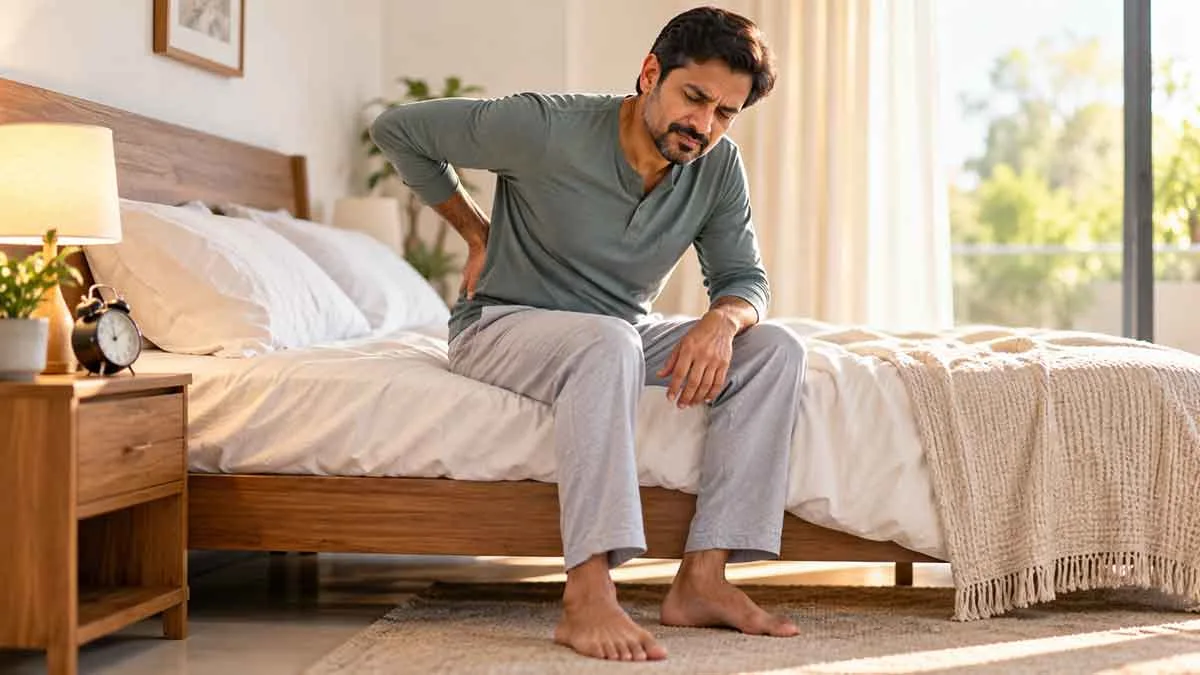
Morning Vs Post-Rest Stiffness
There are two main times when your joints can completely get stiff: first in the morning and second right after you rest for a while.
| Features | Morning Stiffness | Post-Rest Stiffness |
| When does it happen? | It happens when you wake up and try to move after sleeping all night. | It happens during the day when you sit in one still position for a short amount of time. |
| How does it feel | It feels like a deep, heavy pain in the whole body. Your glutes feel completely stuffed and glued. | It feels like sudden and sharp pain. The joint feels stuck and needs a physical push to start moving again. |
| Why does it happen? | When you sleep, your body temperature naturally drops. This causes the natural lubricating fluid inside your joint to become thick and sluggish, making it hard for the joint to glide smoothly. | When the cushion inside your joints gets damaged or rough, and you stop moving, these rough, dry surfaces physically stick and lock together. |
| How long does it last? | It takes a long time to get back to normal. You might struggle with deep stiffness for half an hour or even over an hour before your joints finally loosen up. | It goes away very quickly. Usually, it only takes a minute or two of wiggling around for the joints to loosen up. |
| Ayurvedic View | Your digestion slows down at night. This creates Ama in the body that settles down into your joints overnight and physically blocks the joint challnes/ | This is caused by vata energy, which represents extreme dryness. The movement you stop moving; this dry energy instantly makes the joint tight and brittle. |
Check out our Understanding Joint Morning Stiffness page for more.
What Duration And Pattern May Suggest?
When you wake, note down the time and for how long your joints feel stiff in the morning. And note when you change your position after sitting still or remaining in the same position.
The Wear & Tear Pattern: If your stiffness goes away in some time, then you are likely to deal with osteoarthritis. In Ayurveda, it is called sandhigata vata. In this, the joint gets dry because of aggravated Vata dosha (governs air and movement in the body), and it needs only a few minutes of movement to pump the natural movement back in,
The Inflammatory Pattern: If you are awake for more than some hours and your joints are still completely still and frozen, swollen, and painfully hot, this is an internal immune imbalance called rheumatoid arthritis. In Ayurveda, it is called Aamvata, caused by the accumulation of sticky toxic waste, Aam, in the joint space. This sticky waste is very thick and deeply rooted in the tissues, so simple movement cannot clear it quickly.
Check out our Understanding the difference between Osteoarthritis & Rheumatoid Arthritis page for more.
Walking & Range-Of-Motion Limitations
When your joints are stiff, the way you walk can completely change without you even realizing it. Because it hurts to fully bend or straighten your knee, hip, or ankle, your body naturally tries to protect the joint by limping, taking very short steps, or leaning to only one side. This reduced range of motion is harmful. When you stop bending a joint fully, the muscles around it quickly shrink and get weak. In Ayurveda, restricting your movement allows dry vata energy to build up even more, locking the joint into that slightly bent, frozen position permanently.
Check out our Walking With Arthritis page for more.

How To Maintain Safe Movement?
When it hurts to move, your first instinct is to stop moving completely. But if you rest all day, then it will make your joints stiffer. To break this stiffness cycle, you must keep the joints moving safely and without aggressively grinding the bones.
- Gentle Movement: Moving your joints gently acts like a natural pump. It pushes fresh blood and oxygen into the cartilage so that your joints can bend smoothly without grinding.
- Safe Stretching: Do not force yourself to do heavy exercise, as it will only pressurize your joints more. Instead, do mild stretching and focus on small joint rotations without holding any weight. Slowly circle your ankles, gently swing your legs back and forth, and open and close your hands.
- Build Natural Strength: Ayurveda uses certain natural herbs such as ashwagandha, turmeric, guggulu, etc to build natural strength from inside. When your muscles have strength, they can support weak joints without any need to rely on strong chemicals.
- Taking Short Movement Breaks: Try avoiding sitting in one position for long; give your body a break. Go for a walk or change your sitting posture every 30 minutes, so that the joints don't get dry and stiff.
- Moving Without Pain: Never push your joints until they hurt. Only do stretching, exercises, or any movement when you feel that they are fine and can bear gentle movement.
Assistive Support And Fall Prevention
When your joints feel stiff and painful, it becomes very easy to lose balance and fall. Protecting yourself from an unexpected fall is important to keep your joint safe from further damage.
- Wearing safe shoes: Throw away old, loose slippers or shoes with very slippery bottoms. Always wear flat, supportive shoes with a strong grip to keep your feet firmly planted on the floor,
- Using a walking stick: Using a simple cane or walking stick is very good for keeping balance while walking or for support. It instantly takes a large amount of your body weight off your weak knees and hips, making walking much easier and less painful.
- Clearing your home: Make sure the walking path at your home is completely clear, and your furniture is placed correctly so that you don't get hit by it accidentally. Remove small, loose floor rugs that you could easily trip over, and always turn on the light when walking at night or in the dark.

- Adding bathroom support: Install simple, strong grab bars next to your toilet and inside your washroom. This gives your hands nice support to pull your body weight up without relying only on your weak legs.
- Feeling Stable ( The Ayurvedic View): In Ayurveda, feeling unstable, clumsy, or shaky is a clear sign of Vata energy. Walking slowly, staying on flat ground, and using a physical support like a cane helps your body feel safe and grounded. This physical stability naturally calms the nervous, airy Vata energy in the body.
Red Flags To Watch Out For
While morning and post-rest stiffness are normal signs of arthritis, if you have the following signs also, then you should stop treating them at home:
- If your joints hurt and you also get a fever and feel very sick.
- If you stand up, try to move, and your joints feel completely knocked.
- If you have visible swelling, numbness, redness, or tingling in your joints.
- If the morning stiffness does not go away even after some time.
- If you find it difficult to do your daily activities.
- If you have constant pain for days.
You should not ignore these symptoms and get medical treatment urgently.
The Morning-Stiffness Guide
Waking up with frozen, painful joints can easily ruin your day before it even begins. To help you break free from this daily struggle, our complete morning stiffness guide focuses on safe, natural ways to get your body moving again without forcing or grinding the joints. Rather than just giving you a list of harsh exercises, the guide explains how ot gently transition out of sleep. It covers how to properly use Ayurvedic techniques to fight the morning stiffness. By focussing on warming up the body and cleaning out heavy nighttime waste, this guide will help you step out of bed feeling light and comfortable for the day.
Refernces
Efficacy & safety evaluation of Ayurvedic treatment (Ashwagandha powder & Sidh Makardhwaj) in rheumatoid arthritis patients: a pilot prospective study - PMC The Impact of Chronic Pain, Stiffness and Difficulties in Performing Daily Activities on the Quality of Life of Older Patients with Knee Osteoarthritis - PMC
FAQs
When you sleep, your body cools down, and your natural joint fluids thicken. In Ayurveda, your digestion also slows at night, which causes heavy body waste (Ama) to settle into your resting joints and physically glue them shut.
If you have basic wear-and-tear arthritis, your stiffness should clear up in 15 to 30 minutes. If your joints stay completely frozen for over an hour, it usually points to an active immune issue like Rheumatoid Arthritis.
Resting all day actually makes arthritis worse. Gentle movement acts like a natural pump, pushing fresh, slippery fluid back into the dry joint. You just have to make sure you never push through sharp, pinching pain.
When the physical cushion inside your joint is rough and worn out, the tissues easily stick together the minute you stop moving. Standing up every 30 minutes prevents this quick freeze from happening.
Yes. Cold air drastically increases dry Vata energy in the body. This tightens your muscles, shrinks your blood vessels, and thickens the joint fluids. Keeping your joints warm is the best way to stay flexible.
Deep heat is your best tool. Taking a hot shower, lightly rubbing warm sesame oil directly onto your joints, and drinking a glass of hot water all help physically melt the stiffness away.
Absolutely. A cane or walking stick takes a lot of heavy body weight off your weak knees and hips. It helps you walk more smoothly, prevents dangerous falls, and makes your body feel secure.
You should see a doctor immediately if your joint suddenly locks perfectly in place, turns bright red, feels intensely hot to the touch, or if your stiffness comes with a high fever.
Consult Experienced Ayurveda Doctors for Arthritis Mobility and Stiffness: Morning, Rest and Walking Problems





















Our Happy Patients
-
 Sunita Malik - Knee Pain
 -
 Abhishek Mal - Diabetes
 -
 Vidit Aggarwal - Psoriasis
 -
 Shanti - Sleeping Disorder
 -
 Ranjana - Arthritis
 -
 Jyoti - Migraine
 -
 Renu Lamba - Diabetes
 -
 Kamla Singh - Bulging Disc
 -
 Rajesh Kumar - Psoriasis
 -
 Dhruv Dutta - Diabetes
 -
 Atharva - Respiratory Disease
 -
 Amey - Skin Problem
 -
 Asha - Joint Problem
 -
 Sanjeeta - Joint Pain
 -
 A B Mukherjee - Acidity
 -
 Deepak Sharma - Lower Back Pain
 -
 Vyjayanti - Pcod
 -
 Sunil Singh - Thyroid
 -
 Sarla Gupta - Post Surgery Challenges
 -
 Syed Masood Ahmed - Osteoarthritis & Bp
Diagnostic Marker
Blogs
- 3 Benefits of Golden Milk in Arthritis
- Jiva?s Ayunique Treatment for Osteoarthritis
- Early Diagnosis - The Key to Treating Arthritis
- Natural Options That You Must Try For Arthritis
- Panchakarma to Get Relief from Arthritis Pain
- How to Control Osteoarthritis in Old Age
- Relieving Osteoarthritis with the power of Ayurveda
- Simple home remedies for Rheumatoid Arthritis (Ama vata)
- Uses of Ginger to Get Relief from Arthritis
- Benefits of Turmeric in Controlling Arthritis
Home Remedies
Related Disease
- Ayurvedic Treatment for Ankylosing Spondylitis
- Ayurvedic Treatment For Cervical Spondylosis
- Ayurvedic Treatment For Arthritis
- Ayurvedic Treatment for Osteoarthritis
- Ayurvedic treatment for Gout
- Ayurvedic Treatment for Sciatica
- Ayurvedic Treatment for Rheumatoid Arthritis
- Ayurvedic Treatment for Frozen Shoulder
- Ayurvedic Treatment for Deep Vein Thrombosis (DVT)
- Ayurvedic Treatment for Achilles Tendon Disorders
- Ayurvedic Treatment for Rickets
- Ayurvedic Treatment for Ganglion Cyst
- Ayurvedic Treatment for Osteoporosis
- Get Ayurvedic Treatment for AVN Avascular Necrosis
- Get Ayurvedic Treatment For Osteomyelitis
- Cerebral Palsy Treatment in Ayurveda
Latest Blogs
- बच्चों में weekend sleep timing बदलना Monday mood को कैसे प्रभावित कर सकता है
- Is Fasted Intense Exercise a Good Idea for Every Woman
- Health Tracking Every Hour: Helpful Awareness Or Another Source Of Stress?
- फोन देखते हुए चलना सिर्फ accident risk नहीं—posture और breathing पर क्या असर पड़ता है
- Bloating Before a Period: Why Lifestyle Can Change How It Feels
- बहुत जल्दी खाना खाने से पेट भरने का signal देर से क्यों मिलता है
- ‘No Added Sugar’ Doesn’t Automatically Mean Low Sugar—Here’s Why
- Online meetings के बीच zero movement दिन के अंत में stiffness क्यों बढ़ाता है?
- Screen brightness और late-night work sleep readiness को कैसे बदलते हैं
- Warm Vs Cold Foods: How To Discuss The Ayurvedic Idea Without Turning It Into A Myth
- Noise-cancelling headphones घंटों पहनना mental fatigue को कम करता है या बढ़ा सकता है?
- Sugar-Free Biscuits: Better Choice Or A Health Halo?
- Why a Long Afternoon Nap Can Make Bedtime Surprisingly Difficult
- Scrolling While Eating: The Habit That Makes Meals Harder to Remember
- The Forward-Head Posture You Don’t Notice Until Evening
- Are Seed Mixes Useful—Or Just Easy To Overeat?
- Laptop on the Sofa: Why Neck and Hip Stiffness Show Up Later
- Why Your Eyes Feel Tired Even When Screen Brightness Seems Fine
- Is A Standing Desk A Complete Fix For Too Much Sitting?
- Why a Damp Bathroom Can Affect More Than Just the Walls
Ayurvedic Doctor In Top Cities
- Ayurvedic Doctors in Bangalore
- Ayurvedic Doctors in Pune
- Ayurvedic Doctors in Delhi
- Ayurvedic Doctors in Hyderabad
- Ayurvedic Doctors in Indore
- Ayurvedic Doctors in Mumbai
- Ayurvedic Doctors in Lucknow
- Ayurvedic Doctors in Kolkata
- Ayurvedic Doctors in Patna
- Ayurvedic Doctors in Vadodara
- Ayurvedic Doctors in Ahmedabad
- Ayurvedic Doctors in Chandigarh
- Ayurvedic Doctors in Gurugaon
- Ayurvedic Doctors in Jaipur
- Ayurvedic Doctors in Kanpur
- Ayurvedic Doctors in Noida
- Ayurvedic Doctors in Ranchi
- Ayurvedic Doctors in Bhopal
- Ayurvedic Doctors in Ludhiana
- Ayurvedic Doctors in Dehradun