Diabetes, arthritis, skin disorders & more! Get a free consultation with Top Ayurveda doctors - +91 9266714040 | No travel, No waiting – Consult Jiva’s doctors from home via video call! | Get up to 10% OFF! On Authentic Ayurveda Products! Best Prices only on the brand store. Visit : www.store.jiva.com
This guide is for those people who feel stuck. If you have been diagnosed with arthritis in your knees and you are carrying extra body weight, this is for you. It is for the person who wants to be active but is terrified of making their knee pain worse. Maybe you used to love going for morning walks, but now you have to stop after just ten minutes because your knees feel swollen and heavy. Maybe you're avoiding the stairs entirely. Or you find it hard to get up from the chair. This guide does not ask you to go to the gym, start jogging, or do heavy workouts. It focuses on safe, joint-friendly ways to manage your weight and get your mobility back.
Why Does the Problem Occur?
To fix this problem, you need to understand first why this problem happens to you. Your knee joint has a slippery cushion in the middle, called cartilage, which protects your joints. This works like a shock absorber for your body. When you have arthritis, this cartilage becomes rough, dry, and thin. When you have excess weight in your body, this worn-out cartilage in your knees distributes it. Every time you take a step, the physical force on your knee joint is roughly four times your actual body weight. If you walk 2000 steps every day, this is a massive amount of extra grinding on your already damaged joints. This makes the bones grind against each other, causing you pain, stiffness, and internal inflammation inside the joints.
My name is Dinesh Chandra Baghel. I am 61 years old, and for the last two years I had been suffering from severe joint pain and had difficulty in walking and moving around. I consulted an orthopedic doctor who advised me to undergo immediate surgery. However, I later came to know about Jiva Ayurveda and visited their Lajpat Nagar center, where I met Dr. Sikandar. He started my Panchkarma treatment along with medicines. Within two months, I experienced significant relief and now I am able to walk and move comfortably.
I humbly request everyone to visit Jiva Ayurveda at least once.
Thank you, Jiva Ayurveda.
I took panchakarma sessions here and it helped in relieving my pain because of rheumatoid arthritis. I was personally attended by Parvati who is very professional, helpful and knowledgeable in her work. The experience was great and worth it.
my name is suman singh
I am suffering from arthritis.
I am going to jiva ayurveda alpha clinic
Dr Advised me Panchkarma and Medicine. I am starting medicine i got relief for 2 months medicine and Panchkarma setings
Dr & Staff is very good also Panchkarma therapist.
thanks, jiva ayurveda.
Patient Success Stories
Foods To Eat For Weight Management With Knee Arthritis
To lose extra weight without starving yourself, eat food that is safe for your digestion and does not create heavy, sticky waste in your body.
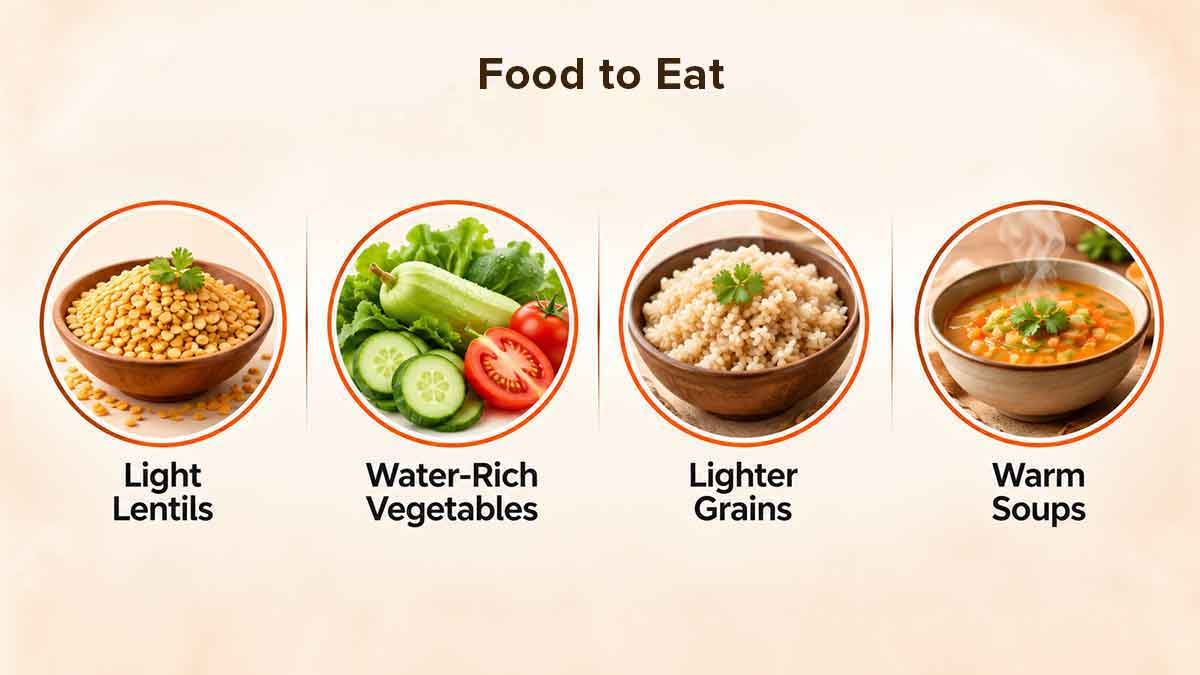
Light Lentils: Eat light lentils such as yellow moong dal; avoid heavy lentils such as chole or rajma. Light lentils digest easily and also help in losing weight without starving you for heavy foods.
Water-Rich Vegetables: Fill your plate with vegetables such as bottle gourd (lauki) and ridge gourd (lauki). They keep you full, have fewer calories, and help in managing your weight and joint pain.
Lighter Grains: Avoid heavy wheats and eat lighter grains like jowar or barley. They are much easier for your body to process and burn for energy.
Warm Soups: Replace cold, raw salads with warm, freshly cooked vegetable soups; they give you high nutrition and fill your stomach while keeping your digestive fire strong.
Metabolism-Boosting Spices: Always cook your food using ginger, turmeric, and cumin. They naturally speed up your fat-burning process while actively calming your joint pain.
A Simple Joint-Friendly Daily Routine
You don't need to starve yourself to lose weight for your knees. Skipping meals actually increases the Vata energy in your body, making your joints hurt more. Instead, follow this simple routine for maintaining joint health:
Drinking warm water in the morning: Start your day with a warm glass of water boiled with a piece of crushed ginger or ajwain on an empty stomach. This helps wake up your stomach and flushes out nighttime toxins.
Keep your breakfast warm and light: Avoid heavy parathas or cold raw salads. Eating a fresh bowl of warm poha or upma gives you energy without making your digestion work too hard right after waking up.
Eat your main meal at noon: When the sun is at its highest, your digestion is at its strongest. This is the right time for your heaviest meal of the day, like rotis, cooked vegetables, and dal.
Keep your dinner light and early: Going to sleep on a full, heavy stomach is a guaranteed way to wake up with stiff knees. Stick to a simple bowl of warm soup or khichdi and finish eating well before going to bed.
Gentle movement: Diet is very important, as is exercise. Doing mild exercises such as stretching, going for a walk, and mild cardio can help in keeping the body active.
Progression & Pacing
When you start managing your diet or movement, you start by making extreme and big changes. If you want to lose weight safely, you need to do it at a steady pace. If you start with movement, then start with only 5-10 minutes of walking daily to let your joints adjust first. If you walk for 10 minutes one week, then walk for 11 minutes the next, and start increasing the time gradually. If your joint pain stays for hours, then reduce your time and focus on your pain first. This also goes to your diet; do not rush yourself. Start slow and do not go for extreme crash diets to lose weight, as it will only make your digestion weaker and make your joints more brittle and dry. Pace your diet one step at a time; swap your meals for vegetable soups and light breakfasts such as upma or poha.
Foods That Actively Damage Your Knees
To protect your knees, you must avoid certain food items that contribute to weight gain and increase joint pain and swelling:
Refined Items: Food items such as maida (white flour) and white sugar are your worst enemies. Bakery biscuits, white bread, and sugary sweets contain substances that trigger joint pain and swelling.
Deep-fried foods: Food items such as puris, bhatrues, and packaged namkeens are heavily processed and hard to digest. They create sticky, toxic waste in your stomach, which sticks inside your joint spaces, leading to pain and stiffness.
Stale or freezing cold food: Eating food straight out of the fridge, or eating meals cooked two days ago, completely ruins your natural digestion and creates deep stiffness in the body.
Stop Signs And Medical Review
While doing gentle movement and managing your weight at home is very helpful, you must stop and go see a doctor if:
You cannot bend ot straighten your legs after so many efforts.
Your knee buckles or gets unstable while walking without any warning.
Your joints get suddenly blown up, red or swollen, and feel hot to the touch.
You get a sharp, throbbing pain that wakes you up at night.
You struggle with day-to-day activities.
Your weight doesn't decrease even after following the routine and a good diet.
Yes, walking is very good for knee osteoarthritis because it lubricates the joint, strengthens supporting leg muscles, and reduces pain.
You can lubricate your knee joints naturally by staying active, drinking plenty of water, and eating nutrient-rich foods that support synovial fluid production.
While no food can directly "repair" knee cartilage because it lacks its own blood supply, eating specific anti-inflammatory and nutrient-rich foods can reduce joint pain, support surrounding muscles, and protect joint tissues.
Avoid high-impact movements, deep joint bends, and complete physical inactivity if you have knee arthritis.
Drink plenty of plain water, and targeted beverages like green tea, tart cherry juice, and collagen-infused drinks can help support stronger, healthier knees.
Curd is generally safe and beneficial for knee pain as a source of calcium and protein, unless you have a specific dairy sensitivity or notice it triggers your symptoms.
Moong dal (yellow or green gram) and horse gram (kulthi dal) are the best choices for arthritis because they are easy to digest and help lower body inflammation.
You can lubricate your knee joints naturally by staying active, drinking plenty of water, and eating nutrient-rich foods that support synovial fluid production.
Find Jiva Ayurveda Clinics for Arthritis Treatment Near You

 Published on 15 Sep, 2026
 Updated on 03 Oct, 2026

.webp)
.webp)