Diabetes, arthritis, skin disorders & more! Get a free consultation with Top Ayurveda doctors - +91 9266714040 | No travel, No waiting – Consult Jiva’s doctors from home via video call! | Get up to 10% OFF! On Authentic Ayurveda Products! Best Prices only on the brand store. Visit : www.store.jiva.com
An ideal diabetic breakfast must be low in simple carbohydrates, high in dietary fiber, and rich in good-quality protein. It should provide sustained energy without causing a sudden spike in blood glucose.
It should provide sustained energy without causing a sudden spike in blood glucose.
In Ayurveda, the morning (6 am to 10 am) is considered the kapha time of day. Kapha dosha is naturally heavy, slow, and cool. Therefore, your breakfast should be warm, freshly cooked, light to digest, and lightly spiced to stimulate jathragni ( digestive fire) without overloading it. Core components of a diabetic breakfast include:
Complex Carbohydrates
Whole grains like barley (jau), pearl millet (bajra), finger millet (Ragi), or broken wheat (daliya). These have a low Glycemic Index (GI) and release glucose slowly.
Lean Protein
Moong dal, besan (gram flour), sprouts, or a small portion of fresh paneer; protein slows gastric emptying and stabilizes sugar.
High Fibre Vegetables
Bottle gourd (Lauki), spinach (palak), fenugreek leaves (methi), and beans.
Digestive Spices
Cumin (jeera), ginger, black pepper, and cinnamon to aid metabolism and reduce insulin resistance.
Why The Choice Matters
Skipping breakfast or making the wrong choice sets a negative metabolic tone for the next 24 hours. When you wake up, your body experiences the “ Dawn phenomenon,” a natural surge of hormones (like cortisol and glucagon) that prompts the liver to release stored glucose. If you eat breakfast high in refined sugars or simple carbs (like white bread, sweet tea, or cornflakes), you stack dietary sugar on top of this natural surge, leading to an extreme blood sugar spike. Within two hours, this spike results in a crash, triggering intense cravings, fatigue, and lethargy. From an Ayurvedic perspective, eating heavy, cold, or intensely sweet foods in the morning aggravates kapha dosha. This creates Ama (Metabolic toxins), dampens your digestive fire (Agni), and directly worsens insulin resistance at the cellular level. A warm, protein-rich spiced breakfast counteracts this sluggishness and ignites healthy metabolism.
Portion And Timing Guidance
Even a healthy meal can disrupt your blood sugar if the timing and quantities are incorrect.
Timing
Aim to eat breakfast within 1 to 2 hours of waking up. Waiting too long can cause your liver to keep pumping out glucose, keeping your fasting sugar elevated. Conversely, if you are on medication, delaying breakfast can trigger hypoglycemia (dangerously low blood sugar).
Portion Control
Use the “plate method “ half of your breakfast plate should be fiber (vegetables), a quarter should be protein (dal/besan/sprouts), and the remaining quarter can be complex carbohydrates (millets/daliya).
Mindful Eating
Eat your breakfast in a calm environment, sitting down. Chew your food thoroughly. In Ayurveda, eating in a rushed or stressed state activates Vata Dosha, which severely impairs digestion and nutrient absorption.
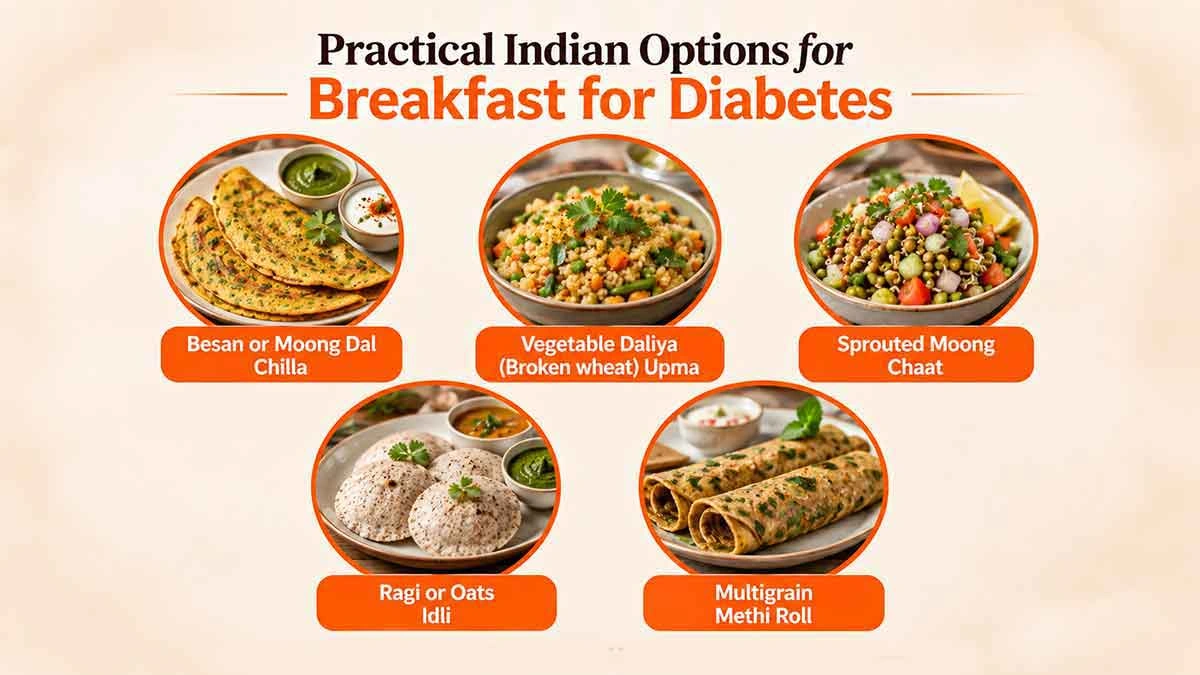
Practical Indian Options
Traditional indian breakfast can easily be modified to be diabetes friendly. Here are highly effective Ayurvedic options
Besan or Moong Dal Chilla
A savory pancake made from gram flour or green gram. To make it perfect for diabetes, mix in finely chopped spinach and fenugreek leaves or grated bottle gourd. Serve with mint coriander chutney instead of sweet ketchup.
Vegetable Daliya (Broken wheat ) Upma
Replace rined rava (semolina)with daliya or rolled oats. Saute it with cumin and mustard seeds, turmeric, and a large portion of non-starchy vegetables like peas, carrots, and beans.
Sprouted Moong Chaat
Lightly steam moong sprouts (steaming makes them easier to digest and prevents Vata Aggravation). Toss with chopped cucumber, tomato, a squeeze of lemon, and roasted cumin powder.
Ragi or Oats Idli
Swap rice idli batter for a mix of ragi (finger millet ) and urad dal or oats. Pair it with a vegetable-loaded sambar.
Multigrain Methi Roll
A roti made with barley (jau) and chickpea flour (Besan) and a little whole wheat, kneaded with fresh fenugreek leaves. Pair it with plain unsweetened curd.
I have had diabetes for the last 10 years and was on allopathic medicines, but my sugar levels kept increasing day by day. For the last 6 months, I had no energy at all.
Then I heard about Jiva Ayurveda from a friend. I consulted them over the phone and started their medicines, diet chart, and yoga therapy. Within a week, I started feeling more energetic, and after 2 months of treatment, I feel full of energy again at the age of 62.
Thank you to the entire team for the timely guidance, patiently solving my queries, and for the good behaviour and support throughout the treatment.
I would like to express my deepest gratitude to the Jiva Ayurveda team for their exceptional care and guidance throughout my Diabetes Care Plan journey.
My sincere thanks to Dr. Pushpendra Shukla for his expert diagnosis, thoughtful treatment approach, and the confidence he instilled in me from day one. I’m equally grateful to Health Coach Swati and Nutritionist Mansi, whose constant motivation, personalized attention, and practical lifestyle advice made a world of difference. Their guidance kept me consistent, positive, and fully committed to the process.
Thanks to their collective efforts, my sugar levels are now stable, and my overall health and energy have improved tremendously. I feel healthier, lighter, and more in tune with my body than ever before.
This program has been a truly transformative experience — not just physically, but mentally and emotionally as well. I deeply appreciate the compassion, professionalism, and dedication shown by the entire team.
Thank you, Jiva Ayurveda, for helping me rediscover balance and wellbeing through the power of Ayurveda.
Warm regards,
Kuldeep Bhardwaj
Firstly, I am thankful for jiva greater noida clinic.
i have diabetes, severe pain in left shoulder and acidity problem since 2 years. i have taken lots of allopathic medicines but no relief, then i visit jiva greater noida clinic, where i have consult with Dr. Sikandar, i have taken 5 months medicines and follow diet chart as per directed by the doctor. Currently, i am almost cured, but i have taken one month extra medicine for complete relief.
thank you all staff for reminding me to followup with doctor time to time, also impressed with your management system.
Patient Success Stories
Foods or patterns to limit
To maintain stable morning blood sugar levels, strictly avoid the following
Refined carbs
White breads, rusks, khari biscuits, and standard rava upma. These lack fibre and digest almost instantly, causing rapid glucose spikes.
Sugary Cereals and Juice
Packaged cornflakes, chocos, muesli with added sugar, and all fruit juices (even fresh ones).
Juices strip away the fruit’s fibre, hitting your bloodstream like pure sugar.
Excessive Dairy and ‘Chai’ Culture
Starting the day with heavily boiled milk tea loaded with sugar and accompanied by biscuits is disastrous for diabetes. Ayurveda also warns against viruddha Ahara (incompatible combinations) such as consuming heavy dairy alongside sour fruits in the morning.
Comorbidity And Medicine Considerations
Your breakfast must adapt if you have other health conditions alongside diabetes :
Hypertension (High Blood Pressure)
If you also have BP issues, avoid adding pickles, papads, or excessive salt to your breakfast. Flavour your food with herbs and lemon instead of spices.
Diabetic Nephropathy (kidney issues)
If your kidney function is compromised, you may need to restrict high-protein breakfasts or specific potassium-rich vegetables. Consult your doctor for specific limits.
Insulin and Oral Medications
If you take morning insulin (like short-acting insulin) or oral hypoglycemics (like sulfonylureas), you must ensure your breakfast contains an adequate, consistent amount of carbohydrates to prevent your blood sugar from dropping too low. Never skip breakfast if you have taken your morning dose.
Example Meal/Use Cases
Here is how to adapt your breakfast based on your morning routine:
The Pre-workout Morning
If you go for a brisk 45-minute walk or do yoga, eat something light beforehand to prevent a sugar drop. Half an apple or a small cup of plain buttermilk with roasted cumin is ideal. Have your main breakfast after the workout.
The Traditional Got Meal
2 medium-sized moong dal chillas stuffed with a little grated paneer, accompanied by a cup of green tea or ayurvedic ginger tulsi tea (no sugar).
In a Rush Scenario
If you have only 10 minutes, grab a bowl of lightly steamed sprouts, a handful of soaked almonds, and a cup of warm cinnamon water.
Yes, but how you prepare it matters: black tea, green tea, or black coffee (without sugar )are fine. If you prefer milk tea, use minimal milk and add spices like cardamom and ginger, and strictly avoid adding sugar, jaggery, or honey. Do not pair tea with refined biscuits or rusks.
Rolled oats and steel-cut oats are excellent due to their high soluble fiber content; however, avoid instant or flavoured packaged oats, as they are highly processed and loaded with hidden sugars. Always prepare oats in a savory (namkeen) style with vegetables rather than boiling them in milk with sugar.
While coconut sugar and jaggery are considered more natural, they still raise blood sugar levels and should be consumed with caution. They are not free substitutes for white sugar, just slightly lower on the glycemic index.
Skipping meals is not recommended for people with diabetes. It can cause blood sugar to drop too low and often leads to overeating at the next meal, which can cause a sharp spike. Regular, balanced meals throughout the day work much better.
Find Jiva Ayurveda Clinics for Diabetes Treatment Near You

 Published on 14 Sep, 2026
 Updated on 03 Oct, 2026