
Successful Treatments
Clinics
Doctors
Arthritis for Desk-Job Workers
 Published on 19 Sep, 2026
 Updated on 08 Oct, 2026

Explore Living With Arthritis
- Home / Diseases & Ayurveda / Joint & Muscle Pain / Ayurvedic Treatment For Arthritis / Living With Arthritis: Work, Stairs and Flare Management / Arthritis for Desk-Job Workers
Who This Arthritis Guide for Desk-Job Workers Is For
If you work for more than eight hours a day, you already know the specific kind of dread that comes with having arthritis in the office. This guide is for the person who sits through a two-hour Zoom meeting and silently worries about how much it is going to hurt to stand up when it is over. It is for the person who pretends to check their phone while simply limping to the breakdown so nobody notices how stiff their knees are.
You might feel frustrated because your job requires you to sit at the computer all day, but your joints are loudly demanding that you lie down or stretch. You do not need an intense, sweaty gym routine. You just need a quiet, realistic way to survive the 9-to-5 without surviving your day in agonizing pain. If you want to protect your joints, reduce that awful afternoon stiffness, and feel comfortable in your office chair again, this guide is written for you.
Patient Success Stories
Why The Problem Occurs
While working at a desk doesn't directly cause arthritis, it creates an environment that puts heavy pressure on joints and accelerates pain, stiffness, or swelling. To fix the stiffness, you need to understand why it occurs in the first place. Unlike your muscles, your joints do not have a direct blood supply. The only way they get warm, healing fluid is when you move. Every time you bend your knee or back, you naturally pump old fluid out and pull fresh, slippery fluid into the joints. When you sit completely still at a desk for hours, that fluid stops moving; it cools down, thickens, and becomes sticky. By the time you finally push your chair back to stand up, your joints are dry and stiff. The pain you feel is simply friction on those unlubricated joints rubbing together after hours of being frozen in one position.
Immediate Practical Modifications
While you cannot quit your job, you surely can change the way you work at your office. Before you try any exercise, you must try these immediate, instant changes at your desk for better joint health:
- Fix your chair height: If your chair is too low, your knees will sit higher than your hips. This traps your hips and knees in a deep, compressed angle for hours. Raise your chair until your hips are slightly higher than your knees, allowing your legs to slope down gently.
- Keep your feet completely flat: If raising your chair makes your legs hang, then it can affect your spine. Your legs must be completely flat on the floor for better spine health. Keep a stack or box under your feet so that they get support.
- Bring the screen up to you: If you are looking down or too up at your laptop or computer system, then it can put massive or heavy pressure on your neck and shoulders. So keep the height of the laptop equal to your eyes so that your neck and shoulders do not feel much pressure.
- Take breaks every 30 minutes: Stillness is the biggest enemy for your joints. Put a timer on your watch for thirty minutes, and take quick breaks at your desk only. Just roll your shoulders, straighten your legs, and do gentle body movements so that they feel relaxed.
Simple Exercises to Keep Your Joints Healthy
You can keep your joints lubricated and healthy by doing the following exercises at your workplace. Add this into your daily routine, and it will help manage the joint pain and the struggle you face at work.
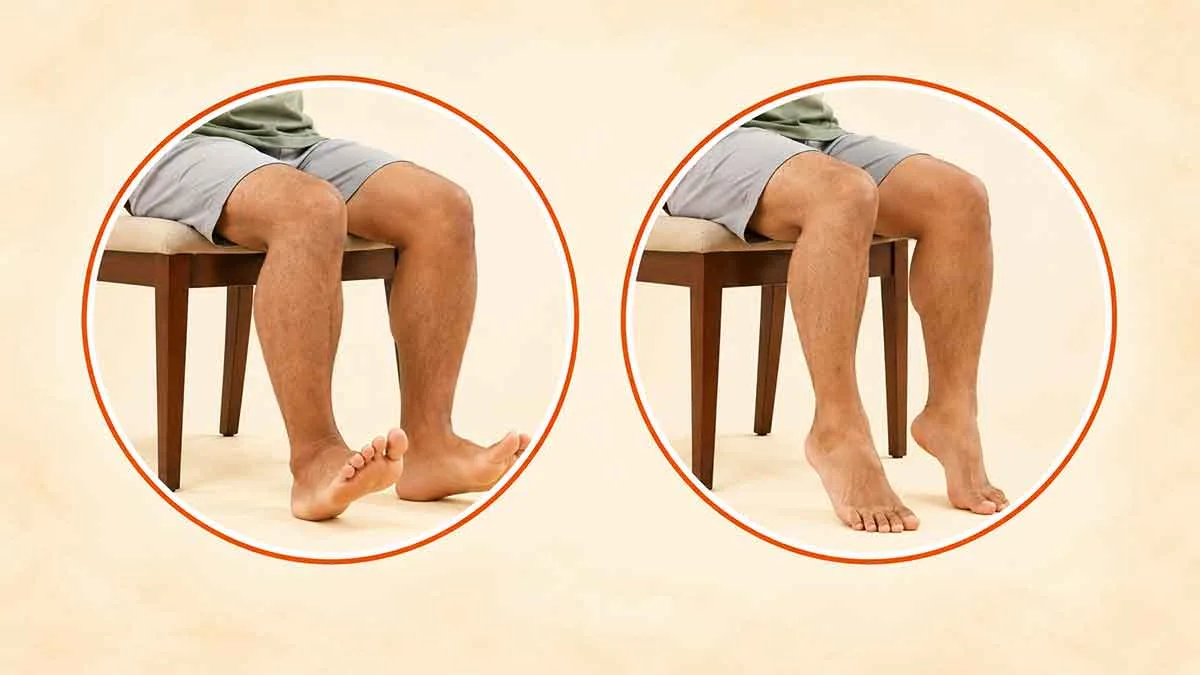
Ankle Pumps: With your feet on the floor, slowly lift your heels while keeping your toes down. Then lower your heels and lift your toes. Go back and forth ten times. This will help to pump fresh blood and fluid to your knees.
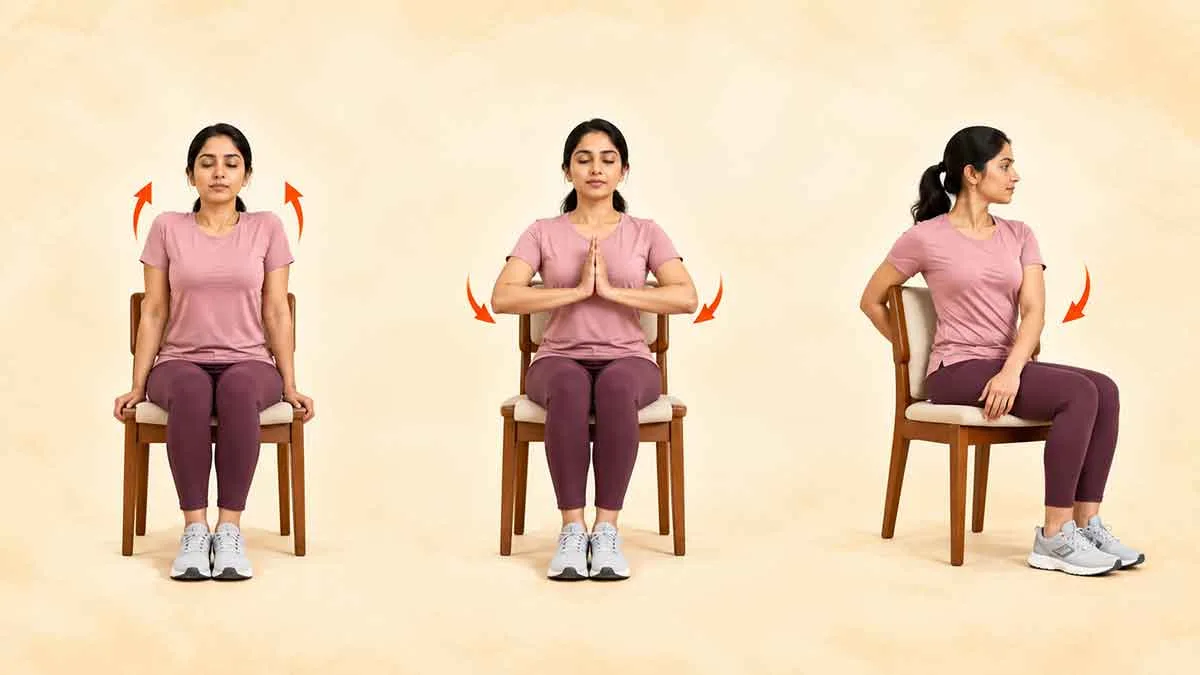
Desk Stretch: Place your hand flat on your desk and push your chair back a little. Lower your hand between your arms and gently stretch your upper back. This helps undo the stiff, hunched posture while typing all day.
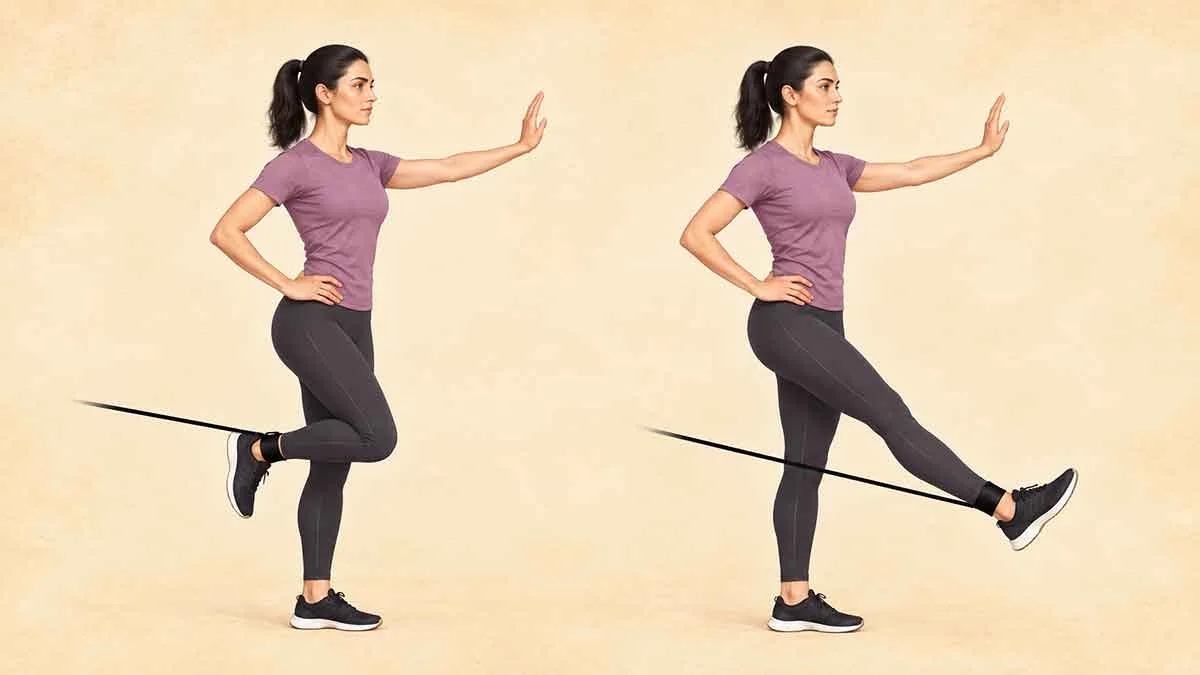
Leg Extensions: Stand tall on your feet, flat on the floor. Slowly extend one leg out in front of you until it’s straight. Hold it for a few seconds, then lower it down. Do it 10 times on each leg. This will help unlock the stiff knees and thigh muscles.
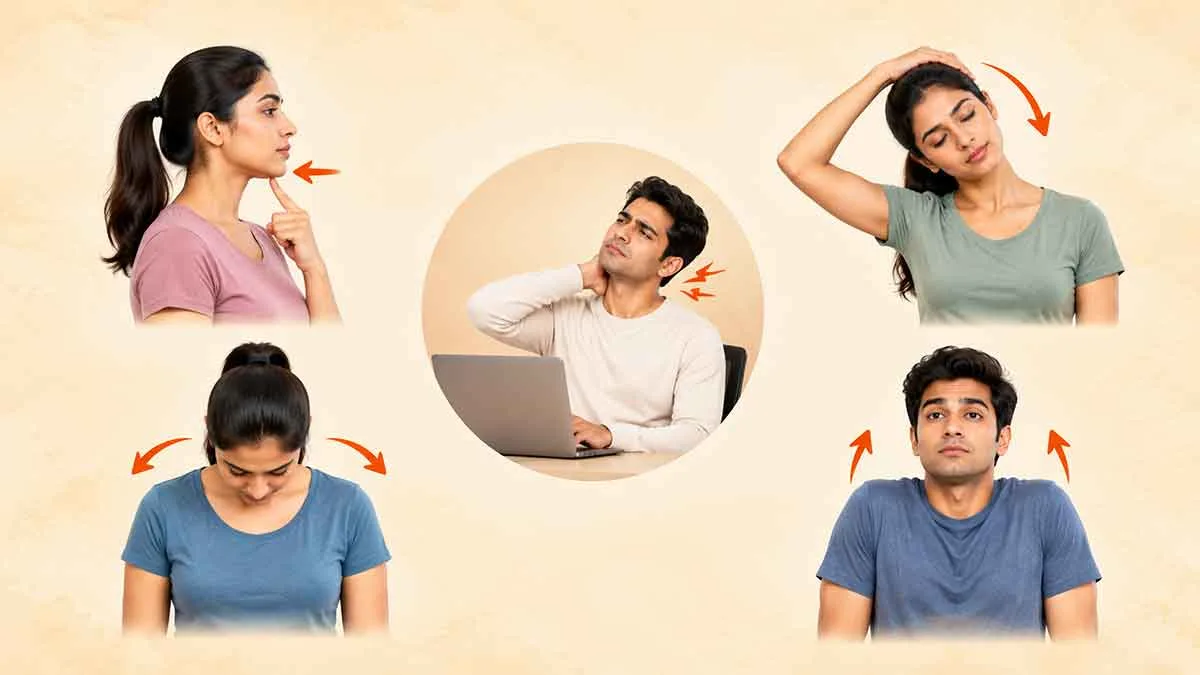
Gentle Neck Stretch: Sit up tall. Slowly lower your right ear toward your right shoulder until you feel a warm, gentle stretch. Hold for three relaxed breaths, then slowly switch to the left side.
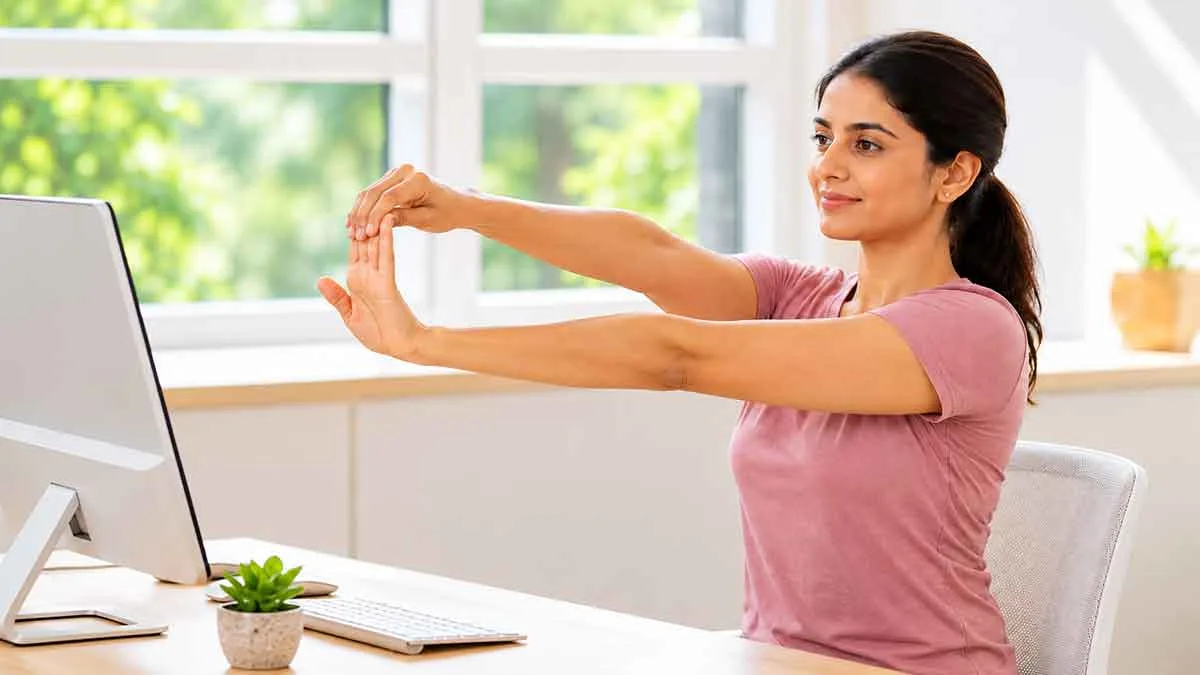
Hand and Finger Stretch: Hold your hands in front of you. Spread your fingers out as wide as you comfortably can, then gently curl them into soft fists. Repeat this five times without forcing.
Progression And Pacing
When people start implementing the required things for better management of pain. They often make the mistake of overdoing it. They feel so stiff that they aggressively stretch their neck or do fifty seated leg extensions, only to wake up with throbbing pain in their joints. To heal, you must master the art of pacing. Start with small, gentle steps. In your first week, do a workout for 10 minutes; if you feel no pain, then add five more minutes to your routine. You are simply reminding your nervous system how to move without fear. Pay attention to how your joints feel two hours after you finish your workday. If they are actually throbbing, burning, or more swollen than usual, you did too much stretching or sat in one bad position for too long. Scale it back the next day. If you feel fine, you can gently add on more repetitions to your desk exercise the following week. Low, steady consistency is what keeps your joints safe.
What To Avoid
To protect the healthy cartilage you still have left, there are a few common office habits you should avoid:
- Sitting with crossed legs: Sitting while crossing one leg over the other completely twists your pelvis out of alignment and puts intense, uneven pressure on your hip and lower spine. Always sit in a way that both feet feel completely flat on the floor.
- Don't curve your back: When you get tired, it is easy to let your lower back collapse, turning your spine into a curve shape. This crushes the disc in your lower back. Place a rolled-up towel or small cushion behind your lower back to force your spine to stay upright.
- Working through sharp pain: If a specific desk exercise or sitting position causes a sharp, biting, or grinding pain inside the bone, stop immediately. A dull muscle ache from fatigue is okay, but sharp joint pain means you are causing damage to your joints.
- Don't do massive workouts on your weekends: Avoid sitting completely still on your work days and trying to do massive workouts on weekends because your joints cannot handle that explosion of activity. Keep your movement gentle and spread evenly throughout the entire week.
Stop Signs And Medical Review
Living with arthritis pain can be very frustrating. But you should not ignore these signs, as they can result in some serious issues:
- If you feel throbbing or aching joint pain for more than a week without any improvement, even after resting.
- If your stiffness doesn't go away after walking and stretching for some time.
- If you have noticeable swelling, redness, and joints that feel warm to the touch.
- If you have constant numbness or tingling in your joints.
- If you have cracking, popping, and grinding sounds while doing any movement.
Seek urgent medical help if you have the above signs in your joints, as ignoring them can cause more harm.
FAQs
Standing desks are helpful, but standing all day can hurt your joints just as much as sitting all day. The real secret is changing positions. The best thing you can do is switch between sitting and standing every thirty minutes.
Use heat in the morning when your joints feel stiff, dry, and tight to help warm up the fluid. Use a soft ice pack at the end of the day if your joint feels hot, swollen, or angry from doing too much.
If it does not hurt, popping is completely normal. It is usually just trapped air escaping the joint. However, if the cracking comes with sharp pain or swelling, you should have a doctor look at it.
Yes, walking on a flat surface is actually one of the best ways to keep your joints lubricated. Just remember to wear supportive shoes and always stop your walk before your knees start to hurt, not after.
Never. A gentle stretch should only feel like a warm, mild pull in your muscles. If you feel a sharp, biting pain deep inside the bone or joint, you are pushing too hard. Stop immediately.
You do not have to do obvious exercises. Just tap your feet under your desk, stand up when you take a phone call, or take the long way to the bathroom. Every single step counts.
Yes! The slippery fluid that protects and cushions your joints is made mostly of water. Staying hydrated all day helps keep that joint fluid thick and healthy so your bones can glide smoothly.
Consult Experienced Ayurveda Doctors for Arthritis for Desk-Job Workers





















Our Happy Patients
-
 Sunita Malik - Knee Pain
 -
 Abhishek Mal - Diabetes
 -
 Vidit Aggarwal - Psoriasis
 -
 Shanti - Sleeping Disorder
 -
 Ranjana - Arthritis
 -
 Jyoti - Migraine
 -
 Renu Lamba - Diabetes
 -
 Kamla Singh - Bulging Disc
 -
 Rajesh Kumar - Psoriasis
 -
 Dhruv Dutta - Diabetes
 -
 Atharva - Respiratory Disease
 -
 Amey - Skin Problem
 -
 Asha - Joint Problem
 -
 Sanjeeta - Joint Pain
 -
 A B Mukherjee - Acidity
 -
 Deepak Sharma - Lower Back Pain
 -
 Vyjayanti - Pcod
 -
 Sunil Singh - Thyroid
 -
 Sarla Gupta - Post Surgery Challenges
 -
 Syed Masood Ahmed - Osteoarthritis & Bp
Diagnostic Marker
Blogs
- 3 Benefits of Golden Milk in Arthritis
- Jiva?s Ayunique Treatment for Osteoarthritis
- Early Diagnosis - The Key to Treating Arthritis
- Natural Options That You Must Try For Arthritis
- Panchakarma to Get Relief from Arthritis Pain
- How to Control Osteoarthritis in Old Age
- Relieving Osteoarthritis with the power of Ayurveda
- Simple home remedies for Rheumatoid Arthritis (Ama vata)
- Uses of Ginger to Get Relief from Arthritis
- Benefits of Turmeric in Controlling Arthritis
Home Remedies
Related Disease
- Ayurvedic Treatment for Ankylosing Spondylitis
- Ayurvedic Treatment For Cervical Spondylosis
- Ayurvedic Treatment For Arthritis
- Ayurvedic Treatment for Osteoarthritis
- Ayurvedic treatment for Gout
- Ayurvedic Treatment for Sciatica
- Ayurvedic Treatment for Rheumatoid Arthritis
- Ayurvedic Treatment for Frozen Shoulder
- Ayurvedic Treatment for Deep Vein Thrombosis (DVT)
- Ayurvedic Treatment for Achilles Tendon Disorders
- Ayurvedic Treatment for Rickets
- Ayurvedic Treatment for Ganglion Cyst
- Ayurvedic Treatment for Osteoporosis
- Get Ayurvedic Treatment for AVN Avascular Necrosis
- Get Ayurvedic Treatment For Osteomyelitis
- Cerebral Palsy Treatment in Ayurveda
Latest Blogs
- बच्चों में weekend sleep timing बदलना Monday mood को कैसे प्रभावित कर सकता है
- Is Fasted Intense Exercise a Good Idea for Every Woman
- Health Tracking Every Hour: Helpful Awareness Or Another Source Of Stress?
- फोन देखते हुए चलना सिर्फ accident risk नहीं—posture और breathing पर क्या असर पड़ता है
- Bloating Before a Period: Why Lifestyle Can Change How It Feels
- बहुत जल्दी खाना खाने से पेट भरने का signal देर से क्यों मिलता है
- ‘No Added Sugar’ Doesn’t Automatically Mean Low Sugar—Here’s Why
- Online meetings के बीच zero movement दिन के अंत में stiffness क्यों बढ़ाता है?
- Screen brightness और late-night work sleep readiness को कैसे बदलते हैं
- Warm Vs Cold Foods: How To Discuss The Ayurvedic Idea Without Turning It Into A Myth
- Noise-cancelling headphones घंटों पहनना mental fatigue को कम करता है या बढ़ा सकता है?
- Sugar-Free Biscuits: Better Choice Or A Health Halo?
- Why a Long Afternoon Nap Can Make Bedtime Surprisingly Difficult
- Scrolling While Eating: The Habit That Makes Meals Harder to Remember
- The Forward-Head Posture You Don’t Notice Until Evening
- Are Seed Mixes Useful—Or Just Easy To Overeat?
- Laptop on the Sofa: Why Neck and Hip Stiffness Show Up Later
- Why Your Eyes Feel Tired Even When Screen Brightness Seems Fine
- Is A Standing Desk A Complete Fix For Too Much Sitting?
- Why a Damp Bathroom Can Affect More Than Just the Walls
Ayurvedic Doctor In Top Cities
- Ayurvedic Doctors in Bangalore
- Ayurvedic Doctors in Pune
- Ayurvedic Doctors in Delhi
- Ayurvedic Doctors in Hyderabad
- Ayurvedic Doctors in Indore
- Ayurvedic Doctors in Mumbai
- Ayurvedic Doctors in Lucknow
- Ayurvedic Doctors in Kolkata
- Ayurvedic Doctors in Patna
- Ayurvedic Doctors in Vadodara
- Ayurvedic Doctors in Ahmedabad
- Ayurvedic Doctors in Chandigarh
- Ayurvedic Doctors in Gurugaon
- Ayurvedic Doctors in Jaipur
- Ayurvedic Doctors in Kanpur
- Ayurvedic Doctors in Noida
- Ayurvedic Doctors in Ranchi
- Ayurvedic Doctors in Bhopal
- Ayurvedic Doctors in Ludhiana
- Ayurvedic Doctors in Dehradun