Diabetes, arthritis, skin disorders & more! Get a free consultation with Top Ayurveda doctors - +91 9266714040 | No travel, No waiting – Consult Jiva’s doctors from home via video call! | Get up to 10% OFF! On Authentic Ayurveda Products! Best Prices only on the brand store. Visit : www.store.jiva.com
Diabetic kidney disease or diabetic nephropathy involves the gradual deterioration of kidney function due to prolonged high blood glucose levels. The kidneys are made up of millions of glomeruli that act as filters to take waste materials out of the body’s blood supply while retaining useful proteins. High blood sugar and high blood pressure cause damage to these filters. As such, the kidneys become leaky, and they start to release important proteins like albumin into the urine.
Who Is Affected And Risk Factors
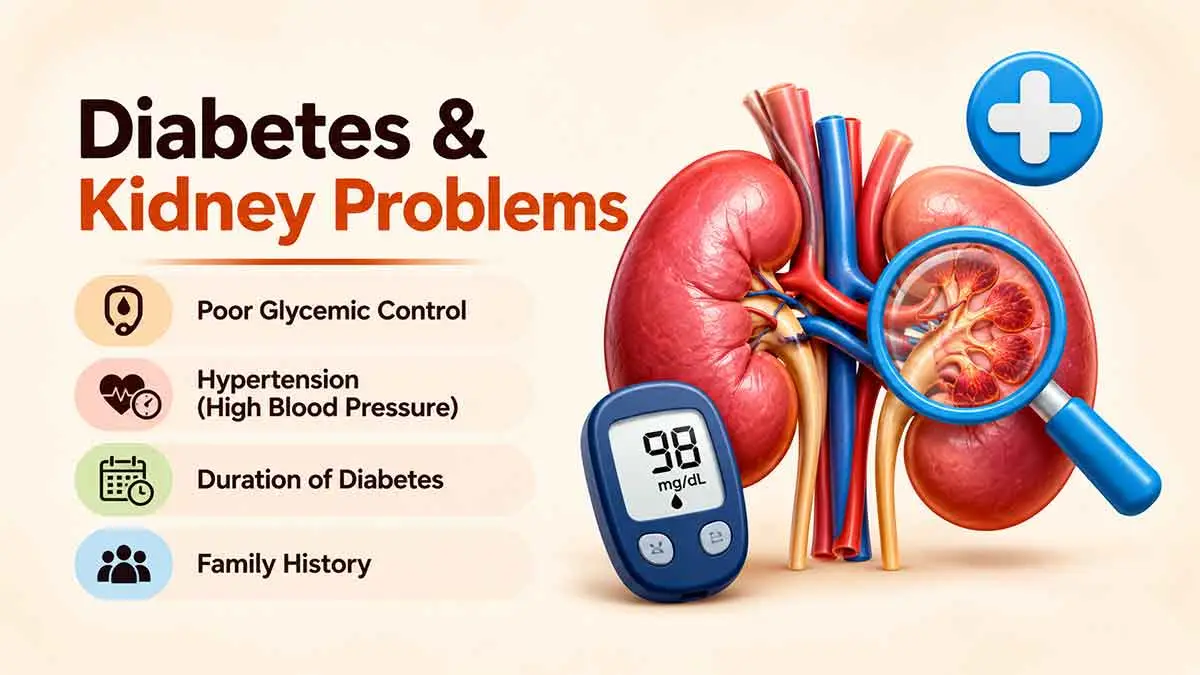
Diabetic nephropathy is common for both types of diabetes, 1 and 2. Nevertheless, every diabetic person may not experience the development of this complication. Risk factors involve the following:
Poor Glycemic Control
Consistently high blood sugar (elevated HbA1c) significantly accelerates vessel damage.
Hypertension (High Blood Pressure)
The most critical compounding risk factor: high pressure further strains the already fragile kidney filters.
Duration of Diabetes
The longer a person has diabetes, particularly if unmanaged, the higher the risk.
Family History
A genetic predisposition to kidney disease or hypertension increases vulnerability.
Symptoms Or Presentation
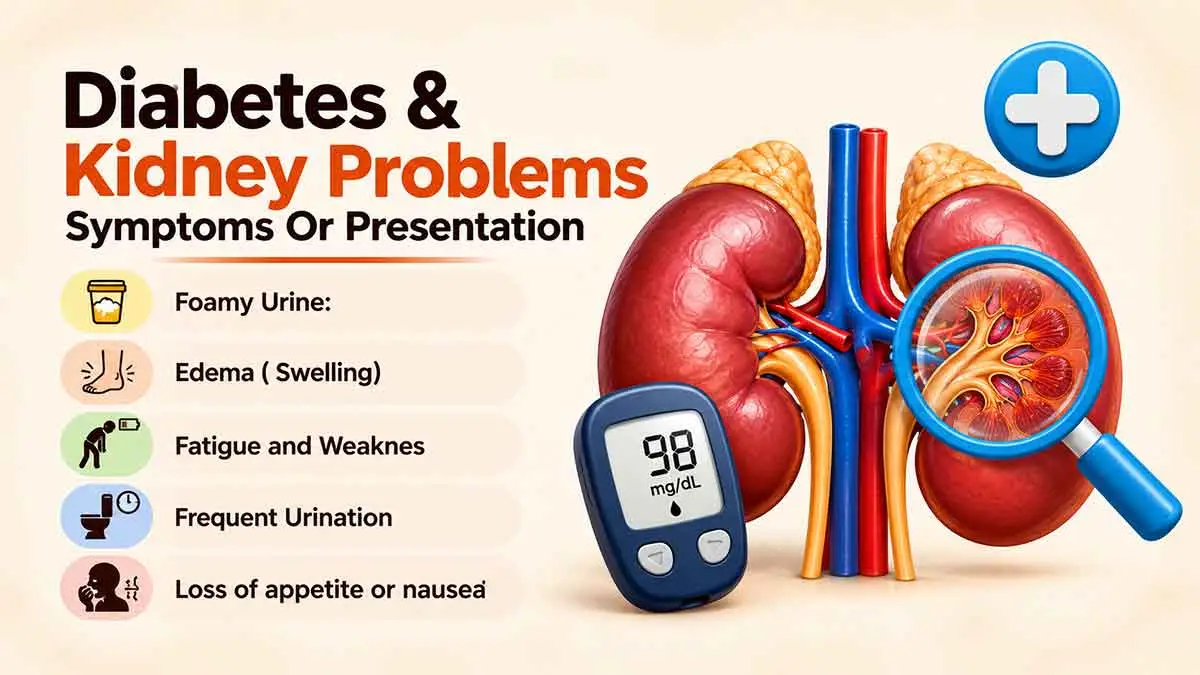
In its early stages, diabetic kidney disease is completely silent. Symptoms only manifest when significant kidney damage has already occurred, which is why routine screening is vital. When symptoms do appear, they typically include:
Foamy Urine: An early visible sign of excess protein (albumin) leaking into urine.
Edema (Swelling): Fluid retention causing swelling in the feet, ankles, hands, or around the eyes.
Fatigue and Weakness: Driven by a buildup of toxins in the blood or by anemia (a common secondary effect of kidney disease).
Frequent Urination: Especially during the night.
Loss of appetite or nausea: as waste products accumulate in the bloodstream.
How It Is Assessed/Diagnosed
Because symptoms appear late, doctors rely on specific routine lab tests to detect diabetic nephropathy early.
Test Name
What it Measures
Clinical Purpose
Urine Albumin-to-Creatinine Ratio (UACR)
The amount of albumin (protein) in the urine.
Detects the earliest stages of kidney filter damage (microalbuminuria).
Estimated Glomerular Filtration Rate (eGFR)
How efficiently the kidneys are filtering waste from the blood, based on serum creatinine levels
Determines the overall stage of kidney function and progression of the disease.
Blood Pressure Monitoring
The force of blood against artery walls
.High blood pressure is both a cause and a complication of kidney damage.
Management And Monitoring
Effective management aims to halt or slow the progression of kidney damage; it requires a highly disciplined, multipronged approach.
Strict Blood Sugar Management
Keeping HbA1c, fasting and post-meal glucose within target ranges to stop ongoing vascular damage.
Blood Pressure Control
This is often treated as aggressively as blood sugar.
Dietary Adjustments
Advanced stages may require specialised diets that monitor the intake of protein, sodium, potassium, and phosphorus to reduce the kidney‘s filtration burden.
Routine Monitoring
UACR and eGFR tests should be conducted at least once a year, or more frequently depending on your current kidney stage.
I have had diabetes for the last 10 years and was on allopathic medicines, but my sugar levels kept increasing day by day. For the last 6 months, I had no energy at all.
Then I heard about Jiva Ayurveda from a friend. I consulted them over the phone and started their medicines, diet chart, and yoga therapy. Within a week, I started feeling more energetic, and after 2 months of treatment, I feel full of energy again at the age of 62.
Thank you to the entire team for the timely guidance, patiently solving my queries, and for the good behaviour and support throughout the treatment.
I would like to express my deepest gratitude to the Jiva Ayurveda team for their exceptional care and guidance throughout my Diabetes Care Plan journey.
My sincere thanks to Dr. Pushpendra Shukla for his expert diagnosis, thoughtful treatment approach, and the confidence he instilled in me from day one. I’m equally grateful to Health Coach Swati and Nutritionist Mansi, whose constant motivation, personalized attention, and practical lifestyle advice made a world of difference. Their guidance kept me consistent, positive, and fully committed to the process.
Thanks to their collective efforts, my sugar levels are now stable, and my overall health and energy have improved tremendously. I feel healthier, lighter, and more in tune with my body than ever before.
This program has been a truly transformative experience — not just physically, but mentally and emotionally as well. I deeply appreciate the compassion, professionalism, and dedication shown by the entire team.
Thank you, Jiva Ayurveda, for helping me rediscover balance and wellbeing through the power of Ayurveda.
Warm regards,
Kuldeep Bhardwaj
Firstly, I am thankful for jiva greater noida clinic.
i have diabetes, severe pain in left shoulder and acidity problem since 2 years. i have taken lots of allopathic medicines but no relief, then i visit jiva greater noida clinic, where i have consult with Dr. Sikandar, i have taken 5 months medicines and follow diet chart as per directed by the doctor. Currently, i am almost cured, but i have taken one month extra medicine for complete relief.
thank you all staff for reminding me to followup with doctor time to time, also impressed with your management system.
Patient Success Stories
Ayurvedic Assessment And Supportive Care
In Ayurveda, diabetes (Prameha) is understood as a metabolic disorder that, if left unmanaged, vitiates the Doshas (primarily Vata and Pitta in later stages) and damages the Dhatus (tissues). Kidney complications occur when this imbalance severely impacts the Mutravaha Srotas (the channels carrying urine) and depletes Ojas (vital immunity and energy).
Ayurvedic supportive care for diabetic kidney issues is highly personalized and focuses on preserving renal function rather than claiming a sudden cure:
Nidana Parivarjana (Removing the Cause)
Addressing the root metabolic fire (Agni) and clearing metabolic toxins (Ama) that obstruct micro-channels.
Renal Support (Rasayana)
Utilizing specific Ayurvedic herbs known for their Mutrala (diuretic) and nephroprotective properties to support tissue health and manage fluid retention.
Integrative Approach
Ayurvedic therapies are strictly positioned as supportive care alongside your prescribed conventional medicines.
Assessment: A Jiva Ayurveda physician will assess your Prakriti (constitution), current disease stage, eGFR reports, and existing medications to create a safe, customized protocol.
Prevention Or Progression
There are five stages of chronic kidney disease (CKD) that diabetic nephropathy undergoes, ranging from stage 1 (mild diabetic kidney damage and normal GFR) to stage 5 (diabetic nephropathy failure).
This development is not always inevitable since early detection of microalbuminuria at stage 1 and stage 2 can help prevent the development of the condition to more serious stages, thus avoiding dialysis or transplantations.
Red flags
If you have any of the following symptoms, seek immediate medical care as they can suggest that your kidneys have been affected by acute kidney injury or failure:
Severe and sudden swelling in the legs or face.
Breathlessness or presence of fluid in the lungs without any obvious reason.
Sudden and significant decrease in urination.
Severe nausea, vomiting, or inability to retain fluids.
While Ayurveda emphasizes improving the functioning of kidneys that still have some function left, as well as the management of symptoms along with correcting the metabolic disorder that is at the heart of the problem, microalbuminuria at its early stages can be halted with proper diabetes control.
While foamy urine is a classic sign of protein leakage (proteinuria) common in diabetic kidney disease, it can occasionally be caused by a rapid urine stream or mild dehydration. However, a diabetic patient noticing consistently foamy urine should consult a doctor immediately for a UACR test.
Medical guidelines generally recommend that type 2 diabetics get tested (UACR and eGFR) at the time of diagnosis and at least once a year thereafter. Type 1 diabetics should begin annual testing five years after their initial diagnosis.
Your daily blood sugar number only tells you how your body is handling food at that moment. It does not tell you if your heart, kidneys, or eyes are quietly getting damaged in the background. True care means protecting your whole body, not just watching a single number.
Find Jiva Ayurveda Clinics for Diabetes Treatment Near You

 Published on 18 Sep, 2026
 Updated on 01 Oct, 2026