Diabetes, arthritis, skin disorders & more! Get a free consultation with Top Ayurveda doctors - +91 9266714040 | No travel, No waiting – Consult Jiva’s doctors from home via video call! | Get up to 10% OFF! On Authentic Ayurveda Products! Best Prices only on the brand store. Visit : www.store.jiva.com
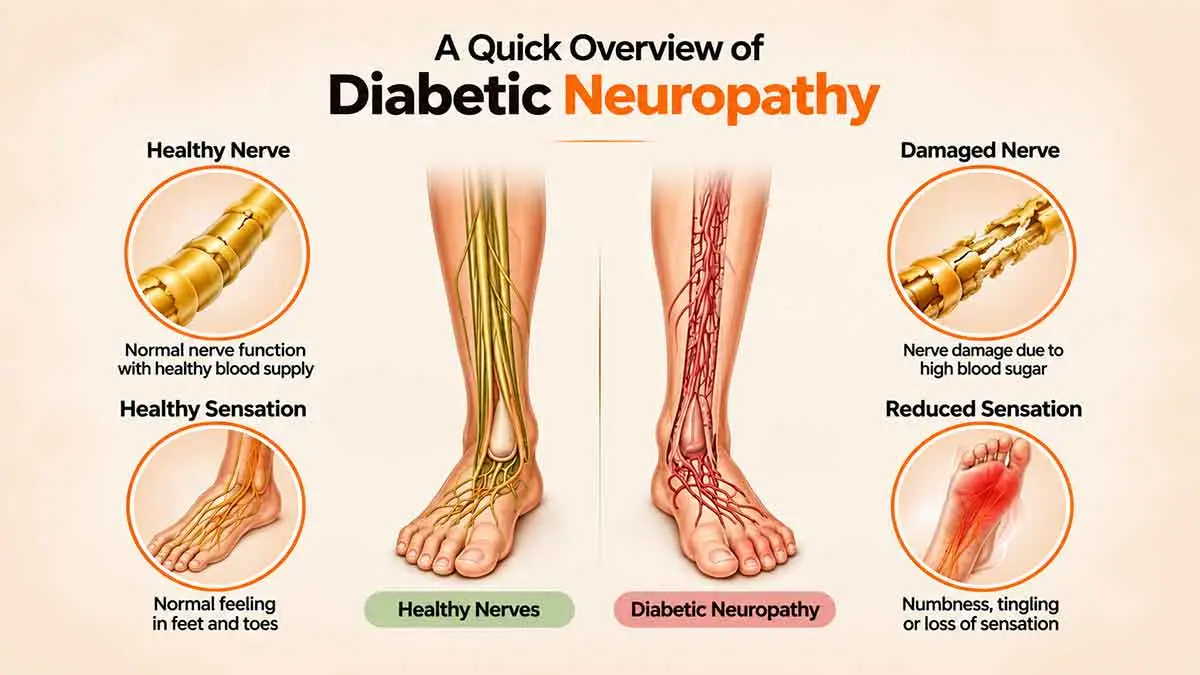
Diabetic neuropathy is nerve damage linked to diabetes. Over time, high blood glucose and elevated blood fats can damage your nerves and the small blood vessels that nourish them. This involves progressive nerve damage due to persistent high blood sugar levels (hyperglycemia).
High glucose and blood fat levels cause the deterioration of the tiny blood vessels (vasa nervorum) responsible for providing the nerves with oxygen and nutrients. Due to a lack of nutrients in the long run, Damage can affect nerve fibres and their protective covering, disrupting signals and causing pain, altered sensation or weakness.
Though there may be many types of neuropathy, they include mainly:
Peripheral Neuropathy
The most common form, primarily affecting the feet, legs, and hands and arms.
Autonomic Neuropathy
Affects nerves controlling internal organs, including the digestive system and bladder, heart, and blood vessels.
Proximal Neuropathy (Diabetic Amyotrophy)
Affects nerves in the thighs, hips, and buttocks or legs, often causing severe pain and muscle weakness on one side.
Focal Neuropathy (Mononeuropathy)
Sudden damage to a single specific nerve, often in the head, torso, or leg (eg carpal tunnel syndrome or cranial nerve palsy). For a broader view of how nerve damage relates to other vascular and organ risks, see our main diabetes complications overview.
Who Is Affected And Risk Factors
Nearly half of all individuals with long-standing diabetes develop some form of nerve damage. The condition develops gradually, but specific factors significantly increase vulnerability.
Poor Blood Sugar Control
Consistently elevated HbA1c levels accelerate microvascular damage and nerve degeneration.
Duration of Diabetes
The risk increases with the duration of diabetes, particularly when blood glucose remains above the recommended range.
Kidney Disease
Diabetic nephropathy damages the kidneys, causing toxins to accumulate in the blood, which further impairs nerve health.
Obesity and Elevated Lipids
High BMI, elevated triglycerides, and high LDL cholesterol contribute to arterial plaque, reducing blood flow to the nerves.
Smoking and Alcohol
Smoking constricts blood vessels and decreases peripheral circulation, while excess alcohol exerts direct toxic effects on nerve tissue, with symptoms or presentation.
Symptoms of Peripheral Diabetic
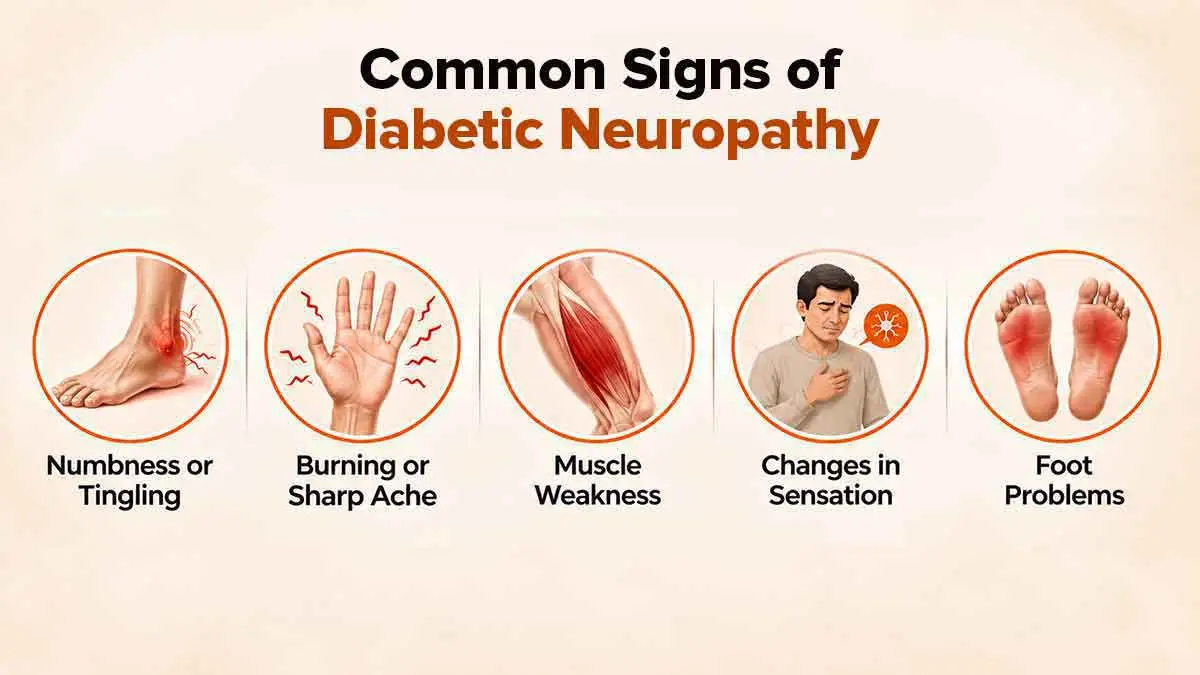
Neuropathy usually begins in the longest nerves of the body, the feet and toes, and gradually spreads upward towards the ankles, legs, and hands in a classic glove and stocking pattern. Symptoms may include tingling, burning, pain, sensitivity to touch or numbness. They can overlap and do not necessarily follow a fixed sequence.
Tingling And Prickling
A pins-and-needles sensation (paresthesia) in the toes or feet.
Burning Pain
Sharp, aching, or burning pain that frequently intensifies at night, disturbing sleep.
Hypersensitivity
Extreme sensitivity to touch, where even the light weight of a bedsheet causes discomfort.
Numbness and Loss of Sensation
Reduced ability to feel temperature changes, vibration, or pain from cuts and blisters.
Loss of Reflexes and Balance
Diminished ankle reflexes, muscle weakness, and unsteadiness while walking.
I have had diabetes for the last 10 years and was on allopathic medicines, but my sugar levels kept increasing day by day. For the last 6 months, I had no energy at all.
Then I heard about Jiva Ayurveda from a friend. I consulted them over the phone and started their medicines, diet chart, and yoga therapy. Within a week, I started feeling more energetic, and after 2 months of treatment, I feel full of energy again at the age of 62.
Thank you to the entire team for the timely guidance, patiently solving my queries, and for the good behaviour and support throughout the treatment.
I would like to express my deepest gratitude to the Jiva Ayurveda team for their exceptional care and guidance throughout my Diabetes Care Plan journey.
My sincere thanks to Dr. Pushpendra Shukla for his expert diagnosis, thoughtful treatment approach, and the confidence he instilled in me from day one. I’m equally grateful to Health Coach Swati and Nutritionist Mansi, whose constant motivation, personalized attention, and practical lifestyle advice made a world of difference. Their guidance kept me consistent, positive, and fully committed to the process.
Thanks to their collective efforts, my sugar levels are now stable, and my overall health and energy have improved tremendously. I feel healthier, lighter, and more in tune with my body than ever before.
This program has been a truly transformative experience — not just physically, but mentally and emotionally as well. I deeply appreciate the compassion, professionalism, and dedication shown by the entire team.
Thank you, Jiva Ayurveda, for helping me rediscover balance and wellbeing through the power of Ayurveda.
Warm regards,
Kuldeep Bhardwaj
Firstly, I am thankful for jiva greater noida clinic.
i have diabetes, severe pain in left shoulder and acidity problem since 2 years. i have taken lots of allopathic medicines but no relief, then i visit jiva greater noida clinic, where i have consult with Dr. Sikandar, i have taken 5 months medicines and follow diet chart as per directed by the doctor. Currently, i am almost cured, but i have taken one month extra medicine for complete relief.
thank you all staff for reminding me to followup with doctor time to time, also impressed with your management system.
Patient Success Stories
How It Is Assessed/Diagnosed
Early clinical assessment is essential to identify nerve dysfunction before permanent sensory loss or ulceration occurs.
Diagnostic Assessment
Clinical Purpose
10g Monofilament Test
Evaluates loss of protective sensation by touching a flexible nylon fiber to specific points on the foot.
128 Hz Tuning Fork Test
Measures vibration perception threshold at the base of the big toe.
Ankle Reflex Evaluation
Tests deep tendon reflexes at the Achilles tendon using a reflex hammer.
Nerve Conduction Velocity (NCV)
Measures the speed and strength of electrical signals passing through peripheral nerves.
Electromyography (EMG)
Evaluates electrical activity in muscles to confirm nerve-muscle connection integrity.
Management And Monitoring
Conventional clinical management focuses on delaying progression, controlling neuropathic pain, and restoring metabolic balance.
Glycemic Control
Maintaining HbA1c and fasting and post-meal glucose targets remains the single most critical intervention to stop progressive nerve decay.
Pain management
Physician-prescribed neuropathic medications (such as anticonvulsants or SNRIs) are used to manage burning sensations and sharp pain.
Regular Monitoring Schedule
DAILY: Self-examination of feet for cuts, discoloration, swelling, or blisters.
QUARTERLY: HbA1c levels check and routine clinical assessment of sensation.
YEARLY: Full podiatric foot exam that includes monofilament and
Ayurvedic Assessment And Supportive Care
According to Ayurveda, diabetic neuropathy is the manifestation of chronic Medhumeha (diabetes). It mainly consists of a major disturbance in Vata dosha, along with the accumulation of Ama (metabolic toxins) in majja dhatu (tissues of the nervous system) and snayu (tendons/ligaments).
The Ayurvedic physician evaluates the Prakriti (constitution) of the patient, his Vikriti (imbalance), agni (digestive fire), and the level of tissue involvement (Dhatu Dushti) in the individual.
Supportive Therapies And Care Principles
Physician-Guided Classical Herbs
Natural formulations containing classical herbs like Ashwagandha (nerve nourishment), Guduchi (metabolic clearance), and guggulu (circulatory support) are recommended based on individual clinical evaluation. A qualified practitioner will select an Ayurvedic formulation after reviewing your symptoms, medicines, and other health conditions.
External Therapies (Bahya Chikitsa)
Gentle foot massage may offer temporary comfort. Seek clinical advice before massage if you have reduced sensation, poor circulation, wounds or swelling, and avoid hot oils.
Dietary Adjustments
Emphasizes warm and light, vata -pacifying foods that support Agni while strictly maintaining low glycemic parameters.
To learn more about Jiva's core clinical philosophy and treatment framework, visit our Ayurvedic treatment for diabetes Guide.
Prevention Or Progression
Targeted daily habits help slow down or prevent the worsening of nerve damage
Maintain strict Glycemic Ranges
Consistent blood sugar management prevents further microvascular injury.
Practice Daily Foot Hygiene
Wash your feet in warm, not hot, water, checking the temperature with your elbow or a thermometer. Dry carefully, especially between the toes. Apply moisturiser to the tops and soles of your feet, avoiding the spaces between your toes.
Choose Proper Footwear
Wear comfortable, well-cushioned shoes with seamless socks to reduce friction and pressure points.
Engage in Low-Impact Exercise
Regular walking, gentle yoga, or swimming stimulates peripheral circulation without placing excess mechanical stress on the feet.
Eliminate Toxins
Avoid tobacco and alcohol, both of which accelerate peripheral vascular damage.
Red flags
Seek immediate medical attention if you experience any of the following urgent symptoms
Non-healing cuts, sores, or blisters on the feet or legs.
Signs of local infection, such as spreading redness, swelling, warmth, or pus discharge.
Sudden onset of severe weakness in the foot, leg, or hand.
Skin discoloration, particularly localized blackening or bluish skin on the toes (indicative of tissue necrosis).
Unexplained severe dizziness or fainting upon standing (indicative of autonomic cardiovascular involvement).
The burning feet symptom is commonly caused by diabetic neuropathy, in which high glucose levels lead to nerve damage and a burning feet sensation.
No. Although diabetic neuropathy can be a common cause of burning feet, other causes may include vitamin deficiencies, poor blood flow, thyroid issues, kidney disease, medication, and other neuropathies.
In case of a constant and worsening burning sensation or in case of accompanying symptoms such as numbness, weakness, foot sores, changes in skin color, swelling, or infections.
No. A gentle foot massage might bring temporary relief in some cases but should not be substituted for any medical treatment.
Well-fitting, cushioned footwear with a wide toe box, good arch support, and no internal seams that could cause rubbing is ideal. Specialist diabetic footwear is widely available and worth the investment for anyone with neuropathy or reduced foot sensation.
Find Jiva Ayurveda Clinics for Diabetes Treatment Near You

 Published on 16 Sep, 2026
 Updated on 03 Oct, 2026