Diabetes, arthritis, skin disorders & more! Get a free consultation with Top Ayurveda doctors - +91 9266714040 | No travel, No waiting – Consult Jiva’s doctors from home via video call! | Get up to 10% OFF! On Authentic Ayurveda Products! Best Prices only on the brand store. Visit : www.store.jiva.com
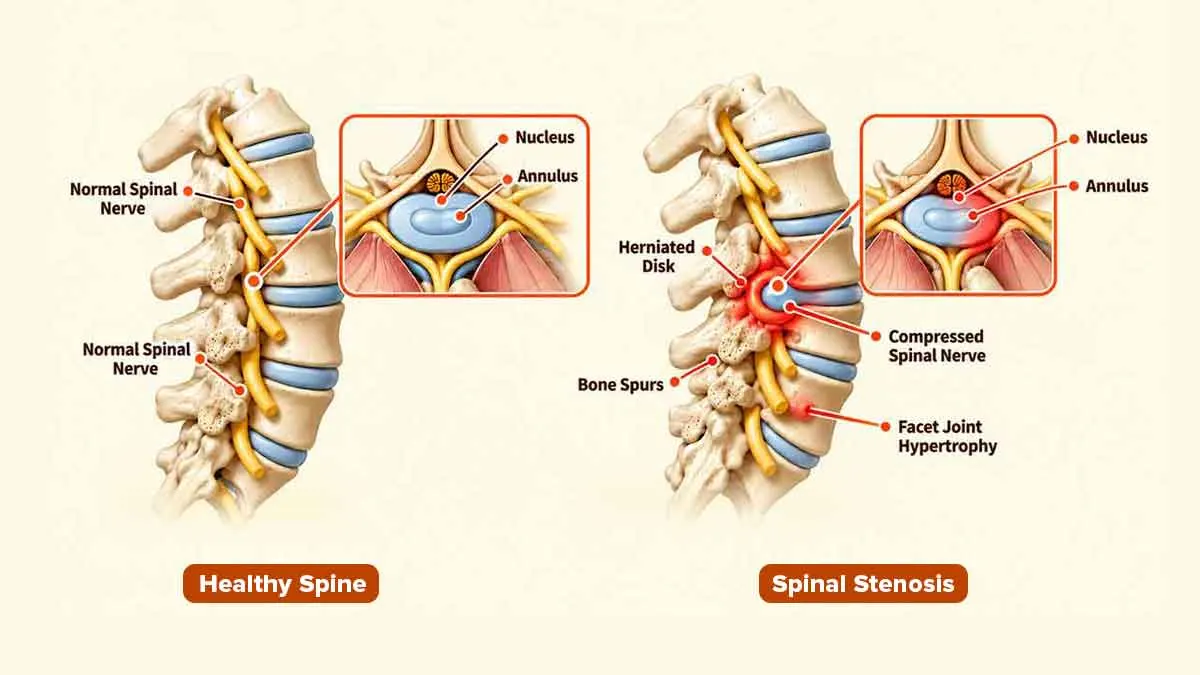
As you get older, the open space inside your lower back can naturally narrow down due to normal wear and tear. This physical tightening is what doctors call spinal stenosis. When this space becomes too tight, the bone directly pinches the large sciatic nerve that runs from your lower back down into your feet. This constant squeezing irritates the nerve, causing a sharp, burning pain, heavy numbness, or tingling to shoot straight down your leg. This painful symptom is what we call sciatica. Spinal stenosis is the physical change in your back, and sciatica is the pain from it.
Who Is Affected And Risk Factors
Spinal stenosis usually develops slowly after years of wear and tear on your back. While it mostly happens as people get older, a few specific things can speed up this process:
Age over 50: Ageing is one of the most common reasons. With time, the parts of your spine naturally dry out and shrink the open space around your nerves.
Arthritis: This causes your body to grow small, extra pieces of rough bone called bone spurs. These hard bumps poke directly into the spinal space and crowd the nerves.
Genetics: If your parents or grandparents had a naturally narrow spine or chronic back issues, you may get it as well.
Sedentary lifestyle: Sitting all day without moving weakens your core and back muscles. Without strong muscles to hold you up, your spine bones take all the heavy daily pressure and wear out much faster.
Excess body weight: Carrying extra weight puts heavy, constant pressure on your back. This extra daily stress forces your bones and joutns to wear down and narrow a bit over time.
Tobacco use: Smoking actively restricts healthy blood flow to your spine. Without enough oxygen, the protective parts of the back dry out and break down much earlier than they should.
I was suffering from sciatica since 2025 and Doctors prescribed me for surgery but I believe in ayurveda and came here to consult with Dr Bhawna , she advised me 14 days panchakarma treatment. After 14 days panchakarma. I stayed here for 14 days and got 90% relief in my symptoms. I thankful to Dr Bhawna and team to cure me.
Thank you Lalita, Preeti, Naina and Tanuja who give me thefalies and personal care.
Reception staff was also very coperative.
Symptoms Or Presentation
When the space inside your lower back narrows, the nerve pain behaves differently than a normal backache. You will notice the following symptoms in your body:
Relief from bending forward: When you lean down or sit down, it often stops the pain. Bending forward naturally opens up the tight space in your back and gives your nerves extra space to breathe.
Pain with standing straight: When you stand straight or walk for a few minutes, it makes your legs feel very heavy, tired, and burning. Standing straight naturally squeezes the space shut and pinches the nerve.
Both legs feel heavy: Unlike a slipped disc, which usually hurts one leg only, this narrowing often causes annoying tingling in both of your legs at the exact same time.
Numbness in the feet: Because the pinched nerve cannot send a clear signal to your toes, your feet might feel completely numb or weak. This can make it hard to keep your normal balance while walking.
How It Is Assessed/Diagnosed
Finding out if your space is shrinking starts with how you move. A doctor will check if leaning forward instantly stops your leg pain, test your daily balance, and check for muscle weakness. To see the hidden problem, they usually ask you for an MRI scan or other imaging tests. This helps in getting a detailed inside picture of your back to show where the tight bone is crushing the delicate nerves.
In Ayurveda, this bone shrinking is seen as an extreme buildup of Vata energy. An Ayurvedic expert will perform Nadi Parisksha (gently feeling your pulse) to read your body's internal balance. They will also check your Agni, digestive fire, by asking you questions about your daily digestion and physically feel your joints for cold stiffness. Instead of just looking at the bones, this complete check-up helps them find where this dry, cold energy is blocking your natural flow so they can start warming and softening the tight area.
Management And Monitoring
Managing a tight spinal space is all about finding easy ways to take the heavy pressure off your nerves. By changing how you move, you can quickly calm the pain and track your progress:
Lean forward for relief: Standing straight for long periods pinches your nerve. Leaning over or using walking sticks helps in opening op your back and gives you room to breathe.
Take sitting breaks: Do not push yourself through the pain if your legs start to burn or feel heavy. Sitting down for just a few minutes immediately opens your lower spine and rests your trapped nerves.
Use heat: Put a warm heating pad on your lower back; this helps calm the tight, painful muscle knots that build up when you try to stand up straight.
Track your walking time: Pay attention to how you walk before your legs go numb. If your safe distance gets shorter over a few weeks, seek medical care.
Ayurvedic Assessment And Supportive Care
In Ayurveda, the narrowing of your spine is seen as an extreme build-up of dry, stiff Vata energy as you age. In Ayurveda, the main goal of supportive care is to deeply lubricate your stiff bones and bring back the healthy moisture to help calm the pinched nerves.
Vata Balance: The main goal is calming your Vata energy. This means adding deep warmth, heavy moisture, and strict daily routines to stop your bones and nervous system from drying out and shrinking further.
Fixing Digestive Fire: Fixing your Agni is very important. If your digestion is weak, your body cannot process the food and absorb nutrients to heal your spine. Drink warm ginger water and eat freshly cooked, easily digestible meals to keep your internal fire strong.
Snehana and Swedana: Snehana, warm oiling, and Swedana, herbal steam, work well together. First, thick warm sesame oil is rubbed into your back to moisturize the dry bones. Then warm herbal steam is used to push that oil deep inside and melt away the tight muscles.
Panchkarma Therapies: Gentle therapies focus directly on the painful area. Kati Basti is highly effective to heal and nourish the shrinking spinal space.
Natural herbs: Herbs such as ashwagandha and guggul are used to clear out the internal stiffness and swelling.
Diet and lifestyle: Your daily food must be warm and freshly cooked. For your lifestyle, keep your lower back warmly covered, avoid cold AC, go to bed early, and do yoga and meditation to manage your stress levels.
Prevention Or Progression
While you cannot completely stop your back from aging, you can easily slow down the narrowing of your spine and keep the nerve pain from getting worse. The secret is keeping your back supported without adding heavy stress. Daily, gentle movements like walking or swimming keep your spinal joints lubricated and moving smoothly. It is also highly important to strengthen your stomach muscles. Always avoid heavy lifting or high-impact jumping, which forces your bones to compress and quickly pinch your nerves.
Red Flags To Watch Out For
Many warning signs need prompt medical care:
If you are not able to control your bladder or bowels.
If your legs become numb, you cannot lift them in front of your feet.
If your pain gets steadily worse or does not improve after a few weeks of self-care.
If you have unexplained weight loss, fever, night sweats, or chills, as it signals a severe infection.
If you suddenly lose all feeling in your inner thigh or groin area.
Imagine your spine as a hollow tube that safely protects your nerves. Spinal stenosis happens when that tube slowly shrinks and gets too narrow inside, usually because of natural aging or arthritis
The nerve roots that bundle together to make your sciatic nerve have to pass through this tube. When the space gets too tight, the hardened bone physically chokes the nerve, sending that familiar sharp, shooting pain down your legs.
A slipped disc is a sudden, soft jelly leak from between your bones that pinches the nerve. Spinal stenosis is a slow, gradual thickening of the bones and ligaments caused by many years of wear and tear.
The "shopping cart" sign. If your back and legs hurt terribly when you stand up straight or walk, but you feel instant, wonderful relief when you sit down or lean forward (like leaning on a grocery cart), it is very likely stenosis.
No. It is actually your body's natural response to aging. Your spine tries to support wobbly, aging joints by growing extra bone (bone spurs) to stabilize them. Unfortunately, that extra bone takes up the exact space your nerves need.
Because standing up straight squeezes the nerve, exercises that gently round or stretch your lower back forward bring great relief. Taking frequent sitting breaks during walks also gives the choked nerves time to recover.
Ayurveda sees this as a deep Vata imbalance directly linked to aging. As we get older, our joints naturally lose their healthy moisture and dry out. Treatment focuses on deeply nourishing the body with warm, heavy medicated oils to lubricate the dry, narrowed bone spaces and calm the stiff nerves.
Find Jiva Ayurveda Clinics for Sciatica Treatment Near You

 Published on 28 Sep, 2026
 Updated on 17 Oct, 2026