Diabetes, arthritis, skin disorders & more! Get a free consultation with Top Ayurveda doctors - +91 9266714040 | No travel, No waiting – Consult Jiva’s doctors from home via video call! | Get up to 10% OFF! On Authentic Ayurveda Products! Best Prices only on the brand store. Visit : www.store.jiva.com
What Sciatica Due to a Herniated / Slipped Disc Means
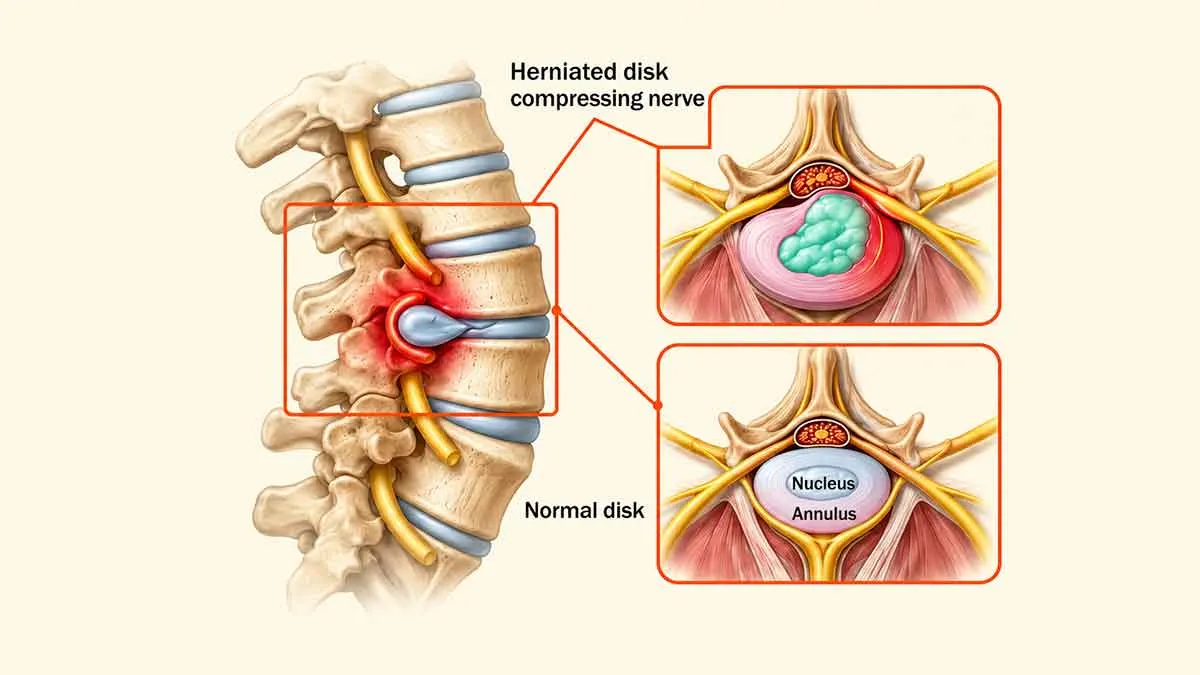
Your spine is made of a stack of bones that run from the bottom of your head all the way down to your tailbone. Sitting directly between each of these solid bones are soft, round cushions known as discs. These little cushions work like natural shock absorbers, protecting your bones and letting you bend and move around smoothly.
However, because of a sudden injury or just normal daily wear and tear, one of these soft cushions can sometimes crack open and leak. This is what we call a herniated disc or Vata Vyadhi. When the disc breaks and leaks, it pushes directly against your spinal cord and severely irritates your delicate nerves. This heavy pressure on the nerve is what triggers sharp pain, tingling, numbness, and sudden muscle weakness in your body.
Other names for herniated discs are bulging disc, slipped disc, ruptured disc, or protruding disc.
It can later lead to neck, back, and leg pain. This can happen anywhere along your spine, but it usually occurs in your lumbar spine or your cervical spine.
Who Is Affected And Risk Factors?
A slipped disc causing sciatica does not happen to everyone; it happens over time because of certain habits and characteristics a person has:
Extra weight: If you have excessive body weight, it puts constant pressure on the discs in your lower back, which can lead to pain.
Occupation: If you have a job that requires heavy weight lifting or bending and twisting, it can put heavy pressure on the lower back.
Genetics: If someone in your family has this disease, then there may be some chances that the next generation may also get it.
Smoking: If you smoke regularly, then it reaches your discs, which accelerates degeneration and tearing of the discs.
Sedentary lifestyle: If you sit for long hours and do not move at all, then the chances of sciatica also increase.
Bad Lifting Habits: If the person has bad lifting habits such as violently picking things up from the floor or twisting, bending incorrectly, then it can also stress the lower back.
I was suffering from sciatica since 2025 and Doctors prescribed me for surgery but I believe in ayurveda and came here to consult with Dr Bhawna , she advised me 14 days panchakarma treatment. After 14 days panchakarma. I stayed here for 14 days and got 90% relief in my symptoms. I thankful to Dr Bhawna and team to cure me.
Thank you Lalita, Preeti, Naina and Tanuja who give me thefalies and personal care.
Reception staff was also very coperative.
Symptoms Or Presentation
When a slipped disc pushes on your sciatic nerve, the pain is usually clear and easy to identify:
A dull sciatic pain, or sharp, burning, or electric pain shooting from the lower back through the buttock, thigh, and leg.
Lower back pain along with aching and stiffness.
Loss of feeling or tingling in the leg or foot.
Difficulty in lifting the front part of the foot or even standing on your toes.
How It Is Diagnosed
Finding out if you have a slipped disc is very important. A medical doctor will usually ask you to lie flat and slowly lift your straight, painful leg up in the air. If you feel a sudden, sharp shock, it is a clear sign a spinal disc is actively pinching your nerve. They will also tap your knees to check your reflexes and test your leg strength. If this severe pain stays for several days, an MRI scan, X-ray, or other related tests are also suggested to see a clear picture inside your back.
In Ayurveda, the practitioner will do a pulse diagnosis to check which of your internal energies are imbalanced. They will ask questions about your lifestyle, digestion, and food habits. They will also do a symptom analysis and will learn about your medical history.
Management And Monitoring
Healing a pinched nerve doesn't happen overnight, so you need a simple routine to track your progress. The entire goal is just to keep the heavy pressure off your back while your body does the hard work of repairing itself.
Use Ice and Heat: Use an ice pack for the first two days to numb the sharp pain and swelling. After that, switch to a warm healing pad to melt away the tight muscle knots in your lower back.
Take small walks: Do not stay stuck in bed for days. Get up and take an easy five-minute walk around the house to bring fresh blood to your back and stop your joints from locking up.
Stop sinking into couches: Avoid soft, squishy chairs that swallow your hips. Sit on a firm surface with a small cushion behind your lower back to keep your spine straight.
Listen to your leg: Pay close attention to where it hurts. If the pain slowly moves up your leg and shrinks back toward your spine, you are healing nicely. If it does not get better after a few weeks, call our doctor for extra help.
Ayurvedic Assessment And Supportive Care
Ayurveda treats sharp nerve pain by calming the cold, dry energy trapped inside your lower back. The treatment uses natural herbs, soothing foods, and deep warmth to gently heal the crushed nerve from the inside out.
Herbal Medicines: Ayurvedic medicines use herbs that safely calm the swelling. Experts often suggest warm, natural herbs such as Ashwagandha, guggul, turmeric, and ginger mixed in warm water to relax tight muscles and stop internal pain.
Therapies and massages: Deep warmth is your best daily treatment. Gentle rubbing with thick, warm sesame oil helps calm the frozen stiffness. After the oil massage, always use a hot water bottle to push that warmth deep into your skin.
Healthy Diet: A damaged nerve needs rich, nourishing food to repair itself. Eat warm, freshly cooked meals like thick soups and vegetables mixed with a little ghee. Completely avoid cold salads, iced drinks, or dry, crunchy snacks that make your body stiff.
Lifestyle plan: Keep your lower back warmly covered and strictly avoid sitting in the AC drafts or cold winds. Try to go to bed early, because staying awake late at night naturally increases the dry, painful stiffness in your nervous system.
Red Flags to Watch Out For
Certain warning signs should not be overlooked:
If your pain gets steadily worse or does not improve after a few weeks of self-care.
If you have unexplained weight loss, fever, night sweats, or chills, as it signals a severe infection.
If you are not able to control your bladder or bowels.
If your legs become numb, you cannot lift them in front of your feet.
If you suddenly lose all feeling in your inner thigh or groin area.
Think of the discs between your spine bones like jelly donuts acting as shock absorbers. A slipped or herniated disc happens when the tough outer edge of the donut tears, and the soft inside pushes out.
Your sciatic nerve runs right past these discs. When the inner jelly pushes out, it directly physically crushes the nerve. The inside of the disc also contains natural acids that irritate the nerve, causing a sharp, burning shock down your leg.
Not at all. A slipped disc is a soft-tissue injury, not a broken bone. With the right care and patience, the bulging part of the disc usually shrinks back or naturally dries up on its own over time.
No. Most people recover completely without ever needing surgery. Gentle daily stretches, posture changes, and time are usually enough to give the nerve room to breathe. Surgery is only considered for severe red-flag emergencies.
Your sciatic nerve is like a long electrical wire starting in your lower back and ending in your toes. When the wire gets severely pinched at the plug (your spine), the pain alarm rings all the way to the end (your foot).
Staying in bed for more than a day or two actually makes it worse. Lying flat for too long makes your back muscles weak and stiff. Gentle, pain-free movement brings fresh blood flow to heal the injured disc.
Ayurvedic therapies focus on relaxing the painful muscle spasms around the injury. Pooling warm, heavy herbal oils directly on your lower spine (Kati Basti) softens stiff tissues, improves local circulation, and deeply calms the trapped, dry Vata energy.
Find Jiva Ayurveda Clinics for Sciatica Treatment Near You

 Published on 28 Sep, 2026
 Updated on 17 Oct, 2026